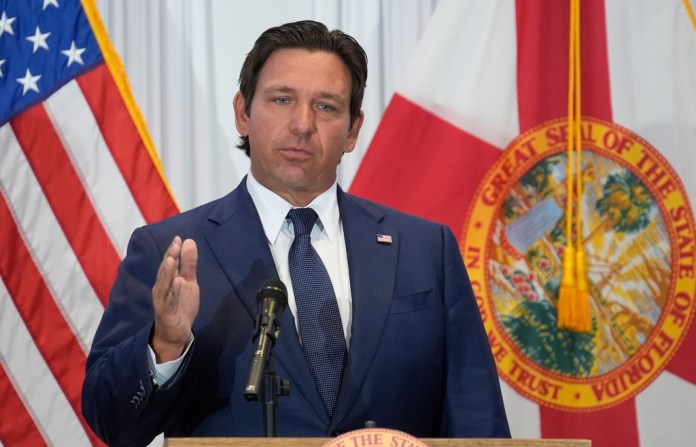
The Florida Supreme Court declined to block the newly enacted congressional map that could net Republicans up to four seats in the Sunshine State. In a 6-1 ruling, the state’s high court ruled it lacks the jurisdiction to rule on a case currently being litigated in a lower court. The ruling does not end the […]
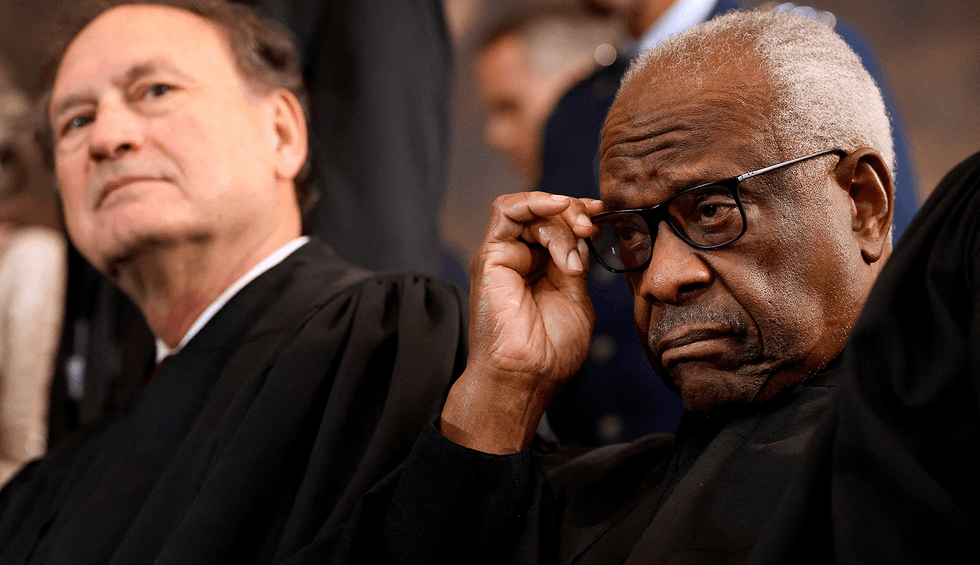
In April, the Supreme Court handed down a controversial decision which critics say “eviscerated” the Voting Rights Act. Now, according to new reporting from Vox, the impact of this decision is about to spread from the voting box to the workplace. Per Vox, “President Donald Trump’s Department of Justice released an opinion on Tuesday that, in the likely event it is embraced by a Republican-controlled federal judiciary, would make it significantly harder for plaintiffs who face employment discrimination to prevail in court.” It was notable that the opinion was signed by T. Elliot Gaiser, head of the Office of Legal Counsel and a former law clerk to Justice Samuel Alito, author of the Supreme Court’s recent decision in Louisiana v. Callais, which gutted a key provision of the Voting Rights Act. Essentially, Gaiser’s opinion argues that the same logic Alito used to attack voting rights can be applied to employment anti-discrimination law. According to Vox senior Supreme Court correspondent Ian Millhiser, “if you accept Alito’s opinion in Callais as legitimate, then Gaiser’s approach to employment discrimination is hardly a stretch. Indeed, it is the next logical move in the Republican Party’s broader campaign to weaken civil rights protections for racial minorities.”As Millhiser explains, “The 1982 law that Alito targeted in Callais provided that voting rights plaintiffs who challenged a state election law did not need to prove that state lawmakers acted with racist intent in order to prevail. Under that law, which was repealed by Callais, a state law that ‘results’ in voters having their right to vote diminished due to their race may also be challenged.” Now, because of the Supreme Court’s decision, voting districts can more or less be gerrymandered at will, even scrubbing Black districts entirely out of existence, because the language in Alito's opinion makes it nearly impossible to prove racist intent.Gaiser’s decision concerns a similar law regarding employment, and he’s making essentially the same argument raised by conservative justices: that a discrimination case can prevail only if racist or sexist intent is explicit. And given these similarities, says Millhiser, Gaiser’s claim “is likely to prevail before a Republican Supreme Court.”According to Millhiser, there are two upshots to this conclusion: “One is that it should be significantly harder for many employment discrimination plaintiffs to prevail. The other, which is potentially even more significant, is that elected officials should lose much of their power to remedy discrimination of all kinds, and the scope of civil rights law should be determined primarily by the Supreme Court.”As Millhiser explains, “both the Voting Rights Act’s results test and employment discrimination’s disparate impact test, after all, were enacted into law by Congress. But the Republican Party’s consistent position on civil rights laws is that democratically enacted civil rights laws must bow to the whims of Republican justices.”In essence, it is the position of conservatives on the court that “these difficult policy questions should be removed from the democratic process and given to a Republican judiciary.” Millhiser asserts that this should raise troubling questions as to “why six Republican lawyers in black robes have more insight into US civil rights policy than the people American voters elected to make these decisions.”
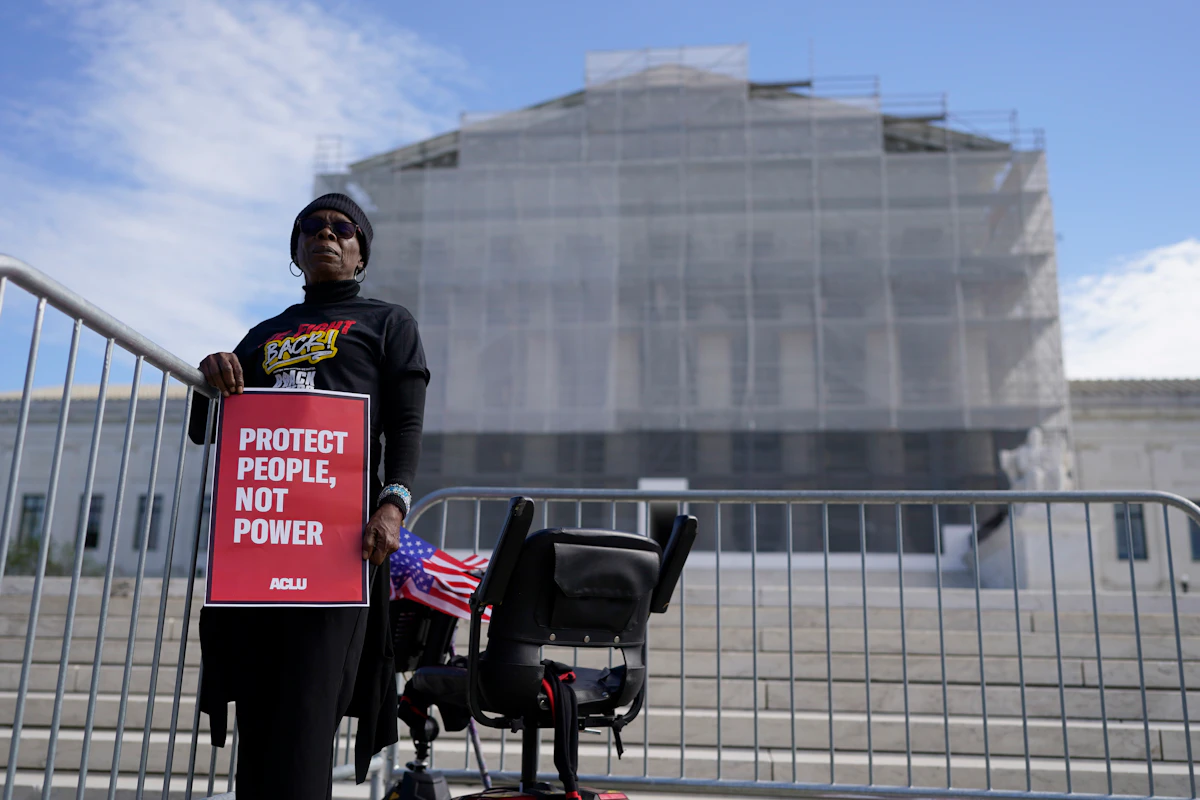
In 2018, David Tyson
Jr., an African American, sued Richardson Independent School District in Texas
for violating Section 2 of the Voting Rights Act. In the district’s 164-year
history, Tyson was the only person of color ever to serve on the school board.
Yet, at the time of the lawsuit, white students made up less than 30 percent of the district while
Black and Hispanic students made up nearly 60 percent.When Congress enacted
the Voting Rights Act at the height of the Civil Rights Movement, it gave
communities the tools to combat these kinds of racial harms. Section 2 of the act outlaws state and local governments from enacting voting rules that result
in racial discrimination. One of the undersung aspects of the Supreme Court’s
recent decision in Louisiana v. Callais—for which there has been much
hue and cry over the way it’s paved the path for right-wing state governments
to draw majority-minority federal districts out of existence—is that it cuts
away at this protection for local governments, as well, rendering it “all but a
dead letter,” as Justice Kagan laments in her dissent.While the media has focused on Callais’s impact on
Congress in the 2026 midterms, its darkest mark will be on local governments.
Section 2 of the Voting Rights Act has been most frequently applied to address and remedy local electoral practices, not
state ones. Its use heralded diverse school boards and city councils where
national minorities, by virtue of being local majorities, can govern.Through this phenomenon, diversity develops twice over. First, through representational diversity and second, through
institutional diversity. Minorities can see themselves represented on school
boards, county commissions, and city councils. And they can harness that
representation to institute local governments that do not look like state or
national government. These more representative governments are more likely to become
local laboratories willing to conduct policy experiments or try alternative
governance approaches that the broader polity dismisses or ignores. This is why
diversity at the level of individuals and institutions cultivates a rich
democracy. Callais endangers these sites of local democracy by hollowing
out Section 2 protections.But back in 2018 when
Tyson filed his lawsuit,
Section 2 of the Voting Rights Act was still intact. We can look back in time
to see its salutary effects. Tyson told a “tale of two districts,”
where—unsurprisingly—a ceaselessly homogeneous school board had harmful
consequences for the Richardson school district. Elementary schools where at
least 70 percent of the students met grade level in two or more subjects
were two-thirds white—and the vast majority were not economically
disadvantaged. By contrast, the lowest-performing elementary schools were
predominantly made up of Black, Latino, and economically disadvantaged
students. Atop the startling peak of disparity was the 60-point achievement
gap between the district’s highest-performing school, which was predominantly
white, and its lowest-performing school, which was predominantly Latino.These racial inequities did
not go unnoticed by the Black and Latino voters of Richardson. And yet,
Richardson’s school board remained persistently white for one reason: the
district’s voting practices. While white students constituted a minority in the
district’s schools, white voters still comprised a majority of the district’s
population. These demographics, combined with an at-large, district-wide voting
scheme where every voter in the district voted in every school board election, meant that minority voters would never succeed in electing a candidate of their
choice. The minority vote would always be diluted against the white vote. The school board—whether
under the threat of ongoing litigation or by a genuine change of heart—agreed
to end this pernicious status quo. In 2019, Richardson Independent School
District settled. As part of the settlement, the district moved toward a single-member district voting
model. Specifically, it instituted an electoral
scheme that allows voters within a predefined border to elect a board member to
represent them—similar to congressional districting. Two of the five
single-member districts in Richardson were drawn to ensure that Black and
Latino voters were the majority. Voters from these districts later elected Regina
Harris, the first Black woman, and Debbie Rentería, the first Hispanic person,
to serve on the school board.Richardson was not alone
in making this kind of change. In response to immigration and changing racial
demographics, the late 2010s saw a spate of
lawsuits across school boards in North Texas alleging
violations of Section 2 of the Voting Rights Act. Many of these districts
settled and moved to electoral systems that gave voters of color greater voice
in their representation.
The madman who killed his father after setting him and the family dog on fire inside their Santa Barbara County home appeared stone-faced in court as a judge sentenced him to life in prison Wednesday for the horrifying crime. Joseph Ashley Garcia learned his fate after being convicted of first-degree murder in April over the...
President Trump told reporters on Wednesday that the U.S. military could continue strikes against Iran after targeting about two dozen sites, mostly near the Strait of Hormuz, in retaliatory attacks on Tuesday. Trump said he still wanted to work toward a “meaningful deal” with Iran but wasn’t done punishing Iran for shooting down an Apache…
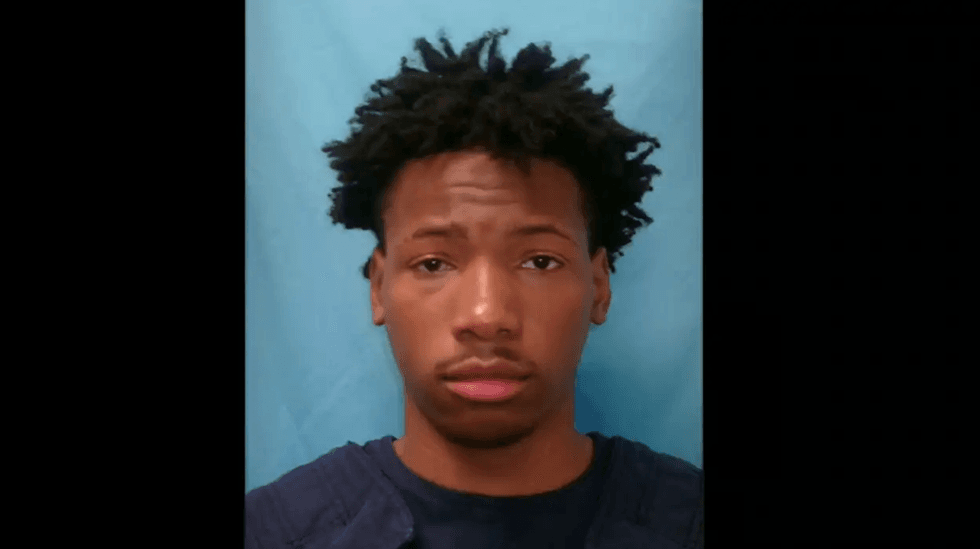
After Karmelo Anthony was found guilty Tuesday of murdering Austin Metcalf in a stabbing at a Frisco, Texas, high school track meet in 2025 — and the same jury soon after sentenced Anthony to 35 years in prison — Metcalf's loved ones read impact statements in a Collin County courtroom with Anthony present.Jeff Metcalf, the victim's father, called his son a friend, a leader, and a true warrior, KDFW-TV reported.'My son's death destroyed the person I used to be.'"Since the day he first grabbed my finger, he had my heart with it," Metcalf said, according to the station, which added that the elder Metcalf also spoke about the joy he felt while watching both of his sons on the field at the same time.Jeff Metcalf also said the public response to his son's murder was sickening, KDFW reported, adding that he said he was targeted in six swatting calls and the victim's mother has been targeted twice."With a gag order, I can't defend myself when people want to tear down my son's memory. That time is over!" Jeff Metcalf added, according to the station. "I said from day one this was never about race. It's about right and wrong. We are all humans. We all bleed the same color. You will face those consequences starting today." Anthony is black; Metcalf was white.Jeff Metcalf also spoke directly to Anthony, KDFW reported: "You failed your parents, yourself, and society. You don't belong in this community.""My son's death destroyed the person I used to be," the father added, according to WFAA-TV. "He does not exist any more."Jeff Metcalf added that "people think grief is sadness; it is not. It is rage. Pure, unfiltered rage," he said, slamming his fist on a table with his voice rising, WFAA noted.The enraged father added to Anthony, "You can't look me in the eyes, but you can stab my f**king son?!" KDFW reported.With that, the judge motioned to prosecutor Bill Wirskye about the cursing, WFAA said.Indeed, a reporter in a KXAS-TV video called Jeff Metcalf's impact statement "full of rage" and noted that the judge had the prosecutor and a bailiff "step in" although Metcalf was allowed to finish reading his impact statement.When he was done, Jeff Metcalf stared at Anthony the entire time he walked past him — just two feet from his son's convicted killer, WFAA reported.RELATED: Jury reaches verdict in Karmelo Anthony murder trial (UPDATE) Hunter Metcalf, the twin brother of the victim, also observed the lack of eye contact and asked Anthony to look him in the eye, KDFW reported: "I would really respect that."Hunter Metcalf said he's been trying to learn how to forgive, KDFW said, adding that he also said he's chosen God and is trying to understand why his brother and best friend was taken from him."Now I want everything taken from you," Hunter Metcalf told Anthony, KDFW reported. "You took everything from me. I wake up every morning, and his door is still shut."Megan Metcalf, the victim's mother, talked about raising two energetic, loving souls, KDFW said: "Now I only have videos and memories of his laugh."The mother talked about the morning of the track meet, KDFW said, adding that she recalled packing her son a snack and giving him a hug — yet not realizing it would be the last time she would embrace her boy."You may have been given a sentence of 35 years. You should feel lucky," Megan Metcalf told Anthony, KDFW said. "I've been sentenced to a lifetime without my son."KDFW noted that Anthony, 19, will be eligible for parole after he serves half of his 35-year sentence. His murder conviction could have resulted in a prison sentence of as little as five years to as many as 99 years.During the sentencing deliberation, the jury was considering whether Anthony acted out of "sudden passion," which would have limited his time behind bars to 20 years, KDFW said.The reporter in the KXAS video described Anthony as "shaking" and "sobbing" and displaying a "sheer look of shock" on his face after his guilty verdict was read. The reporter added that Anthony was "trembling" in his chair and "sobbing" as his mother asked the jury during the sentencing phase to "please have mercy on my son."A new mug shot of Anthony was taken Tuesday after he was placed in the custody of the Collin County Sheriff's Office following his guilty verdict.RELATED: Karmelo Anthony murder trial: Jurors begin deliberations — and can consider lesser charge of manslaughter Karmelo Anthony. Image source: Collin County (Texas) Sheriff's OfficeIn addition, the reporter in the KXAS video said Anthony was seen mouthing the words "I'm sorry" to his family and added that Anthony's parents were not in court for his sentencing or for the impact statements.Like Blaze News? Bypass the censors, sign up for our newsletters, and get stories like this direct to your inbox. Sign up here!
The Microsoft co-founder will sit for the transcribed interview as revelations about his relationship with Epstein have rocked his philanthropic foundation.