The Supreme Court’s Voting Rights Decision Is Worse Than You Think
Source: The New Republic · Bias: Left
Summary
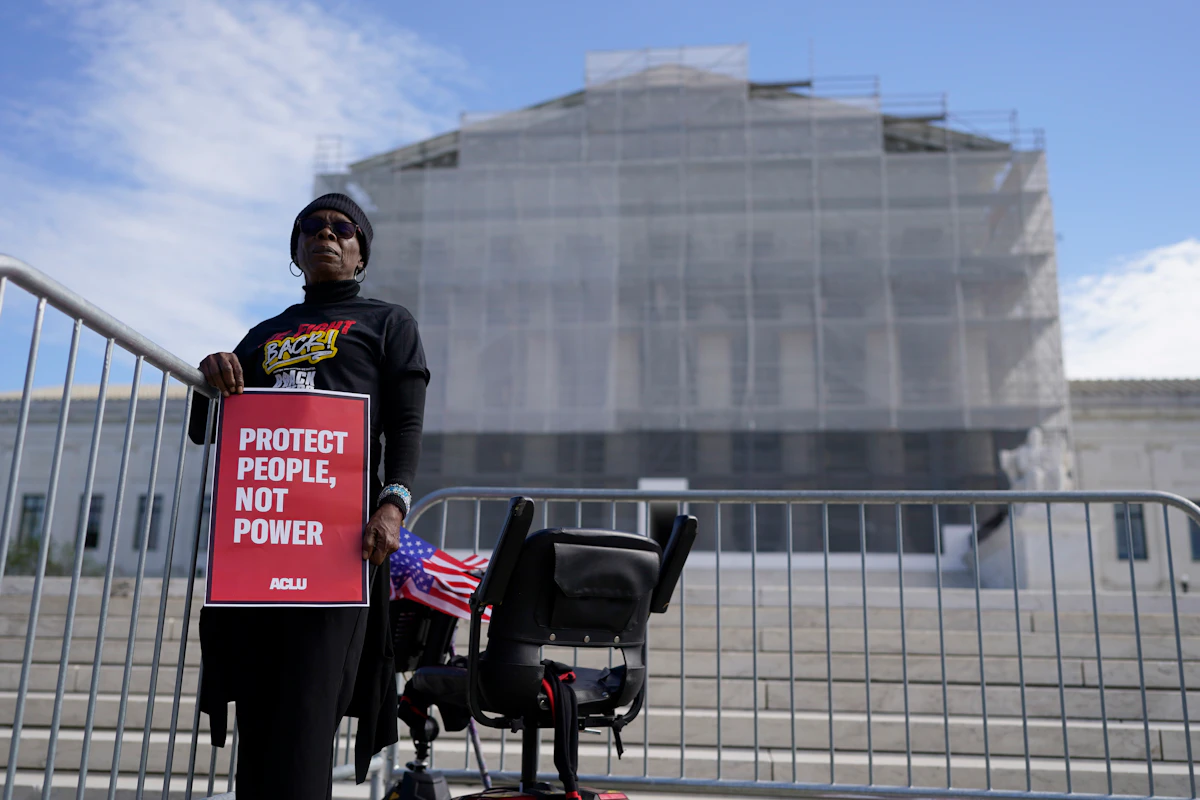
In 2018, David Tyson Jr., an African American, sued Richardson Independent School District in Texas for violating Section 2 of the Voting Rights Act. In the district’s 164-year history, Tyson was the only person of color ever to serve on the school board. Yet, at the time of the lawsuit, white students made up less than 30 percent of the district while Black and Hispanic students made up nearly 60 percent.When Congress enacted the Voting Rights Act at the height of the Civil Rights Movement, it gave communities the tools to combat these kinds of racial harms. Section 2 of the act outlaws state and local governments from enacting voting rules that result in racial discrimination. One of the undersung aspects of the Supreme Court’s recent decision in Louisiana v. Callais—for which there has been much hue and cry over the way it’s paved the path for right-wing state governments to draw majority-minority federal districts out of existence—is that it cuts away at this protection for local governments, as well, rendering it “all but a dead letter,” as Justice Kagan laments in her dissent.While the media has focused on Callais’s impact on Congress in the 2026 midterms, its darkest mark will be on local governments. Section 2 of the Voting Rights Act has been most frequently applied to address and remedy local electoral practices, not state ones. Its use heralded diverse school boards and city councils where national minorities, by virtue of being local majorities, can govern.Through this phenomenon, diversity develops twice over. First, through representational diversity and second, through institutional diversity. Minorities can see themselves represented on school boards, county commissions, and city councils. And they can harness that representation to institute local governments that do not look like state or national government. These more representative governments are more likely to become local laboratories willing to conduct policy experiments or try alternative governance approaches that the broader polity dismisses or ignores. This is why diversity at the level of individuals and institutions cultivates a rich democracy. Callais endangers these sites of local democracy by hollowing out Section 2 protections.But back in 2018 when Tyson filed his lawsuit, Section 2 of the Voting Rights Act was still intact. We can look back in time to see its salutary effects. Tyson told a “tale of two districts,” where—unsurprisingly—a ceaselessly homogeneous school board had harmful consequences for the Richardson school district. Elementary schools where at least 70 percent of the students met grade level in two or more subjects were two-thirds white—and the vast majority were not economically disadvantaged. By contrast, the lowest-performing elementary schools were predominantly made up of Black, Latino, and economically disadvantaged students. Atop the startling peak of disparity was the 60-point achievement gap between the district’s highest-performing school, which was predominantly white, and its lowest-performing school, which was predominantly Latino.These racial inequities did not go unnoticed by the Black and Latino voters of Richardson. And yet, Richardson’s school board remained persistently white for one reason: the district’s voting practices. While white students constituted a minority in the district’s schools, white voters still comprised a majority of the district’s population. These demographics, combined with an at-large, district-wide voting scheme where every voter in the district voted in every school board election, meant that minority voters would never succeed in electing a candidate of their choice. The minority vote would always be diluted against the white vote. The school board—whether under the threat of ongoing litigation or by a genuine change of heart—agreed to end this pernicious status quo. In 2019, Richardson Independent School District settled. As part of the settlement, the district moved toward a single-member district voting model. Specifically, it instituted an electoral scheme that allows voters within a predefined border to elect a board member to represent them—similar to congressional districting. Two of the five single-member districts in Richardson were drawn to ensure that Black and Latino voters were the majority. Voters from these districts later elected Regina Harris, the first Black woman, and Debbie Rentería, the first Hispanic person, to serve on the school board.Richardson was not alone in making this kind of change. In response to immigration and changing racial demographics, the late 2010s saw a spate of lawsuits across school boards in North Texas alleging violations of Section 2 of the Voting Rights Act. Many of these districts settled and moved to electoral systems that gave voters of color greater voice in their representation.
Related Coverage
- Plot Thickens – New Jersey Data Contractor Says Noncitizens Registering to Vote Not Our Error (Far Right — The Last Refuge)
- Trump Right To Recognize Collapse of Trust in US Elections (Center Right — RealClearPolitics - Homepage)
- Jeffries won’t rule out vote to abolish ICE if Dems retake the House, but downplays push from his party (Right — New York Post)
- Van Hollen: Trump Should Just 'End' the Iran Conflict 'Right Now' (Far Right — Breitbart News)
- Rick Scott Joins Push to Force SAVE Act Vote as Lee Explains His Plan (Right — PJ Media)
- Mike Lee to Force Roll Call Vote on SAVE Act Before Recess (Right — PJ Media)
- Trump's now thinking about his own death — and that's petrifying (Far Left — Raw Story)
- Trump's 'get-out-the-vote' fail exposed by laughing expert: 'Doing it for the other side!' (Far Left — Raw Story)
More Headlines From June 10, 2026
- RINO Sen. Lindsey Graham Clinches GOP Nomination for Fifth Term in South Carolina Senate Primary (Far Right)
- Knife that Karmelo Anthony used to kill Austin Metcalf was $13 Walmart blade with flashlight (Right)
- US, Iran Attack Each Other Over Apache Downed Near Hormuz Strait (Center)
- Trump ‘loves’ inflation explained, Rep. Jasmine Crockett defends Metcalf murderer (Right)
- Sen. Susan Collins’ allies preview ‘the end for Graham Platner’ in Maine Senate war (Right)