
New York Post
LA mayoral candidate Spencer Pratt drops astonishing truth bomb about city that leaves Bill Maher stunned
Pratt's comments echo a common perception that Los Angeles attracts large numbers of homeless people from elsewhere.
Right

Tough-on-crime outsider Aberaldo de la Espriella took the lead in Colombia's presidential race on Sunday night, setting up a runoff with Iván Cepeda, an ally of outgoing President Gustavo Petro.
Pratt's comments echo a common perception that Los Angeles attracts large numbers of homeless people from elsewhere.

Journalist Nick Shirley is accusing the media of making him a “target” over his reporting on fraud in Minnesota. Joining Fox News Channel’s The Big Weekend Show on […]

'This is outright election sabotage. No matter who you're voting for, this should outrage every single American'
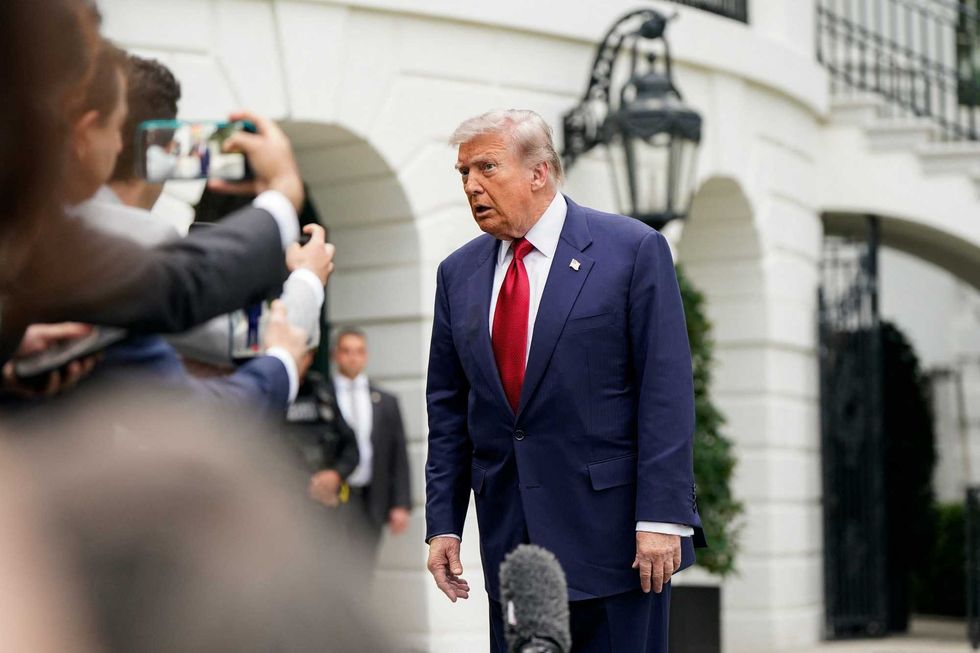
A survey discussed by attorneys Brian Kabateck and Shant Karnikian found that 94% of judges and lawyers believe President Donald Trump's second administration poses a greater threat to the rule of law than his first. "Here we are. It's gotten that much worse," Karnikian said on their podcast "Civil Action."Karnikian called the results astounding, also noting the erosion of faith in American institutions. Since his second inauguration, Trump has clashed with the federal judiciary, attacking judges who ruled against him, including Supreme Court justices who struck down his tariff policies. Trump has also attempted to leverage the judiciary, including settling an Internal Revenue Service, or IRS, lawsuit over leaked tax returns to create a fund potentially benefiting allies —a move federal judges have criticized. Kabateck highlighted the Supreme Court's use of the "shadow docket," where rulings occur without public visibility, characterizing it as a dangerous precedent.Watch the video below. Your browser does not support the video tag.

WASHINGTON — Democratic Party leaders from a dozen states traveled to Washington, D.C., at the end of May to press for their voters to cast the first ballots in the next presidential primary.State representatives argued that diversifying the early states would ensure Democrats nominate a presidential candidate who not only holds broad appeal among the base, but can ultimately win over independent voters in swing states and the White House in November 2028.A final decision from the Democratic National Committee’s Rules and Bylaws Committee will, however, have to contend with state laws and the officials who actually set primary dates.Iowa and New Hampshire traditionally hold the first caucus and first primary election for presidential candidates — though South Carolina had the first DNC-sanctioned primary in 2024 — and both states argued it’s better to stay that way.“Look, New Hampshire will make every effort it can to comply with the Rules and Bylaws Committee, but there are some factors outside of our control,” said U.S. Sen. Maggie Hassan. “Our secretary of state is required by law to schedule the New Hampshire primary before other states.”A “Write-In Joe Biden” campaign sign in a Portsmouth, New Hampshire, snow bank in 2024, when New Hampshire held its primary first in the nation in defiance of the Democratic National Committee. (Photo by Hadley Barndollar/New Hampshire Bulletin)New Hampshire Democrats, she said, don’t believe their voters should pick the nominee, but would instead vet “the nominee so that they are better prepared for the states that follow, which will by definition be larger, more diverse and that’s really important too.”“The one other thing I will add is that the Republicans are going to have the first-in-the-nation primary be New Hampshire,” Hassan added. “And there is a big vacuum when a whole bunch of Republican presidential candidates are coming into our state, highlighting local candidates who are Republicans and there isn’t the same fulsome, evenly balanced Democratic response. And I think that can put us at a disadvantage at the local level and occasionally at the federal level as well.”Iowa Democrat Scott Brennan told panel members that state law “requires that we be a caucus and that we go before any competing process.”Iowa Democratic Party Chair Rita Hart also noted that Republicans and the journalists who cover their campaigns will be in the state for months ahead of the GOP presidential primary.“In 2028, no matter what your decision is regarding the nominating calendar, Iowa will be the center of politics because the Republicans will be here right along with scads of national reporters,” she said.Members of the DNC’s Rules and Bylaws Committee asked questions throughout the two days of presentations, including what states were doing to protect voter privacy, whether states had implemented restrictions on abortion and how much rent will cost campaign staffers for a one-bedroom apartment in larger cities.State Democratic Party members repeatedly told the committee that voters in their home states are best positioned to winnow down what is expected to be a large group of presidential candidates. Here’s some of what they argued:South CarolinaSouth Carolina Democratic Party Chair Christale Spain said her presentation wasn’t about keeping the state toward the front of the calendar for “nostalgia,” but “about whether the Democratic Party understands where the fight for democracy actually is.”“This is not a routine calendar debate,” she said. “Republicans are not debating theory, they’re moving in real time to weaken voting rights, redraw maps, dilute Black political power and change the rules where they don’t like the voters’ choices.”The Democratic Party, Spain said, must ensure that Black voters “help shape the nomination from the beginning” and argued South Carolina is best positioned to do that.“If Black voters are the backbone of the Democratic Party, then the calendar should reflect that,” she added.Spain also called on the national party to recognize that Southern states hold crucial Democratic voters, despite the fact that region of the country typically gives its Electoral College votes to Republican presidential candidates during the general election.“If Democrats want a long-term national majority, we cannot write off the deep South and then act surprised when the math doesn’t work,” she said.Drawing a contrast with many of the other states, Spain noted that in South Carolina, the Democratic Party’s executive committee picks the date of its primary, not state law or the secretary of state.New Mexico New Mexico Gov. Michelle Lujan Grisham told the panel her state had “everything to offer” the party and its presidential candidates.“We’re a minority-majority state,” she said.
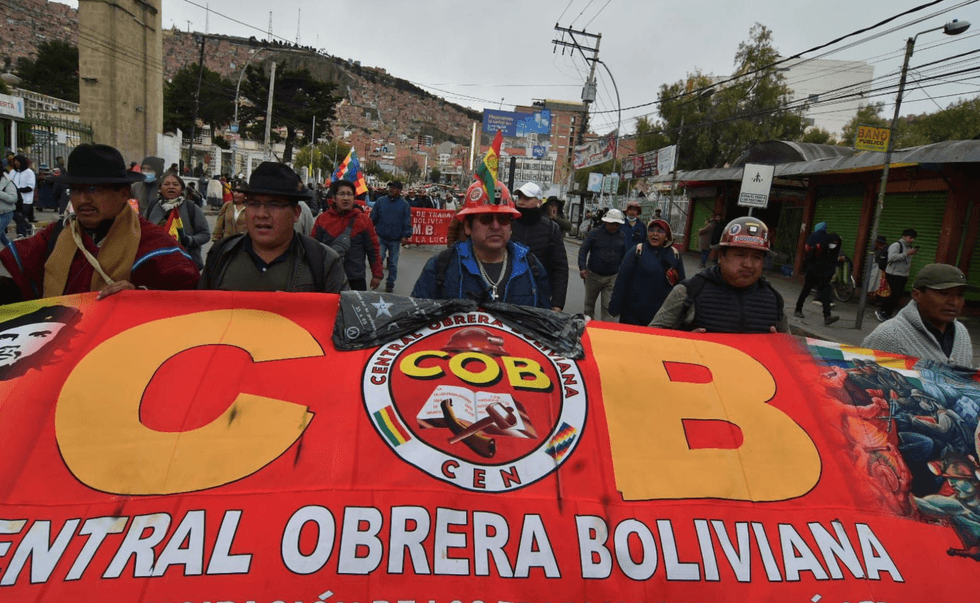
The right to strike is under attack throughout the world, including in the United States. Labor strikes are currently forbidden or restricted in the majority of countries.Now, in a landmark 43-page advisory opinion issued May 21, the International Court of Justice (ICJ, or World Court) has determined that the right to strike is protected under the International Labour Organization’s (ILO) Convention No. 87 on Freedom of Association and Protection of the Right to Organise.“At a moment when workers’ organizations face sustained attacks around the world, this opinion reaffirms that the freedom to withhold one’s labor is not a privilege granted by the powerful, but a fundamental human right grounded in international law,” AFL-CIO President Liz Shuler said in a statement.The ILO is the United Nations agency that sets global labor standards. It has 187 member states and has adopted 191 conventions since its founding in 1919. The ILO considers Convention No. 87 to be one of its 11 fundamental conventions.In 2023, the ILO asked the ICJ to settle an internal dispute about whether Convention No. 87 gives workers the right to strike, which is not specifically addressed in the convention. Although advisory opinions of the ICJ are not legally binding, many courts accept them as authoritative legal decisions.The ICJ ruled in its 10-4 opinion that a strike “is one of the main activities engaged in and tools used by workers and their organizations to promote their interests and improve conditions of labour, thereby ensuring the effective exercise of the freedom of association protected under Convention No. 87.”The Court found “that protection of the right to strike is encompassed in the protection of the freedom of association provided for in Convention No. 87.”In reaching that conclusion, the Court considered provisions in two 1996 Covenants that contain relevant rules of international law regarding the right to strike. Both refer to Convention No. 87.Article 8, paragraph 1 (d) of the International Covenant on Economic, Social and Cultural Rights (ICESCR) expressly protects the right to strike, if it is exercised in conformity with domestic laws.Article 22, paragraph 1 of the International Covenant on Civil and Political Rights (ICCPR) provides for the right to freedom of association. The ICJ noted that for more than 25 years, the Human Rights Committee — which monitors the implementation of the ICCPR — has considered the right to strike to be encompassed in the protection of freedom of association.Due to the high degree of overlap between the states parties to the ICESCR and ICCPR, and Convention No. 87, the ICJ determined there was a common understanding among them on the right to strike. The Court thus concluded “that an interpretation taking into account the relevant rules of international law contained in the ICESCR and the ICCPR indicates that the protection of the right to strike is encompassed in the protection of the freedom of association provided by Convention No. 87.”No Right to Organize Without the Right to Strike“For generations, working people have understood a simple truth: The freedom to join a union means nothing if you cannot withhold your labor when bosses refuse to listen. Now, the world’s highest court has affirmed that truth,” said Jeffrey Vogt, director of the International Lawyers Assisting Workers (ILAW) Network, which issued the call for the ILO referral of this case to the ICJ.The ICJ decision “affirms decades of judicial precedent and what workers around the world know: there is no right to organize and bargain collectively without the right to strike,” Shuler said in her statement. “When workers are barred from taking collective action on the job, they cannot defend their rights and demand the workplace conditions and contracts they are owed. The freedom to join a union becomes an empty formality.”“This is an important day for the International Labor Organization [ILO], and for its continued relevance in the world of work. However, the significance of this opinion extends well beyond the institutional context in Geneva,” the ILAW Network wrote in a statement.The ICJ advisory opinion came “at a moment of acute pressure on the international labour rights system,” ILAW stated. “Across the world, the right to strike is under sustained attack — through restrictive legislation, expansive judicial interpretation of essential services, the criminalisation of trade union activity, and the use of dismissals, injunctions, and damages claims to deter collective action.”Legal restrictions on the right to strike are increasing. In 2022, strikes were outlawed or stringently restricted in 129 of the 148 countries tallied by the International Trade Union Confederation (ITUC), one of the six organizations with consultative status at the ILO Governing Body.The ITUC, which represents 191 million workers in 169 countries and territories, is dedicated to trade union democracy and independence.
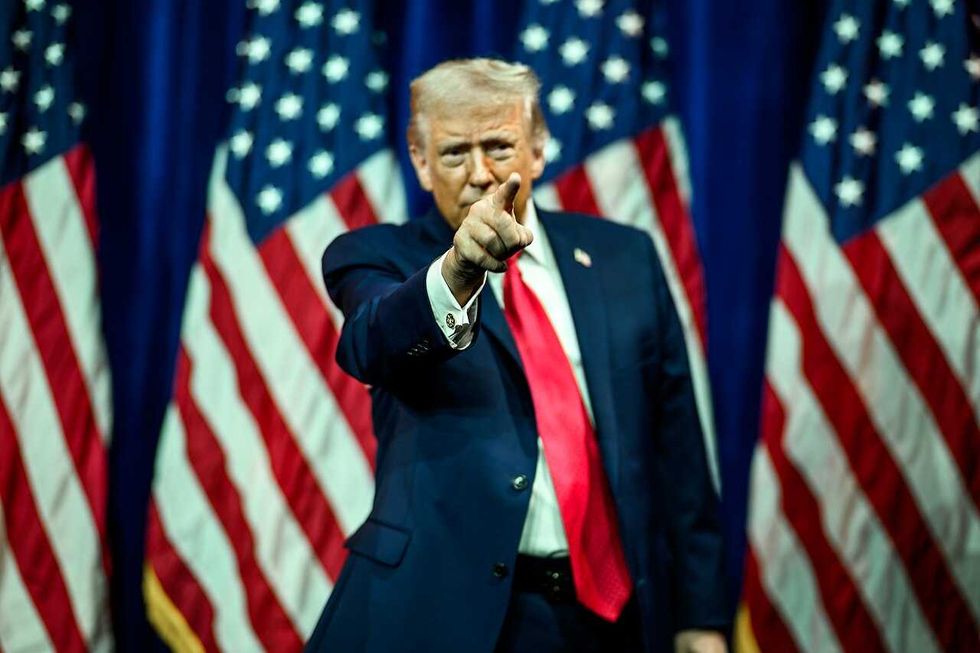
President Donald Trump's ability to influence the outcome of GOP primaries has been evident in recent weeks, with Rep. Thomas Massie (R-Kentucky), Sen. John Cornyn (R-Texas), Sen. Bill Cassidy (R-Louisiana) and other incumbents he was angry or disappointed with losing to Trump-backed challengers. All of those primaries made it abundantly clear that any Republican Trump considers disloyal is in danger of being voted out of office via a GOP primary. But within the MAGA movement, there is no shortage of infighting. And historian/author Nicole Hemmer examined that MAGA chaos during an appearance on The New Republic's podcast, "The Daily Blast."Host Greg Sargent, a former Washington Post columnist, cited recent testimony from former U.S. Attorney General Pam Bondi as an example of MAGA infighting. Bondi, Sargent told Hemmer, "essentially threw Acting AG Todd Blanche under the bus" when testifying about the U.S. Department of Justice's (DOJ) Jeffrey Epstein investigation. Bondi, according to Sargent, "blamed Blanche" for the "lack of transparency" over Epstein at DOJ.Hemmer argued, "Pam Bondi is in such a different position at this point than she was when she was first subpoenaed to give this testimony. She used to be the attorney general. Now, she's been forced out, and she is shifting all the blame onto her presumed successor. Blanche is going to have to go through confirmation hearings soon, and she has just made that very difficult for him. Epstein is going to be the focus of conversation when Blanche goes up for confirmation."Bondi, Hemmer stressed, put Blanche "in a particularly tough position, because he goes into his confirmation hearings looking like someone who's covering for Trump" Sargent argued that with the 2026 midterms a little over five months away, the United States is seeing a "split screen" in which Trump, on one hand, "still has this iron grip on the Republican primary electorate"— while on the other hand, the GOP "as a whole" is starting to "worry more about voters outside the MAGA bubble."Hemmer told Sargent, "Donald Trump has not been serving the interests of the base in a number of ways. The Iran war, his relationship with Israel, the Epstein files — these have caused a real split in the MAGA base. It has led to a number of right-wing personalities to openly question and criticize Donald Trump more than they had in the past. And then, you have this pressure on members of the party, at least members of the party who are from purple districts. There are plenty of Republicans who are going to be running in deep-red districts. They're completely safe. Once they win their primary with Trump's backing, there's just not a scenario in which they're going to lose that seat."Hemmer continued, "But you are going to have purple-district Republicans suddenly, again, cross-pressured, because as Trump's popularity goes down, they're going to need to win centrists and Democrats in order to win their election."
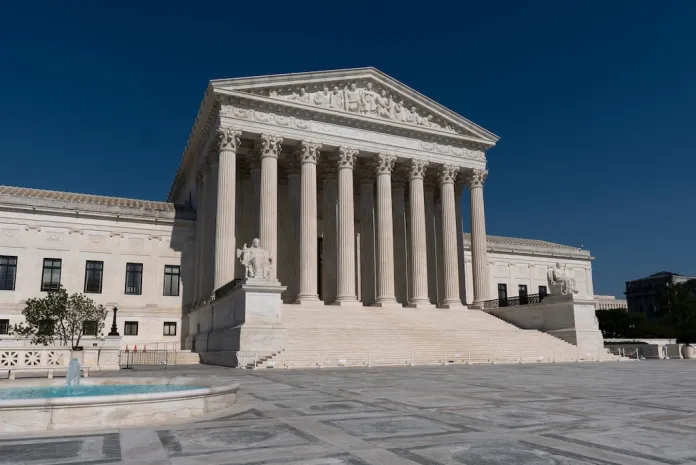
The Supreme Court added a case to its next term on Monday that addresses how the First Step Act applies to inmates seeking quicker transfers from prison to lower-security confinement, such as a halfway house, marking the latest instance of the justices reviewing the scope of the 2018 criminal justice reform law. The high court […]