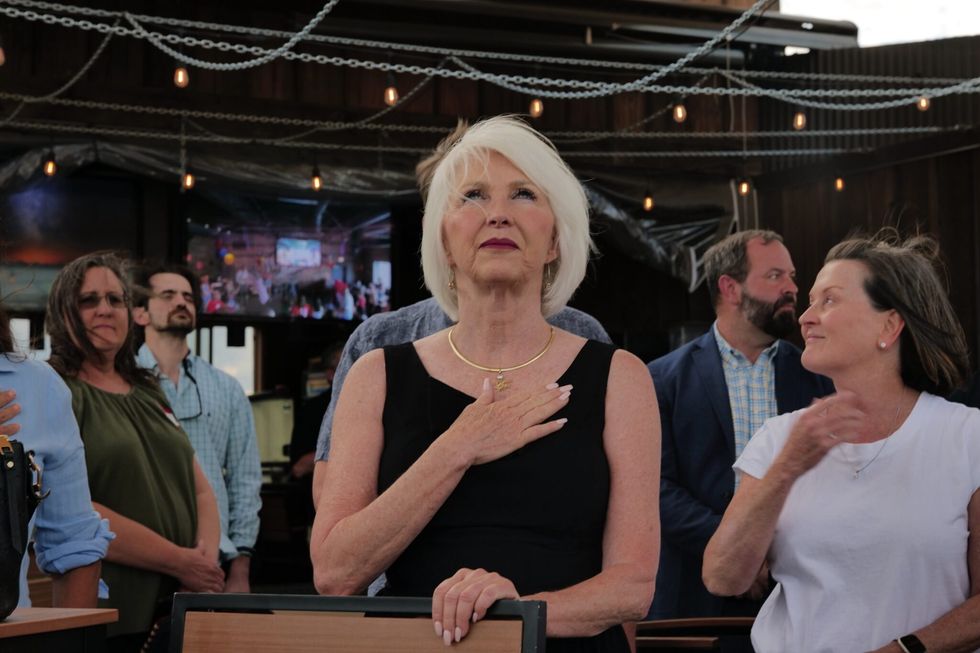
Tina Peters walked out of a Colorado prison Monday morning and headed for Steve Bannon's War Room — where the convicted election denier told the MAGA faithful she wants a job in the Trump administration."I would like for President Trump — I'd like to be more involved in prison reform," Peters said on the podcast, adding she'd pursue it "if that's the way the Lord leads me."Peters, 70, was released Monday from La Vista Correctional Facility in Pueblo after serving less than a quarter of her nine-year sentence for election interference. Colorado Democratic Gov. Jared Polis commuted her sentence to four and a half years last month following a sustained pressure campaign by President Donald Trump.Peters was convicted in 2024 on four felony and three misdemeanor counts after she snuck an unauthorized operative affiliated with MyPillow CEO Mike Lindell into her Mesa County elections office to copy Dominion Voting Systems equipment during a 2021 software update.On Bannon's show, Peters described deteriorating health behind bars — acid reflux, blood sugar problems from a diet of salt and sugar — and raised concerns about the use of Suboxone in women's prisons, claiming inmates are put on the drug and can't get off."There's no way to rehabilitate them with the way the prisons are run currently," she said.But prison reform wasn't her only ambition. Peters made it clear she has no intention of abandoning her election-conspiracy crusade, citing recent and upcoming races — including New York City mayoral winner Zohran Mamdani and Virginia Gov. Abigail Spanberger (D) — as evidence that Democrats cannot be trusted at the ballot box."I know that the Democrats are going to cheat," she said, "and no one's really addressing the problem."The problem, in Peters' telling, remains the same one that landed her in prison.
A conservative group is asking the federal government to criminally investigate Colorado officials for throwing 2020 election skeptic Tina Peters in prison. The state targeted the former […]
Tough-on-crime outsider Aberaldo de la Espriella took the lead in Colombia's presidential race on Sunday night, setting up a runoff with Iván Cepeda, an ally of outgoing President Gustavo Petro.
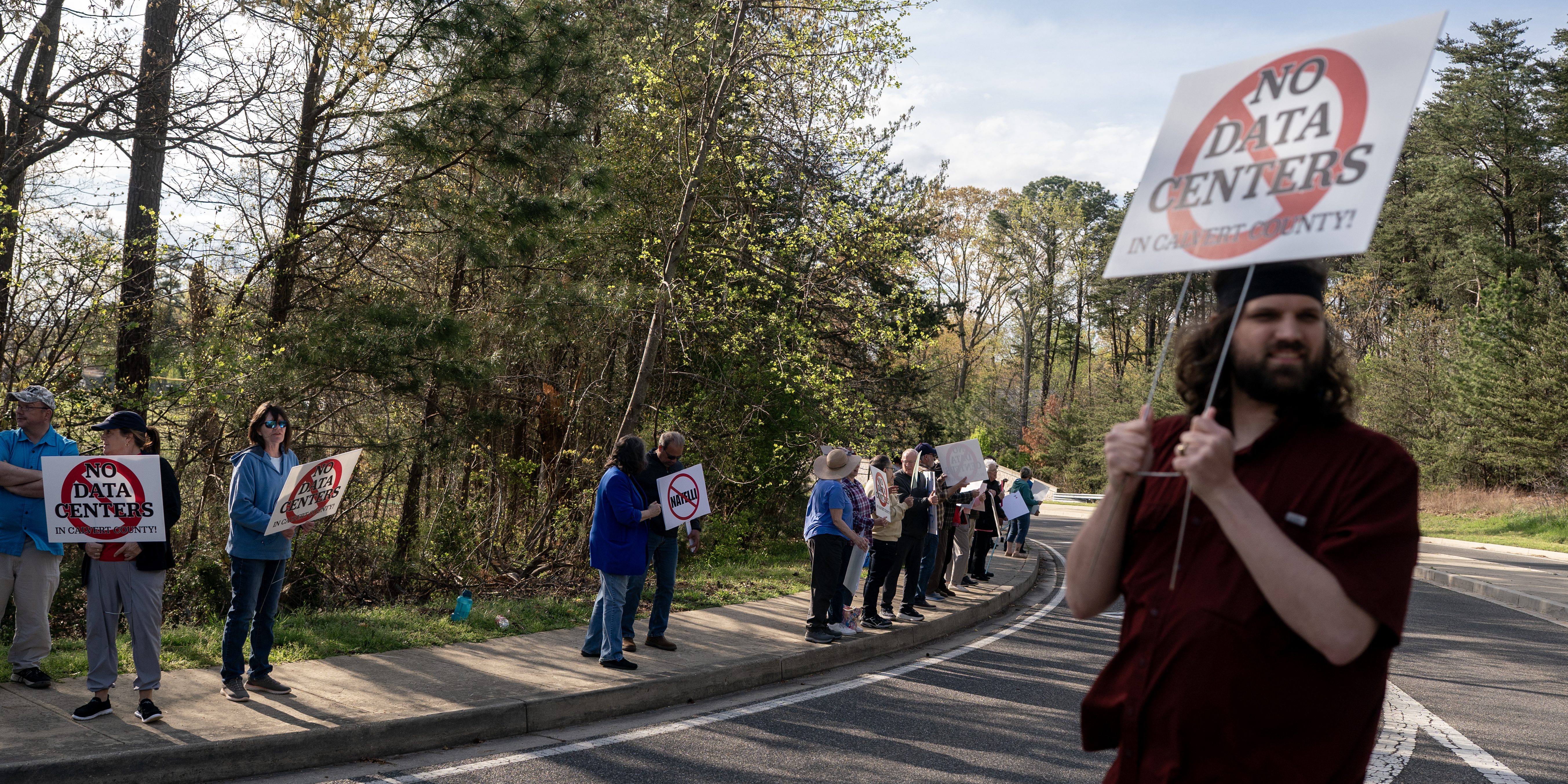
A law enforcement document obtained by The Intercept shows police scan social media looking for posts opposing AI data centers.
The post Cops Are Spying on People Who Criticize AI Data Centers Online appeared first on The Intercept.
Data centers require a massive amount of water to cool their systems, which heat up as they process digital information through numerous computers and network servers. Systems that aren’t “closed loop” have to cycle out water that doesn’t evaporate.Most data centers in Virginia are permitted to discharge water into municipal wastewater systems, the same place household water goes to be treated and recycled for consumption. But there’s limited data tracking of potential chemicals in data centers’ discharge water.At least one data center is permitted to discharge directly into a natural water source in the state: Northeast Creek in Louisa County. Another is applying for a similar permit to discharge into nearby Sedges Creek which feeds into Lake Anna.That water is pretreated before being released into the creek and has limits to certain metals and temperature set by the Department of Environmental Quality. But the knowledge gaps about the chemical makeup of data centers’ water discharge poses major questions over whether “forever chemicals” could be contaminating water from the facilities, posing risks to human and environmental health.Cooling the watersAmazon’s Lake Anna Tech Park project will include an evaporative water cooling system, which is what they use in the Northeast Creek location. The H2O will come from well water until industrial systems are hooked up. At that point, the water will be run through a “membrane” that cools the air and fans will blow it onto the data halls containing the computers.Amazon – which operates dozens of data centers in the state – explained that at the two Louisa sites they are only using the evaporation method a small portion of the year; the rest of the time they pull in air from outside for cooling. Water sent through an evaporative cooling system is considered non-contact, meaning it does not directly touch the computer equipment.“In Louisa County, we rely on outside natural air-cooling for about 96% of the year and only use water-based cooling during the hottest periods, which is about 4% of annual operations,” Amazon said in a statement.After a few cycles the water has to be released. The system dechlorinates the water and manages pH balance before sending it into the creek.“As part of this process, cooling water needs to be periodically discharged; this cooling water is called ‘non-contact cooling water.’ It never touches IT equipment, and it’s treated before release in alignment with state environmental standards,” an Amazon representative said.Larger, newer data centers are more frequently designed with “closed loop” systems, meaning they don’t take in as much water on a daily basis. Initially, hundreds of gallons of water are pumped into this type of system, much of which evaporates, and then it’s topped off as needed.But they take more energy to operate.In an aerial view, an Amazon Web Services data center is shown situated near single-family homes on July 17, 2024 in Stone Ridge, Virginia. (Photo by Nathan Howard/Getty Images)Closed loop systems will often use what is described as mechanical cooling or liquid cooling, where the water is recycled through the system, cooled, and placed directly on chips to bring the temperature down. The heat from those systems still has to be expelled through an HVAC system.The water is pretreated before being released into the creek and has limits for certain metals and temperature set by DEQ. But with recent reports showing the ubiquitous nature of per- and polyfluoroalkyl substances (PFAS) in everything from water to soil to household products, community members are increasingly worried about whether the data center’s discharge water contains them, too.Residents have also cited concerns over PFAS being present in the equipment inside of data centers that is used to cool the heated systems and routinely replaced every few years.These chemicals can have serious health impacts when people are exposed to even small amounts, such as decreased fertility, higher risk of some cancers, and weakening of the immune system.Virginia currently does not have requirements for the testing of the discharge water of data centers for PFAS, nor does the federal Environmental Protection Agency.Because the water being discharged from data centers either into wastewater systems or into the creek are not explicitly required to be tested for PFAS, it is unclear whether they are present or not.“We know that they may be using, not only PFAS, but other toxic chemicals. We know that they released massive amounts of water, at least to treatment works, and some of them to surface waters,” said Jonathan Kalmuss-Katz with EarthJustice, a nonprofit that litigates environmental issues. ”And beyond that, it’s just a void. There’s really a dangerous lack of information.”The Environmental and Energy Study Institute reports that PFAS can be present in the cooling systems that are liquid based – which is not what the Louisa Amazon data centers use.
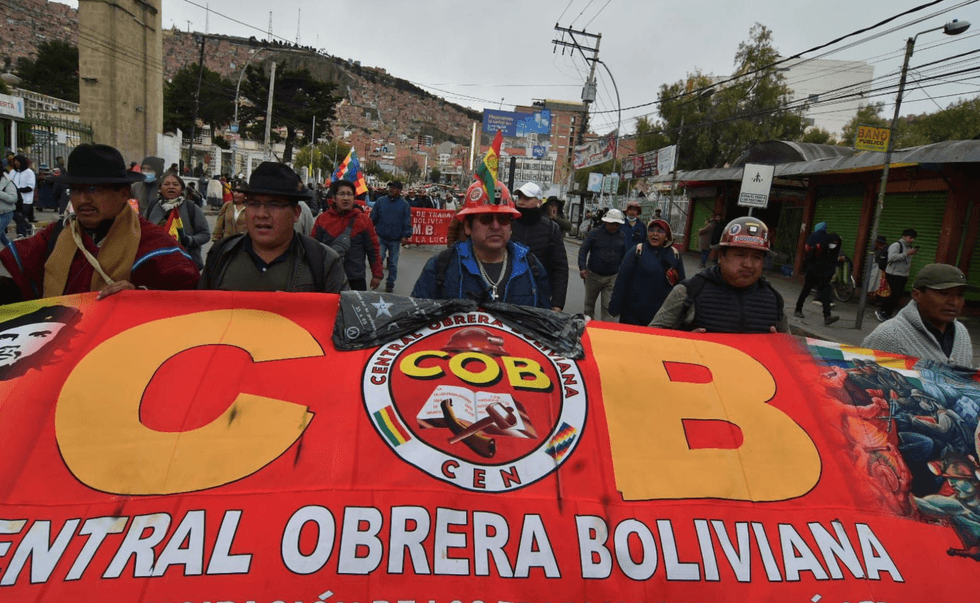
The right to strike is under attack throughout the world, including in the United States. Labor strikes are currently forbidden or restricted in the majority of countries.Now, in a landmark 43-page advisory opinion issued May 21, the International Court of Justice (ICJ, or World Court) has determined that the right to strike is protected under the International Labour Organization’s (ILO) Convention No. 87 on Freedom of Association and Protection of the Right to Organise.“At a moment when workers’ organizations face sustained attacks around the world, this opinion reaffirms that the freedom to withhold one’s labor is not a privilege granted by the powerful, but a fundamental human right grounded in international law,” AFL-CIO President Liz Shuler said in a statement.The ILO is the United Nations agency that sets global labor standards. It has 187 member states and has adopted 191 conventions since its founding in 1919. The ILO considers Convention No. 87 to be one of its 11 fundamental conventions.In 2023, the ILO asked the ICJ to settle an internal dispute about whether Convention No. 87 gives workers the right to strike, which is not specifically addressed in the convention. Although advisory opinions of the ICJ are not legally binding, many courts accept them as authoritative legal decisions.The ICJ ruled in its 10-4 opinion that a strike “is one of the main activities engaged in and tools used by workers and their organizations to promote their interests and improve conditions of labour, thereby ensuring the effective exercise of the freedom of association protected under Convention No. 87.”The Court found “that protection of the right to strike is encompassed in the protection of the freedom of association provided for in Convention No. 87.”In reaching that conclusion, the Court considered provisions in two 1996 Covenants that contain relevant rules of international law regarding the right to strike. Both refer to Convention No. 87.Article 8, paragraph 1 (d) of the International Covenant on Economic, Social and Cultural Rights (ICESCR) expressly protects the right to strike, if it is exercised in conformity with domestic laws.Article 22, paragraph 1 of the International Covenant on Civil and Political Rights (ICCPR) provides for the right to freedom of association. The ICJ noted that for more than 25 years, the Human Rights Committee — which monitors the implementation of the ICCPR — has considered the right to strike to be encompassed in the protection of freedom of association.Due to the high degree of overlap between the states parties to the ICESCR and ICCPR, and Convention No. 87, the ICJ determined there was a common understanding among them on the right to strike. The Court thus concluded “that an interpretation taking into account the relevant rules of international law contained in the ICESCR and the ICCPR indicates that the protection of the right to strike is encompassed in the protection of the freedom of association provided by Convention No. 87.”No Right to Organize Without the Right to Strike“For generations, working people have understood a simple truth: The freedom to join a union means nothing if you cannot withhold your labor when bosses refuse to listen. Now, the world’s highest court has affirmed that truth,” said Jeffrey Vogt, director of the International Lawyers Assisting Workers (ILAW) Network, which issued the call for the ILO referral of this case to the ICJ.The ICJ decision “affirms decades of judicial precedent and what workers around the world know: there is no right to organize and bargain collectively without the right to strike,” Shuler said in her statement. “When workers are barred from taking collective action on the job, they cannot defend their rights and demand the workplace conditions and contracts they are owed. The freedom to join a union becomes an empty formality.”“This is an important day for the International Labor Organization [ILO], and for its continued relevance in the world of work. However, the significance of this opinion extends well beyond the institutional context in Geneva,” the ILAW Network wrote in a statement.The ICJ advisory opinion came “at a moment of acute pressure on the international labour rights system,” ILAW stated. “Across the world, the right to strike is under sustained attack — through restrictive legislation, expansive judicial interpretation of essential services, the criminalisation of trade union activity, and the use of dismissals, injunctions, and damages claims to deter collective action.”Legal restrictions on the right to strike are increasing. In 2022, strikes were outlawed or stringently restricted in 129 of the 148 countries tallied by the International Trade Union Confederation (ITUC), one of the six organizations with consultative status at the ILO Governing Body.The ITUC, which represents 191 million workers in 169 countries and territories, is dedicated to trade union democracy and independence.
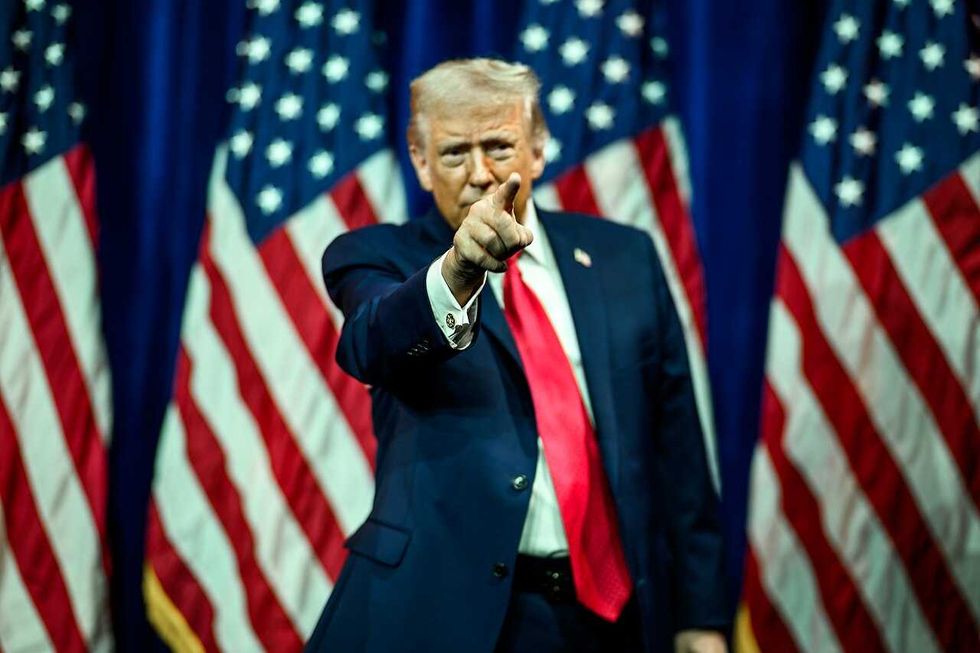
President Donald Trump's ability to influence the outcome of GOP primaries has been evident in recent weeks, with Rep. Thomas Massie (R-Kentucky), Sen. John Cornyn (R-Texas), Sen. Bill Cassidy (R-Louisiana) and other incumbents he was angry or disappointed with losing to Trump-backed challengers. All of those primaries made it abundantly clear that any Republican Trump considers disloyal is in danger of being voted out of office via a GOP primary. But within the MAGA movement, there is no shortage of infighting. And historian/author Nicole Hemmer examined that MAGA chaos during an appearance on The New Republic's podcast, "The Daily Blast."Host Greg Sargent, a former Washington Post columnist, cited recent testimony from former U.S. Attorney General Pam Bondi as an example of MAGA infighting. Bondi, Sargent told Hemmer, "essentially threw Acting AG Todd Blanche under the bus" when testifying about the U.S. Department of Justice's (DOJ) Jeffrey Epstein investigation. Bondi, according to Sargent, "blamed Blanche" for the "lack of transparency" over Epstein at DOJ.Hemmer argued, "Pam Bondi is in such a different position at this point than she was when she was first subpoenaed to give this testimony. She used to be the attorney general. Now, she's been forced out, and she is shifting all the blame onto her presumed successor. Blanche is going to have to go through confirmation hearings soon, and she has just made that very difficult for him. Epstein is going to be the focus of conversation when Blanche goes up for confirmation."Bondi, Hemmer stressed, put Blanche "in a particularly tough position, because he goes into his confirmation hearings looking like someone who's covering for Trump" Sargent argued that with the 2026 midterms a little over five months away, the United States is seeing a "split screen" in which Trump, on one hand, "still has this iron grip on the Republican primary electorate"— while on the other hand, the GOP "as a whole" is starting to "worry more about voters outside the MAGA bubble."Hemmer told Sargent, "Donald Trump has not been serving the interests of the base in a number of ways. The Iran war, his relationship with Israel, the Epstein files — these have caused a real split in the MAGA base. It has led to a number of right-wing personalities to openly question and criticize Donald Trump more than they had in the past. And then, you have this pressure on members of the party, at least members of the party who are from purple districts. There are plenty of Republicans who are going to be running in deep-red districts. They're completely safe. Once they win their primary with Trump's backing, there's just not a scenario in which they're going to lose that seat."Hemmer continued, "But you are going to have purple-district Republicans suddenly, again, cross-pressured, because as Trump's popularity goes down, they're going to need to win centrists and Democrats in order to win their election."