Supreme Court takes up another case over First Step Act brought by inmate
Center Right
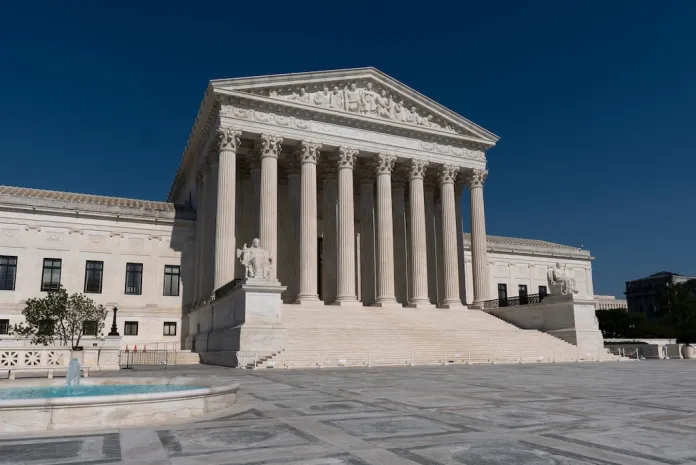
The Supreme Court added a case to its next term on Monday that addresses how the First Step Act applies to inmates seeking quicker transfers from prison to lower-security confinement, such as a halfway house, marking the latest instance of the justices reviewing the scope of the 2018 criminal justice reform law. The high court […]
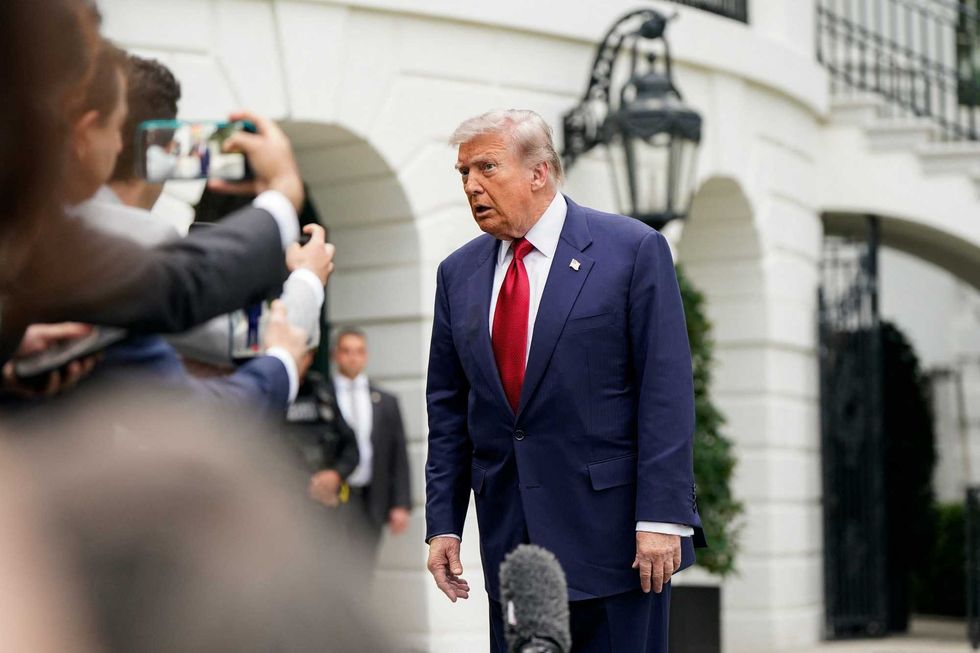
A survey discussed by attorneys Brian Kabateck and Shant Karnikian found that 94% of judges and lawyers believe President Donald Trump's second administration poses a greater threat to the rule of law than his first. "Here we are. It's gotten that much worse," Karnikian said on their podcast "Civil Action."Karnikian called the results astounding, also noting the erosion of faith in American institutions. Since his second inauguration, Trump has clashed with the federal judiciary, attacking judges who ruled against him, including Supreme Court justices who struck down his tariff policies. Trump has also attempted to leverage the judiciary, including settling an Internal Revenue Service, or IRS, lawsuit over leaked tax returns to create a fund potentially benefiting allies —a move federal judges have criticized. Kabateck highlighted the Supreme Court's use of the "shadow docket," where rulings occur without public visibility, characterizing it as a dangerous precedent.Watch the video below. Your browser does not support the video tag.
WASHINGTON — Democratic Party leaders from a dozen states traveled to Washington, D.C., at the end of May to press for their voters to cast the first ballots in the next presidential primary.State representatives argued that diversifying the early states would ensure Democrats nominate a presidential candidate who not only holds broad appeal among the base, but can ultimately win over independent voters in swing states and the White House in November 2028.A final decision from the Democratic National Committee’s Rules and Bylaws Committee will, however, have to contend with state laws and the officials who actually set primary dates.Iowa and New Hampshire traditionally hold the first caucus and first primary election for presidential candidates — though South Carolina had the first DNC-sanctioned primary in 2024 — and both states argued it’s better to stay that way.“Look, New Hampshire will make every effort it can to comply with the Rules and Bylaws Committee, but there are some factors outside of our control,” said U.S. Sen. Maggie Hassan. “Our secretary of state is required by law to schedule the New Hampshire primary before other states.”A “Write-In Joe Biden” campaign sign in a Portsmouth, New Hampshire, snow bank in 2024, when New Hampshire held its primary first in the nation in defiance of the Democratic National Committee. (Photo by Hadley Barndollar/New Hampshire Bulletin)New Hampshire Democrats, she said, don’t believe their voters should pick the nominee, but would instead vet “the nominee so that they are better prepared for the states that follow, which will by definition be larger, more diverse and that’s really important too.”“The one other thing I will add is that the Republicans are going to have the first-in-the-nation primary be New Hampshire,” Hassan added. “And there is a big vacuum when a whole bunch of Republican presidential candidates are coming into our state, highlighting local candidates who are Republicans and there isn’t the same fulsome, evenly balanced Democratic response. And I think that can put us at a disadvantage at the local level and occasionally at the federal level as well.”Iowa Democrat Scott Brennan told panel members that state law “requires that we be a caucus and that we go before any competing process.”Iowa Democratic Party Chair Rita Hart also noted that Republicans and the journalists who cover their campaigns will be in the state for months ahead of the GOP presidential primary.“In 2028, no matter what your decision is regarding the nominating calendar, Iowa will be the center of politics because the Republicans will be here right along with scads of national reporters,” she said.Members of the DNC’s Rules and Bylaws Committee asked questions throughout the two days of presentations, including what states were doing to protect voter privacy, whether states had implemented restrictions on abortion and how much rent will cost campaign staffers for a one-bedroom apartment in larger cities.State Democratic Party members repeatedly told the committee that voters in their home states are best positioned to winnow down what is expected to be a large group of presidential candidates. Here’s some of what they argued:South CarolinaSouth Carolina Democratic Party Chair Christale Spain said her presentation wasn’t about keeping the state toward the front of the calendar for “nostalgia,” but “about whether the Democratic Party understands where the fight for democracy actually is.”“This is not a routine calendar debate,” she said. “Republicans are not debating theory, they’re moving in real time to weaken voting rights, redraw maps, dilute Black political power and change the rules where they don’t like the voters’ choices.”The Democratic Party, Spain said, must ensure that Black voters “help shape the nomination from the beginning” and argued South Carolina is best positioned to do that.“If Black voters are the backbone of the Democratic Party, then the calendar should reflect that,” she added.Spain also called on the national party to recognize that Southern states hold crucial Democratic voters, despite the fact that region of the country typically gives its Electoral College votes to Republican presidential candidates during the general election.“If Democrats want a long-term national majority, we cannot write off the deep South and then act surprised when the math doesn’t work,” she said.Drawing a contrast with many of the other states, Spain noted that in South Carolina, the Democratic Party’s executive committee picks the date of its primary, not state law or the secretary of state.New Mexico New Mexico Gov. Michelle Lujan Grisham told the panel her state had “everything to offer” the party and its presidential candidates.“We’re a minority-majority state,” she said.
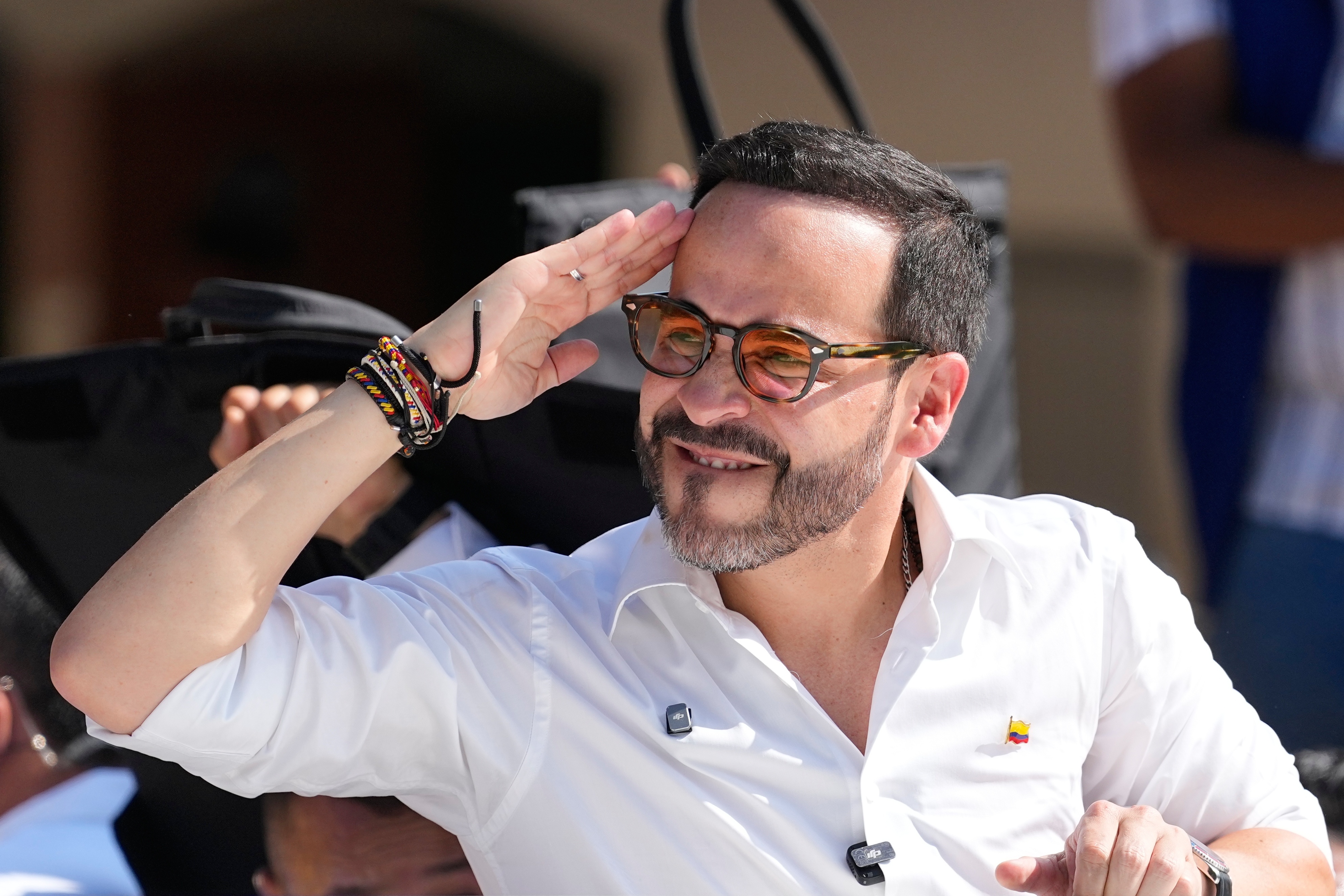
Tough-on-crime outsider Aberaldo de la Espriella took the lead in Colombia's presidential race on Sunday night, setting up a runoff with Iván Cepeda, an ally of outgoing President Gustavo Petro.
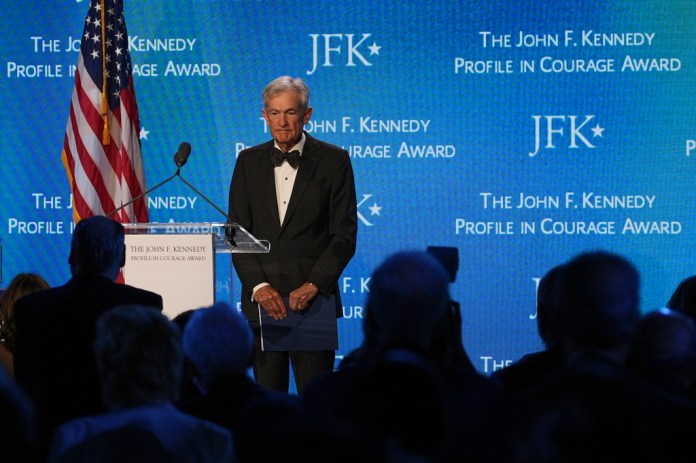
Former Federal Reserve Chairman Jerome Powell on Sunday warned against politicizing the central bank, amid concerns President Donald Trump is undermining the institution’s prized independence. Powell’s speech while accepting the John F. Kennedy Profile in Courage Award in Boston came after he suggested that the Justice Department’s investigation into concerns he lied or misrepresented the […]