Anchor expresses deep unease over celebrating America’s 250th anniversary
MS NOW anchor Ali Velshi wants to talk about the “racial politics” of the United States during the country’s 250-year anniversary. While the rest of the country […]

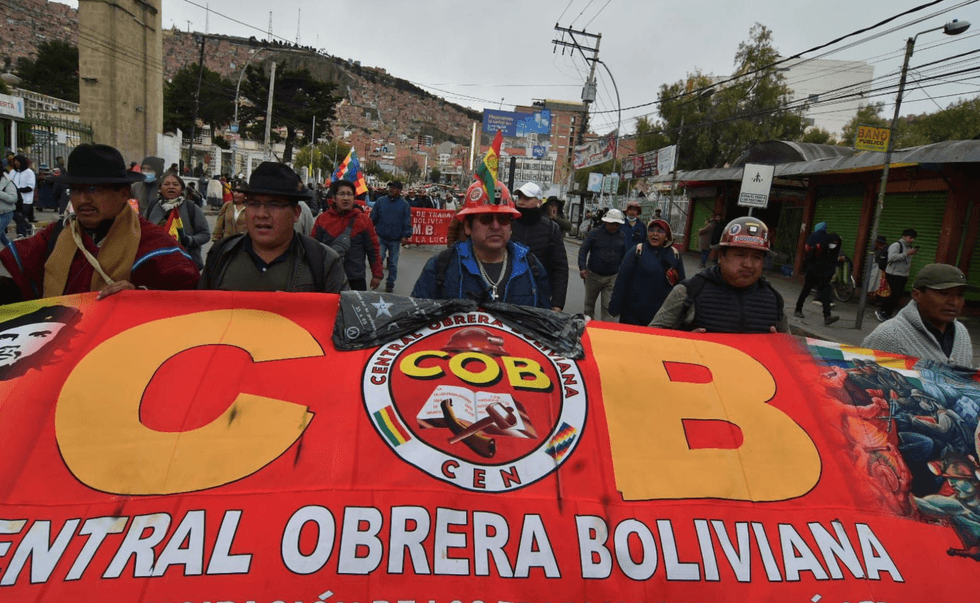
The right to strike is under attack throughout the world, including in the United States. Labor strikes are currently forbidden or restricted in the majority of countries.Now, in a landmark 43-page advisory opinion issued May 21, the International Court of Justice (ICJ, or World Court) has determined that the right to strike is protected under the International Labour Organization’s (ILO) Convention No. 87 on Freedom of Association and Protection of the Right to Organise.“At a moment when workers’ organizations face sustained attacks around the world, this opinion reaffirms that the freedom to withhold one’s labor is not a privilege granted by the powerful, but a fundamental human right grounded in international law,” AFL-CIO President Liz Shuler said in a statement.The ILO is the United Nations agency that sets global labor standards. It has 187 member states and has adopted 191 conventions since its founding in 1919. The ILO considers Convention No. 87 to be one of its 11 fundamental conventions.In 2023, the ILO asked the ICJ to settle an internal dispute about whether Convention No. 87 gives workers the right to strike, which is not specifically addressed in the convention. Although advisory opinions of the ICJ are not legally binding, many courts accept them as authoritative legal decisions.The ICJ ruled in its 10-4 opinion that a strike “is one of the main activities engaged in and tools used by workers and their organizations to promote their interests and improve conditions of labour, thereby ensuring the effective exercise of the freedom of association protected under Convention No. 87.”The Court found “that protection of the right to strike is encompassed in the protection of the freedom of association provided for in Convention No. 87.”In reaching that conclusion, the Court considered provisions in two 1996 Covenants that contain relevant rules of international law regarding the right to strike. Both refer to Convention No. 87.Article 8, paragraph 1 (d) of the International Covenant on Economic, Social and Cultural Rights (ICESCR) expressly protects the right to strike, if it is exercised in conformity with domestic laws.Article 22, paragraph 1 of the International Covenant on Civil and Political Rights (ICCPR) provides for the right to freedom of association. The ICJ noted that for more than 25 years, the Human Rights Committee — which monitors the implementation of the ICCPR — has considered the right to strike to be encompassed in the protection of freedom of association.Due to the high degree of overlap between the states parties to the ICESCR and ICCPR, and Convention No. 87, the ICJ determined there was a common understanding among them on the right to strike. The Court thus concluded “that an interpretation taking into account the relevant rules of international law contained in the ICESCR and the ICCPR indicates that the protection of the right to strike is encompassed in the protection of the freedom of association provided by Convention No. 87.”No Right to Organize Without the Right to Strike“For generations, working people have understood a simple truth: The freedom to join a union means nothing if you cannot withhold your labor when bosses refuse to listen. Now, the world’s highest court has affirmed that truth,” said Jeffrey Vogt, director of the International Lawyers Assisting Workers (ILAW) Network, which issued the call for the ILO referral of this case to the ICJ.The ICJ decision “affirms decades of judicial precedent and what workers around the world know: there is no right to organize and bargain collectively without the right to strike,” Shuler said in her statement. “When workers are barred from taking collective action on the job, they cannot defend their rights and demand the workplace conditions and contracts they are owed. The freedom to join a union becomes an empty formality.”“This is an important day for the International Labor Organization [ILO], and for its continued relevance in the world of work. However, the significance of this opinion extends well beyond the institutional context in Geneva,” the ILAW Network wrote in a statement.The ICJ advisory opinion came “at a moment of acute pressure on the international labour rights system,” ILAW stated. “Across the world, the right to strike is under sustained attack — through restrictive legislation, expansive judicial interpretation of essential services, the criminalisation of trade union activity, and the use of dismissals, injunctions, and damages claims to deter collective action.”Legal restrictions on the right to strike are increasing. In 2022, strikes were outlawed or stringently restricted in 129 of the 148 countries tallied by the International Trade Union Confederation (ITUC), one of the six organizations with consultative status at the ILO Governing Body.The ITUC, which represents 191 million workers in 169 countries and territories, is dedicated to trade union democracy and independence.
MS NOW anchor Ali Velshi wants to talk about the “racial politics” of the United States during the country’s 250-year anniversary. While the rest of the country […]
'This is outright election sabotage. No matter who you're voting for, this should outrage every single American'
Iran has suspended peace negotiations with the US on Monday, saying Israel's attacks in Southern Lebanon violated the fragile ceasefire. As The Gateway Pundit reported, negotiations between the US and Iran were ongoing as Trump sought amendments to the “largely negotiated” framework for a 60-day “memorandum of understanding” (MOU) that he announced last weekend. The post JUST IN: Iran Suspends Negotiations with US Over Israeli Strikes in Lebanon appeared first on The Gateway Pundit.
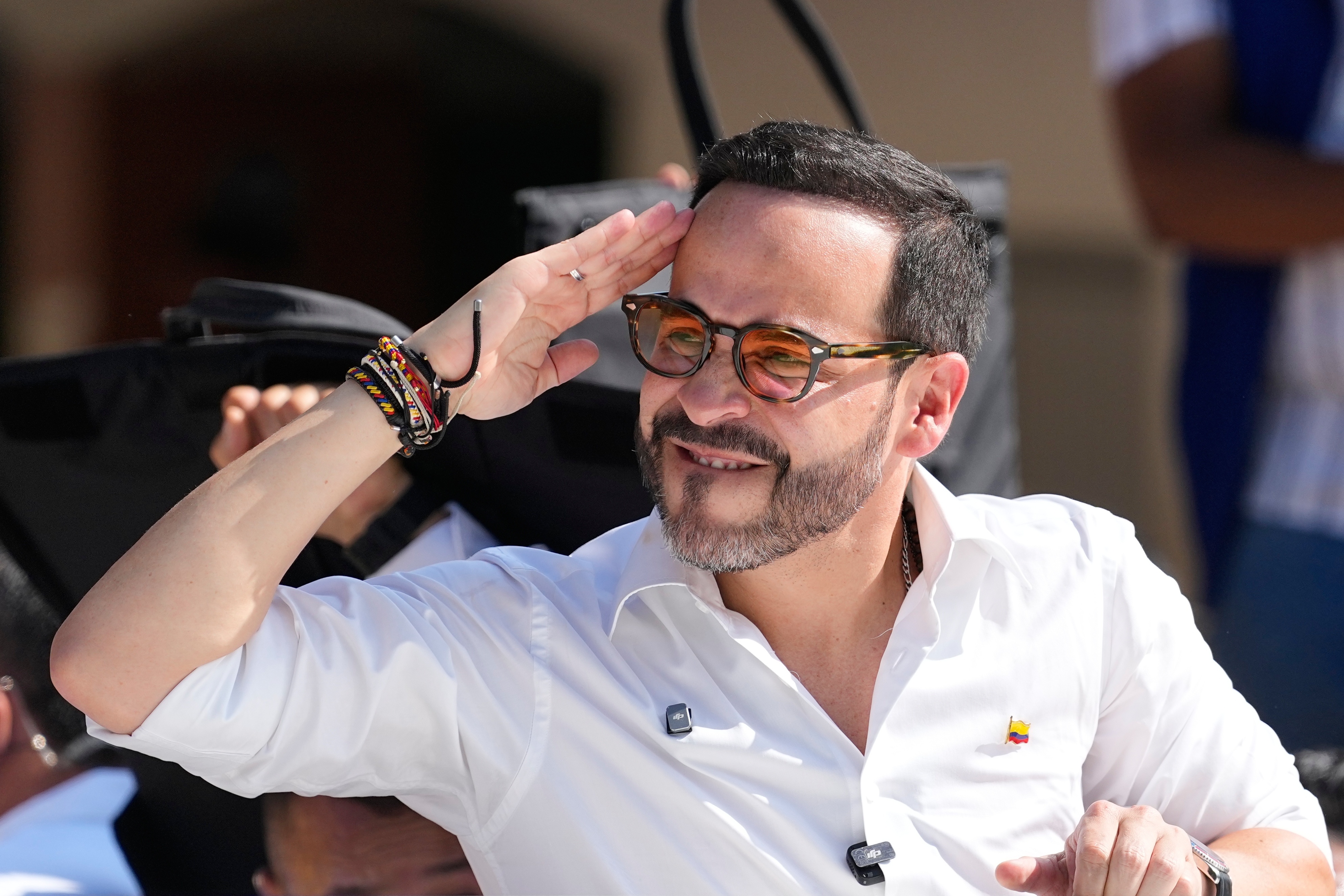
Tough-on-crime outsider Aberaldo de la Espriella took the lead in Colombia's presidential race on Sunday night, setting up a runoff with Iván Cepeda, an ally of outgoing President Gustavo Petro.
An estimated 300 immigrants detained at the Delaney Hall ICE jail in Newark, New Jersey, are continuing a hunger and labor strike to demand their freedom. Amid ongoing protests, New Jersey Governor Mikie Sherrill has deployed state police, who erected a barricade around the facility and have reportedly brutalized activists. Newark Mayor Ras Baraka has also imposed a nightly curfew around Delaney Hall until further notice. Local investigative journalist Bob Hennelly joins Democracy Now! to talk about the ongoing hunger and labor strike, launched on May 22, and its historical implications in Newark and the rest of the country. In letters at the outset of their strike detailing the conditions in the ICE jail, detainees have “written something that I think historians will say is equivalent to the Declaration of Independence,” says Hennelly, “because they so vividly describe the way they’ve been deprived of all the basic human rights that we’ve come to associate with this nation.”
While the public has been focused on the occasional high-profile clash between President Donald Trump and the Supreme Court, the court's conservative supermajority has been quietly using the shadow docket to hand Trump something far more consequential — effective control of the federal government — and legal analysts say that work is now largely complete.That is the central argument of a new piece by Dahlia Lithwick and Mark Joseph Stern in Slate, who say the popular narrative of a principled Chief Justice John Roberts standing up to Trump conceals a far more troubling reality."Trump's takeover of the federal government is largely complete," Stern writes. "So I just don't think the court needs to issue nearly as many shadow docket orders as it did during that shock-and-awe campaign — it has already achieved its objectives."The shadow docket refers to emergency orders and procedural rulings the court issues outside its normal merits docket, typically with little explanation and no oral argument. During the first year of Trump's second term, the conservative supermajority used it repeatedly and rapidly to clear the way for Trump to impound federal funds, fire executive officials, and rewrite immigration law — moves that would have been blocked under previous interpretations of the law.Lithwick and Stern argue that Roberts has a long-established pattern of using smaller decisions to prepare the ground for larger ones. "Do something small, get people accustomed to it, then do it big," Stern explains. "The shadow docket has become the way you do that now. You seed the ground on the shadow docket and say: 'Well, this is the law now.' This process used to take four or five years. Now, with the shadow docket, you can do it within the same term."The authors also push back on the idea that occasional Trump losses at the court represent meaningful resistance. The justices, they argue, only draw the line when Trump threatens the court's own power and supremacy — not when he threatens civil liberties, voting rights, or the separation of powers more broadly.That selective resistance, Lithwick warns, may ultimately backfire. The court has repeatedly rewarded Trump for defying lower court orders. "There is no clear reason why that should stop with the Supreme Court," she writes. "Eventually, the administration won't just say: It worked all these other times, it should work this time."If that happens, Stern argues, the court will have squandered whatever moral authority it had left. "They've made me a king," he writes of Trump's likely reasoning, "so I'm going to act like one."
WATCH: Unions Join Newark Anti-ICE Protests as the Left MOBILIZES Against Trump’s Immigration Enforcement Anti-ICE protests in Newark, New Jersey, are exposing a much larger problem than opposition to one detention facility. The post Publicly Funded Teachers Unions Join Newark Anti-ICE Protests as the Left MOBILIZES Against Trump’s Immigration Enforcement Agenda (VIDEO) appeared first on The Gateway Pundit.
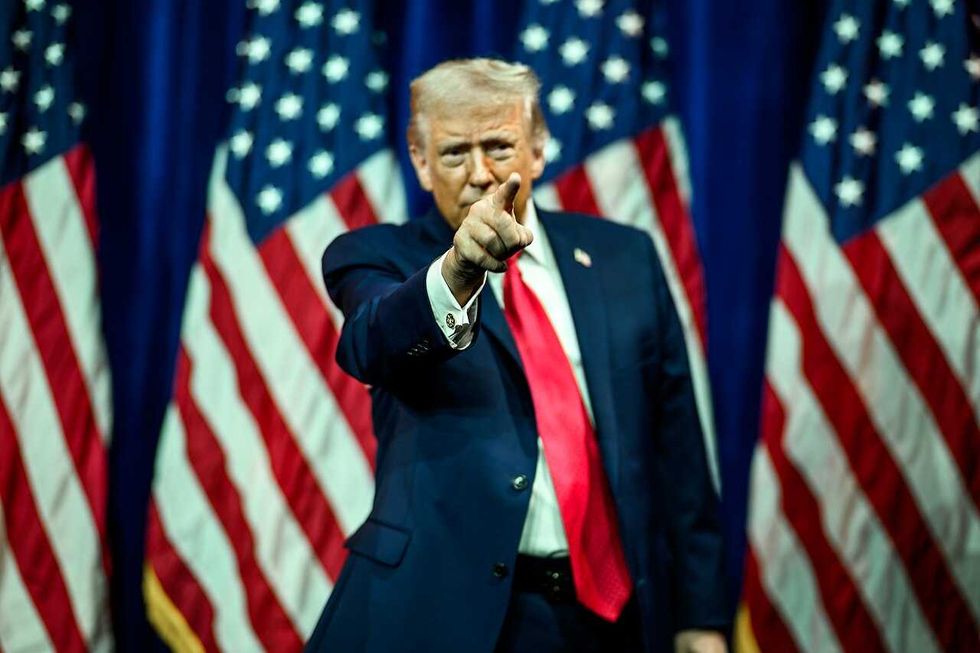
President Donald Trump's ability to influence the outcome of GOP primaries has been evident in recent weeks, with Rep. Thomas Massie (R-Kentucky), Sen. John Cornyn (R-Texas), Sen. Bill Cassidy (R-Louisiana) and other incumbents he was angry or disappointed with losing to Trump-backed challengers. All of those primaries made it abundantly clear that any Republican Trump considers disloyal is in danger of being voted out of office via a GOP primary. But within the MAGA movement, there is no shortage of infighting. And historian/author Nicole Hemmer examined that MAGA chaos during an appearance on The New Republic's podcast, "The Daily Blast."Host Greg Sargent, a former Washington Post columnist, cited recent testimony from former U.S. Attorney General Pam Bondi as an example of MAGA infighting. Bondi, Sargent told Hemmer, "essentially threw Acting AG Todd Blanche under the bus" when testifying about the U.S. Department of Justice's (DOJ) Jeffrey Epstein investigation. Bondi, according to Sargent, "blamed Blanche" for the "lack of transparency" over Epstein at DOJ.Hemmer argued, "Pam Bondi is in such a different position at this point than she was when she was first subpoenaed to give this testimony. She used to be the attorney general. Now, she's been forced out, and she is shifting all the blame onto her presumed successor. Blanche is going to have to go through confirmation hearings soon, and she has just made that very difficult for him. Epstein is going to be the focus of conversation when Blanche goes up for confirmation."Bondi, Hemmer stressed, put Blanche "in a particularly tough position, because he goes into his confirmation hearings looking like someone who's covering for Trump" Sargent argued that with the 2026 midterms a little over five months away, the United States is seeing a "split screen" in which Trump, on one hand, "still has this iron grip on the Republican primary electorate"— while on the other hand, the GOP "as a whole" is starting to "worry more about voters outside the MAGA bubble."Hemmer told Sargent, "Donald Trump has not been serving the interests of the base in a number of ways. The Iran war, his relationship with Israel, the Epstein files — these have caused a real split in the MAGA base. It has led to a number of right-wing personalities to openly question and criticize Donald Trump more than they had in the past. And then, you have this pressure on members of the party, at least members of the party who are from purple districts. There are plenty of Republicans who are going to be running in deep-red districts. They're completely safe. Once they win their primary with Trump's backing, there's just not a scenario in which they're going to lose that seat."Hemmer continued, "But you are going to have purple-district Republicans suddenly, again, cross-pressured, because as Trump's popularity goes down, they're going to need to win centrists and Democrats in order to win their election."