Campbell and Rees-Mogg Clash on Everything But a New Brexit Vote
Center
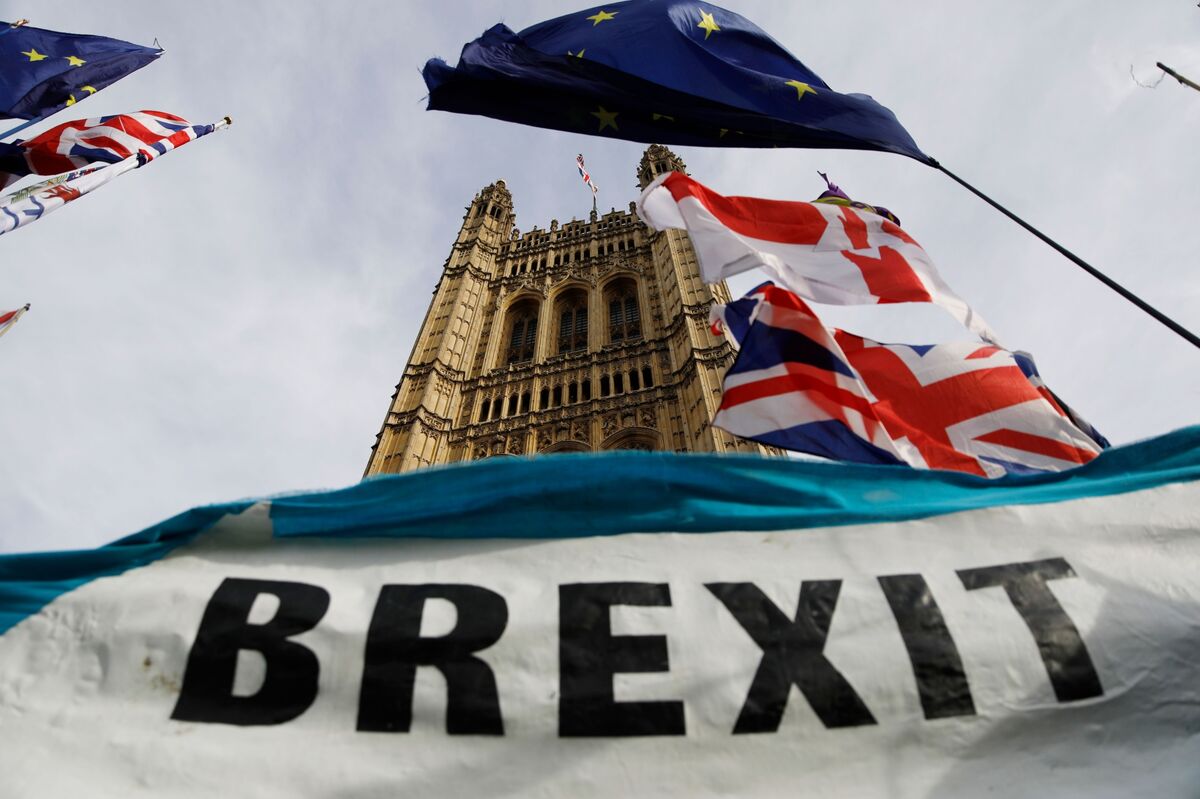
Alastair Campbell and Jacob Rees-Moog share little common ground on Britain’s decision to leave the European Union a decade ago — except both agree a second vote to join is unlikely in the near future.
Speaker Mike Johnson (R-La.) announced that the House will vote Thursday morning on extending the nation’s foreign spy powers through July 2, a move that comes amid a partisan clash over President Trump naming Bill Pulte to be the acting director of national intelligence (DNI). The expected vote comes after Democrats in the Senate largely…
In 2018, David Tyson
Jr., an African American, sued Richardson Independent School District in Texas
for violating Section 2 of the Voting Rights Act. In the district’s 164-year
history, Tyson was the only person of color ever to serve on the school board.
Yet, at the time of the lawsuit, white students made up less than 30 percent of the district while
Black and Hispanic students made up nearly 60 percent.When Congress enacted
the Voting Rights Act at the height of the Civil Rights Movement, it gave
communities the tools to combat these kinds of racial harms. Section 2 of the act outlaws state and local governments from enacting voting rules that result
in racial discrimination. One of the undersung aspects of the Supreme Court’s
recent decision in Louisiana v. Callais—for which there has been much
hue and cry over the way it’s paved the path for right-wing state governments
to draw majority-minority federal districts out of existence—is that it cuts
away at this protection for local governments, as well, rendering it “all but a
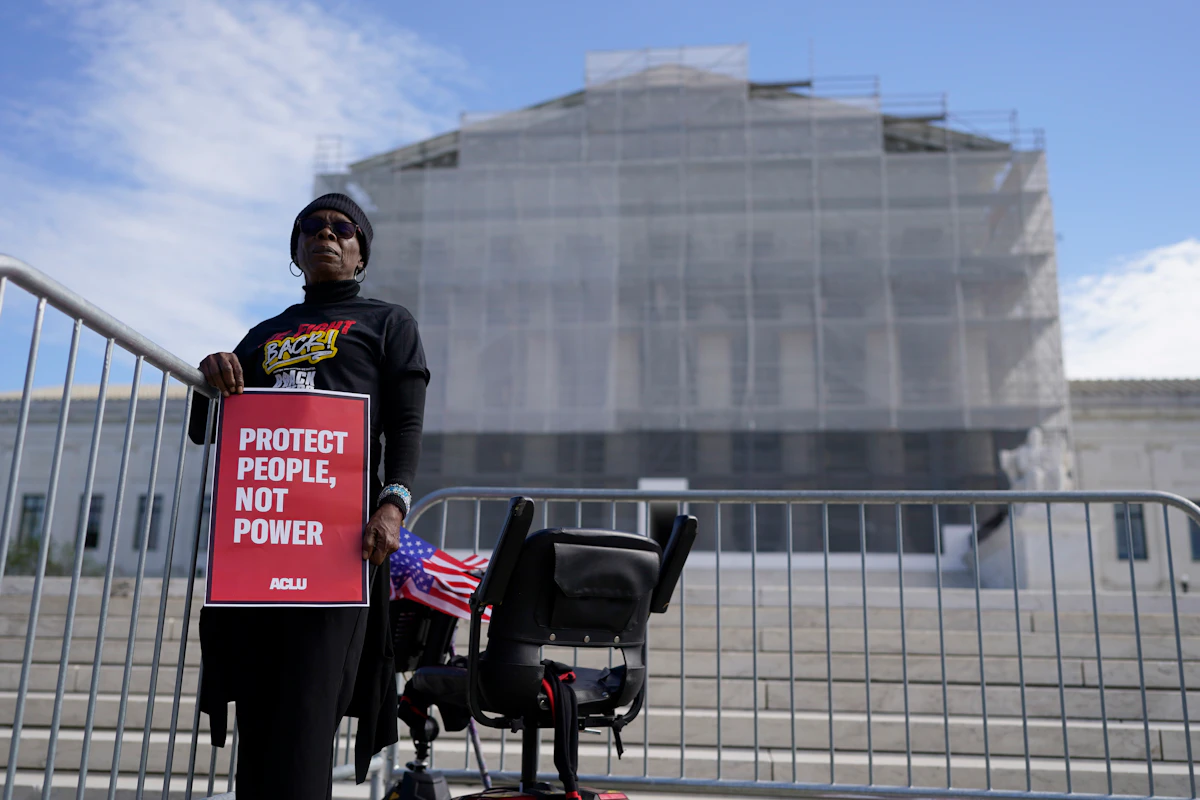
dead letter,” as Justice Kagan laments in her dissent.While the media has focused on Callais’s impact on
Congress in the 2026 midterms, its darkest mark will be on local governments.
Section 2 of the Voting Rights Act has been most frequently applied to address and remedy local electoral practices, not
state ones. Its use heralded diverse school boards and city councils where
national minorities, by virtue of being local majorities, can govern.Through this phenomenon, diversity develops twice over. First, through representational diversity and second, through
institutional diversity. Minorities can see themselves represented on school
boards, county commissions, and city councils. And they can harness that
representation to institute local governments that do not look like state or
national government. These more representative governments are more likely to become
local laboratories willing to conduct policy experiments or try alternative
governance approaches that the broader polity dismisses or ignores. This is why
diversity at the level of individuals and institutions cultivates a rich
democracy. Callais endangers these sites of local democracy by hollowing
out Section 2 protections.But back in 2018 when
Tyson filed his lawsuit,
Section 2 of the Voting Rights Act was still intact. We can look back in time
to see its salutary effects. Tyson told a “tale of two districts,”
where—unsurprisingly—a ceaselessly homogeneous school board had harmful
consequences for the Richardson school district. Elementary schools where at
least 70 percent of the students met grade level in two or more subjects
were two-thirds white—and the vast majority were not economically
disadvantaged. By contrast, the lowest-performing elementary schools were
predominantly made up of Black, Latino, and economically disadvantaged
students. Atop the startling peak of disparity was the 60-point achievement
gap between the district’s highest-performing school, which was predominantly
white, and its lowest-performing school, which was predominantly Latino.These racial inequities did
not go unnoticed by the Black and Latino voters of Richardson. And yet,
Richardson’s school board remained persistently white for one reason: the
district’s voting practices. While white students constituted a minority in the
district’s schools, white voters still comprised a majority of the district’s
population. These demographics, combined with an at-large, district-wide voting
scheme where every voter in the district voted in every school board election, meant that minority voters would never succeed in electing a candidate of their
choice. The minority vote would always be diluted against the white vote. The school board—whether
under the threat of ongoing litigation or by a genuine change of heart—agreed
to end this pernicious status quo. In 2019, Richardson Independent School
District settled. As part of the settlement, the district moved toward a single-member district voting
model. Specifically, it instituted an electoral
scheme that allows voters within a predefined border to elect a board member to
represent them—similar to congressional districting. Two of the five
single-member districts in Richardson were drawn to ensure that Black and
Latino voters were the majority. Voters from these districts later elected Regina
Harris, the first Black woman, and Debbie Rentería, the first Hispanic person,
to serve on the school board.Richardson was not alone
in making this kind of change. In response to immigration and changing racial
demographics, the late 2010s saw a spate of
lawsuits across school boards in North Texas alleging
violations of Section 2 of the Voting Rights Act. Many of these districts
settled and moved to electoral systems that gave voters of color greater voice
in their representation.
A number of Trump supporters are finally starting to grow tired of his act and see him as only out for himself, Bulwark policy editor Ashley Parker told MS NOW's Katy Tur on Wednesday — and this is exemplified by his release of commemorative $12,000 gold coins for the UFC fight planned for the White House lawn. "Is this a contradiction Trump is not getting in enriching himself while Americans are struggling?" asked Tur. "I mean, does he not see the sort of side-by-side?""The grifting, corruption is nothing particularly new for this president or for American voters to experience for this president," said Parker, adding that he has been merchandising and cutting deals off the presidency to make himself money ever since his first term. The difference now, she said, is that "voters ... including some who were part of that broad and impressive coalition that got him back into the White House in 2024, they are less willing to give him grace on things like this."These voters, she said, "know how much gas costs, they know how much money they have in their checking accounts at the end of the month, or how much they don't have. They know what prices are, they know where their wages are, and they're struggling."So when these voters see something like a five-figure gold coin for sale to commemorate a Trump event, Parker continued, "it now becomes almost a physical golden token of the way that they feel. He does not care about them and only cares about himself."This sort of thing, she said, is also why Trump's White House ballroom project has been so resonant and controversial. "These things like the White House ballroom, like the UFC fight, like these rather expensive coins, frankly, are such a political problem for him right now."All of this comes as local activists in D.C. file legal action to try to stop Trump's UFC event from taking place altogether. - YouTube youtu.be
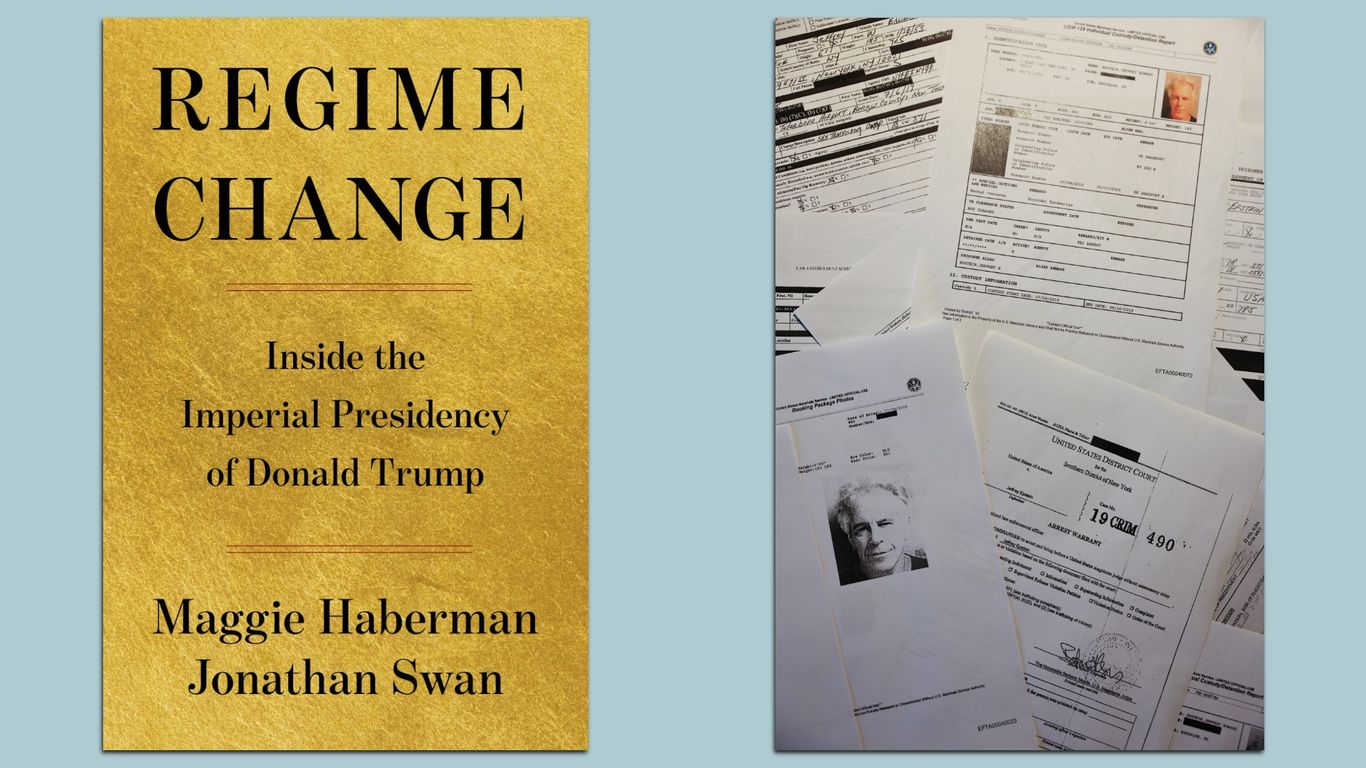
President Trump's top aides so feared leaks about their handling of the Jeffrey Epstein files that they held multiple damage-control meetings in the classified confines of the Situation Room, Maggie Haberman and Jonathan Swan write in "Regime Change," their hotly awaited book about Trump's second term.In a New York Times Magazine excerpt, posted today ahead of the book's publication on June 23, the two Times reporters describe in cinematic detail how top Trump officials, including Vice President JD Vance and Chief of Staff Susie Wiles, gathered in the Situation Room last summer to debate how to manage the growing scandal.The White House is now abuzz over the leak about leak control.Behind the scenes: Vance had "floated to colleagues an extraordinary P.R. gambit — that the White House enlist Tucker Carlson to interview Epstein's longtime girlfriend and co-conspirator, Ghislaine Maxwell, in prison. It might help the president if Maxwell was willing to state that Trump had not been part of any wrongdoing with Epstein," Swan and Haberman report in the excerpt, "Inside the White House Freakout Over the Epstein Files.""Vance told the group he believed all the files should be released as soon as possible," the authors write.But Trump, they add, wanted "the whole Epstein issue buried, and he was snapping at anyone who mentioned it. His staff largely avoided the subject in their conversations with him, forced to worry among themselves."The intrigue: Joe Scarborough said on MS NOW's "Morning Joe," just after the excerpt was posted, that "Regime Change" will be "one of the most important books on the Trump presidency."Less than an hour later, Trump, known to watch "Morning Joe," posted on Truth Social: "Joe Scarborough's ever shrinking, low rated show, one of the most inaccurate detailers of truthful facts on television, is being crushed in the ratings."Scarborough promptly read the post on the air.Swan and Haberman write that "relationships at the top of the Justice Department were by now beyond dysfunctional."Dan Bongino, a top MAGA podcaster who was then Trump's deputy FBI director, seethed about the Epstein snafus: "This is going to be President Trump's Iran-contra.""The Epstein crisis," the authors write, "had exposed something that some of Trump's closest advisers spent months refusing to see. The president could break institutions, redirect the federal government against his enemies and bring the world's richest men into the Oval Office bearing tribute. But he could not, it turned out, make Jeffrey Epstein disappear."In the days before publication of a Wall Street Journal scoop about Trump and Epstein, Trump, in an "effort to quash the story, had called News Corp.'s chief executive, Robert Thomson; News Corp.'s owner, Rupert Murdoch; and The Journal's editor in chief, Emma Tucker. Practically shouting, the president told Tucker, who is British, that she must 'hate America.'"Emma Tucker tells Mike: "For the record, I LOVE America!"The other side: White House spokeswoman Abigail Jackson said in a statement to Axios: "Just as President Trump has said, he's been totally exonerated on anything relating to Epstein. And by releasing thousands of pages of documents, cooperating with the House Oversight Committee's subpoena request, signing the Epstein Files Transparency Act, and calling for more investigations into Epstein's Democrat friends, President Trump has done more for Epstein's victims than anyone before him."Read the excerpt (gift link) ... Preorder the book.
President Donald Trump's administration has spent months trying to get voter lists, particularly from blue states. Now, Trump is threatening to deny mailing ballots through the USPS if those states don't turn over the lists. "That dilemma stems from newly proposed USPS rules that seek to comply with an executive order President Donald Trump signed this spring to crack down on mail-in voting," reported CNN. "If courts let the order stand, it would give the federal government an unprecedented role in elections — and could put even more voter data in the hands of Trump officials searching for supposed election fraud."Trump's rules lay out new demands for mail-in ballots that states must meet if they intend to conduct an election by mail. Some states, like Colorado and seven others, with the District of Columbia, have all-mail elections. Twenty-three states and D.C. have decided to sue over the threat.The Justice Department cleared a legal hurdle in May when a federal judge in Washington refused to block Trump’s executive order, allowing the Postal Service to begin enforcing it. Democratic groups are seeking an appeal and warn voters will be disenfranchised in November if mailed-in ballots are banned. Democratic Maine Secretary of State Shenna Bellows, whose state is part of the coalition challenging the order in Boston, told CNN in an interview that if courts rule in favor of the Trump administration, it would be “a virtual elimination of mail-in voting, unless the states supply voter lists to the federal government.”“If proper postage is paid on a mail piece, the USPS should deliver it,” former USPS Board of Governors Vice Chair Anton Hajjar said, speaking to CNN. “The proposed rule says it’s not regulating elections but that’s what, in effect, it’s doing.”“This would deny eligible people the right to vote. Full stop,” said Oregon Secretary of State Tobias Read, who is also suing the Trump over the matter.“This is not in the president’s power,” Read said. “It’s absolutely clear in the Constitution – states run elections.”“The Administration remains confident that the Executive Order will be implemented by the November election, which was always the intent when it was signed,” claimed White House spokeswoman Abigail Jackson.
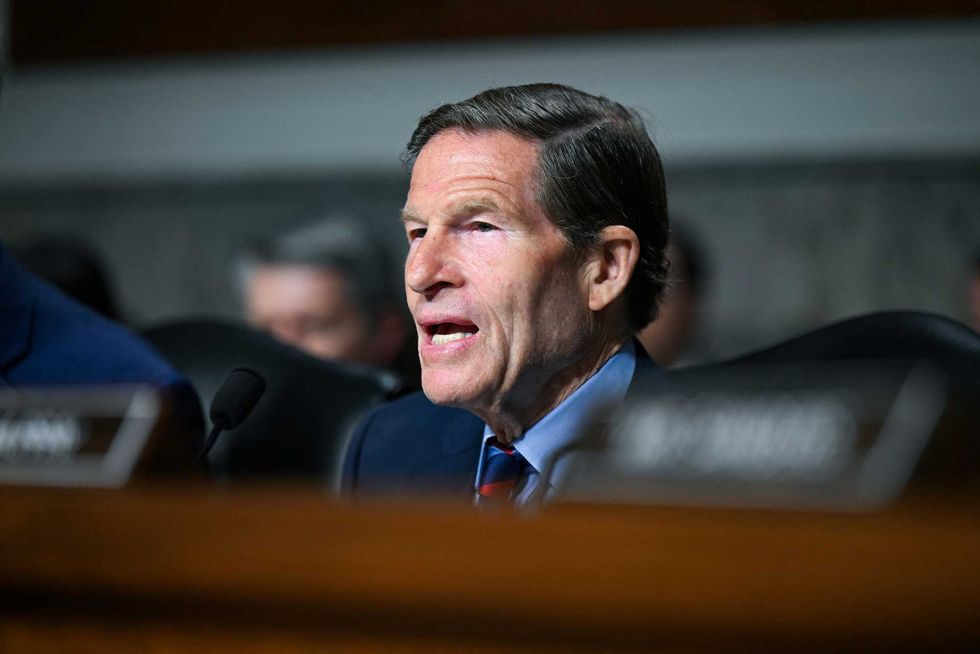
A longtime Democratic senator slammed a judge nominated by President Donald Trump for an appeals court vacancy after he refused to answer a direct question about who won the 2020 presidential election.Sen. Richard Blumenthal (D-CT) asked North Dakota U.S. District Court Judge Daniel Mack Traynor, who was testifying before the Senate during a confirmation hearing for the 8th Circuit Court of Appeals."Who won the 2020 election?" Blumenthal asked."This issue has become a question of political controversy. I'm a sitting federal district judge, I'm a nominee to be 8th Circuit court of appeals. Justice Jackson, who previously was confirmed by the Senate for a position...," Traynor said, as Blumenthal interjected. "It's 'political controversy' only because the president refuses to accept the results of the 2020 election. I'm asking you as a matter of fact. Who won the 2020 election?" Blumenthal again asked. But Traynor tried to dodge the question again."As Justice Jackson stated, in her responses to questions on the record, it is not appropriate to engage in discussion regarding that as a judge, or sitting judge," Traynor said.But Blumenthal wasn't satisfied with the judge's response. "So you're going to use the same script that other nominees have used before this panel to avoid the question?" Blumenthal asked. "I think the precedent established by Justice Jackson and other nominees is something that I need to follow," Traynor responded."As a matter of fact, who got more votes in 2020? Which of the presidential candidates?" Blumenthal asked. "As I stated before, this is an issue that Justice Jackson and other nominees have been asked, they've not provided a response," Traynor said.Blumenthal cut off Traynor and called him out for avoiding the question — and repeating the same excuses that other Trump-allied nominees have used in previous congressional hearings."You understand why I'm asking you to state, as a simple matter of fact who got more votes? The reason is because the president seeks to perpetuate a lie. You are in effect, protecting the lie if you fail to take an independent position as a matter of simple fact. Everybody in this room knows the answer. You're unwilling to state it. Instead, adopting a script that has been dictated to you by the White House. You prepared this answer with the White House, did you not?" Blumenthal said.BLUMENTHAL: Who won the 2020 election?JUDGE TRAYNOR: This issue has become a question of political controversy. Justice Jackson--BLUMENTHAL: It's 'political controversy' only because the president refuses to accept the results. I'm asking you as a matter of fact. Who won?… pic.twitter.com/Wzs3XqcgMn— Aaron Rupar (@atrupar) June 10, 2026
The U.S. annual inflation rate is the highest it’s been in three years—a clear consequence of President Trump’s widely unpopular, very expensive war on Iran, which drags on even as he constantly claims that he’s close to a deal.The Bureau of Labor Statistics reported on Wednesday that the consumer price index rose 0.5 percent last month, with energy costs accounting for 60 percent of that increase. The annual inflation rate is at 4.2 percent—the highest since April 2023.“Americans are getting squeezed financially by inflation that’s back at a three-year high,” Navy Federal Credit Union chief economist Heather Long told CNBC. “The frustration for many Americans is that so many of the basics are up in price right now—gas, food, electricity, and medical care are all clear pain points that are above 3 percent inflation. Ending the war in Iran will help to moderate inflation, but the worst is likely still to come for rising food prices.”Trump, for his part, has claimed that Iran will “pay the price” for not making a deal. But it’s clear at this point that Iran is willing to draw this conflict out so that American’s pockets hurt more and more every day. It’ll be a difficult sell to midterm voters with inflation at a three-year high and a cost-of-living crisis that was already dire—two issues Trump ran on solving. And it’s entirely his fault.CNN: INFLATION TOPS 4% FOR FIRST TIME IN THREE YEARS AS OIL PRICES JUMP pic.twitter.com/icTIIyDLJq— Aaron Rupar (@atrupar) June 10, 2026