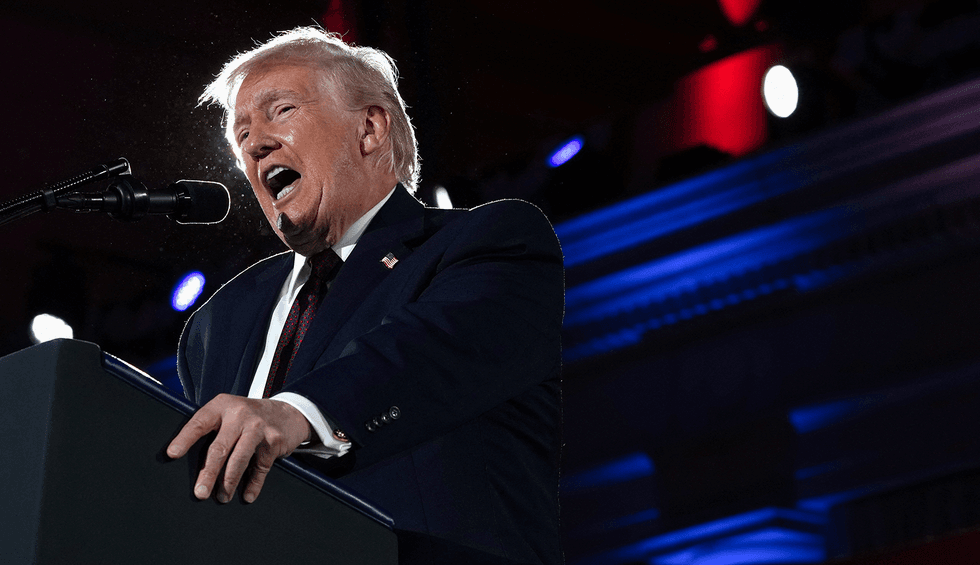
Anchor expresses deep unease over celebrating America’s 250th anniversary
Far Right
MS NOW anchor Ali Velshi wants to talk about the “racial politics” of the United States during the country’s 250-year anniversary. While the rest of the country […]
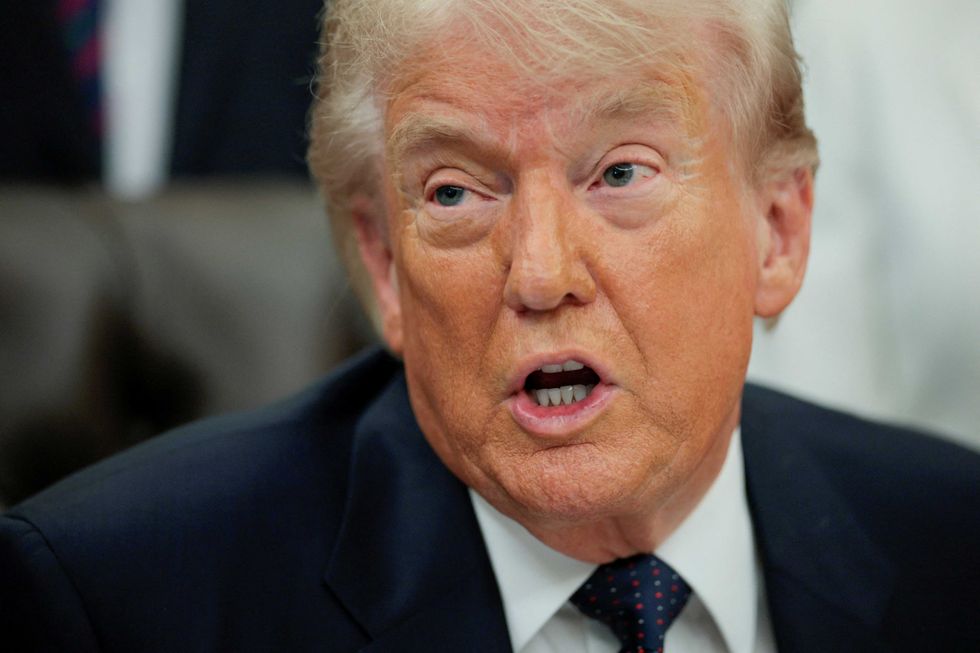
A GOP lawmaker argued on Monday that Americans who are unhappy with President Donald Trump's Iran war should leave the United States — prompting people to mock the remarks online.Rep. Sheri Biggs (R-SC) was speaking to Newsmax during a live broadcast following reports that Iran had suspended talks with the U.S. after Israeli strikes and an increased military offensive in Lebanon, which Iran had set as a condition for any ceasefire.Biggs claimed that Americans need to trust the president on what comes next with the ongoing conflict."I think we have to trust him. The American people elected President Trump for a reason, and it's because he has the backbone, the intelligence to get things done," she said."We have to put America first, and as I've said before, if you don't love this country, get out," Biggs said.People online had plenty of things to say in response to Biggs' comments."Republican Rep. says if you don't support Trump's Iran War you should leave America," Ron Filipkowski, editor in chief of MeidasNews and former Marine who has more than 782,000 followers, wrote on X."The bleaker things get, the more outrageous their bootlicking becomes," Zach Halper, Senior Media Strategist at Momentum Communications Group, wrote on Bluesky."They can't stop drinking the Kool-Aid... and people will remember," True Blue, an account that self-describes as "blue dot in the red state of Utah" and frequent progressive commentator with more than 23,000 followers, wrote on Bluesky."Historians will recall how Rep. Sheri Biggs chose to ignore her oath of office to defend against all enemies both foreign and domestic is broken by this treasonous member of Congress. Being on the wrong side of history as a loyal MAGA Nazi sycophant is definitely your grand legacy, Sheri," Dwight Miller, Navy veteran and frequent political commentator, wrote on Bluesky.Republican Rep. says if you don't support Trump's Iran War you should leave America. https://t.co/EzkgGYOcFf— Ron Filipkowski (@RonFilipkowski) June 1, 2026
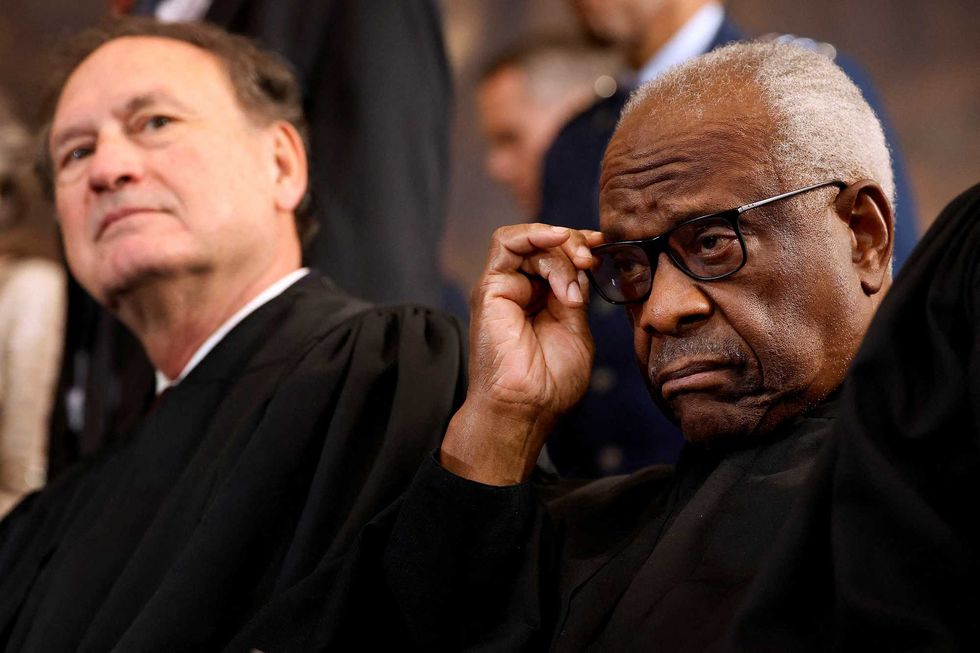
Corporations can now vote in Delaware. And they’re doing it.Seriously. Not dystopian science fiction or a new novel by an AI version of George Orwell. Actual corporations — what America’s first Supreme Court Justice, John Marshall, in 1819 called “an artificial being, invisible, intangible, and existing only in contemplation of law” — are today voting in elections for everything from the mayor and town council to referendums on corporate taxes and limits on corporate behavior.What could possibly go wrong?There are, after all, more corporations than people in Delaware. They can now decide who’s going to run the government, what the laws are, and — through their votes to elect humans who’ll take corporate money to do what corporations want (something else that corrupt Republicans on the Supreme Court legalized) — even what regulations companies must follow and what limits there are on their behavior.In a few weeks, my next book will be coming out, “Who Killed the American Dream: The Greatest Political Crime Ever Told,” and the timing couldn’t be more synchronous.The book, written like a murder mystery but 100% true, tells the story of how a corrupt Supreme Court clerk conspired with a corrupt Supreme Court justice to hand “corporate personhood” to the railroad corporations that were then among the richest and most powerful in the world.The decision was handed down in 1886; in it, the Court itself didn’t say a single word about corporate personhood. Back then corporations had the rights of “artificial persons” so they could pay taxes, own land, and execute contracts and lawsuits, but nobody seriously claimed they could assert human rights like free speech, privacy, or the right to vote.But the clerk of the Court, a wealthy plutocrat named John Chandler Bancroft Davis, slipped into the headnote of the case — a commentary for law students and others wanting a summary of a decision, which carries absolutely no legal weight whatsoever — that the Chief Justice, Morrison Remick Waite, had claimed corporations were “persons,” implying they had rights under the 14th Amendment.The railroads then hired a few retired members of Congress who were on the committees that wrote the Amendment as frontmen and for the next five years they traveled the country claiming that the “actual intent” of the authors of the 14th Amendment was to grant human rights to corporations, not former slaves.Their efforts worked; just 10 years later, in the Covington & Lexington Turnpike v. Sandford case, the Court cited the Santa Clara decision and ruled:“[C]orporations are persons within the meaning of the constitutional provisions forbidding the deprivation of property without due process of law as well as a denial of the equal protection of the laws.”That badly abused Amendment, ratified on July 9, 1868, was written to liberate formerly enslaved people, and its language is pretty clear about that:“No state shall make or enforce any law which shall abridge the privileges or immunities of citizens of the United States; nor shall any state deprive any person of life, liberty, or property, without due process of law; nor deny to any person within its jurisdiction the equal protection of the laws.” (emphasis added)The railroad corporations claimed that because they were taxed at different rates on property they owned in Santa Clara and Santa Ana counties in California, they were “persons” being denied the “equal protection of the law.” The Court determined that the California constitution already dealt with tax issues like that, giving the railroad the relief they wanted, but there was no federal action at all.However, the lie about corporate personhood buried in the headnote took root and lives on to this day. For example, yesterday afternoon I asked DuckDuckGo’s AI the question:“Who won the 1886 Santa Clara Supreme Court decision?”And the answer I got back was:“The Southern Pacific Railroad Company won the 1886 Santa Clara County v. Southern Pacific Railroad decision. The Supreme Court ruled in favor of the railroad, affirming that corporations are considered ‘persons’ under the Fourteenth Amendment.”None of that is true, but it was nonetheless the basis of the 1978 First National Bank v Bellotti decision written by Lewis Powell himself (of “Powell Memo” fame), claiming that because corporations are “persons” with rights under the Bill of Rights — including the First Amendment right to free speech — they could spend big bucks to swing elections. In that decision, the Court majority footnoted:“It has been settled for almost a century that corporations are persons within the meaning of the Fourteenth Amendment. Santa Clara County v. Southern Pacific R. Co., 118 U. S. 394 (1886); see Covington & Lexington Turnpike R. Co. v. Sandford, 164 U. S. 578 (1896).”Because corporations don’t have mouths to speak with, Powell reasoned, their money served the same purpose.
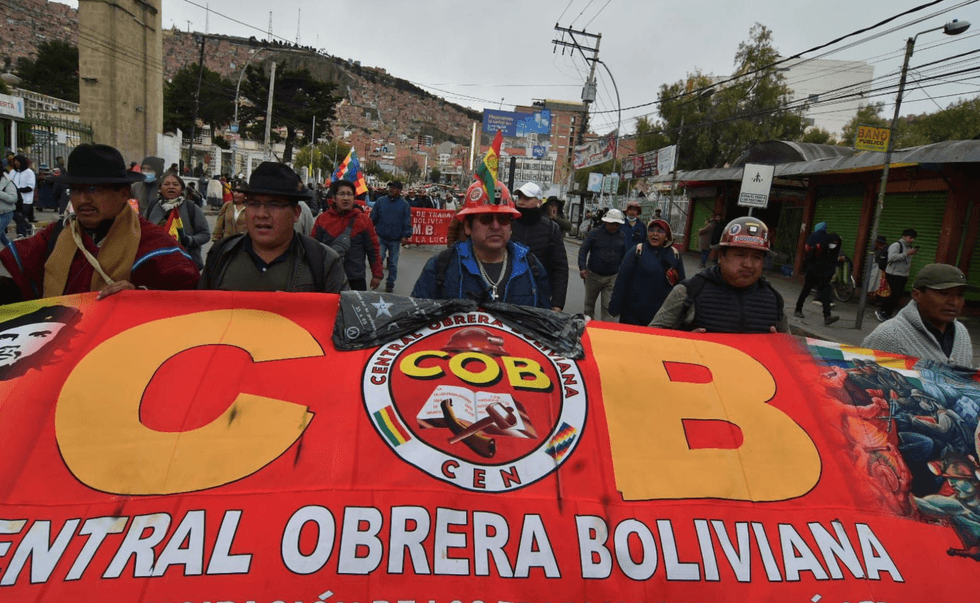
The right to strike is under attack throughout the world, including in the United States. Labor strikes are currently forbidden or restricted in the majority of countries.Now, in a landmark 43-page advisory opinion issued May 21, the International Court of Justice (ICJ, or World Court) has determined that the right to strike is protected under the International Labour Organization’s (ILO) Convention No. 87 on Freedom of Association and Protection of the Right to Organise.“At a moment when workers’ organizations face sustained attacks around the world, this opinion reaffirms that the freedom to withhold one’s labor is not a privilege granted by the powerful, but a fundamental human right grounded in international law,” AFL-CIO President Liz Shuler said in a statement.The ILO is the United Nations agency that sets global labor standards. It has 187 member states and has adopted 191 conventions since its founding in 1919. The ILO considers Convention No. 87 to be one of its 11 fundamental conventions.In 2023, the ILO asked the ICJ to settle an internal dispute about whether Convention No. 87 gives workers the right to strike, which is not specifically addressed in the convention. Although advisory opinions of the ICJ are not legally binding, many courts accept them as authoritative legal decisions.The ICJ ruled in its 10-4 opinion that a strike “is one of the main activities engaged in and tools used by workers and their organizations to promote their interests and improve conditions of labour, thereby ensuring the effective exercise of the freedom of association protected under Convention No. 87.”The Court found “that protection of the right to strike is encompassed in the protection of the freedom of association provided for in Convention No. 87.”In reaching that conclusion, the Court considered provisions in two 1996 Covenants that contain relevant rules of international law regarding the right to strike. Both refer to Convention No. 87.Article 8, paragraph 1 (d) of the International Covenant on Economic, Social and Cultural Rights (ICESCR) expressly protects the right to strike, if it is exercised in conformity with domestic laws.Article 22, paragraph 1 of the International Covenant on Civil and Political Rights (ICCPR) provides for the right to freedom of association. The ICJ noted that for more than 25 years, the Human Rights Committee — which monitors the implementation of the ICCPR — has considered the right to strike to be encompassed in the protection of freedom of association.Due to the high degree of overlap between the states parties to the ICESCR and ICCPR, and Convention No. 87, the ICJ determined there was a common understanding among them on the right to strike. The Court thus concluded “that an interpretation taking into account the relevant rules of international law contained in the ICESCR and the ICCPR indicates that the protection of the right to strike is encompassed in the protection of the freedom of association provided by Convention No. 87.”No Right to Organize Without the Right to Strike“For generations, working people have understood a simple truth: The freedom to join a union means nothing if you cannot withhold your labor when bosses refuse to listen. Now, the world’s highest court has affirmed that truth,” said Jeffrey Vogt, director of the International Lawyers Assisting Workers (ILAW) Network, which issued the call for the ILO referral of this case to the ICJ.The ICJ decision “affirms decades of judicial precedent and what workers around the world know: there is no right to organize and bargain collectively without the right to strike,” Shuler said in her statement. “When workers are barred from taking collective action on the job, they cannot defend their rights and demand the workplace conditions and contracts they are owed. The freedom to join a union becomes an empty formality.”“This is an important day for the International Labor Organization [ILO], and for its continued relevance in the world of work. However, the significance of this opinion extends well beyond the institutional context in Geneva,” the ILAW Network wrote in a statement.The ICJ advisory opinion came “at a moment of acute pressure on the international labour rights system,” ILAW stated. “Across the world, the right to strike is under sustained attack — through restrictive legislation, expansive judicial interpretation of essential services, the criminalisation of trade union activity, and the use of dismissals, injunctions, and damages claims to deter collective action.”Legal restrictions on the right to strike are increasing. In 2022, strikes were outlawed or stringently restricted in 129 of the 148 countries tallied by the International Trade Union Confederation (ITUC), one of the six organizations with consultative status at the ILO Governing Body.The ITUC, which represents 191 million workers in 169 countries and territories, is dedicated to trade union democracy and independence.
President Donald Trump's ability to influence the outcome of GOP primaries has been evident in recent weeks, with Rep. Thomas Massie (R-Kentucky), Sen. John Cornyn (R-Texas), Sen. Bill Cassidy (R-Louisiana) and other incumbents he was angry or disappointed with losing to Trump-backed challengers. All of those primaries made it abundantly clear that any Republican Trump considers disloyal is in danger of being voted out of office via a GOP primary. But within the MAGA movement, there is no shortage of infighting. And historian/author Nicole Hemmer examined that MAGA chaos during an appearance on The New Republic's podcast, "The Daily Blast."Host Greg Sargent, a former Washington Post columnist, cited recent testimony from former U.S. Attorney General Pam Bondi as an example of MAGA infighting. Bondi, Sargent told Hemmer, "essentially threw Acting AG Todd Blanche under the bus" when testifying about the U.S. Department of Justice's (DOJ) Jeffrey Epstein investigation. Bondi, according to Sargent, "blamed Blanche" for the "lack of transparency" over Epstein at DOJ.Hemmer argued, "Pam Bondi is in such a different position at this point than she was when she was first subpoenaed to give this testimony. She used to be the attorney general. Now, she's been forced out, and she is shifting all the blame onto her presumed successor. Blanche is going to have to go through confirmation hearings soon, and she has just made that very difficult for him. Epstein is going to be the focus of conversation when Blanche goes up for confirmation."Bondi, Hemmer stressed, put Blanche "in a particularly tough position, because he goes into his confirmation hearings looking like someone who's covering for Trump" Sargent argued that with the 2026 midterms a little over five months away, the United States is seeing a "split screen" in which Trump, on one hand, "still has this iron grip on the Republican primary electorate"— while on the other hand, the GOP "as a whole" is starting to "worry more about voters outside the MAGA bubble."Hemmer told Sargent, "Donald Trump has not been serving the interests of the base in a number of ways. The Iran war, his relationship with Israel, the Epstein files — these have caused a real split in the MAGA base. It has led to a number of right-wing personalities to openly question and criticize Donald Trump more than they had in the past. And then, you have this pressure on members of the party, at least members of the party who are from purple districts. There are plenty of Republicans who are going to be running in deep-red districts. They're completely safe. Once they win their primary with Trump's backing, there's just not a scenario in which they're going to lose that seat."Hemmer continued, "But you are going to have purple-district Republicans suddenly, again, cross-pressured, because as Trump's popularity goes down, they're going to need to win centrists and Democrats in order to win their election."
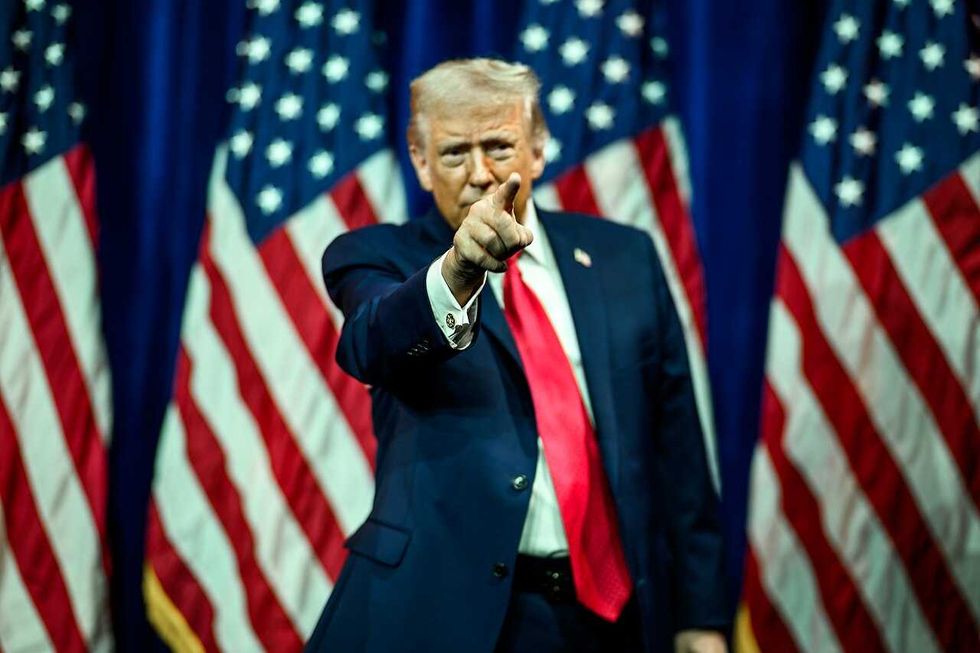
In light of my post yesterday about Trump’s plans for a Trump rally on the mall to celebrate the start of America’s 250th birthday festivities — designed, in his words, for “patriots” and promising to be “wild” — several of you wanted to know more about how it’s being planned and paid for. This year’s 250th anniversary events, commemorating America’s founders’ refusal to be bound by a tyrant, were supposed to be planned by a nonpartisan, nonprofit group created by Congress in 2016 via a bipartisan congressional caucus of more than 350 members.That nonpartisan, nonprofit group is called “America250.”“America250” still exists, at least in theory. It lists as Honorary National Co-Chairs George W. Bush, Barack Obama, Laura Bush, and Michelle Obama. Its ex-officio members include present and former government officials drawn from both parties. You can read more about it at the “Official website of the U.S. Semiquincentennial Commission,” here. But “America250” is not planning this year’s 250th anniversary events on the mall or anywhere else in official Washington. Trump and his MAGA allies circumvented Congress and created their own planning committee, confusingly named “Freedom 250.”Trump’s “Freedom 250” describes itself in much the same way “America250” does — as a “non-partisan organization leading the celebration of our Nation’s 250th birthday.” See here.But unlike “America250,” Trump’s “Freedom 250” is bankrolling events promoting Trump and his political agenda (which is why most of the performing artists who originally agreed to participate dropped out last week when they learned of the ruse).The “Freedom 250 toolkit” lists as its “core theme” elevating “President Trump’s Freedom 250 vision” — boosting Trump’s supposed achievements and not his many failures (such as two impeachments, criminal conviction on 34 felony charges, attempted coup against the United States, incitement of an attack on the U.S. Capitol, disastrous war in Iran, etc.) — analogous to Trump’s executive order requiring that the Smithsonian remove details about his impeachments from museum exhibits.Not surprisingly, Trump’s “Freedom 250” is also designed to make money for Trump. Trump’s personal business is now trademarking the term “Trump 250,” along with a logo nearly identical to America250’s logo.The Trump Organization has filed several trademark applications in connection with America’s 250th anniversary celebration, all featuring the Trump name as a centerpiece of the highly anticipated festivities. In one filing, a “Trump 250” image was trademarked to be used on a variety of merchandise including bumper stickers, tote bags, drinkware, clothing items, and golf balls. A wordmark application was also submitted for the name “Trump 250” on Friday.Trump’s online store is already selling sweatshirts, a $200 dollar blanket, and golf balls with that logo.Like the White House ballroom project, Trump’s “Freedom 250” is also a pay-to-play scheme. People and companies with financial interests likely affected by Trump are encouraged to make tax-deductible donations to gain access to, and seek favors from, him.Corporations pay between $500,000 and $10 million to become Freedom 250 “sponsors.” A corporation giving $1 million or more will be invited to a “private Freedom 250 thank you reception” hosted by Trump. For $2.5 million or more, sponsors will even get a speaking role at the Fourth of July celebration in Washington. (Major donors so far include Lockheed Martin, ExxonMobil, Oracle, Palantir, Mastercard, and United Airlines.)Who else is paying for Trump’s “Freedom 250” festivities? You and I, at least in part.Tucked away inside last year’s sprawling 870-page “One Big Beautiful Act” was an allocation of $150 million for “events, celebrations, and activities surrounding the observance and commemoration of the 250th anniversary of the founding of the United States.” Most of those funds are going to Trump’s “Freedom 250” rather than to the nonpartisan “America250.” Why? When Congress appropriated the $150 million, only America250 was planning celebrations for the 250th. But now that Trump’s Freedom 250 is up and running, Trump’s Interior Department has doled out $100 million to it ($25 million has gone to the nonpartisan America250).Oh, and unlike other groups created by Congress, Trump’s Freedom 250 doesn’t have to disclose anything about its spending until 2027.So the answer to your questions about how America’s 250th is being planned and paid for — and why it’s becoming a propaganda vehicle celebrating Trump — is that Trump has pushed aside the nonpartisan group Congress set up in 2016 to plan it and substituted his own Trump-loyalist group, to which Trump’s Interior Department is siphoning off most of the taxpayer funds. This is exactly what Trump did to the Kennedy Center, the Smithsonian Institution, the National Capital Planning Commission, and every other semi-public body Congress established for the common good.
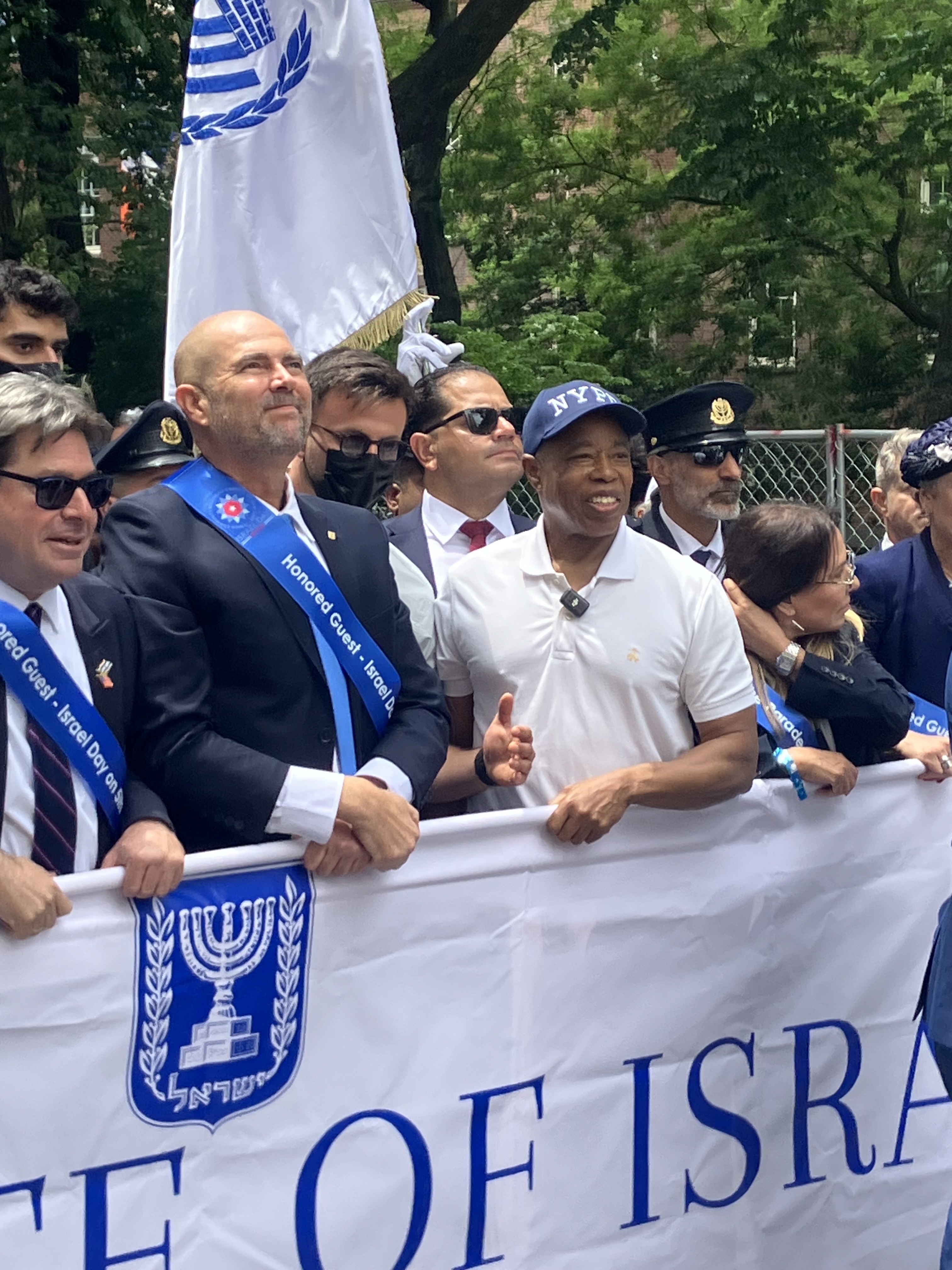
There was no love lost on Sunday for Zohran Mamdani, who became the first New York City mayor to skip the annual Israel Day Parade in more than 60 years.
The post ‘He Hates Us’: New York Jews and Israeli Officials Say Mamdani Isn’t Wanted at the Israel Day Parade, as Hizzoner Becomes First Mayor in 60 Years to Skip Celebration appeared first on .