Republicans are growing increasingly frustrated with the Pentagon and are losing faith in the secretary's leadership as the 2026 midterm elections approach. Secretary of Defense Pete Hegseth has focused more on the physical abilities of U.S. soldiers while President Donald Trump runs another war in the Middle East. The two together are ignoring some of the best military minds of their generation, said one outgoing senator. “I don’t have any confidence in him anymore. I think he’s all over the place, he’s accelerating the retirement or forcing out some of the most distinguished leaders in the DOD that we have,” Sen. Thom Tillis (R-N.C.) told The Hill. Other Republican lawmakers are displeased with the Pentagon's inability to anticipate the closures of the Strait of Hormuz. The failures in the Iran war have caused an upswing in fuel prices and a significant depletion of the U.S. Strategic Petroleum Reserve (SPR), which is now below half full. The war has now expanded into blocking oil transfers in the Red Sea, and problems in the Black Sea persist. Tillis blamed Hegseth's "massive insecurity complex" in dealing with the military. Hegseth has been photographed in several different "workouts" with soldiers, lifting weights and doing pull-ups. This month he announced helping soldiers with low testosterone. "He has a lack of experience in large organizations; he micromanages too much. He’s lost my confidence," blasted Tillis, who was the deciding vote on whether to approve Hegseth last year. A Republican senator who wished to remain nameless told The Hill that Hegseth is also losing confidence with senior military leaders. “I have heard out of the Pentagon that there’s a loss of confidence within the Pentagon. And of course then everyone here on the Hill hears those same concerns,” the lawmaker said.Meanwhile, the Pentagon's forced-retirement announcement list is growing. Sen. Susan Collins (R-Maine) is concerned about Chris Donahue, the top U.S. Army commander in Europe. She told reporters she found it "deeply troubling." “These are men and women who volunteered to serve our country and swore an oath to support and defend our Constitution.” She also said she wants “more information” on “the strategy and endgame for the war.”“I do think that the American public’s growing weary,” Sen. Shelley Moore Capito (R-W.V.) said. “Collectively, those of us in Congress are worried about the costs associated with the Department of War and the transparency,” said Sen. Joni Ernst (R-Iowa). Tillis also noted a broader concern about Trump and Hegseth's leadership purge of women and people of color with expertise in strategic planning. Hegseth is now blocking the promotion of many women and people of color across the armed forces. “Everybody knows about some of the Game of Thrones stuff going on with some of the other service secretaries and Hegseth. It seems like he wants to run the whole place,” Tillis said.“When you’re a leader, you better damn sure have people smarter than you in the room. You’re supposed to be air traffic control for all these brilliant people and he’s undermining the DOD’s success by undermining these brilliant people who spent their career in uniform," he added.
Houthi attacks on Saudi oil depots along the Red Sea on Sunday led to a drop in ship traffic through the Bab el-Mandeb Strait, according to the analytics platform Kpler on Monday. The strait saw 11 cargo vessels move through the strait, the lowest number of ships to pass through in months, according to Kpler’s…
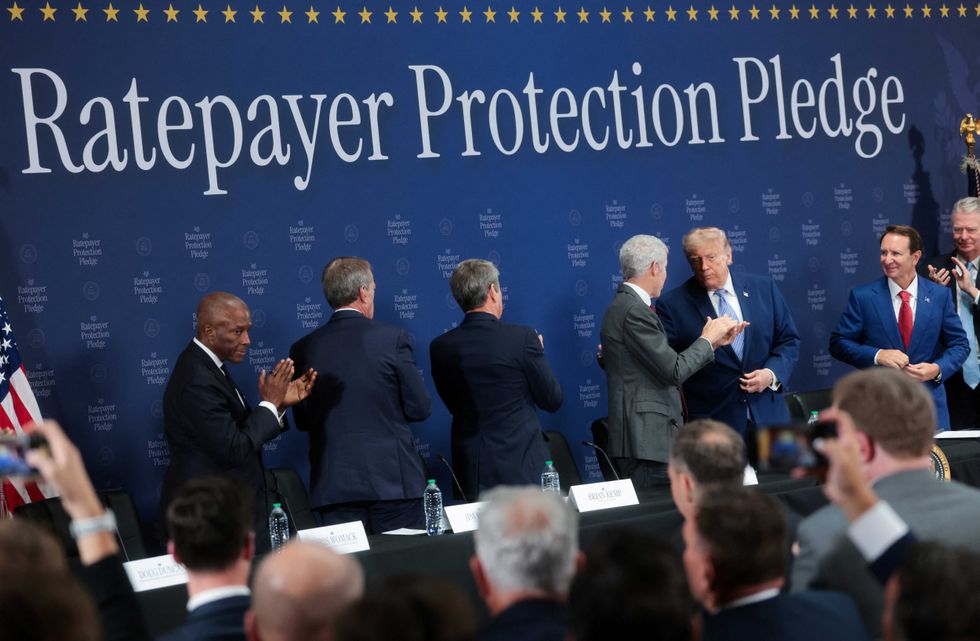
Gov. Bill Lee last week joined 22 Republican governors in signing onto President Donald Trump’s “Ratepayer Protection Pledge,” a voluntary agreement to hold companies responsible for the costs of building, maintaining and powering data centers.The Trump administration has publicly touted the pledge as sparing taxpayers from tax and electricity rate hikes tied to data centers, even as communities across Tennessee and the U.S. push back on plans for the massive data infrastructure projects in their own backyards.Tech companies including Google, Meta and OpenAI have also signed onto the pledge, which positions data center expansion as essential to the nation’s future.“America’s continued economic and technological leadership depends on reliable, large-scale data center infrastructure built here at home,” the pledge says.On Friday, Lee posted a message of thanks to Trump for introducing the pledge.“Tennessee has shown we can lead the nation in innovation while protecting hardworking families from higher utility bills, & we’re grateful for your leadership to advance policies that strengthen our economy & secure America’s future,” Lee posted on X.There may be an appetite among voters for ratepayer protections with more teeth, according to Sarah Hunt, president and CEO of Rainey Center, a Washington, D.C.-based nonprofit public policy research organization.“Only 9% of voters that we polled had even heard that these tech companies had voluntarily signed onto this pledge that the White House had put together, and 61% of voters, after we tell them about it, want to see Congress make the Ratepayer Protection Pledge binding law,” Hunt said during a July Infrastructure Summit hosted by the Tennessee Chamber of Commerce and Industry.The U.S. Environmental Protection Agency has declined to set nationwide environmental standards for data centers, instead leaving regulatory decisions to states and local governments.Tennessee lawmakers this year passed a law stipulating that owners of data centers that require at least 50 megawatts of power must pay for any infrastructure upgrades needed to produce the electricity the data center demands. Sen. Brent Taylor, a Shelby County Republican and the law’s Senate sponsor, said the law is meant to protect ratepayers from power bill increases.But the law has some caveats: if the infrastructure upgrades benefit other ratepayers or follow normal rules that apply to all large electricity customers, utilities can help data centers cover the cost.The law alternatively allows data centers to power themselves using equipment like gas-powered turbines — without state or local oversight — raising concerns from environmental groups and community coalitions who say these turbines pollute the air and emit continuous sound. Data centers may also purchase power from independent producers that operate outside of public utilities.Tennessee lawmakers did not pass six other bills introduced this year that would have set up guardrails for data centers, ranging from registration and permitting requirements to mandatory reporting on water, electricity and fuel use.Multiple local governments across the state have instituted moratoriums on data center project approvals while they create regulations for the growing industry.
No primary—especially a Senate primary—should go on this long. But Michigan’s Democratic Senate primary, having dragged on for months, has turned into an interminably vicious grudge fest—one that’s not likely to subside until voters finally go to the polls on August 4 and choose between Haley Stevens and Abdul El-Sayed.But the Michigan primary is also so bitter for the same reason that it has been so interesting. Of all of the 2026 races, this is the one that best captures the current fissures in the Democratic Party—and which seems to best predict where the fault lines of the 2028 presidential primary might lie. The biggest reason is that this race features the cleanest factional divides. Stevens, who currently represents the northern Detroit suburbs in Congress, is an establishment stalwart, backed by both party leaders and tens of millions in AIPAC money. El-Sayed—a former state public health official who ran a failed campaign for governor in 2018—is a progressive and longtime ally of Bernie Sanders and has made criticizing America’s backing of Israel’s genocide in Gaza a key plank in his campaign. Briefly adding to the intrigue was the race’s third leading candidate, Mallory McMorrow, a young member of Michigan’s state Senate, who attempted to triangulate between these positions but dropped out earlier this month without endorsing either candidate. If you want a race that captures the expected “lanes” of the 2028 primary—establishment, insurgent, middle—look to Michigan.In recent weeks, particularly after McMorrow’s exit, that race has also been fractious, bitter, and personal. Stevens’s surrogates and backers have argued El-Sayed is too radical and risks alienating swing voters needed to win a seat that is essential for Democratic hopes of taking the Senate. Multiple Stevens backers, including the centrist group Third Way and Hillary Scholten, who also represents Michigan in the House, have attacked El-Sayed for campaigning with Hasan Piker, the popular leftist streamer who has made controversial comments about September 11 and October 7. On Wednesday, Scholten also attempted to tie El-Sayed to Graham Platner, who dropped out of the Senate race in Maine amid multiple controversies, including allegations of rape and sexual assault. “Abdul El-Sayed and Graham Platner campaigned together. They fundraised together,” she said on CNN. That’s not actually true—they never campaigned together and only sent out two joint fundraising emails—but it gets at the increasingly vicious nature of the campaign and the personal nature of the attacks, which often avoid policy and instead focus on character. El-Sayed has attempted to force a focus on policy disagreements, but his backers, particularly his online allies, have ridiculed Stevens’s often awkward campaign appearances. After Stevens had a Howard Dean–ish moment of forced enthusiasm—“You better believe I’m gonna be doing it with a little bit of joy, a little bit of enthusiasm, a little bit of energy, and a little bit of stick it to ’em! Because that’s the Michigan way!”—the mockery grew so intense that El-Sayed released a video asking his supporters to quit making personal attacks on his opponent—and, more importantly, to keep the focus on policy. There are real policy disagreements between Stevens and El-Sayed, particularly over Israel. Stevens is a longtime backer, who once said, “Israel comes to me in my dreams.” El-Sayed, meanwhile, has made U.S. support for Israel a focal point of his campaign and a key point of distinction between himself and Stevens. That issue does have extra resonance in Michigan, given its sizable Muslim population, but the fight between El-Sayed and Stevens is one that Democrats will be having on a national stage very soon. That fight mirrors some of the contretemps of past Democratic campaigns—particularly the race between Bernie Sanders and Hillary Clinton in 2016, and the race between Sanders, Elizabeth Warren, and Joe Biden in 2020. As in those contests, a populist outsider is taking on an establishment figure by arguing that the Democratic Party needs to adopt more progressive positions. The schism over support for Israel obviously mirrors debates that dogged both Joe Biden and Kamala Harris after October 7, 2023. But what is most interesting about the Michigan race is how little policy has factored into the race, particularly in Stevens’s attacks on El-Sayed. At a debate earlier this month, Stevens essentially accused El-Sayed of being a prima donna—someone primarily running to get attention for himself. “I am not trying to sell a book or a podcast,” Stevens said in her opening remarks. “I’m the only one on this stage who doesn’t have a talent agent trying to pitch me for paid speeches.
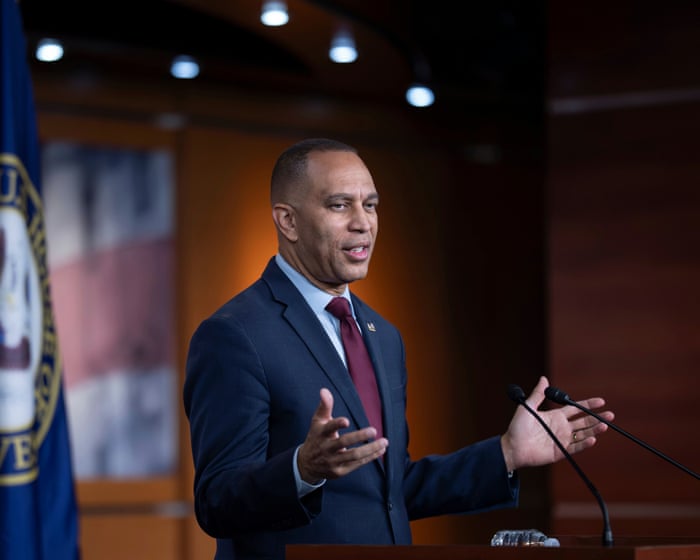
Top House Democrat says US president ‘failed to deliver’ on campaign promises to lower costs and avoid overseas warsDonald Trump’s Republican party has “nothing to run on” for the congressional midterm elections after the president broke promises to lower costs and avoid starting war overseas, Hakeem Jeffries has said.The House minority leader, a New York congressman, made those comments on CNN’s State of the Union on Sunday, exactly 100 days from the 3 November midterms, when Jeffries and his fellow Democrats are aiming to take control of the US House and Senate from their Republican opponents. Continue reading...
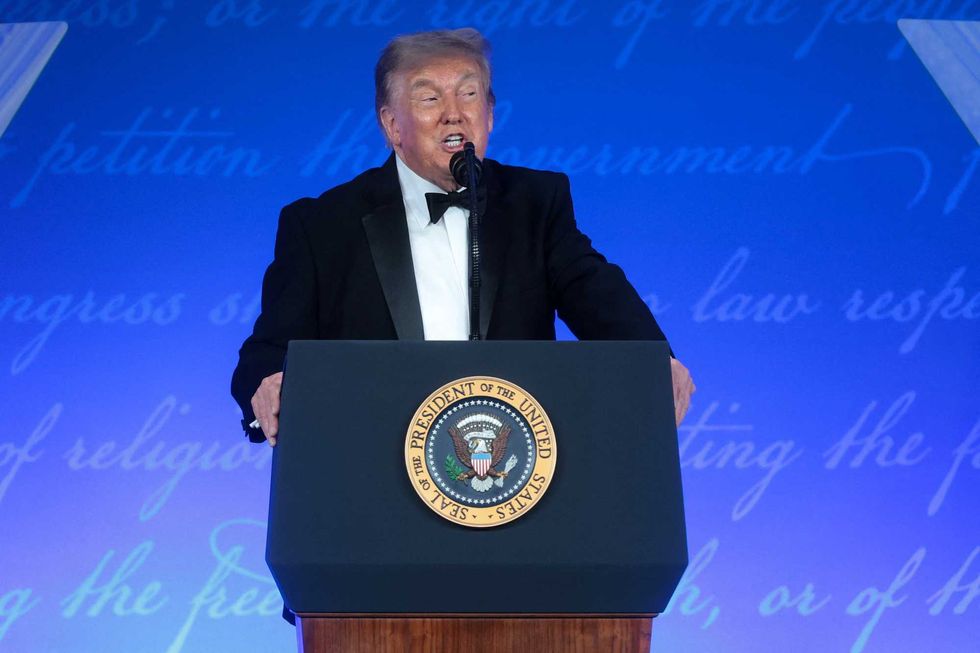
President Donald Trump may have just laid down the tracks for one of his boldest election plots yet, according to one political analyst. John Heilemann, an MS NOW political analyst, said on Sunday's broadcast of "Deadline: White House: Weekend" that Trump's recent national address about election security was an attempt to "lay down the tracks" for his next wave of lies about the election results."I think he's just trying to lay down the tracks on which he can make false claims in the future," Heilemann said. "For him, it's enough to have said those things publicly so that when he does what he's going to do, whatever that turns out to be in November, he can look back and say, 'I told you so. I said, this was rigged. You didn't believe me. You didn't listen to me. But it was rigged then, and it's rigged now ... This is an illegitimate election. And here's what we're going to do going forward.'" Heilemann noted that recent polling appears to back up his assertion. A recent poll from The Economist and YouGov found that 67% of Americans, including 77% of independent voters, thought Trump was trying to sow doubt about American elections during his national address rather than back up his claims of election interference with concrete facts. "So, all of this is about pretext, not about persuasion, and not about some kind of good faith attempt to govern," he added. "It's about ... laying the groundwork for what comes nextcomes next."

.jpg)