Red Sea shipping slows after Houthi attacks on Saudi Arabia: Data
Source: The Hill News · Bias: Center
Summary
Houthi attacks on Saudi oil depots along the Red Sea on Sunday led to a drop in ship traffic through the Bab el-Mandeb Strait, according to the analytics platform Kpler on Monday. The strait saw 11 cargo vessels move through the strait, the lowest number of ships to pass through in months, according to Kpler’s…
Red Sea shipping slows after Houthi attacks on Saudi Arabia: Data
Center
Houthi attacks on Saudi oil depots along the Red Sea on Sunday led to a drop in ship traffic through the Bab el-Mandeb Strait, according to the analytics platform Kpler on Monday. The strait saw 11 cargo vessels move through the strait, the lowest number of ships to pass through in months, according to Kpler’s…
WHAT’S HAPPENING TODAY: Good afternoon and happy Monday, readers! We hope you all had a restful weekend. The House is out of town, but the Senate remains in D.C. for two more weeks before the scheduled August recess to take on several key legislative priorities. But, as for tomorrow, the memorial service for Republican Sen. […]
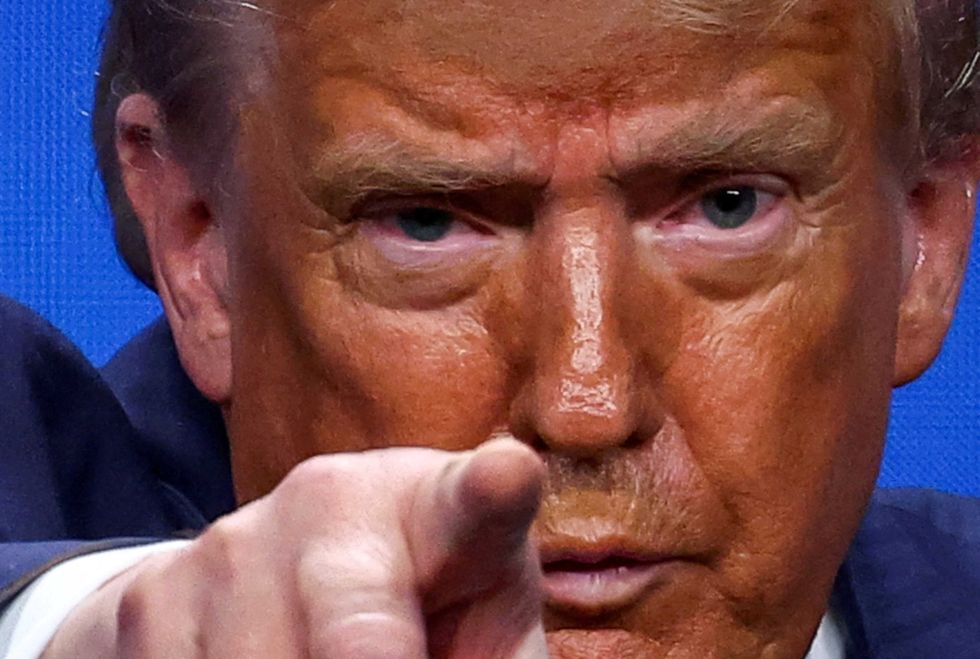
In recent months, experts have pointed to various warning signs that President Donald Trump is engaged in a “slow-moving coup” as he attempts to maintain his grip on power. On Monday, with the highly consequential midterms less than 100 days away, a leading presidential historian took to Vanity Fair to assert there is an “antidemocratic plot afoot,” and to explain Trump’s “authoritarian formula.”According to lawyer and presidential historian James Robenalt, “There's a radical, antidemocratic plot afoot, cooked up at the highest levels of the Trump executive branch — drawing in the Department of Justice, the leadership of the intelligence community, and possibly even the Pentagon — to tilt November’s midterm elections to Republican candidates, so as to ensure that the president’s party retains control of the House and Senate." As Robenalt explains, the plot is revealed by Trump’s effort to federalize elections, which the Constitution very clearly states are to be overseen by states. Trump has attempted to assert federal control via executive order, but has been “consistently” and “easily” rebuked by the courts, as the Constitution allows only Congress to override state mandates.“Trump’s defeats in court help explain his fixation on the so-called SAVE America Act, short for ‘Safeguard American Voter Eligibility,’” writes Robenalt. “The president has even admitted, however grudgingly, that only Congress can create new election standards. The proposed bill, already considered by a somewhat skeptical House, and even more wary Senate, fuses two of Trump’s favorite obsessions: illegal immigration and voter fraud. Illegal immigration helped carry him to victory in 2016; alleged rigged elections powered some of his political messaging in 2024.”“If enacted, the SAVE America bill would make states demand documentary proof of citizenship — passports, birth certificates and the like — before voters could register or update their registration, and would require the corresponding paperwork to be presented in person to a local board,” but according to Robenalt, repeated pushback from both sides of the aisle suggests that Congress won’t pass the bill. “Here, then, is where the story turns thorny,” he writes. “If Congress chooses not to support initiatives to curb certain types of voting or certain types of voters, Trump and his surrogates have other options.”“First off,” he explains, “they have been using what many observers consider an authoritarian formula to attack democracy itself: attempting, through public pronouncements and a flurry of activities, to slowly and steadily degrade voters’ confidence in election integrity; raise the specter of criminal indictments of enemies; increase the rhetoric against ‘violent left-wing extremists’ and ‘communists’; and take endless swipes at the free press.”“Secondly,” Robenalt continues, “the administration’s recent moves fit a pattern. Remove election guardians and guardrails. Weaken intelligence channels that might deter foreign interference. Use strong-arm tactics, such as the confiscation of old ballots, to intimidate officials and possibly serve as a dress rehearsal for federal muscle-flexing in future elections. Threaten prison time for those who refuse to comply. Announce to America’s adversaries that US elections are vulnerable, thereby inviting the very interference the administration decries. Then, theoretically, use that alleged foreign interference as a pretext to cancel elections, invoke the Insurrection Act, or send troops or ICE agents to the polls.”“It could all play out,” warns Robenalt, “as several pundits have remarked, very much as Hemingway famously described bankruptcy: gradually, then suddenly. Some catalytic event — a Reichstag Fire analogue, or another January 6, or a bogus declassification purporting to show foreign hackers changing votes — could be used to manufacture a phony rationale for emergency action.”As journalist Jonathan Alter pointed out, “Trump never made any secret of his intentions, explaining to Republicans in January of 2026 on the fifth anniversary of the January 6 insurrection, ‘You’ve gotta win the midterms, because if we don’t win the midterms, they’ll find a reason to impeach me.’” According to Robenalt, “The president has shown, time and again, that he will go to unprecedented lengths so as not to relinquish power,” and Americans must not take for granted that he will give up without a fight. “Those who cherish democracy must stay alert,” Robenalt concludes. “Vigilance remains the first defense. But the essential act is simpler still: vote. Vote early, if you can, because early voting makes election-day obstruction that much harder to pull off.”
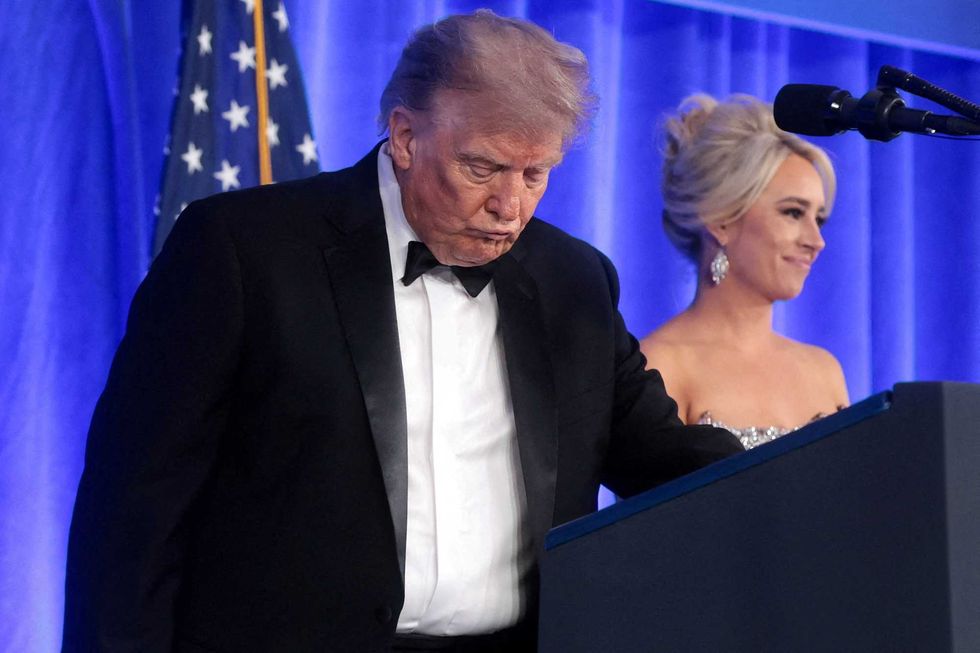
CNN took a beating online this week, as various commentators called out the network for its participation in the White House Correspondents' Dinner (WHCD) after reports emerged that its "leadership was furious" over comments President Donald Trump made attacking its journalists.The latest WHCD took place on Friday evening, having been delayed when a gunman attempted to carry out a shooting at the previously scheduled event. CNN had a notable presence at the dinner, with anchor Wolf Blitzer presenting an award to Wall Street Journal reporters who uncovered new ties between Trump and Jeffrey Epstein. Trump also took aim at anchor Kaitlin Collins during his address that night, comparing her appearance to that of Dylan Mulvaney, a transgender influencer who has been the target of considerable right-wing outrage, with the remark being criticized as both misogynistic and transphobic.On Monday, Semafor released a new report noting that CNN staffers were "livid" about Trump's attack on Collins, with some leaders at the company reportedly considering "scaling back" its involvement in next year's dinner or "skipping it altogether." The outlet had previously committed to attending the event to celebrate the work of its reporters and to avoid seeming like they were making a political statement by opting not to attend.Given CNN's participation in the event, and the hand it had in boosting its profile this year, several prominent users across social media raked the network over the coals in response to the report, suggesting that they should not have attended it at all, as well as for their extensive coverage of Trump overall."They ought to be furious at themselves for sustaining the dinner with their attendance," journalist John Harwood wrote in a post to X.Responding to Harwood's post, Canadian journalist Annie Dufour shared her own reaction to the WHCD from Friday."From Canada, this was painful to watch as a journalist," she posted. "American Media has fallen short of its role as a pillar of democracy. Complacent. Coy. Accommodating. A Vichy Press, almost. When it should have been unyielding, brave, and bold. You reap what you sow.""They should scale back their coverage of the lunatic president who spewed all of this hate at Kaitlan and CNN. And journalism as a whole," journalist Sophia A. Nelson posted."They were also shocked to discover that gambling is going on at Rick's Cafe in Casablanca," journalist Brian Lowery posted, referencing a scene from a classic film to suggest that Trump's diatribe should have been an obvious outcome.they ought to be furious at themselves for sustaining the dinner with their attendance https://t.co/9NRpqDU7gw— John Harwood (@JohnJHarwood) July 27, 2026
U.S. Ambassador to the United Nations Mike Waltz said Sunday the U.S. will not be “exporting enrichment capacity to” Saudi Arabia under the new nuclear deal announced last week. Waltz appeared on the Sunday morning shows to clarify aspects of the deal, which would eventually allow the Saudis to enrich uranium, raising fears the Persian…
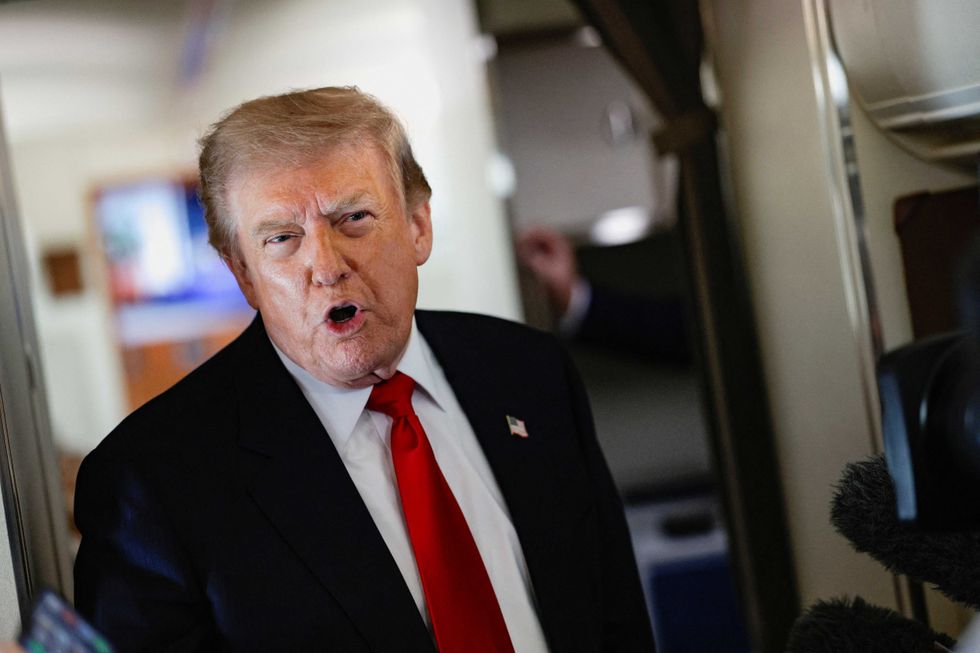
President Donald Trump sparked outrage on Monday after snapping at a female reporter who questioned him aboard Air Force One.Trump was heading to Michigan, where he was expected to give an address about the economy at the GM Proving Grounds in Milford. He was furious after the journalist asked him a question about the Senate and the SAVE America Act, which he has pressured Republicans to support as part of his broader push for stricter voter ID."On the Senate, on the SAVE Act, why do you want the U.S. Senate to stay in town?" she asked. "Shouldn't they be out across the country campaigning?""What a stupid question," Trump said.Critics and political commentators responded to the president's remarks."Just listen to @realDonaldTrump. He’s utterly incoherent. He can’t follow the questions, can’t maintain a train of thought. He couldn’t run a lemonade stand at this point," conservative attorney turned anti-Trump activist George Conway wrote on X."Trump is incoherent, delusional and dangerous," White House columnist for Raw America, Brian Karem, wrote on X."When someone tells you Trump is super transparent and talks to reporters more than any other president, show them this. He simply doesn't answer questions. He is the LEAST transparent president," Zeteo's Mehdi Hasan wrote on X."He absolutely hates strong women, what an insecure pathetic piece of human waste," progressive political commentator Robert Scannell wrote on Bluesky.WOMAN REPORTER: On the SAVE Act, why do you want the Senate to stay in town? Shouldn't they be out across the country?TRUMP: Why the stupid question? What a stupid question. For Jennifer to ask such a stupid -- she's a smart person. So listen ... pic.twitter.com/m8cm5TkJer— Aaron Rupar (@atrupar) July 27, 2026
The U.S. pulled back on its daily strikes on Iran over the weekend to both give more time for negotiations and conserve munitions. President Trump is “giving it a little bit of room,” Mike Waltz, United Nations ambassador, said Sunday. Reports also bubbled up over the weekend that the U.S. campaign in the Strait of Hormuz…
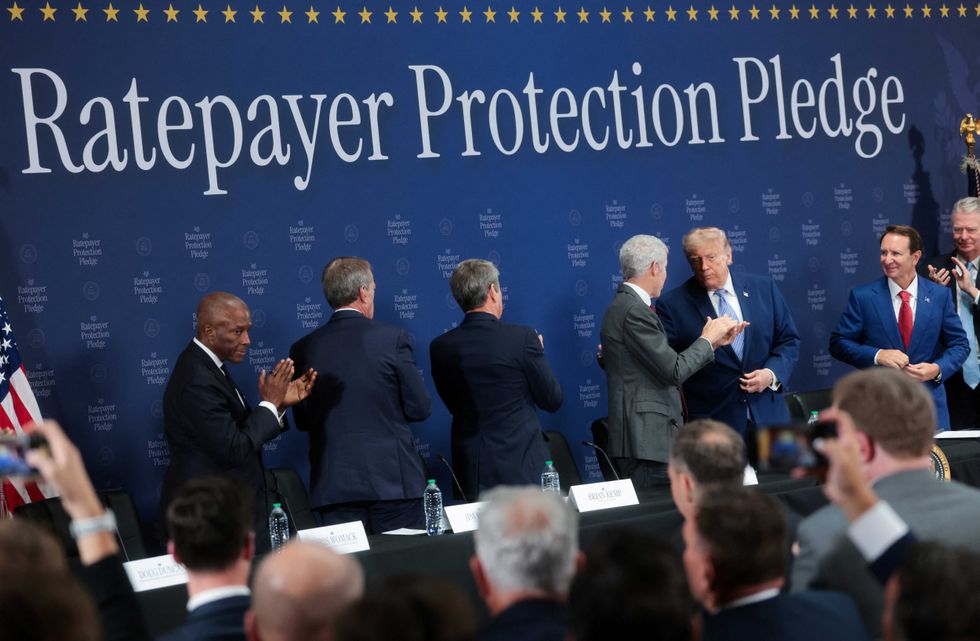
Gov. Bill Lee last week joined 22 Republican governors in signing onto President Donald Trump’s “Ratepayer Protection Pledge,” a voluntary agreement to hold companies responsible for the costs of building, maintaining and powering data centers.The Trump administration has publicly touted the pledge as sparing taxpayers from tax and electricity rate hikes tied to data centers, even as communities across Tennessee and the U.S. push back on plans for the massive data infrastructure projects in their own backyards.Tech companies including Google, Meta and OpenAI have also signed onto the pledge, which positions data center expansion as essential to the nation’s future.“America’s continued economic and technological leadership depends on reliable, large-scale data center infrastructure built here at home,” the pledge says.On Friday, Lee posted a message of thanks to Trump for introducing the pledge.“Tennessee has shown we can lead the nation in innovation while protecting hardworking families from higher utility bills, & we’re grateful for your leadership to advance policies that strengthen our economy & secure America’s future,” Lee posted on X.There may be an appetite among voters for ratepayer protections with more teeth, according to Sarah Hunt, president and CEO of Rainey Center, a Washington, D.C.-based nonprofit public policy research organization.“Only 9% of voters that we polled had even heard that these tech companies had voluntarily signed onto this pledge that the White House had put together, and 61% of voters, after we tell them about it, want to see Congress make the Ratepayer Protection Pledge binding law,” Hunt said during a July Infrastructure Summit hosted by the Tennessee Chamber of Commerce and Industry.The U.S. Environmental Protection Agency has declined to set nationwide environmental standards for data centers, instead leaving regulatory decisions to states and local governments.Tennessee lawmakers this year passed a law stipulating that owners of data centers that require at least 50 megawatts of power must pay for any infrastructure upgrades needed to produce the electricity the data center demands. Sen. Brent Taylor, a Shelby County Republican and the law’s Senate sponsor, said the law is meant to protect ratepayers from power bill increases.But the law has some caveats: if the infrastructure upgrades benefit other ratepayers or follow normal rules that apply to all large electricity customers, utilities can help data centers cover the cost.The law alternatively allows data centers to power themselves using equipment like gas-powered turbines — without state or local oversight — raising concerns from environmental groups and community coalitions who say these turbines pollute the air and emit continuous sound. Data centers may also purchase power from independent producers that operate outside of public utilities.Tennessee lawmakers did not pass six other bills introduced this year that would have set up guardrails for data centers, ranging from registration and permitting requirements to mandatory reporting on water, electricity and fuel use.Multiple local governments across the state have instituted moratoriums on data center project approvals while they create regulations for the growing industry.