Gavin Newsom’s rewards Jim DeBoo with $60K state gig: ‘Cronyism at its best’
Right
Gov. Gavin Newsom is giving one of his most trusted political soldiers a cushy, taxpayer-funded appointment as he nears the end of his tenure leading California, reviving accusations that “cronyism” may be one of the lasting legacies of this governorship.
Former CNN stalwart Jim Acosta ruthlessly trolled President Donald Trump on a sunny Monday afternoon, delivering a withering in-person review of the Great American State Fair, where Acosta could barely contain his glee at the near-empty spectacle and "shoddy" construction.Videoing himself from the National Mall, Acosta pulled no punches."If you're looking for a place with really no lines whatsoever, then you better come down to the mall," he said with a grin.After a small dig at a miniature version of Trump's Triumphal Arch — "Isn't that cute?" — Acosta continued to take swipe after swipe at the lackluster lines."As you can see, no line to get in. It's 1 o'clock in the afternoon, we're on the National Mall, probably the nicest weather of the week, and there are no lines to get in. Hardly anybody in line," he mocked.His tour added to days of grim crowd reviews, with one critic saying he'd "seen more people at my local diner.""Surely there must be a long line for the Ferris Wheel. It's the big attraction down here. Let's take a look. Oh boy," Acosta deadpanned, showing empty queue lines. He made a similar assessment of a burger venue at the fair.The marquee Ferris wheel has been a recurring sore spot, with commentators saying the fair is falling apart "at the seams" after it lost power and shut down one evening.Acosta wasn't finished.He turned his gaze on what he called "shoddy" construction of the mini arch."Look at this," he said, pointing to massive gaps between the bottom of the arch's faux columns and the ground. "There's a huge gap."Acosta estimated the gaps were up to 3 feet in length.Later in the scorching review, Acosta poked fun at the number of people listening to a fossil fuel panel."And there's nobody listening. Just a few people," he said. "Weird."The sparse scene has dogged the event all weekend, with Trump allies at one point reduced to insisting the empty fairgrounds were packed.Shoddy displays and tiny crowds. But lots of Trump worship. Sad. My report from Trump’s Great American State Fair down on the National Mall. pic.twitter.com/IfUpNMZMVY— Jim Acosta (@Acosta) June 29, 2026
The decision rebuffs the Republican National Committee’s efforts to end grace periods for some late-arriving votes that were postmarked by Election Day.
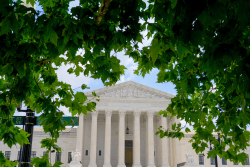
The Supreme Court ruled on Monday that state laws allowing ballots to arrive after Election Day are legal. The decision is the latest in a series of setbacks for President Trump’s efforts to regulate elections.
The opening weekend of the Great American State Fair in Washington, D.C., was, to put it simply, miserable. It was extremely muggy, with rain pouring down seemingly every hour. A child rolled around in the grass, crying and screaming, "I. WANT. TO. GO. HOME!!!" Creed's "Higher" blared over the loudspeakers, and a sparse crowd milled about the various exhibitions. The bare bones setup-flimsy, fake two-dimensional columns that looked like something Wile E. Coyote would run into while chasing The Road Runner-left much to be desired, as America's 250th anniversary was celebrated with kitsch and...
Alea Bates wasn’t ready to leave Tallahassee Memorial HealthCare’s main hospital four days after a stranger shot her seven times at close range. Miraculously, hospital records show, none of the bullets damaged her internal organs.But after surgery, Bates said, she couldn’t get out of bed or walk to the bathroom without help. She complained of intense pain radiating down her left leg, weakness in her knee, and a numbing sensation below it, according to hospital records. Bates, who worked as an Uber Eats driver, didn’t have the strength to drive a car.Still, Bates said, the hospital told her it was time to go.“They didn't do any further X-rays or CTs or MRIs to figure out why my knee was numb,” she said. “And they were just like, you know, ‘It'll go away.’”Doctors said she was medically stable, Bates said, and because she had no health insurance, they could not send her to a rehabilitation hospital or a skilled nursing facility, which can charge thousands of dollars a day for such care.“They were just like, We need the bed for somebody who has insurance,” she said. “That's of course, you know, what they say without saying it.”At least one firearm injury is treated in an American emergency room every 30 minutes. Tens of thousands die from their injuries every year. Many more, like Bates, are left to face long recoveries, steep medical debt, and enduring trauma.How insurance affects the care of gunshot wound victims has remained shrouded in mystery — until now, due to a new analysis by The Trace and KFF Health News of data that Florida hospitals compile to collect payments from insurance companies and file with the state.When uninsured patients arrive at hospitals in Florida with gunshot wounds, on average they spend significantly fewer days in the hospital — in some cases half the time — than those with health insurance, according to the data analysis.Among the most severely injured patients, the uninsured stayed three fewer days in the hospital on average than their counterparts with insurance.The data was obtained exclusively for this reporting on gun violence hospitalizations in the state, aided by Florida state law.The newsrooms spent more than a year analyzing the records, which did not identify patients. The data contained patients’ insurance status, their residential ZIP code, their race, and other demographic info. Reporters reviewed academic studies and government documents and interviewed health policy experts, doctors, activists, and victims of gun violence or their relatives.The results are a first-of-its-kind look at what happens to the insured and the uninsured who are shot and admitted to the hospital for treatment.Across Florida, the analysis of hospital billing data from 2018 to 2024 obtained from the Florida Agency for Health Care Administration shows:Uninsured patients make up a quarter of the more than 20,000 gunshot wound hospitalizations identified, making them the largest single group treated for firearm injuries.Uninsured gunshot victims had hospital stays of about six days on average, only three-quarters of the time spent by patients with private insurance and less than half the average stay for patients on traditional Medicaid, the public health insurance program for poor and disabled people.The gap in hospital care persisted regardless of hospital size, location, or ownership type, including at facilities that receive taxpayer money with a mandate to treat all patients regardless of their ability to pay.Of the gunshot wound patients, nearly half were Black, making the group highly overrepresented. About a quarter of nonwhite patients were uninsured, versus fewer than a fifth of white patients.The inequality echoes a long history of discrimination in U.S. healthcare against Black and Latino patients, groups that suffer disproportionately from firearm violence and a lack of health insurance.The U.S. has more gun violence deaths than other wealthy nations, and no group suffers more than Black Americans like Bates. Black people are far more likely to become victims of a firearm homicide than white people, according to the Johns Hopkins Bloomberg School of Public Health.Patient outreach workers say hospital personnel might perceive gunshot victims as gang members or troublemakers who deserve blame for getting shot. One study found rehab centers refuse to admit gunshot victims more often than other patients, and some medical records from hospitals were littered with racist or insensitive descriptions of patients and their behavior.The damage can be lasting: Patients who leave the hospital too soon after a traumatic injury have a higher risk of serious complications, including infection, hemorrhage, nerve damage, and death, especially if wounds — and mental health concerns — are left untreated.Arch Mainous, a University of Florida professor and vice chair for research in community health and family medicine, said there’s evidence that financial incentives drive care — for patients and for...
The Supreme Court on Monday ruled that states can count mail ballots that are cast by Election Day but arrive later, rejecting a GOP challenge to Mississippi law's for late-arriving ballots.
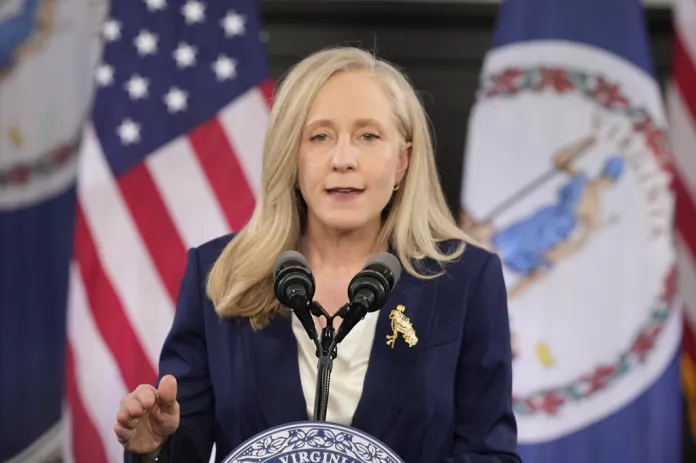
Gov. Abigail Spanberger (D-VA) returned Virginia’s state budget to the General Assembly on Monday with 14 proposed amendments ahead of the state’s fiscal cliff this week. The state’s House of Delegates and Senate will have to act on the amendments to the state’s budget and possibly send it back to Spanberger for her final signature […]