SCOTUS Says States Can Count Late-Arriving Mail Ballots
Center Right
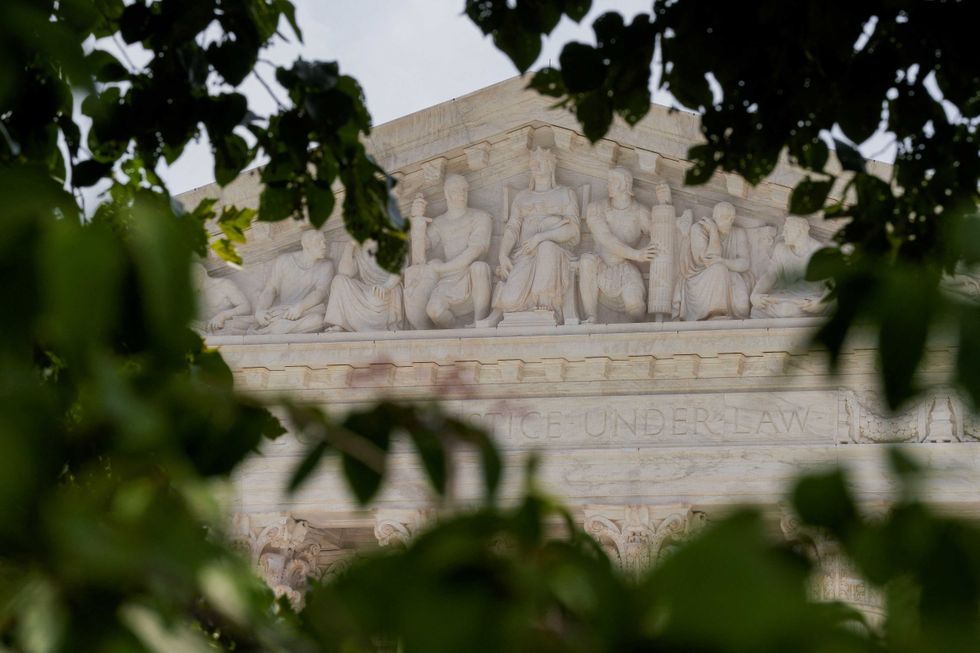
The Supreme Court on Monday ruled that states can count mail ballots that are cast by Election Day but arrive later, rejecting a GOP challenge to Mississippi law's for late-arriving ballots.
The Supreme Court handed President Donald Trump a loss on Monday in siding against his party on voting, refusing to overturn state laws that allow mail ballots that arrive after Election Day to be counted as long as they are postmarked by Election Day. But they might simultaneously have given Trump the tools to punch a hole in the right to vote by mail anyway.That's because they also released their long-awaited decision in Trump v. Slaughter, overturning nearly a century of precedent to determine the president can fire members of independent agencies without cause.According to White House correspondent Jacob Bogage, one of the many federal entities that could be impacted by Trump's newfound powers to clean house would be one with critical implications for mail-in ballots — effectively giving him a bunch of the control he was hoping to get out of the ruling that didn't go his way."This also has big potential mail-in voting consequences," he wrote. "It could empower the president to fire members of the USPS board of governors, the group that selects the postmaster general and overseas the U.S. mail system."This comes as the current postmaster general, David Steiner, is already going all-in on a controversial Trump executive order that would direct the Postal Service not to deliver mail ballots at all in states that don't hand over sensitive information about voter practices to the federal government.A federal judge in Boston has already moved to block the enforcement of that executive order, but litigation is certain to continue in the case.
The Supreme Court ruled on Monday that state laws allowing ballots to arrive after Election Day are legal. The decision is the latest in a series of setbacks for President Trump’s efforts to regulate elections.
The opening weekend of the Great American State Fair in Washington, D.C., was, to put it simply, miserable. It was extremely muggy, with rain pouring down seemingly every hour. A child rolled around in the grass, crying and screaming, "I. WANT. TO. GO. HOME!!!" Creed's "Higher" blared over the loudspeakers, and a sparse crowd milled about the various exhibitions. The bare bones setup-flimsy, fake two-dimensional columns that looked like something Wile E. Coyote would run into while chasing The Road Runner-left much to be desired, as America's 250th anniversary was celebrated with kitsch and...
Alea Bates wasn’t ready to leave Tallahassee Memorial HealthCare’s main hospital four days after a stranger shot her seven times at close range. Miraculously, hospital records show, none of the bullets damaged her internal organs.But after surgery, Bates said, she couldn’t get out of bed or walk to the bathroom without help. She complained of intense pain radiating down her left leg, weakness in her knee, and a numbing sensation below it, according to hospital records. Bates, who worked as an Uber Eats driver, didn’t have the strength to drive a car.Still, Bates said, the hospital told her it was time to go.“They didn't do any further X-rays or CTs or MRIs to figure out why my knee was numb,” she said. “And they were just like, you know, ‘It'll go away.’”Doctors said she was medically stable, Bates said, and because she had no health insurance, they could not send her to a rehabilitation hospital or a skilled nursing facility, which can charge thousands of dollars a day for such care.“They were just like, We need the bed for somebody who has insurance,” she said. “That's of course, you know, what they say without saying it.”At least one firearm injury is treated in an American emergency room every 30 minutes. Tens of thousands die from their injuries every year. Many more, like Bates, are left to face long recoveries, steep medical debt, and enduring trauma.How insurance affects the care of gunshot wound victims has remained shrouded in mystery — until now, due to a new analysis by The Trace and KFF Health News of data that Florida hospitals compile to collect payments from insurance companies and file with the state.When uninsured patients arrive at hospitals in Florida with gunshot wounds, on average they spend significantly fewer days in the hospital — in some cases half the time — than those with health insurance, according to the data analysis.Among the most severely injured patients, the uninsured stayed three fewer days in the hospital on average than their counterparts with insurance.The data was obtained exclusively for this reporting on gun violence hospitalizations in the state, aided by Florida state law.The newsrooms spent more than a year analyzing the records, which did not identify patients. The data contained patients’ insurance status, their residential ZIP code, their race, and other demographic info. Reporters reviewed academic studies and government documents and interviewed health policy experts, doctors, activists, and victims of gun violence or their relatives.The results are a first-of-its-kind look at what happens to the insured and the uninsured who are shot and admitted to the hospital for treatment.Across Florida, the analysis of hospital billing data from 2018 to 2024 obtained from the Florida Agency for Health Care Administration shows:Uninsured patients make up a quarter of the more than 20,000 gunshot wound hospitalizations identified, making them the largest single group treated for firearm injuries.Uninsured gunshot victims had hospital stays of about six days on average, only three-quarters of the time spent by patients with private insurance and less than half the average stay for patients on traditional Medicaid, the public health insurance program for poor and disabled people.The gap in hospital care persisted regardless of hospital size, location, or ownership type, including at facilities that receive taxpayer money with a mandate to treat all patients regardless of their ability to pay.Of the gunshot wound patients, nearly half were Black, making the group highly overrepresented. About a quarter of nonwhite patients were uninsured, versus fewer than a fifth of white patients.The inequality echoes a long history of discrimination in U.S. healthcare against Black and Latino patients, groups that suffer disproportionately from firearm violence and a lack of health insurance.The U.S. has more gun violence deaths than other wealthy nations, and no group suffers more than Black Americans like Bates. Black people are far more likely to become victims of a firearm homicide than white people, according to the Johns Hopkins Bloomberg School of Public Health.Patient outreach workers say hospital personnel might perceive gunshot victims as gang members or troublemakers who deserve blame for getting shot. One study found rehab centers refuse to admit gunshot victims more often than other patients, and some medical records from hospitals were littered with racist or insensitive descriptions of patients and their behavior.The damage can be lasting: Patients who leave the hospital too soon after a traumatic injury have a higher risk of serious complications, including infection, hemorrhage, nerve damage, and death, especially if wounds — and mental health concerns — are left untreated.Arch Mainous, a University of Florida professor and vice chair for research in community health and family medicine, said there’s evidence that financial incentives drive care — for patients and for...
Former West Virginia Sen. Joe Manchin criticized his former political party for embracing socialist ideology, as the Democratic Party leans into more far-left candidates following progressives’ primary wins in New York and across the country. When discussing the recent primary wins by left-wing candidates, Manchin was asked about a Gallup poll showing that 66% of […]
In a blow to the integrity of U.S. elections, the Supreme Court upheld state laws permitting election officials to accept postmarked ballots after Election Day on Monday. The ruling was 5-4, with Chief Justice John Roberts and Justice Amy Coney Barrett joining the court’s liberal justices in the majority. The dispute in Watson v. RNC […]
CLICK HERE TO WATCH RIGHT NOW!
The post Watch Live: Supreme Court Rules Federal Law Does NOT Require Mail-In Ballots to Be Received by Election Day – Barrett and Roberts Side with Liberal Justices and More! The WAR Zone Podcast With Wayne Allyn Root Presented by The Gateway Pundit appeared first on The Gateway Pundit.
Former Federal Trade Commissioner Rebecca Slaughter on Monday called on Congress to reassert its authority as a coequal branch of government after the Supreme Court ruled that President Trump had the authority to fire her last year. The conservative majority ruled 6-3 in favor of the president, expanding presidential power over an independent agency within…