Cuba warns US it has ‘full and exclusive sovereignty’ over airspace in wake of Castro indictment
Right
Cuba shared a pointed message to the United States Saturday, warning it had "full and exclusive sovereignty over the airspace above its territory," in an apparent attempt to deter a Maduro-style incursion to capture indicted Raul Castro.
The creation of an “Anti-Weaponization Fund” at the Department of Justice may have shocked a lot of people, but not Paul Figley, a legal scholar and former DOJ staffer who has spent years warning that taxpayer money could be used by an administration for political ends in just this way.The fund, the result of a settlement of legal claims by Donald Trump and his family against the IRS, aims to compensate those who “suffered weaponization and lawfare” at the hands of the federal government. It has already been called a “slush fund” by the New York Times editorial board, which noted – as many have – that it’s likely to pay much of its US$1.8 billion funding to Trump allies who rioted at the U.S. Capitol on Jan. 6, 2021.The money comes from what’s called the Judgment Fund, set up in the Department of Treasury by Congress in the 1950s to pay legal judgments and settlements involving the federal government. In doing so, Congress gave away a portion of its foundational, constitutional role: The power to control government spending. Figley, who worked at the Department of Justice and is also an emeritus professor of legal rhetoric at American University Washington College of Law, has warned Congress and others that by putting decisions about such huge payouts in the hands of the executive branch, the fund would inevitably be hijacked for political purposes. Naomi Schalit, The Conversation’s politics and legal affairs editor, spoke with Figley. What is the Judgment Fund, and why was it created?The Judgment Fund is a permanent, indefinite appropriation that Congress established to pay most judgments and settlements against the federal government. Prior to 1956, whenever a judgment or settlement was agreed upon or finalized, Congress would have to appropriate money to pay it. That meant the administration and Congress would have to go through kind of a karaoke: “Here’s a new settlement, here’s why it should be approved.” “OK, we approve it.” And it took up a lot of time and didn’t produce much good effect. So the old General Accounting Office recommended that Congress set up a system that would pay some claims automatically, and in 1956, Congress established the Judgment Fund. It allows payment of settlements and judgments if those payments were final and not authorized or provided for by some other legally available appropriation. Former Department of Justice lawyer Paul Figley spent years warning that presidents could use the little-known Judgment Fund as a political piggy bank. Congress essentially handed over responsibility for paying for settlements and judgments, which was taking up a lot of time, to the executive branch?Yes, the Department of Justice would do the paperwork and say this is final, or this is an appropriate settlement, send that to Treasury, Treasury then certifies that it was properly documented, and then orders the payment.From the constitutional perspective, it appears that Congress was getting rid of an annoying thing that it had to do, but wasn’t it also giving away its power of the purse?Yes, but only in a limited way to begin with. When the Judgment Fund was first established, any settlement or judgment that could go through the process had to be less than US$100,000. That worked so well that Congress increased the amount a couple of times, and then ultimately in 1977 said there’s no cap. It’s a permanent indefinite appropriation, and once it was established, nobody ever has to go back to Congress to ask that it be updated or refilled. It works automatically. You’ve written and given testimony about concerns you have with the Judgment Fund, over quite a few years and spanning several administrations. What are those concerns?The concern is that under our system, Congress should be responsible for – and is responsible for – appropriating money.Are you worried that this fund can be abused?It has been. For many, many years, it wasn’t abused very often. Occasionally, it was used for political purposes in the foreign policy context. President George H. W. Bush used it in 1991 to settle a claim with Iran for arms that had not been delivered. The Clinton administration used it to settle a similar claim with Pakistan in 1998. The Obama administration secretly paid Iran $1.7 billion for arms that the U.S. had not delivered, and $1.3 billion of that came from the Judgment Fund. Those all had a political context, and while they were arguably good decisions, they were decisions that, absent the Judgment Fund, would have had to go through Congress and have money appropriated after, perhaps, debate and discussion. The Obama administration also went much further in litigation involving claims of civil rights violations by the Department of Agriculture. The Obama administration’s use of the Judgment Fund in class action suits for discrimination in Department of Agriculture civil loan programs struck me as really bad policy.
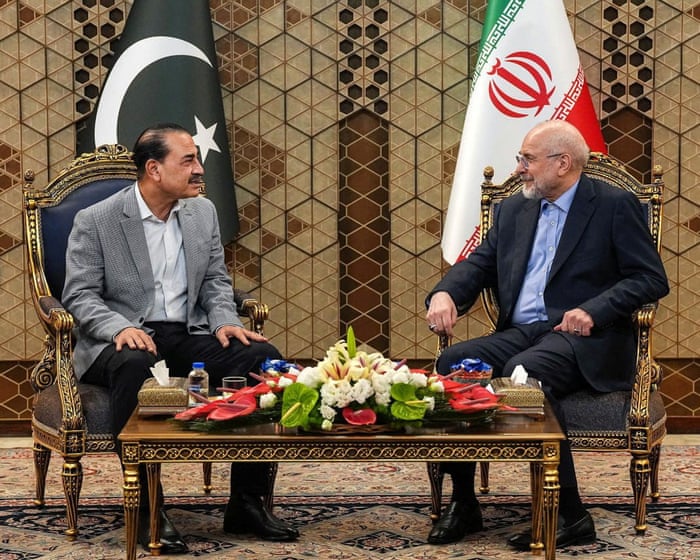
A framework agreement to end the Iran war is being “fine-tuned,” according to a security official from Pakistan, who has been helping media negotiations between Iran and the US.
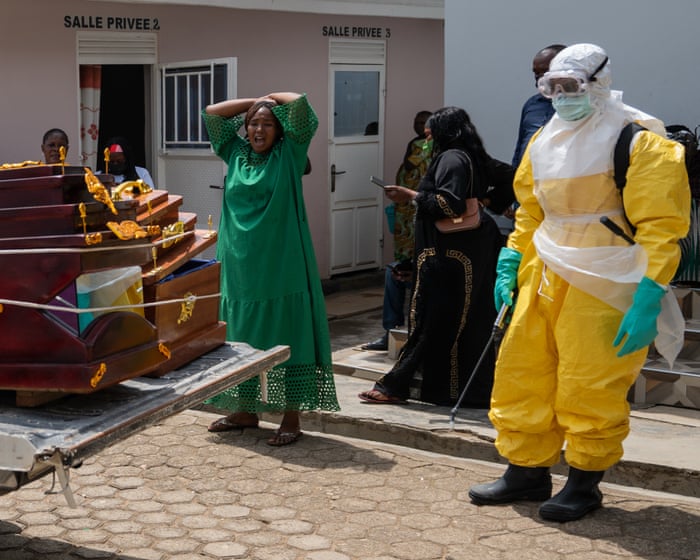
Order aimed at preventing spread of Ebola to US affects travelers who have visited three countries in last 21 daysUS authorities have temporarily banned green-card holders from entering the country if they have traveled to the Democratic Republic of the Congo (DRC), Uganda or South Sudan in the last 21 days.The order issued on Friday is part of an expanding attempt to prevent Ebola from entering US borders. A previously announced travel restriction blocked only people without US passports who had visited those countries from entering but exempted US citizens and lawful permanent residents. Continue reading...
US president says it’s a ‘solid 50/50’ on either making a ‘good’ deal with Iran or striking the country anewDonald Trump said he would meet today with American negotiators to review Iran’s latest proposal and decide by Sunday whether he will strike Iran “to kingdom come”.The US secretary of state, Marco Rubio, also told reporters in India on Saturday that “there may be news later today” about Iran. He did not specify what that news would be. Continue reading...
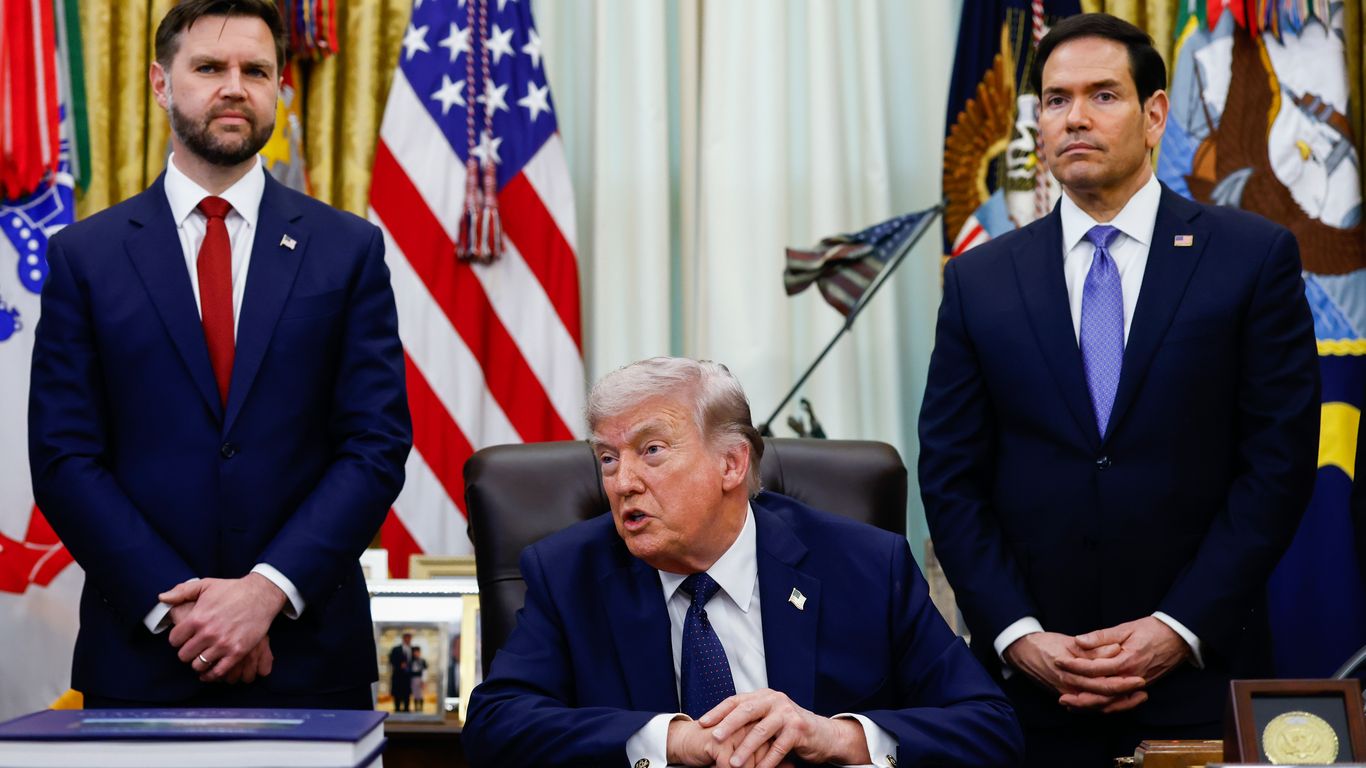
President Trump told Axios on Saturday that he would be meeting with his negotiators later in the day to discuss Iran's latest offer, and would likely decide by Sunday whether to resume the war.The big picture: Trump said it was a "solid 50/50" as to whether he would be able to make a "good" deal or else "blow them to kingdom come."The latest: The president is expected to hold a conference call with Gulf leaders later today to discuss the situation with Iran, per two sources with knowledge of the plans.The leaders of Egypt, Pakistan and Turkey are currently expected to be among the participants. A senior Israeli official said that Prime Minister Benjamin Netanyahu and his aides are in touch with the White House about the emerging deal.Friction point: Sen. Lindsey Graham (R-S.C.) told Axios that some leaders in the region have urged President Trump to strike Iran to weaken the regime and get a deal on better terms.On the other hand, he said, other leaders in the region and some of the president's top advisers urged him to take the deal that is on the table.Those voices, he said, claimed the Strait of Hormuz can't be secure from Iranian influence and that if Iran is attacked it has the ability to destroy substantial Gulf oil operations."Count me as a strong skeptic that Iran can't be prevented from terrorizing the Strait of Hormuz and that we can't defend vital interests in the region after massive attacks against Iran — if they have been truly obliterated they shouldn't be able to do either," he said. "Time will tell. I am hoping for a good outcome still."The big picture: Trump told Axios he'd meet with Steve Witkoff and Jared Kushner later on Saturday to discuss Iran's latest response. Vice President Vance is also expected to join.Pakistani Field Marshal Asim Munir, who has been mediating between the parties, left Tehran on Saturday after meeting top officials there and trying to push a deal across the line.A deal was not finalized but Pakistan said there was "encouraging progress toward a final understanding."The new draft that Trump intends to review on Saturday emerged from the Iran-Pakistan talks.The other side: Iran's foreign ministry spokesperson said Saturday that Iran and the U.S. were in the final stage of discussions on a memorandum of understanding to end the war. The spokesperson said the MOU would also deal with gradually reopening the Strait of Hormuz, lifting the U.S. blockade and releasing frozen Iranian funds. He added that a 30-60 day period of negotiations on a detailed agreement would follow.Zoom in: Trump said he would only take a deal that covers issues like uranium enrichment and the fate of Iran's existing stockpile.However, those issues are unlikely to be resolved in any detail under the MOU the U.S. and Iran are discussing to end the war and launch more in-depth negotiations.Regional mediators — Qatar, Egypt, Turkey, Saudi Arabia and Pakistan — have been scrambling over the past 24 hours to bridge the gaps between the parties. They have held numerous calls with both Iranian Foreign Minister Abbas Araghchi and Witkoff.State of play: "I think one of two things will happen: either I hit them harder than they have ever been hit, or we are going to sign a deal that is good," Trump said.He acknowledged that "some people would much rather have a deal and others would rather resume the war," but rejected the idea that Netanyahu was "worried" that he might make an unfavorable deal.Trump described Netanyahu as "torn." Israeli officials say the prime minister is highly concerned about the deal under discussion and has urged Trump to launch another round of strikes.What to watch: Secretary of State Marco Rubio said Saturday that there had been "some progress" in talks and "there might be some news later today." He said Iran can never have a nuclear weapon and must give up its enriched uranium, and the Strait of Hormuz needs to be fully reopened "without tolls." Up to now, the U.S. and Iranian positions on both the nuclear issue and the strait have been irreconcilable. Those issues might not be fully resolved even if a peace memo is signed. This is a developing story. Check back for updates.