
WorldNetDaily
Viral video skewers SAVE America Act critics for hypocrisy
Election security plan is what dozens of OTHER nations already require
Far Right
The proposed “hyperscale” campus would strain water, energy, and local ecology.
Election security plan is what dozens of OTHER nations already require
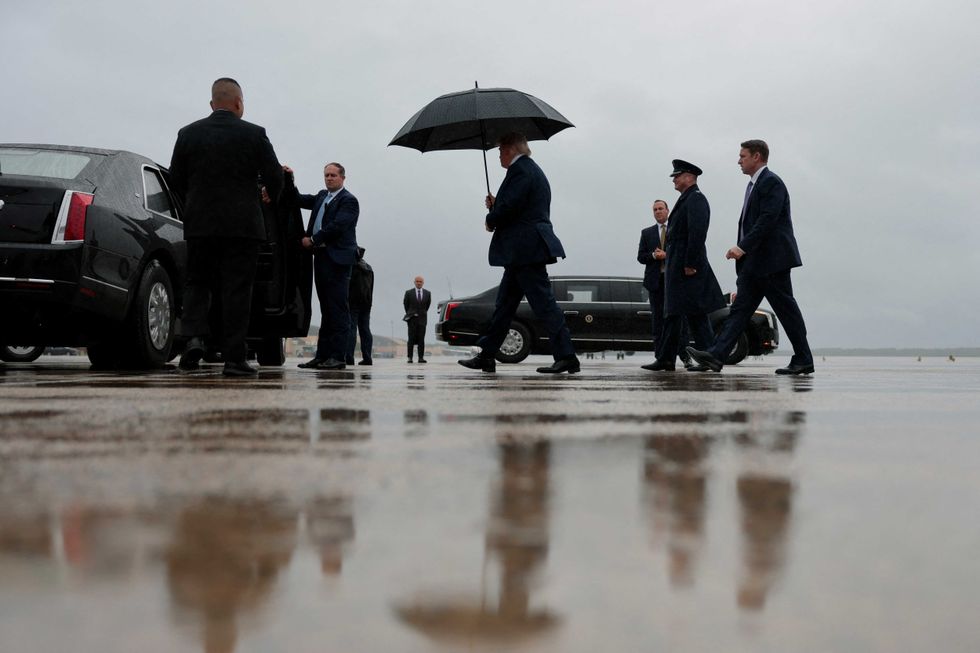
As President Donald Trump appears to inch closer toward authorizing a major U.S. military operation this weekend, renowned international security expert Robert Pape warned the president on Saturday that he may very well be walking directly into what he called “the biggest trap yet.”Reporting suggests that the Trump administration is actively preparing to launch a new wave of strikes against Iran, and officially end the ongoing but weak U.S.-Iran ceasefire. The president teased a full U.S.-takeover of Iran Saturday morning, and later said there was a “solid” chance he decides to blow Iran “to kingdom come” by Sunday.“The administration may be approaching a dangerous decision point. And the real danger is not simply another round of strikes on Iran,” wrote Pape, a professor of political science at the University of Chicago, writing on his Substack. “The real danger is that Trump may be approaching the biggest Smart Bomb Trap yet.”The “Smart Bomb Trap,” as he called it, was the notion that a quick resolution to the U.S. war against Iran could be achieved with “one precise strike” targeting Iran’s new supreme leader or senior leadership. As noted by Pape, the U.S. war against Iraq began with a series of strikes targeting former Iraqi President Saddam Hussein, similar to how the ongoing U.S. war against Iran began with strikes targeting former Iranian Supreme Leader Ali Hosseini Khamenei.With the U.S. war against Iran hammering Americans’ pocketbooks both at the gas pump and elsewhere, and with the GOP’s midterm outlook growing more dire, such an option would be hard to resist for Trump, Pape argued.“The possibility that one precise strike could suddenly end the crisis, collapse the regime, restore deterrence, and produce a dramatic political victory,” Pape wrote.“For any president under pressure, that possibility becomes extraordinarily difficult to resist. Especially for Trump, whose instinct in crisis has repeatedly been to search for decisive demonstrations of strength through precision force.”However, the unique and asymmetrical circumstances that have allowed Iran – which has military spending roughly 130-times less on its military – to block the Trump administration from achieving its stated war objectives, Pape cautioned, could very well backfire spectacularly.“Iran would still retain dispersed missile capability, underground infrastructure, asymmetric escalation pathways, and – most importantly – the ability to widen economic disruption across the Gulf faster than Washington could stabilize it,” Pape wrote.“Especially if the US attacks Iran’s leaders, retaliation could well include Saudi, UAE, and Kuwaiti leaders – the leadership of countries that Iran would surely like to weaken decisively as US allies crucial to future basing of more military power against Iran in the future. That is the key asymmetry in this war.”

A framework agreement to end the Iran war is being “fine-tuned,” according to a security official from Pakistan, who has been helping media negotiations between Iran and the US.

Update: The Busch family released a statement on the cause of death, saying a medical evaluation “concluded that severe pneumonia progressed into sepsis, resulting in rapid and […]

President Donald Trump is dragging the Republican Party down at a moment when it could cost them everything, the conservative-leaning Wall Street Journal editorial board wrote in an analysis published on Friday evening."Republicans don’t want to say this publicly, but privately they do," wrote the board, an increasingly frequent critic of the president's policies despite sharing many of his political beliefs. "President Trump’s personal political obsessions are hurting his Presidency, harming the chances for further policy gains the rest of this year, and putting control of the House and Senate in jeopardy."GOP lawmakers' inability to pass Trump's Homeland Security funding bill, while also turning up the heat against his "Anti-Weaponization Fund" to pay out $1.776 billion to his political allies, is beginning to make the cracks show, the board wrote. Trump's other fixation on getting White House ballroom funding passed has similarly ground the DHS budget bill process to a halt, and the ongoing war powers votes Democrats are forcing against his action in Iran are starting to divide the party as well.But the real catalyst, the board wrote, is Trump working to unseat two Republican incumbent senators."First he helped defeat Lousiana's (sic) Bill Cassidy in a primary, and this week he endorsed Texas Attorney General Ken Paxton over Sen. John Cornyn," wrote the board. "Mr. Trump’s motives in both cases were largely personal — he wanted revenge against Mr. Cassidy for thinking his behavior on Jan. 6, 2001 (sic), was an impeachable offense, and Mr. Cornyn didn’t endorse him for President with enough alacrity to suit his loyalty test."Through all of this, the board wrote, Trump "seems incapable of rising above, even as voters care much more about the economy and prices and his job approval falls to new lows.""Mr. Trump’s Presidency will be all but over — except for impeachment 3.0 — if the GOP loses control of Congress in November," the board concluded. "If he wants to accomplish more legislatively, he has only a few months to do it. Does he want his remaining legacy to be a ballroom, an Arc de Trump, and payoffs for his friends from a fund that Republicans would denounce if a Democratic President tried it?"
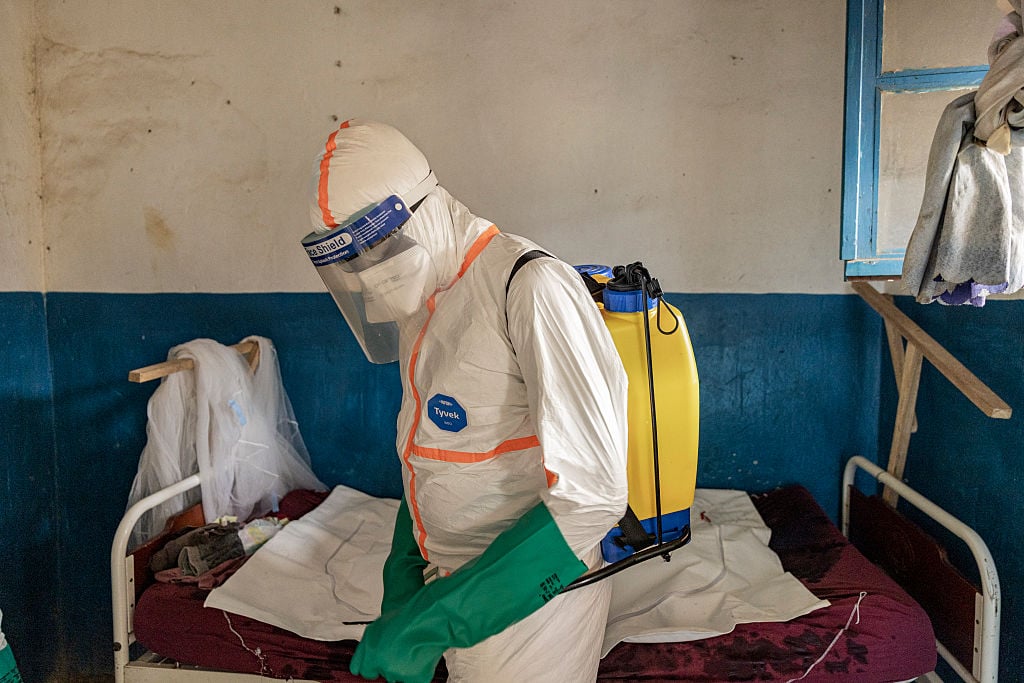
“Ebola and hantavirus are different viruses spreading under different circumstances, but both come from animals,” writes Neil Vora.

In the digital age, all politics is national. Just ask United Kingdom Prime Minister Keir Starmer, who may lose his job following the Labour Party's sweeping losses in his country's May 7 local elections.

A Republican strategist says that Trump is hurting politically right now and warned a GOP lawmaker who appeared with the president."This is a really terrible week for this Trump administration," Rina Shah said during an appearance on CNN. She added that Rep. Mike Lawler (R-NY) "should not have trumped" the president at a campaign event on Friday."Lawler has been confusing in the past many months," Shah explained. "By continuing to seem like he wants to be close to the White House," despite "his colleagues in the Senate...they're reading the room."She brought up the fiery meeting between GOP senators and Acting Attorney General Todd Blanche, where they "really stood up" and chewed into him regarding the "anti-weaponization" fund, Shah said.The midterm elections are six months away, and "it's time to get tough about what matters." The senators who ripped into Blanche "aren't in full revolt. They're just in midterm savior mode," Shah added."So Lawler, if he knew better, he would be doing that too," she explained. "He's employing a throw-it-all-at-the-wall strategy. He thinks that maybe Trump's charisma might win out with some folks, but again, the pocketbook issues."She tried to send the message to Lawler that "your constituents hate endless war," but Trump is "making it all about himself."