Cubans Rally in Havana Against the Trump Administration’s Threats to Attack
“Cuba is a people of peace and reaffirms its legitimate right to self-defense," Cuba’s CDR national coordinator said

President Trump told Axios on Saturday that he would be meeting with his negotiators later in the day to discuss Iran's latest offer, and would likely decide by Sunday whether to resume the war.The big picture: Trump said it was a "solid 50/50" as to whether he would be able to make a "good" deal or else "blow them to kingdom come."The latest: The president is expected to hold a conference call with Gulf leaders later today to discuss the situation with Iran, per two sources with knowledge of the plans.The leaders of Egypt, Pakistan and Turkey are currently expected to be among the participants. A senior Israeli official said that Prime Minister Benjamin Netanyahu and his aides are in touch with the White House about the emerging deal.Friction point: Sen. Lindsey Graham (R-S.C.) told Axios that some leaders in the region have urged President Trump to strike Iran to weaken the regime and get a deal on better terms.On the other hand, he said, other leaders in the region and some of the president's top advisers urged him to take the deal that is on the table.Those voices, he said, claimed the Strait of Hormuz can't be secure from Iranian influence and that if Iran is attacked it has the ability to destroy substantial Gulf oil operations."Count me as a strong skeptic that Iran can't be prevented from terrorizing the Strait of Hormuz and that we can't defend vital interests in the region after massive attacks against Iran — if they have been truly obliterated they shouldn't be able to do either," he said. "Time will tell. I am hoping for a good outcome still."The big picture: Trump told Axios he'd meet with Steve Witkoff and Jared Kushner later on Saturday to discuss Iran's latest response. Vice President Vance is also expected to join.Pakistani Field Marshal Asim Munir, who has been mediating between the parties, left Tehran on Saturday after meeting top officials there and trying to push a deal across the line.A deal was not finalized but Pakistan said there was "encouraging progress toward a final understanding."The new draft that Trump intends to review on Saturday emerged from the Iran-Pakistan talks.The other side: Iran's foreign ministry spokesperson said Saturday that Iran and the U.S. were in the final stage of discussions on a memorandum of understanding to end the war. The spokesperson said the MOU would also deal with gradually reopening the Strait of Hormuz, lifting the U.S. blockade and releasing frozen Iranian funds. He added that a 30-60 day period of negotiations on a detailed agreement would follow.Zoom in: Trump said he would only take a deal that covers issues like uranium enrichment and the fate of Iran's existing stockpile.However, those issues are unlikely to be resolved in any detail under the MOU the U.S. and Iran are discussing to end the war and launch more in-depth negotiations.Regional mediators — Qatar, Egypt, Turkey, Saudi Arabia and Pakistan — have been scrambling over the past 24 hours to bridge the gaps between the parties. They have held numerous calls with both Iranian Foreign Minister Abbas Araghchi and Witkoff.State of play: "I think one of two things will happen: either I hit them harder than they have ever been hit, or we are going to sign a deal that is good," Trump said.He acknowledged that "some people would much rather have a deal and others would rather resume the war," but rejected the idea that Netanyahu was "worried" that he might make an unfavorable deal.Trump described Netanyahu as "torn." Israeli officials say the prime minister is highly concerned about the deal under discussion and has urged Trump to launch another round of strikes.What to watch: Secretary of State Marco Rubio said Saturday that there had been "some progress" in talks and "there might be some news later today." He said Iran can never have a nuclear weapon and must give up its enriched uranium, and the Strait of Hormuz needs to be fully reopened "without tolls." Up to now, the U.S. and Iranian positions on both the nuclear issue and the strait have been irreconcilable. Those issues might not be fully resolved even if a peace memo is signed. This is a developing story. Check back for updates.
“Cuba is a people of peace and reaffirms its legitimate right to self-defense," Cuba’s CDR national coordinator said
Some Republican lawmakers are pushing back on a potential peace deal with Iran as President Donald Trump mulls renewed airstrikes. The United States and Iran are reportedly close to securing an agreement that extends the ceasefire for 60 days. If finalized, the deal would include the gradual reopening of the Strait of Hormuz and lay […]
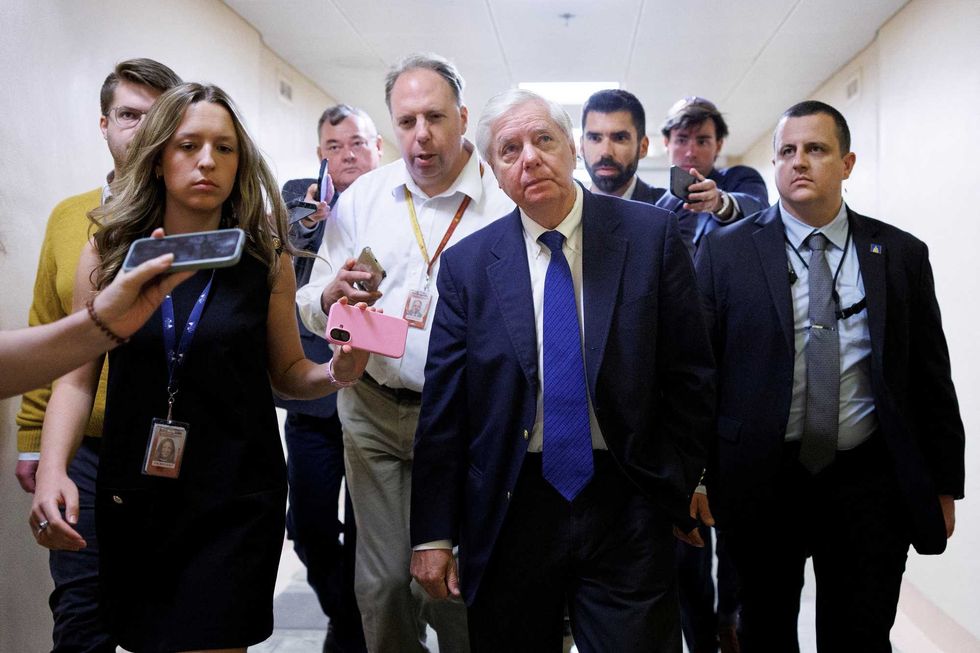
Sen. Lindsey Graham (R-SC) turned heads on Saturday after openly questioning why the U.S. war against Iran "started to begin with,” despite having personally lobbied for the United States to launch it.Graham’s remarks come amid reports that President Donald Trump – who Graham notably didn’t name in his comments – is “close to a deal to end the war” with Iranian officials, according to a claim from Axios’ Barak Ravid on Saturday. The prospect of a deal appeared to trouble Graham, however, at least without first crippling Iran's military capacity beyond the point of recovery.“This combination of Iran being perceived as having the ability to terrorize the Strait in perpetuity and the ability [to] inflict massive damage to Gulf oil infrastructure is a major shift of the balance of power in the region and over time will be a nightmare for Israel,” Graham wrote in a social media post on X.“Also, it makes one wonder why the war started to begin with if these perceptions are accurate. I personally am a skeptic of the idea that Iran cannot be denied the ability to terrorize the Strait and the region cannot protect itself against Iranian military capability.”Graham was widely mocked back in January after appearing “legitimately depressed” in the wake of Trump’s decision back in January to hold off on striking Iran. In March, it was revealed that Graham had “coached” Israeli Prime Minister Benjamin Netanyahu on how to convince Trump to bomb Iran.For Graham to now question why the war he lobbied to start was launched “to begin with” caused concern among some onlookers.“Reading Senator Graham's tweets is always really exciting because you really have no idea if you're getting utterly sycophantic sane washing of POTUS, or, entirely accurate and cogent geopolitical analysis,” wrote journalist Matt Gurney in a social media post on X to his more than 52,000 followers.Journalist Chuck Todd noted how Graham was “trying so hard not to use the word ‘Trump’” in his remarks, writing in a social media post on X to his nearly 2 million followers, and political commentator Tommy Vietor offered Graham some advice.“File this one under: things you should’ve thought through before starting the war,” Vietor wrote to his nearly 540,000 followers on X.Graham has long been among the most vocal advocates for a U.S. strike on Iran, consistent with his long record of backing military action against other nations throughout his career, including Iran, Iraq, Libya, Mexico, North Korea, Syria and Venezuela, among other nations.Reading Senator Graham's tweets is always really exciting because you really have no idea if you're getting utterly sycophantic sane washing of POTUS, or, entirely accurate and cogent geopolitical analysis. https://t.co/3w29R1Gtoq— Matt Gurney (@mattgurney) May 23, 2026
Secretary of State Marco Rubio on Saturday said progress has been made in the ongoing peace negotiations between the U.S. and Iran, saying the war will be solved “one way or the other” amid a visit to India. “There’s been some progress made. Even as I speak to you now, there’s some work being done,”…
Rubio echoed Trump’s sentiment that the U.S. will not allow Iran to obtain a nuclear weapon, to stop enriching uranium and to reopen the Strait of Hormuz — a critical waterway whose closure has severely disrupted the global oil supply chain.
President Donald Trump held a conference call with the leaders of several Middle Eastern nations on Saturday to discuss a possible agreement between the United States and Iran. The Gulf states that joined the call were Saudi Arabia, Qatar, the United Arab Emirates, Egypt, Turkey, and Pakistan, Reuters reported. The call started at 1 p.m. […]
The Trump administration and Iran are close to a deal to end the war, with remaining gaps focused on "wording" of several points, a U.S. official briefed on the negotiations said Saturday.Why it matters: It's one of the strongest signals yet that the nearly three-month-old war could be nearing an end. The official stressed no final decision has been made by President Trump.Reality check: Trump and his advisers thought they were close to a deal several times at earlier stages in the war, but none materialized.The latest: Trump held a call on Saturday with the leaders of Saudi Arabia, the UAE, Qatar, Egypt, Turkey and Pakistan. According to a source briefed on the call, several of the leaders urged Trump to take the deal.Trump is expected to speak on Saturday with Israeli Prime Minister Benjamin Netanyahu, an Israeli official said.Vice President JD Vance, who was in Ohio, and Secretary of Defense Pete Hegseth, who was at West Point, were called back to Washington for a meeting to discuss the deal.Catch up quick: Earlier Saturday, Trump told Axios he would be meeting with his negotiators later in the day to discuss Iran's latest offer, and would likely decide by Sunday whether to resume the war.Trump said it was a "solid 50/50" as to whether he would be able to make a "good" deal or else "blow them to kingdom come."Zoom in: Pakistani Field Marshal Asim Munir, who has been mediating between the parties, left Tehran on Saturday after meeting top officials there and trying to push a deal across the line.A deal was not finalized but Pakistan said there was "encouraging progress toward a final understanding."The new draft that Trump intends to review on Saturday emerged from the Iran-Pakistan talks.The other side: Iran's foreign ministry spokesperson said Saturday that Iran and the U.S. were in the final stage of discussions on a memorandum of understanding to end the war.The spokesperson said the MOU would also deal with gradually reopening the Strait of Hormuz, lifting the U.S. blockade and releasing frozen Iranian funds.He added that a 30-60 day period of negotiations on a detailed agreement would follow.This is breaking news. Check back for updates.
As President Donald Trump appears to inch closer toward authorizing a major U.S. military operation this weekend, renowned international security expert Robert Pape warned the president on Saturday that he may very well be walking directly into what he called “the biggest trap yet.”Reporting suggests that the Trump administration is actively preparing to launch a new wave of strikes against Iran, and officially end the ongoing but weak U.S.-Iran ceasefire. The president teased a full U.S.-takeover of Iran Saturday morning, and later said there was a “solid” chance he decides to blow Iran “to kingdom come” by Sunday.“The administration may be approaching a dangerous decision point. And the real danger is not simply another round of strikes on Iran,” wrote Pape, a professor of political science at the University of Chicago, writing on his Substack. “The real danger is that Trump may be approaching the biggest Smart Bomb Trap yet.”The “Smart Bomb Trap,” as he called it, was the notion that a quick resolution to the U.S. war against Iran could be achieved with “one precise strike” targeting Iran’s new supreme leader or senior leadership. As noted by Pape, the U.S. war against Iraq began with a series of strikes targeting former Iraqi President Saddam Hussein, similar to how the ongoing U.S. war against Iran began with strikes targeting former Iranian Supreme Leader Ali Hosseini Khamenei.With the U.S. war against Iran hammering Americans’ pocketbooks both at the gas pump and elsewhere, and with the GOP’s midterm outlook growing more dire, such an option would be hard to resist for Trump, Pape argued.“The possibility that one precise strike could suddenly end the crisis, collapse the regime, restore deterrence, and produce a dramatic political victory,” Pape wrote.“For any president under pressure, that possibility becomes extraordinarily difficult to resist. Especially for Trump, whose instinct in crisis has repeatedly been to search for decisive demonstrations of strength through precision force.”However, the unique and asymmetrical circumstances that have allowed Iran – which has military spending roughly 130-times less on its military – to block the Trump administration from achieving its stated war objectives, Pape cautioned, could very well backfire spectacularly.“Iran would still retain dispersed missile capability, underground infrastructure, asymmetric escalation pathways, and – most importantly – the ability to widen economic disruption across the Gulf faster than Washington could stabilize it,” Pape wrote.“Especially if the US attacks Iran’s leaders, retaliation could well include Saudi, UAE, and Kuwaiti leaders – the leadership of countries that Iran would surely like to weaken decisively as US allies crucial to future basing of more military power against Iran in the future. That is the key asymmetry in this war.”