When some politicians are inconvenienced by the Constitution, they may seek to change the court that interprets it. Packing the Supreme Court was once agreed to be a radical measure, one that threatens the sanctity of the institution as a politically impartial branch. For over 150 years, Congress has not altered the number of justices […]
Installation of Independence Day safety measures was deployed early due to the “increase in vandalism by leftist activists” in and around the Lincoln Memorial Reflecting Pool. In […]
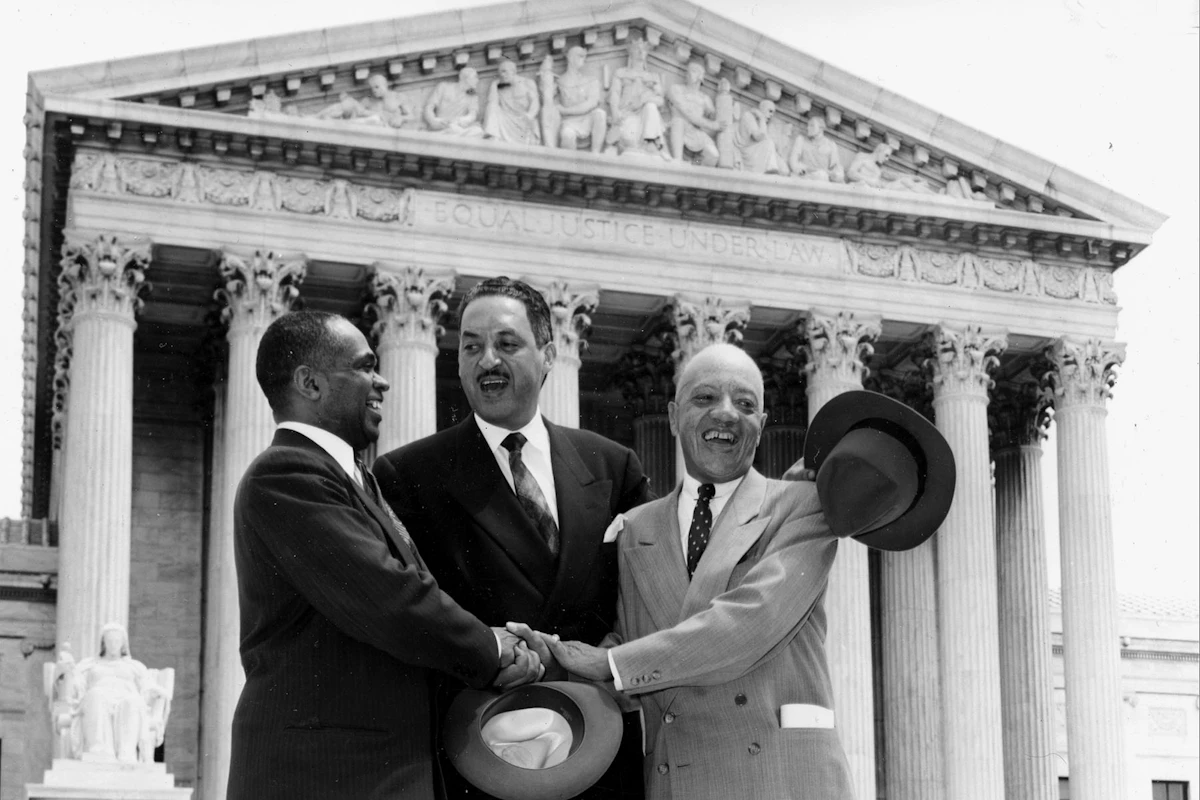
1. Brown v. Board of Education, 1954This school desegregation decision was so important that Chief Justice Earl Warren made sure the judges were unanimous. And even with that, 20 or so years passed before it was actually enforced.2. Dred Scott v. Sandford, 1857A shameful decision not to extend citizenship to descendants of slaves by a shameful court that helped precipitate the Civil War. Let us note, however, that the vote was 7–2, so bravo to Benjamin Robbins Curtis and John McLean.3. Marbury v. Madison, 1803In which Chief Justice John Marshall established judicial review—giving the court the power to declare a congressional law unconstitutional. Would be lovely if we could undo this today.4. Plessy v. Ferguson, 1896The infamous “separate but equal” ruling. Homer Plessy was seven-eighths Caucasian and tried to sit in a white railway car. Not in Louisiana, bub!T-5. Citizens United v. Federal Election Commission, 2010A disgraceful ruling to all but undo campaign finance rules. Its impact on U.S. elections has been corrupting beyond our ability to count—quite literally, since one result of this decision is that we have no way of tracking how much corporations pour into campaigns.T-5. Roe v. Wade, 1973The landmark pro-abortion ruling. Interestingly, at first, the Jerry Falwells of this country weren’t up in arms about this one. Homeschooling was their big issue at the time.“This case … empowers Trump to violate as many laws as he wants without fear of the consequences. Immunity breeds impunity.”—author and columnist Jonathan Alter on Trump v. U.S.7. Trump v. United States, 2024The ruling that offered the president immunity from criminal prosecution for official acts. One of the most annoying naïve-liberal guessing games of the Roberts court era: Maybe Gorsuch or Kavanaugh will save us here! No. They didn’t.8. Bush v. Gore, 2000The race to the right-wing gutter started here, with a decision so rancidly political—it settled a dispute over vote recounting—that the five majority justices noted it was “limited only to the present circumstances,” i.e., meant to install George W. Bush as president.T-9. McCulloch v. Maryland, 1819Unlike Marbury, this John Marshall ruling suits liberals today just fine: It declared the supremacy of federal over state law and would define the potential scope of the administrative state. Some conservatives would like to overturn it. At the rate we’re going, they won’t need to.T-9. Obergefell v. Hodges, 2015A rare victory for progress and decency in the modern era, thanks to Anthony Kennedy joining the court’s (then) four liberals to legalize same-sex marriage.T-11. Dobbs v. Jackson Women’s Health Organization, 2022Another Deep South case, and wham, nearly a half-century of pro-abortion rights precedent tossed out the window. Every justice who voted for this clearly lied about their beliefs at their confirmation hearings.T-11. West Coast Hotel Company v. Parrish, 1937The famous case in which the anti–New Deal Supreme Court, perhaps brushed back by FDR’s court-packing scheme, shifted its right-wing gears and held that a minimum wage was constitutional. Justice Owen Roberts called it “the switch in time that saved nine.”T-11. Baker v. Carr, 1962One of three “one person, one vote” cases decided by the Warren court in the early 1960s. Warren, upon retiring, called these cases the most important of his tenure. One justice had a nervous breakdown during deliberations.T-14. Loving v. Virginia, 1967The court here held unanimously that the marriage between the appropriately named Richard Loving, a white man, and his Black wife, Mildred Jeter, could stand.T-14. Miranda v. Arizona, 1966The bane of cops from the day it was decided, it ensured that people under arrest were made aware of their rights. Kind of amazing it hasn’t been reversed yet.
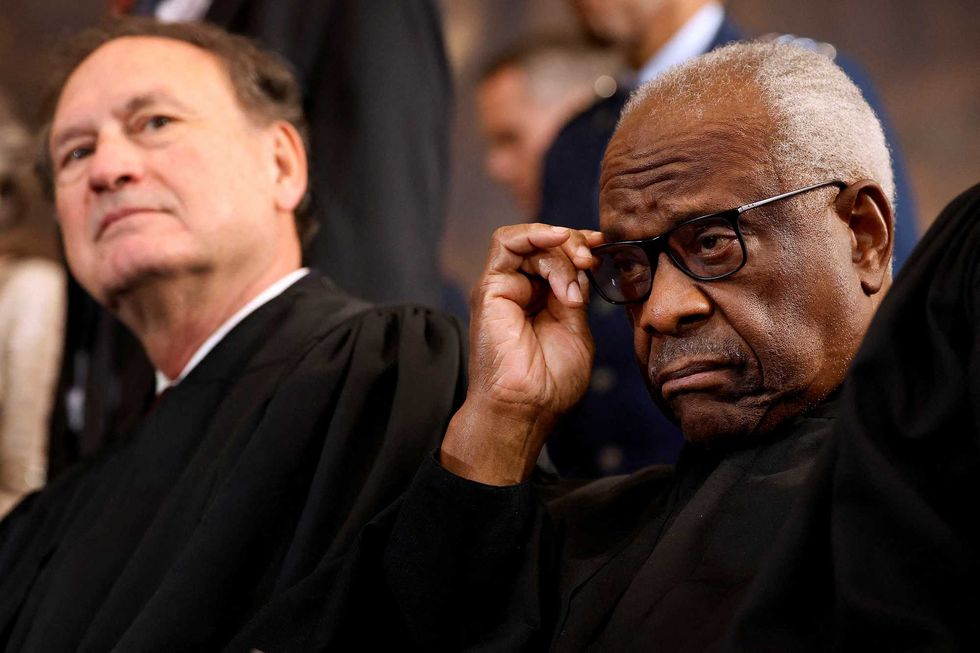
A "disturbing" Supreme Court ruling will allow border officials to subject green-card holders to a "Kafkaesque nightmare," per a Slate analysis.According to the analysis by legal reporter Mark Joseph Stern, the 6-3 Supreme Court vote along usual partisan lines in the case Blanche v. Lau established that border officials don't need "clear and convincing evidence" that green-card holders committed a "crime of moral turpitude" to deny them entry.The case originates from a lawful permanent resident named Muk Choi Lau, who lost his green card and was paroled into the U.S. after he was accused of selling designer-style shorts with a counterfeit trademark, Stern wrote. Lau argued that the border official shouldn't be able to take his green card and have so much discretion.Although a lower court agreed with Lau, the Supreme Court tossed that decision with a ruling that Stern described as "egregiously wrong."Lau was allowed into the United States on parole, but that status puts an immigrant in "legal limbo" and makes them "far more vulnerable to deportation."Stern brought up Justice Ketanji Brown Jackson's dissenting opinion and echoed her point that by taking a legal permanent resident's green card, it can make it harder for them "to work, open bank accounts, secure housing, obtain health insurance, and enroll in school."Meanwhile, Stern called out Justice Clarence Thomas's opinion, saying it "blesses one part of the Trump administration's multipronged attack against green-card holders, validating its campaign to revoke these individuals' rights on a whim," and highlighted that Thomas "expressly declined to say what, if any, burden the government bears at the border."
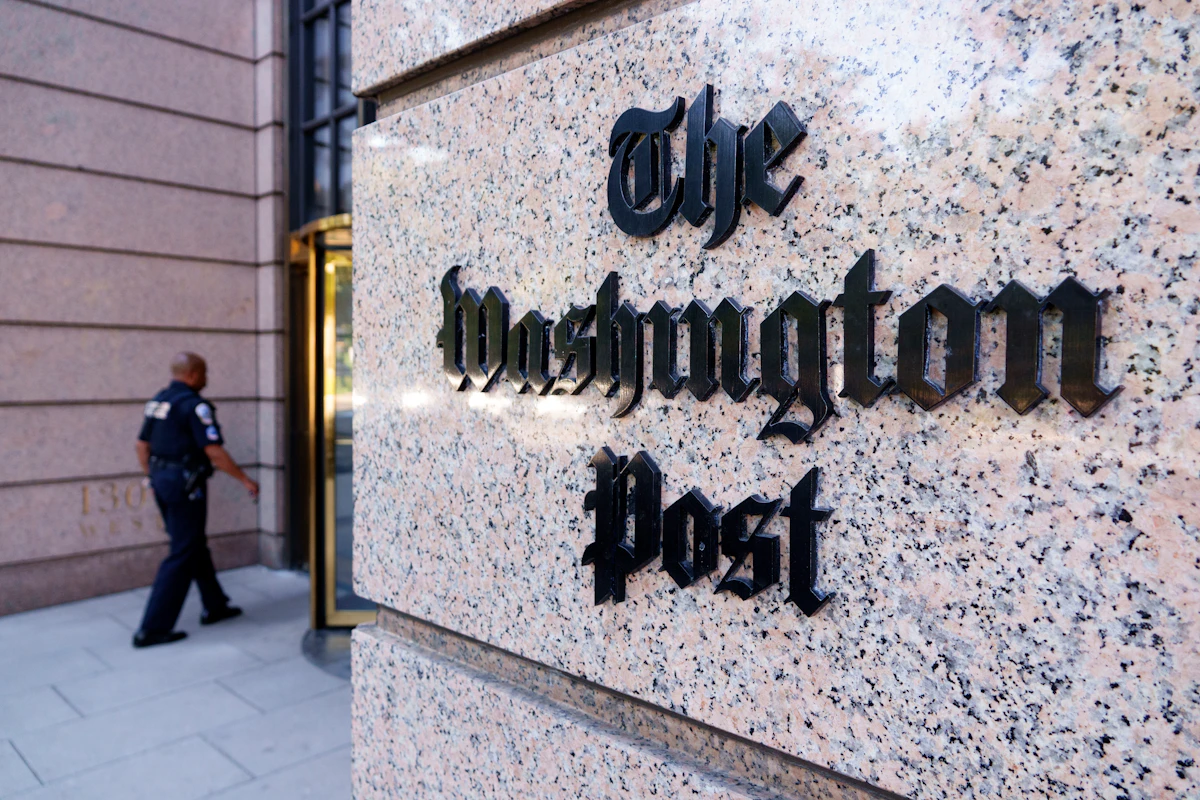
The Trump Justice Department planned to subpoena journalists at The Washington Post and The Wall Street Journal, attempting to force them to testify before a grand jury for vague national security concerns. The subpoenas were eventually withdrawn this month without any explanation after news organizations pushed back.This was an extremely unprecedented decision that follows the all-too-familiar trend of weaponizing the DOJ against whomever President Trump is upset by that day.Washington Post reporter Ellen Nakashima—who covers the security and intelligence community, including the war on Iran—was subpoenaed this spring. The Post was in the process of fighting Nakashima’s subpoena before the DOJ suddenly rescinded it.“The unwarranted subpoena of our reporter Ellen Nakashima — a clear violation of constitutionally guaranteed press freedom — was another sign of the government seeking to compel journalists to become instruments of its investigations,” a Post spokesperson said. “We will continue to stand fully behind the journalism of The Washington Post and fight all efforts by any administration that violate our First Amendment rights.”Three Wall Street Journal reporters covering national security issues also received grand jury subpoenas from the DOJ, according to the Post. In May, the DOJ also subpoenaed the Journal’s reporters over leaks from the Department of Defense related to the Iran war.The DOJ has yet to comment on or explain its decisions to file and rescind the grand jury subpoenas.“The potential of the government intruding into the newsgathering process is even greater when you are in the grand jury than it is for a subpoena for documents,” said Gabe Rottman, vice president of policy at the Reporters Committee for Freedom of the Press. “The administration has taken a number of extremely aggressive steps in respect to the press.… These are all aggressive attempts to target journalists reporting on the actions of the Trump administration. They are a dangerous intrusion of the independence of the press.”
A federal appeals court on Tuesday sided with Trump and ruled that ICE may resume swift deportations.
The post Federal Appeals Court Bats Down Biden Judge, Sides with Trump, Says ICE Can Resume Swift Deportations appeared first on The Gateway Pundit.