
RealClearPolitics - Homepage
Google Met German Officials in '22 To Talk Censorship
Google held at least 34 meetings with top German government officials - including the Chancellor - to discuss suppressing
Center Right
From State ex rel. Yost v. Google, LLC, decided Monday by the Ohio Court of Appeals (Judge Andrew J. King,… The post Google Isn't a Common Carrier, Ohio Court of Appeals Rules appeared first on Reason.com.
Google held at least 34 meetings with top German government officials - including the Chancellor - to discuss suppressing

President Donald Trump's birthday celebration on the White House lawn was disparaged as a "volcano of corruption" in a new legal challenge.Attorneys fighting to block this weekend's UFC matches at the White House told a federal judge Wednesday the president and his allies stand to profit from what they called "the first private, for-profit sporting event ever held on White House grounds" — and warned the country is approaching a historic moment of institutional corruption, reported MS NOW."Such a volcano of corruption, if allowed to go forward, will mark an inflection point in American history," argued plaintiffs Susan Douglas and Paul Romano in their final filing.The plaintiffs, attorneys from the Public Integrity Project, painted a portrait of interlocking financial interests at the heart of the planned three-day spectacle, which is set to culminate Sunday — Trump's 80th birthday — with seven professional UFC bouts staged on the South Lawn inside a massive temporary structure known as "the Claw."They pointed to million-dollar VIP packages, brand placement opportunities near the Lincoln Memorial, and an exclusive broadcast on Paramount Plus, a streaming service run by Trump allies Larry and David Ellison. No American, they noted, will be able to watch the self-described "celebration of America" without paying a subscription fee.They further alleged Trump bought stock in the company that owns the UFC earlier this spring, giving him a direct financial stake in the event's success. UFC head Dana White, who has organized the spectacle alongside the White House, is a longtime personal friend and political ally of the president.The Trump administration called the lawsuit meritless and said the plaintiffs were merely seeking "to complain about that which offends their sensibilities." Officials also argued the suit's last-minute timing alone should disqualify it, noting the event was publicly announced nearly a year ago.U.S. District Judge Amit Mehta, an Obama appointee, must now decide whether the fights go on — or whether the volcano gets capped.
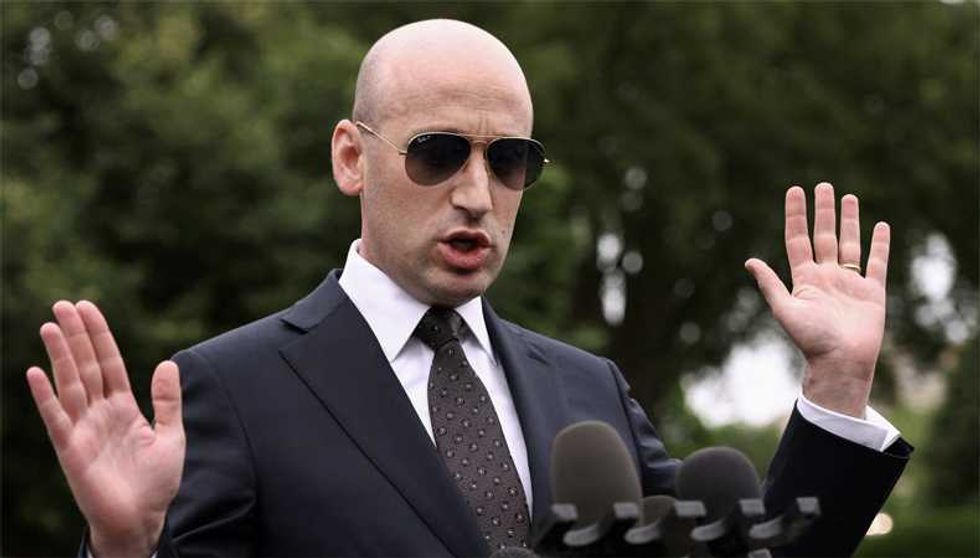
The prospect that a group tied to White House adviser Stephen Miller may be working behind the scenes to meddle in the upcoming election has become so alarming that an Arizona county attorney, who endorsed Donald Trump for president, has asked a court to intervene.According to MS NOW reporting by Ja'han Jones, Maricopa County Attorney Rachel Mitchell—who gained national prominence questioning Christine Blasey Ford during Brett Kavanaugh's Supreme Court confirmation hearing—is leading the charge against America First Legal's influence over the Maricopa County Recorder's Office, which administers elections.Recorder Justin Heap, who has previously encouraged the Trump administration's attempts to seize sensitive Arizona voter data, has allegedly allowed America First Legal to exercise sweeping authority over his office. This comes as Trump has openly called for Republicans to "take over the voting" in major cities, including Phoenix.In a June 8 legal filing, Mitchell's lawyers asked Maricopa County Superior Court Judge Scott Blaney to rein in America First Legal, describing the group's actions as an "unprecedented power grab.""The Recorder lacks any explicit or implicit statutory authority to hire outside counsel—let alone a partisan organization—to serve as in-house counsel on 'all' matters under his 'purview,'" Mitchell's lawyers wrote, according to the Arizona Republic.According to Jones, America First Legal is advising Heap's office as he battles the Republican-controlled Maricopa County Board of Supervisors in a dispute over official powers. According to Democracy Docket, the conflict escalated when Heap allegedly seized election equipment and provisional ballot envelopes while votes were being cast in a March local election, prompting county supervisors to warn of "grave chain-of-custody concerns."Mitchell's legal team identified six examples of America First Legal exceeding its intended scope, according to Arizona Republic reporting. The group has claimed authority over all early voting matters, directed election officials to disregard directives from Mitchell's office, threatened prosecution over drop boxes, and sent warning letters signaling new litigation against the board.According to Jones, "The fact that even conservative officials are sounding the alarm here shows how extreme, unprecedented and potentially threatening to democracy this situation could prove to be."
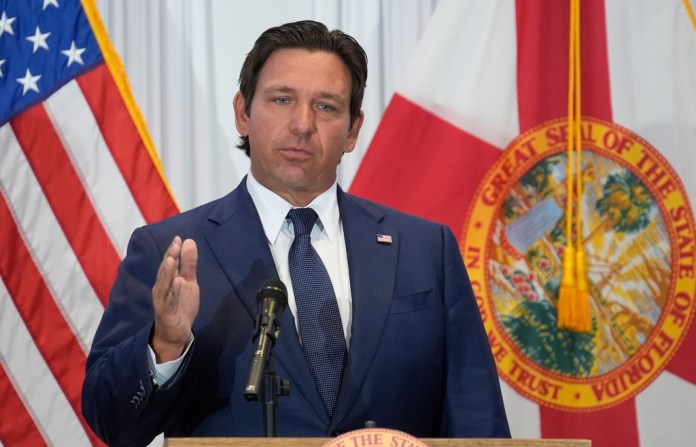
The Florida Supreme Court declined to block the newly enacted congressional map that could net Republicans up to four seats in the Sunshine State. In a 6-1 ruling, the state’s high court ruled it lacks the jurisdiction to rule on a case currently being litigated in a lower court. The ruling does not end the […]

Austin Metcalf's family righteously lashed out at Austin's murderer, Karmelo Anthony, following his conviction in a Texas courthouse on Tuesday, condemning his actions in blistering victim impact statements read in court. According to CBS, the family of Austin Metcalf delivered emotional victim impact statements in court after Karmelo was sentenced, with the parents and Austin's twin brother, Hunter, admonishing the killer. The post Austin Metcalf’s Brother, Parents Blast Karmelo Anthony While Reading Victim Statement in Court: “Your Name Will Be Forgotten”, “You Don’t Belong in This Community” appeared first on The Gateway Pundit.

Convicted killer Karmelo Anthony has claimed he’s “penniless” and can’t afford a lawyer for his appeal — despite his family collecting $625,000 in crowdfunding for his legal defense and "living expenses," according to a report.
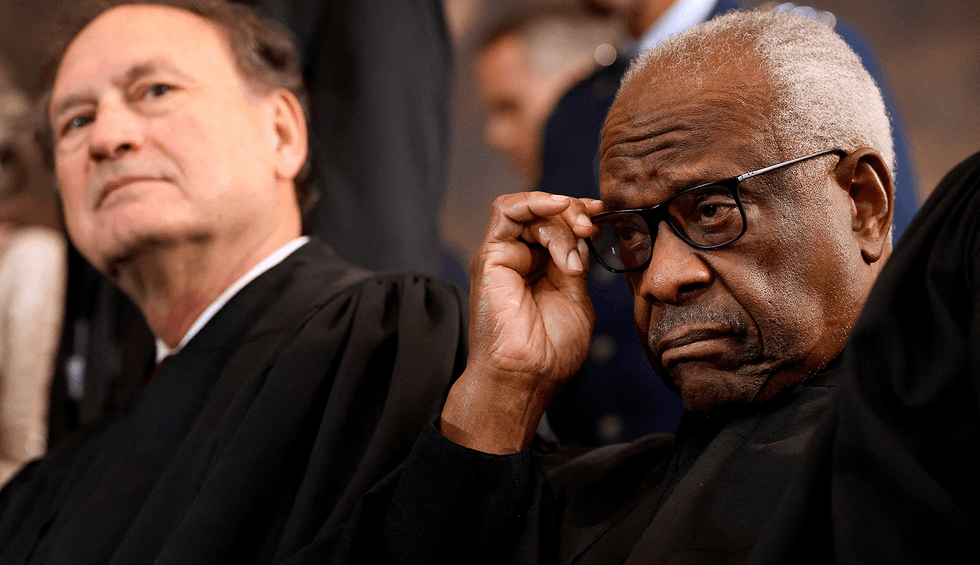
In April, the Supreme Court handed down a controversial decision which critics say “eviscerated” the Voting Rights Act. Now, according to new reporting from Vox, the impact of this decision is about to spread from the voting box to the workplace. Per Vox, “President Donald Trump’s Department of Justice released an opinion on Tuesday that, in the likely event it is embraced by a Republican-controlled federal judiciary, would make it significantly harder for plaintiffs who face employment discrimination to prevail in court.” It was notable that the opinion was signed by T. Elliot Gaiser, head of the Office of Legal Counsel and a former law clerk to Justice Samuel Alito, author of the Supreme Court’s recent decision in Louisiana v. Callais, which gutted a key provision of the Voting Rights Act. Essentially, Gaiser’s opinion argues that the same logic Alito used to attack voting rights can be applied to employment anti-discrimination law. According to Vox senior Supreme Court correspondent Ian Millhiser, “if you accept Alito’s opinion in Callais as legitimate, then Gaiser’s approach to employment discrimination is hardly a stretch. Indeed, it is the next logical move in the Republican Party’s broader campaign to weaken civil rights protections for racial minorities.”As Millhiser explains, “The 1982 law that Alito targeted in Callais provided that voting rights plaintiffs who challenged a state election law did not need to prove that state lawmakers acted with racist intent in order to prevail. Under that law, which was repealed by Callais, a state law that ‘results’ in voters having their right to vote diminished due to their race may also be challenged.” Now, because of the Supreme Court’s decision, voting districts can more or less be gerrymandered at will, even scrubbing Black districts entirely out of existence, because the language in Alito's opinion makes it nearly impossible to prove racist intent.Gaiser’s decision concerns a similar law regarding employment, and he’s making essentially the same argument raised by conservative justices: that a discrimination case can prevail only if racist or sexist intent is explicit. And given these similarities, says Millhiser, Gaiser’s claim “is likely to prevail before a Republican Supreme Court.”According to Millhiser, there are two upshots to this conclusion: “One is that it should be significantly harder for many employment discrimination plaintiffs to prevail. The other, which is potentially even more significant, is that elected officials should lose much of their power to remedy discrimination of all kinds, and the scope of civil rights law should be determined primarily by the Supreme Court.”As Millhiser explains, “both the Voting Rights Act’s results test and employment discrimination’s disparate impact test, after all, were enacted into law by Congress. But the Republican Party’s consistent position on civil rights laws is that democratically enacted civil rights laws must bow to the whims of Republican justices.”In essence, it is the position of conservatives on the court that “these difficult policy questions should be removed from the democratic process and given to a Republican judiciary.” Millhiser asserts that this should raise troubling questions as to “why six Republican lawyers in black robes have more insight into US civil rights policy than the people American voters elected to make these decisions.”
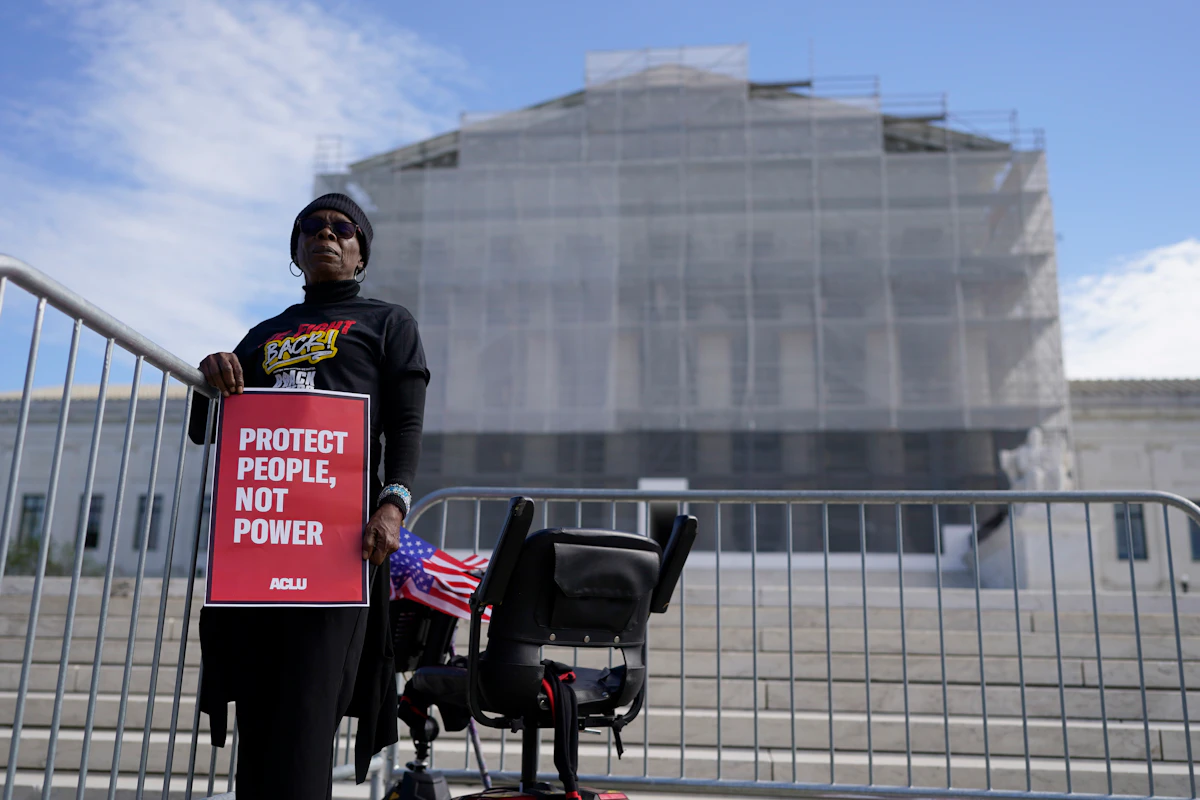
In 2018, David Tyson Jr., an African American, sued Richardson Independent School District in Texas for violating Section 2 of the Voting Rights Act. In the district’s 164-year history, Tyson was the only person of color ever to serve on the school board. Yet, at the time of the lawsuit, white students made up less than 30 percent of the district while Black and Hispanic students made up nearly 60 percent.When Congress enacted the Voting Rights Act at the height of the Civil Rights Movement, it gave communities the tools to combat these kinds of racial harms. Section 2 of the act outlaws state and local governments from enacting voting rules that result in racial discrimination. One of the undersung aspects of the Supreme Court’s recent decision in Louisiana v. Callais—for which there has been much hue and cry over the way it’s paved the path for right-wing state governments to draw majority-minority federal districts out of existence—is that it cuts away at this protection for local governments, as well, rendering it “all but a dead letter,” as Justice Kagan laments in her dissent.While the media has focused on Callais’s impact on Congress in the 2026 midterms, its darkest mark will be on local governments. Section 2 of the Voting Rights Act has been most frequently applied to address and remedy local electoral practices, not state ones. Its use heralded diverse school boards and city councils where national minorities, by virtue of being local majorities, can govern.Through this phenomenon, diversity develops twice over. First, through representational diversity and second, through institutional diversity. Minorities can see themselves represented on school boards, county commissions, and city councils. And they can harness that representation to institute local governments that do not look like state or national government. These more representative governments are more likely to become local laboratories willing to conduct policy experiments or try alternative governance approaches that the broader polity dismisses or ignores. This is why diversity at the level of individuals and institutions cultivates a rich democracy. Callais endangers these sites of local democracy by hollowing out Section 2 protections.But back in 2018 when Tyson filed his lawsuit, Section 2 of the Voting Rights Act was still intact. We can look back in time to see its salutary effects. Tyson told a “tale of two districts,” where—unsurprisingly—a ceaselessly homogeneous school board had harmful consequences for the Richardson school district. Elementary schools where at least 70 percent of the students met grade level in two or more subjects were two-thirds white—and the vast majority were not economically disadvantaged. By contrast, the lowest-performing elementary schools were predominantly made up of Black, Latino, and economically disadvantaged students. Atop the startling peak of disparity was the 60-point achievement gap between the district’s highest-performing school, which was predominantly white, and its lowest-performing school, which was predominantly Latino.These racial inequities did not go unnoticed by the Black and Latino voters of Richardson. And yet, Richardson’s school board remained persistently white for one reason: the district’s voting practices. While white students constituted a minority in the district’s schools, white voters still comprised a majority of the district’s population. These demographics, combined with an at-large, district-wide voting scheme where every voter in the district voted in every school board election, meant that minority voters would never succeed in electing a candidate of their choice. The minority vote would always be diluted against the white vote. The school board—whether under the threat of ongoing litigation or by a genuine change of heart—agreed to end this pernicious status quo. In 2019, Richardson Independent School District settled. As part of the settlement, the district moved toward a single-member district voting model. Specifically, it instituted an electoral scheme that allows voters within a predefined border to elect a board member to represent them—similar to congressional districting. Two of the five single-member districts in Richardson were drawn to ensure that Black and Latino voters were the majority. Voters from these districts later elected Regina Harris, the first Black woman, and Debbie Rentería, the first Hispanic person, to serve on the school board.Richardson was not alone in making this kind of change. In response to immigration and changing racial demographics, the late 2010s saw a spate of lawsuits across school boards in North Texas alleging violations of Section 2 of the Voting Rights Act. Many of these districts settled and moved to electoral systems that gave voters of color greater voice in their representation.