
New York Post
Fired ‘60 Minutes’ star Scott Pelley accuses CBS of pushing ‘falsehoods and bias’
Pelley, who spent 37 years at CBS News, said "60 Minutes" had “lost its DNA” following the recent ouster of top producers and correspondents.
Right

With Rob Sand atop the ticket, Josh Turek as their newly minted Senate nominee and multiple House races in play, Democrats believe they have the best shot to win big in Iowa in more than a decade.
Pelley, who spent 37 years at CBS News, said "60 Minutes" had “lost its DNA” following the recent ouster of top producers and correspondents.
Democrats haven't yet learned that their abuses of power can be used against them by their opposition. It's just a matter of time.
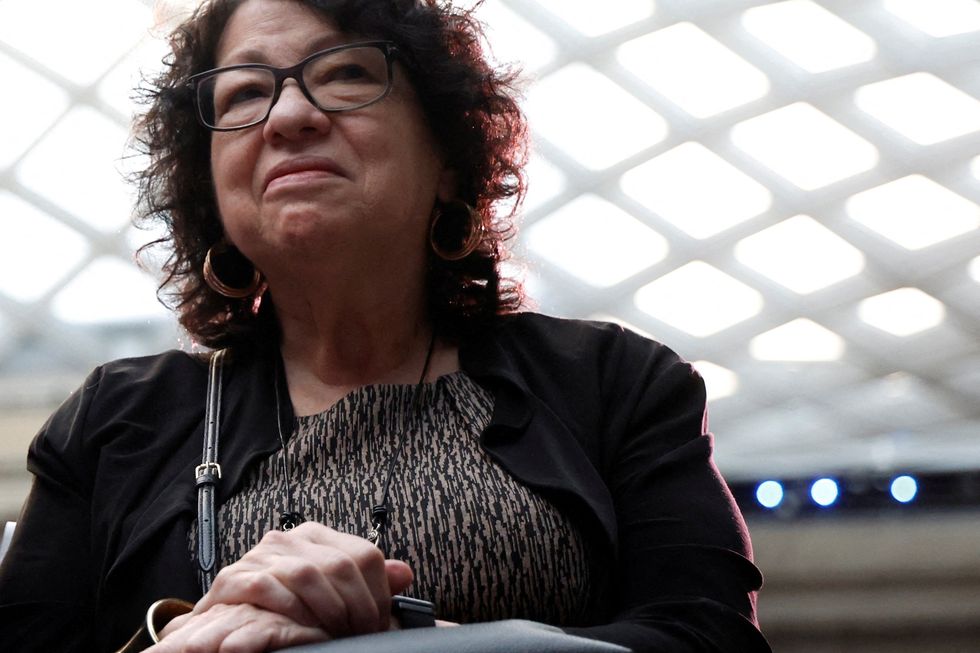
The US Supreme Court late Tuesday gave Alabama a green light to use an aggressively gerrymandered congressional map that a lower court said was “tainted by intentional race-based discrimination.”The unsigned decision, from which the high court’s three liberal justices dissented, enables Alabama’s Republican-dominated government to replace its current congressional map, which has two majority-Black districts, with a map that the US Supreme Court struck down in 2023. That map has just one majority-Black district.In her dissenting opinion, liberal Justice Sonia Sotomayor wrote that “just as Alabama doubled down on racial discrimination, the court today doubles down on chaos.”“In addition to being wrong on the merits, the court’s decision inflicts two grave harms on the public,” wrote Sotomayor. “It debases the democratic process by upending Alabama’s entire election in the name of permitting Alabama to discriminate against Black Alabamians. It also corrodes the rule of law by rewarding Alabama’s gamesmanship and outright defiance of court orders.”The liberal justice noted that in order to switch to the map previously struck down by the high court, Alabama election officials “will have to reassign hundreds of thousands of voters across the state to new congressional districts.”“Three of Alabama’s counties will be particularly hard hit because they are split across two congressional districts,” Sotomayor noted. “These counties have about 600,000 registered voters between them (roughly 15% of the state’s total number of registered voters).”Alabama Gov. Kay Ivey, a Republican, postponed US House primary elections in the wake of the Supreme Court’s April decision in Louisiana v. Callais, which severely narrowed the 1965 Voting Rights Act’s protections against racial discrimination and paved the way for Alabama and other states to impose new maps ahead of the 2026 midterms. “The Supreme Court’s shameful ruling allowing Alabama to move forward with a gerrymander that was drawn with the explicit intent to dilute Black voting power—as found by a panel of judges that included two Trump appointees—is an absolute affront to the founding principles of our democracy, and wipes out whatever was left of the court’s credibility,” said Marina Jenkins, executive director of the National Redistricting Foundation. “This country deserves better, and we must continue to work toward federal legislation that not only bans partisan and racial gerrymandering but also ensures that our rights cannot be undermined by captured courts.”The ruling drew condemnation from the two Democrats in Alabama’s US congressional delegation. Rep. Shomari Figures, who was elected to the US House under the independently drawn map that Alabama Republicans are working to replace, said in a statement that “the Supreme Court has now confirmed that there is no longer a Voting Rights Act in America, and states are essentially free to discriminate against minority voters with no consequences.”“This is a dangerous ruling that sets the state and this nation back decades,” said Figures.Rep. Terri Sewell called the ruling “just the latest in a pattern of outrageous Supreme Court decisions that help Republicans desperately cling to power ahead of the midterm elections while diluting Black voices and erasing decades of hard-fought civil rights progress.”“No matter how hard Alabama state officials may try, they will not succeed in silencing our voices,” said Sewell. “We will not go back to the Jim Crow era. The fight for fair representation continues.”

Florida Representative Debbie Wasserman Schultz is the exact kind of Democrat I usually criticize. She’s been in Congress for more than 20 years, done nothing particularly remarkable or courageous during that time, did a disastrous job of running the Democratic National Committee in 2016 by pouring gasoline on the Hillary-versus-Bernie fire, and disingenuously suggested that Joe Biden was a strong candidate even after his horrible debate performance two years ago. I never imagined writing a piece in defense of her. Yet here I am. Democrats and Black Americans desperately need to rethink our approach to racial politics, and Wasserman Schultz has accidentally ended up on the right side of some critical questions.Here’s the story. Wasserman Schultz’s political life was upended a few weeks ago when Florida Republicans further gerrymandered the state. The GOP is aiming to win 24 of Florida’s 28 U.S. House seats, four more than they have now. So they shifted the South Florida communities that comprise the 25th district that Wasserman Schultz represents in a way that turns the electorate from one that Kamala Harris won by about five percentage points in 2024 to one Harris lost by nine. The elections website Planscore estimates that a Democrat has about a 20 percent chance of winning the new version of the 25th district. Such a victory would be particularly hard for Wasserman Schultz, a sharp-elbowed partisan who has done little to appeal to centrist voters. So Wasserman Schultz, 59, has opted to run in Florida’s 20th district. Under the new maps, Harris won that district by around 37 points in 2024, according to estimates from the University of Virginia’s Center for Politics. PlanScore puts the odds of a Democrat winning there at over 99 percent. So whoever wins the Democratic primary on August 18 will almost certainly head to Capitol Hill. Here’s the conundrum. Both the old and new versions of the 20th district have sizable Black populations. Many of these communities were long represented by Alcee Hastings, who is Black and served in the House from 1993 to 2021. Hastings was succeeded by another Black politician, Shelia Cherfilus-McCormick. The congresswoman held the seat until this April, when she resigned from the House because she was likely to be expelled after being indicted for allegedly stealing federal disaster relief funds and using them for her campaign. The 20th district seat is currently vacant. Many Democrats in Florida say that at a time when Republicans are using the Supreme Court’s recent Louisiana v. Callais ruling to eliminate majority-Black districts and effectively expel African Americans from Congress, a white pol like Wasserman Schultz shouldn’t be running in a seat that has traditionally been held by a Black politician. The Black Caucus in Florida’s state legislature called Wasserman Schultz’s decision to run in the 20th district “disheartening.” A group of 10 Florida DNC members, some Black and some not, released a letter blasting Wasserman Schultz in fiery terms. They said her district choice “reinforces the same message Republicans have pushed for years: that Black representation does not matter.” “Our party cannot credibly denounce the dismantling of Black political power by Republicans while treating one of Florida’s few remaining majority-Black districts as a political opportunity for an incumbent seeking a safer seat,” they added. “We cannot claim to defend voting rights, racial justice, and representation while undermining Black political power when it becomes politically convenient.” Wasserman Schultz has argued that she can bring more money home to the 20th district than a newly elected member because of her seniority. And she emphasizes her long-standing relationships with Black leaders and support of Black organizations in Southern Florida. That’s all true. Let’s not ignore the obvious, though: She isn’t running in the 20th district on some altruistic mission to help Black people in South Florida, but rather because it’s the easiest way to continue her political career. That said, I don’t want the congresswoman to stand down. Wasserman Schultz’s candidacy embodies two important principles worth defending. First, Black voters should get the chance to choose the candidate who they feel best represents them, whatever that person’s race. The new 20th district is about 40 percent Black. So it’s likely that the Democratic primary electorate is majority Black. A successful candidate will have to convince Black voters that they will advance the interests of African Americans on Capitol Hill. What’s happening in Florida’s 20th district is much different than in Louisiana and Tennessee, where heavily Democratic, majority-Black districts are being replaced by ones that have Republican majorities.

President Donald Trump 's hand-picked candidate for Iowa Governor, Congressman Randy Feenstra, narrowly lost his primary Tuesday night.

The Cook Political Report late Tuesday shifted its rating of the Iowa Senate race toward Democrats, moving the needle from “likely Republican” to “lean Republican.” The shift comes after Democrats’ preferred candidate, state Rep. Josh Turek (D), secured his party’s nomination in the primary with nearly 63 percent of the vote, according to Decision Desk…
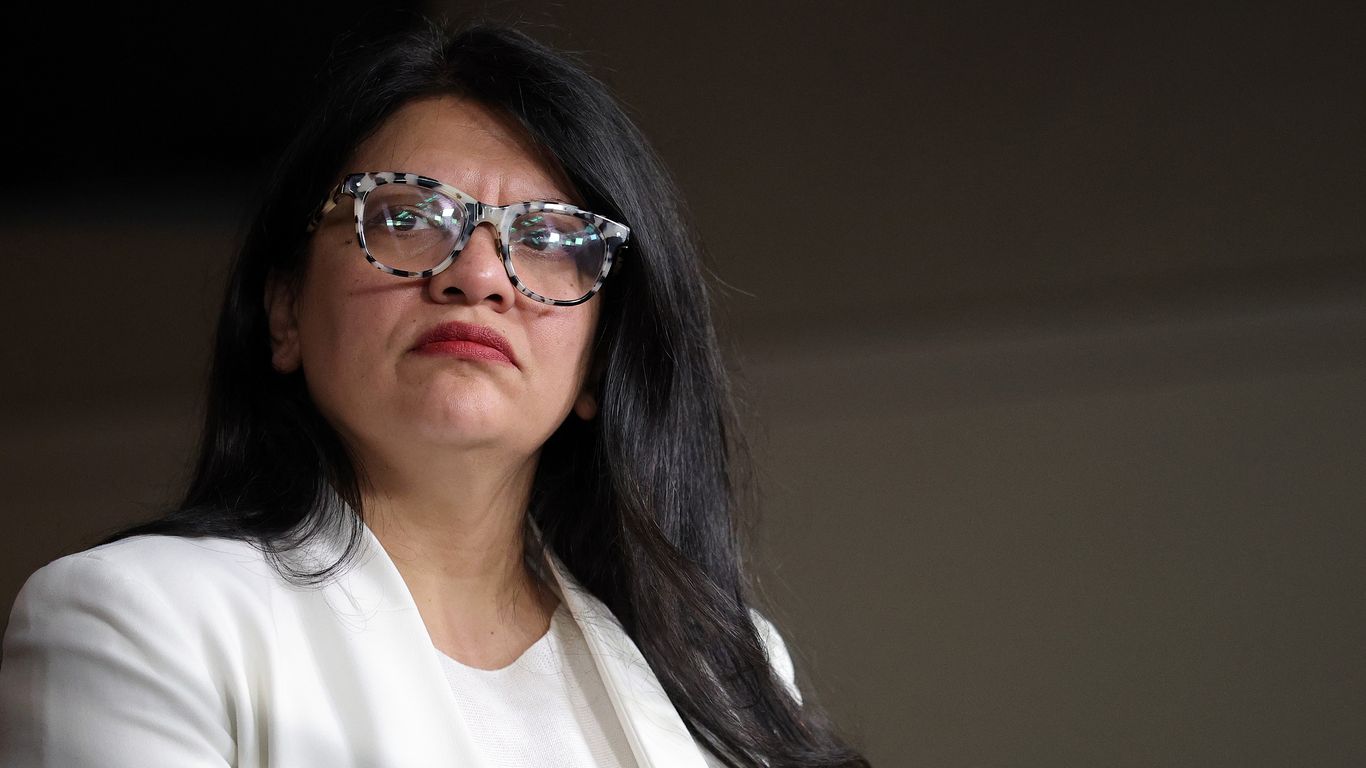
An impending House vote to constrain the Trump administration from joining Israel's war in Lebanon has some Democrats fuming that one of their own members is forcing them to take an agonizing vote.Why it matters: That anger could cost the measure, introduced by Rep. Rashida Tlaib (D-Mich.), a significant amount of crucial Democratic support.The vote has attracted far more widespread opposition within the party than Iran war powers resolutions, according to numerous lawmakers and aides familiar with the behind-the-scenes dynamic."People are not happy," one senior House Democrat told Axios, "that she is making people take this vote."State of play: The House is scheduled to vote this week both on both a Democratic leadership-led Iran war powers resolution and Tlaib's Lebanon war powers resolution.Tlaib's two-page measure would direct President Trump to "remove the United States Armed Forces from Lebanon" within 7 days of when the measure is passed.The vote comes as Israel has been engaged on a months-long ground operation in Southern Lebanon and even threatened to bomb Hezbollah targets in Beirut in its fight with the Iran-backed militia.Tlaib's office said in a press release: "The United States is assisting this destruction through the weapons, intelligence, logistics, and diplomatic cover it provides the Israeli government, and Congress has the power and duty to put an end to this illegal invasion."Yes, but: House Democrats are caught between their wariness about being seen as condoning Israel's actions and the fact that there is no indication the U.S. is planning imminent, large-scale ground operations in Lebanon. There are also concerns among Democratic leadership that the resolution could hamper the U.S.'s current efforts to combat Hezbollah, lawmakers, aides and other sources familiar with the internal discussions told Axios.Reps. Greg Meeks (D-N.Y.), Adam Smith (D-Wash.) and Jim Himes (D-Conn.) — the top Democrats on the House Foreign Affairs, Armed Services and Intelligence Committees — are on the fence, according to multiple sources.House Minority Leader Hakeem Jeffries (D-N.Y.) said he hasn't "taken a look at it yet," with a leadership aide telling Axios there are drafting issues that could be fixed to make the measure more widely palatable. What we're hearing: A second senior House Democrat said they are "probably a 'no'" on the measure, telling Axios it is "not a war powers resolution, it's a statement."Another House Democrat opposed to the resolution said the fact that Meeks, Smith and Himes aren't on board "will help" muster votes against it. The three ranking members are leading the Iran war powers efforts."People have stated their positions [on Lebanon] — there's no ambiguity," a fourth House Democrat fumed. "This resolution does nothing to advance a solution."What they're saying: "Poll after poll shows that the American people do not support our government sending a blank check and unlimited military assistance to the Israeli government as it massacres thousands of innocent civilians and demolishes entire cities and communities," Tlaib said in a statement to Axios."Members of Congress should listen to them, particularly as Israel's campaign of destruction in Lebanon threatens to prolong the disastrous war with Iran, which is causing extreme economic suffering for ordinary Americans who are already struggling to make ends meet." Said Rep. Delia Ramirez (D-Ill.), Tlaib's co-lead on the resolution: "Every day that we do not act to stop the assault on Lebanon, we enable another genocide. The War Powers Resolution is targeted to end Netanyahu and Trump's war crimes. Members of Congress must stop making excuses and act."The bottom line: If the resolution remains as is, expect way more Democratic "no" votes than the usual handful of staunchly pro-Israel centrists.

The mayor of Newark, New Jersey, said Tuesday that if the Delaney Hall ICE detention center isn’t closed soon, the city may file a lawsuit.Ras Baraka pointed to reports of the center’s poor conditions, with detainees suffering from serious health conditions. He said that in one report, a detainee suffered a miscarriage and wasn’t given proper care.“It’s troubling, which forces us to expand our lawsuit against Delaney Hall,” Baraka said at a press conference outside of the facility, referring to a lawsuit filed Tuesday against the private contractor that runs the facility, GEO Group.For more than a week, detainees in Delaney Hall have been on a hunger strike due to inadequate food, a lack of proper medical care, and unsanitary conditions. Protesters have shown up outside of the facility and have been met with violence from Immigration and Customs Enforcement agents. Among them was Senator Andy Kim, who was hit with pepper spray last week outside Delaney Hall after attempting to defuse tensions between the agents and protesters.Secretary of Homeland Security Markwayne Mullin mocked Kim, saying he shouldn’t have been there, and also denied the existence of a hunger strike, making a racist attack on the detainees.“There was only a handful of individuals that was refusing to eat, because they want their ethnic group—or their ethnic-right food. Well, they can go back to their country and get whatever food they want,” Mullin said. “The fact is, we’re giving them the calories they want. This isn’t Holiday Inn. We’re giving them sanitation.”Kim, Baraka, and other New Jersey elected officials have shown up at the facility and said they’ve seen the conditions firsthand. New Jersey Governor Mikie Sherrill has also called for Delaney Hall to be shut down.