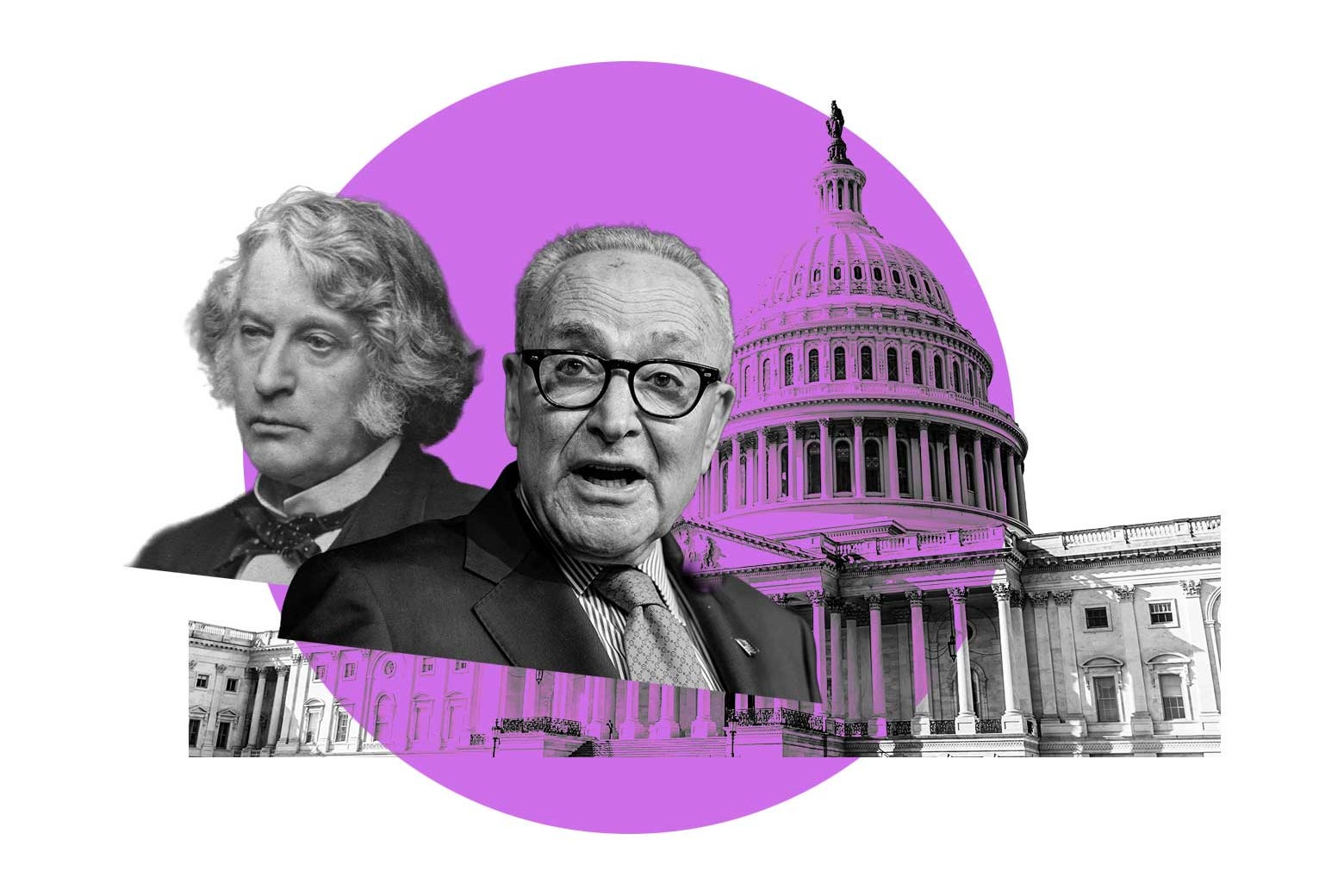

The Supreme Court Just Transformed Its Horrible Voting Rights Ruling Into Something More Calamitous
What the Roberts court has just wreaked goes beyond handing an extra House seat to the GOP in the upcoming election.

Even after Callais, Congress has the power, under the guarantee clause, to stamp out state efforts to decimate Black representation.
What the Roberts court has just wreaked goes beyond handing an extra House seat to the GOP in the upcoming election.
In “yet another deeply alarming appointment,” President Donald Trump has picked major Trump campaign donor Bill Pulte to replace former Congressmember Tulsi Gabbard as director of national intelligence, the nation’s top spy chief who reports directly to the president. Pulte is “not somebody who has any of the requisite experience for this incredibly important office,” says Matt Platkin, a former attorney general for New Jersey. Pulte is also expected to continue in his other high-level positions as chair of the Federal National Mortgage Association (Fannie Mae) and chair of the Federal Home Loan Mortgage Corporation (Freddie Mac) and director of the Federal Housing Finance Agency, where he is accused of abusing his power to pursue political prosecutions against Trump’s enemies. We also speak to Harvard Law School professor Nancy Gertner, a retired federal judge, about legal challenges to Trump’s mass deportation campaign, particularly involving widespread abuses committed by DHS and ICE. “What we’re seeing now is an effort for the courts to catch up to those abuses, and they are. Legislation is going to be needed to make this even more clear,” says Gertner.
Hamawy won despite media reports that sought to tarnish the progressive candidate as an Islamic extremist. The post Adam Hamawy, Doctor Who Volunteered in Gaza, Poised to Become Pro-Palestine Rep. From New Jersey appeared first on The Intercept.
The US Supreme Court late Tuesday gave Alabama a green light to use an aggressively gerrymandered congressional map that a lower court said was “tainted by intentional race-based discrimination.”The unsigned decision, from which the high court’s three liberal justices dissented, enables Alabama’s Republican-dominated government to replace its current congressional map, which has two majority-Black districts, with a map that the US Supreme Court struck down in 2023. That map has just one majority-Black district.In her dissenting opinion, liberal Justice Sonia Sotomayor wrote that “just as Alabama doubled down on racial discrimination, the court today doubles down on chaos.”“In addition to being wrong on the merits, the court’s decision inflicts two grave harms on the public,” wrote Sotomayor. “It debases the democratic process by upending Alabama’s entire election in the name of permitting Alabama to discriminate against Black Alabamians. It also corrodes the rule of law by rewarding Alabama’s gamesmanship and outright defiance of court orders.”The liberal justice noted that in order to switch to the map previously struck down by the high court, Alabama election officials “will have to reassign hundreds of thousands of voters across the state to new congressional districts.”“Three of Alabama’s counties will be particularly hard hit because they are split across two congressional districts,” Sotomayor noted. “These counties have about 600,000 registered voters between them (roughly 15% of the state’s total number of registered voters).”Alabama Gov. Kay Ivey, a Republican, postponed US House primary elections in the wake of the Supreme Court’s April decision in Louisiana v. Callais, which severely narrowed the 1965 Voting Rights Act’s protections against racial discrimination and paved the way for Alabama and other states to impose new maps ahead of the 2026 midterms. “The Supreme Court’s shameful ruling allowing Alabama to move forward with a gerrymander that was drawn with the explicit intent to dilute Black voting power—as found by a panel of judges that included two Trump appointees—is an absolute affront to the founding principles of our democracy, and wipes out whatever was left of the court’s credibility,” said Marina Jenkins, executive director of the National Redistricting Foundation. “This country deserves better, and we must continue to work toward federal legislation that not only bans partisan and racial gerrymandering but also ensures that our rights cannot be undermined by captured courts.”The ruling drew condemnation from the two Democrats in Alabama’s US congressional delegation. Rep. Shomari Figures, who was elected to the US House under the independently drawn map that Alabama Republicans are working to replace, said in a statement that “the Supreme Court has now confirmed that there is no longer a Voting Rights Act in America, and states are essentially free to discriminate against minority voters with no consequences.”“This is a dangerous ruling that sets the state and this nation back decades,” said Figures.Rep. Terri Sewell called the ruling “just the latest in a pattern of outrageous Supreme Court decisions that help Republicans desperately cling to power ahead of the midterm elections while diluting Black voices and erasing decades of hard-fought civil rights progress.”“No matter how hard Alabama state officials may try, they will not succeed in silencing our voices,” said Sewell. “We will not go back to the Jim Crow era. The fight for fair representation continues.”
Mojtaba, 56, hasn't been seen in public since the war started on Feb. 28 with surprise US-Israeli airstrikes that reportedly injured him and killed his father, the late Supreme Leader Ali Khamenei.
A measure to direct the president to halt U.S. engagement in Iran had been on track to pass in late May, but Republican leaders postponed action. They have run out of time to delay the vote.
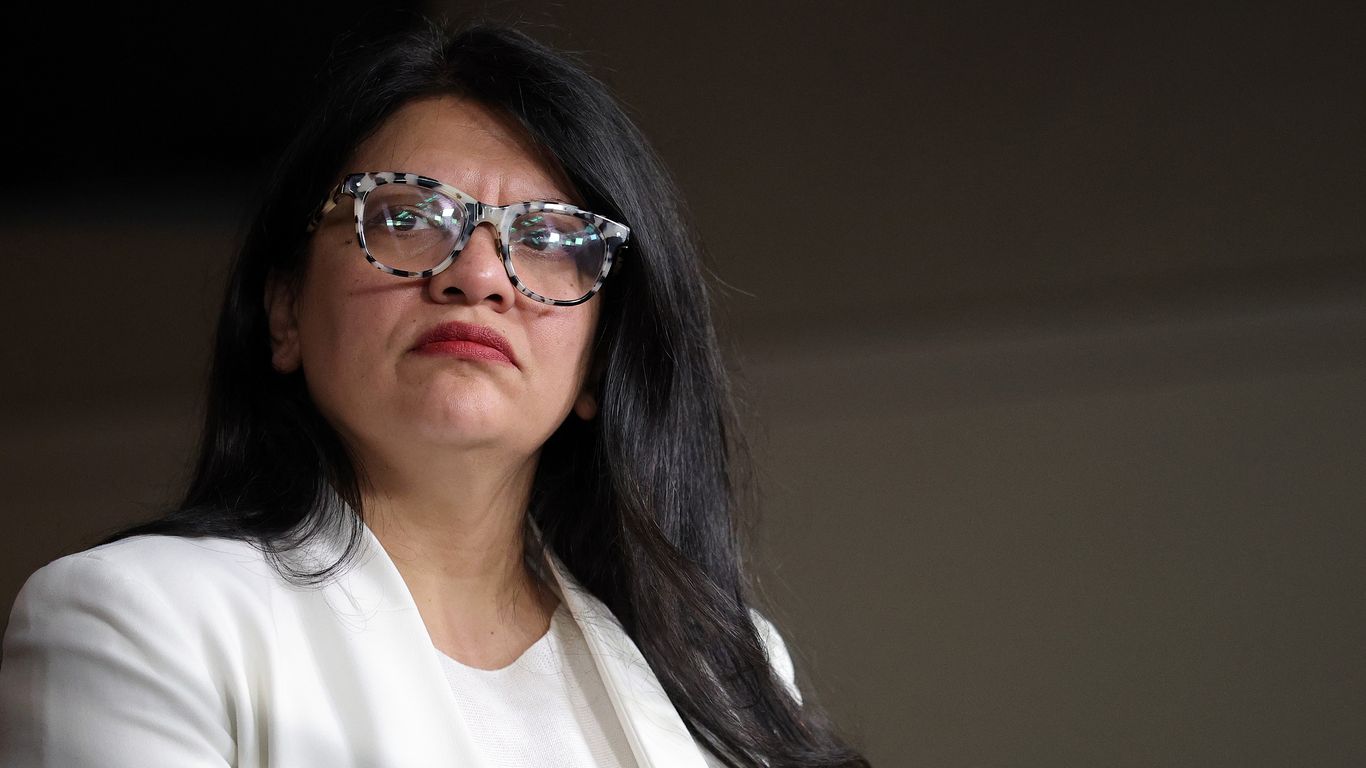
An impending House vote to constrain the Trump administration from joining Israel's war in Lebanon has some Democrats fuming that one of their own members is forcing them to take an agonizing vote.Why it matters: That anger could cost the measure, introduced by Rep. Rashida Tlaib (D-Mich.), a significant amount of crucial Democratic support.The vote has attracted far more widespread opposition within the party than Iran war powers resolutions, according to numerous lawmakers and aides familiar with the behind-the-scenes dynamic."People are not happy," one senior House Democrat told Axios, "that she is making people take this vote."State of play: The House is scheduled to vote this week both on both a Democratic leadership-led Iran war powers resolution and Tlaib's Lebanon war powers resolution.Tlaib's two-page measure would direct President Trump to "remove the United States Armed Forces from Lebanon" within 7 days of when the measure is passed.The vote comes as Israel has been engaged on a months-long ground operation in Southern Lebanon and even threatened to bomb Hezbollah targets in Beirut in its fight with the Iran-backed militia.Tlaib's office said in a press release: "The United States is assisting this destruction through the weapons, intelligence, logistics, and diplomatic cover it provides the Israeli government, and Congress has the power and duty to put an end to this illegal invasion."Yes, but: House Democrats are caught between their wariness about being seen as condoning Israel's actions and the fact that there is no indication the U.S. is planning imminent, large-scale ground operations in Lebanon. There are also concerns among Democratic leadership that the resolution could hamper the U.S.'s current efforts to combat Hezbollah, lawmakers, aides and other sources familiar with the internal discussions told Axios.Reps. Greg Meeks (D-N.Y.), Adam Smith (D-Wash.) and Jim Himes (D-Conn.) — the top Democrats on the House Foreign Affairs, Armed Services and Intelligence Committees — are on the fence, according to multiple sources.House Minority Leader Hakeem Jeffries (D-N.Y.) said he hasn't "taken a look at it yet," with a leadership aide telling Axios there are drafting issues that could be fixed to make the measure more widely palatable. What we're hearing: A second senior House Democrat said they are "probably a 'no'" on the measure, telling Axios it is "not a war powers resolution, it's a statement."Another House Democrat opposed to the resolution said the fact that Meeks, Smith and Himes aren't on board "will help" muster votes against it. The three ranking members are leading the Iran war powers efforts."People have stated their positions [on Lebanon] — there's no ambiguity," a fourth House Democrat fumed. "This resolution does nothing to advance a solution."What they're saying: "Poll after poll shows that the American people do not support our government sending a blank check and unlimited military assistance to the Israeli government as it massacres thousands of innocent civilians and demolishes entire cities and communities," Tlaib said in a statement to Axios."Members of Congress should listen to them, particularly as Israel's campaign of destruction in Lebanon threatens to prolong the disastrous war with Iran, which is causing extreme economic suffering for ordinary Americans who are already struggling to make ends meet." Said Rep. Delia Ramirez (D-Ill.), Tlaib's co-lead on the resolution: "Every day that we do not act to stop the assault on Lebanon, we enable another genocide. The War Powers Resolution is targeted to end Netanyahu and Trump's war crimes. Members of Congress must stop making excuses and act."The bottom line: If the resolution remains as is, expect way more Democratic "no" votes than the usual handful of staunchly pro-Israel centrists.