Out of Time to Delay, House to Vote on Trump’s Power to Continue War in Iran
Center Left
A measure to direct the president to halt U.S. engagement in Iran had been on track to pass in late May, but Republican leaders postponed action. They have run out of time to delay the vote.
President Trump took a swing at former “60 Minutes” correspondent Scott Pelley in a podcast interview released after CBS News fired the journalist for pushing back on company leadership. “I think Scott Pelley’s got his own problems, he’s terrible,” Trump, who has long been critical of members of the media, told The New York Post’s…
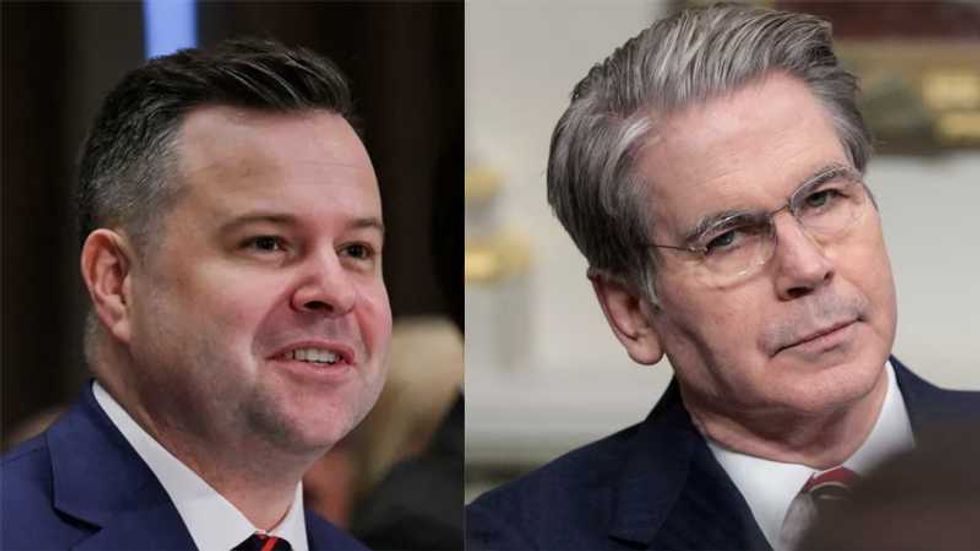
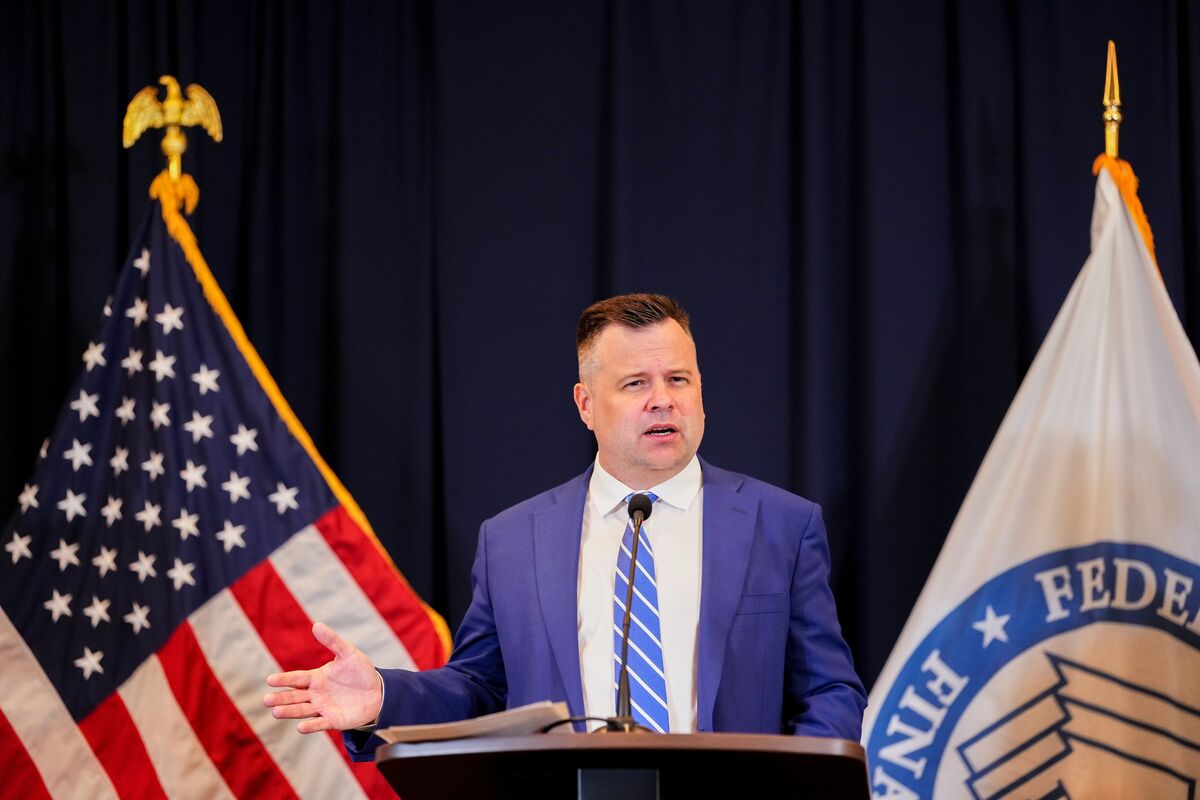
President Trump's decision to nominate Bill Pulte as director of national intelligence caught many of his closest advisors off guard and dealt a significant blow to Treasury Secretary Scott Bessent, with whom the Federal Housing Finance Agency head has engaged in an ongoing power struggle.According to reporting from the Wall Street Journal, Pulte, who leads the agency overseeing the country's mortgage market, personally approached Trump with an audacious proposal: ascending to the position of director of national intelligence following Tulsi Gabbard's departure.The nomination appears rooted not in foreign policy expertise—Pulte has none—but in what Trump prizes most: unwavering loyalty, the Journal is reporting before adding that, in pitching himself to the president, Pulte promised to become an "unyielding advocate" for Trump's foreign policy agenda and signaled support for the administration's Iran war, according to sources familiar with the conversations.The move represents a major victory for Pulte in his internal administration battles. The Federal Housing Finance Agency director has become a deeply polarizing figure, clashing repeatedly with Trump advisers who have grown frustrated with his aggressive approach and willingness to bypass the chain of command to access the president directly.Trump has reportedly resisted efforts by administration officials to remove Pulte, telling confidants he values the FHFA chief's loyalty above all else.Trump "first raised the idea of appointing Pulte as intelligence director to aides over the weekend, according to a person familiar with the matter," the Journal is reporting before adding that the fact that president actually pulled the trigger on Pulte's nomination, "caught them by surprise."As for Bessent, one of the president's closest allies in the Cabinet, he was reportedly kept out of the loop, the Journal is reporting.Tensions between the Treasury secretary and Pulte reached a boiling point last year when Bessent threatened to punch Trump's housing chief "in the f------ face" after learning that Pulte had been disparaging him to the president, according to the Wall Street Journal.Treasury Department officials, including Bessent, learned of Trump's decision through social media like everyone else. An adviser broke the news to Bessent while he was preparing for a congressional hearing—a humiliating notification for one of the administration's senior economic officials, the report notes.
Senate Democrats are threatening to block an extension of a controversial spy powers law if the White House refuses to withdraw its appointment of Bill Pulte as the acting director of National Intelligence.
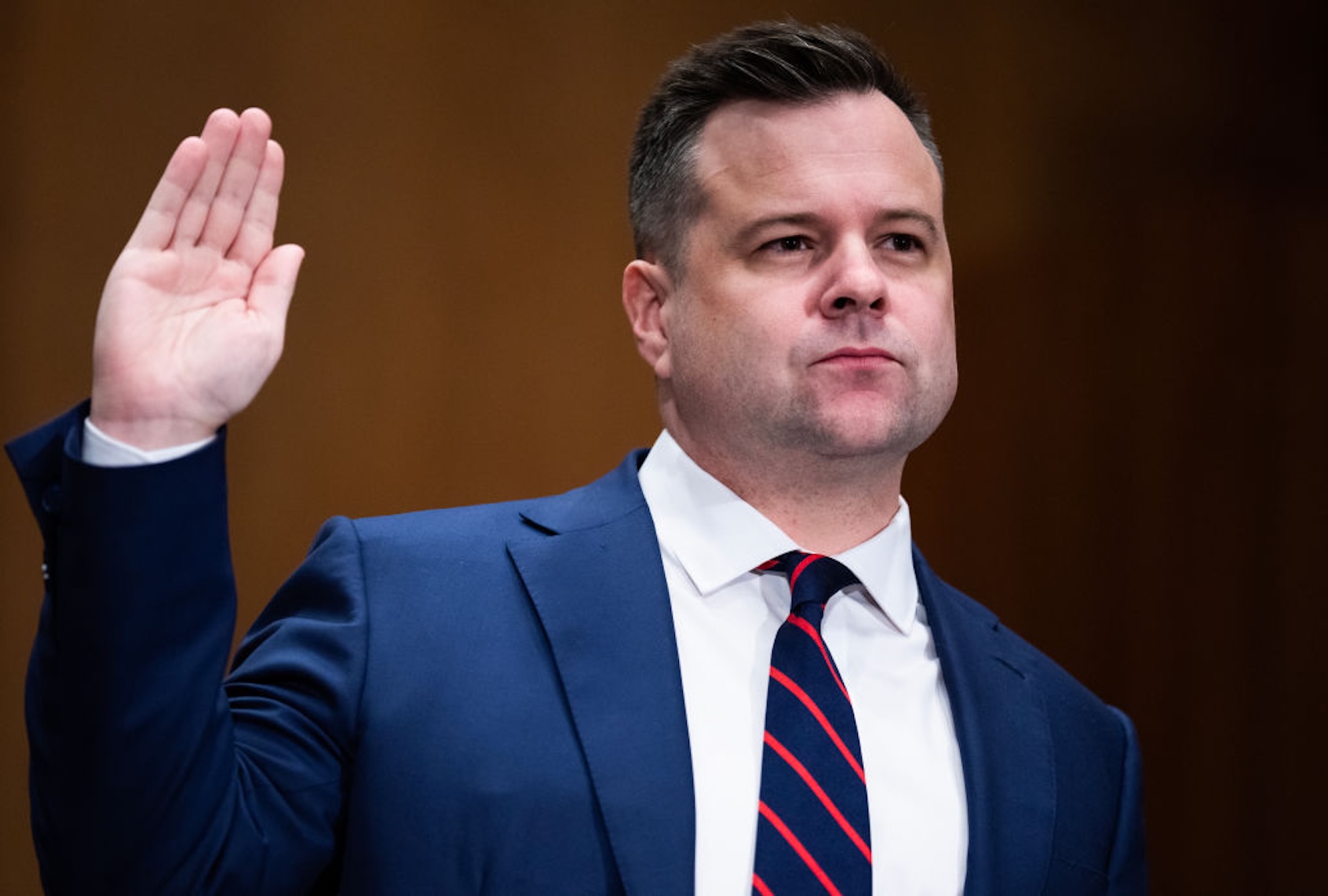
On Tuesday, it was announced that President Donald Trump had appointed current Director of the Federal Housing Finance Agency Bill Pulte to the role of acting Director of National Intelligence. Backlash against the move was swift, as critics from across the political spectrum slammed Pulte’s total lack of intelligence experience. By Wednesday morning, senators from both sides of the aisle had made their opposition to Trump’s pick clear, and threats to derail key legislation over the matter now pose a “real risk” to the Republican agenda. This is according to Punchbowl News, which reports that Senator Mark Warner (D-VA) has warned Senate Majority Leader John Thune (R-SD) that if Pulte remains in the position, Democrats will withhold the votes Republicans need for a FISA extension they’ve been trying and failing to pass for months. It expires in just 9 days, so with yet another legislative deadline looming, the GOP is grappling with the latest in a string of recent frustrations.“Warner,” explains Punchbowl News, “who’s been critical in building Democratic support for a bipartisan deal to extend FISA Section 702, made clear to Thune that all options are on the table to reverse what Democrats see as a dangerous Trump pick to lead ODNI. Pulte, who currently leads the Federal Housing Finance Agency, has no national security experience and has used his existing role to exact revenge on Trump’s political foes.”According to Warner, Democrats will never back the reauthorization of FISA Section 702 with Pulte overseeing the program, as opponents of the provision — which is technically used for gathering the communications of foreign targets — argue that it can be used as a “backdoor” for spying on Americans. This potential for misuse has drawn skepticism from privacy hawks on both sides of the aisle, and though Thune has repeatedly claimed that the absence of 702 would cause U.S. national security to “go dark,” its proponents have had to make concessions to gain the support of conservative Republicans, like a three year ban on a central banking digital currency and a prohibition on the use of 702 information by the FBI against Americans. But now Democrats worry that 702 could be weaponized by Pulte to attack Trump’s political enemies. As Punchbowl explains, “Democrats have leverage here. Republicans can’t pass a FISA reauthorization on their own. With a handful of GOP senators expected to oppose any FISA agreement, Thune would likely need at least a dozen Democrats to support the bill. Without a big vote in the Senate, it’ll be difficult for the House to pass it via a fast-track process ahead of the June 12 deadline. It’s safe to say that Pulte’s appointment kills any chance of the House passing FISA using the fast-track suspension process.”What’s more, should Pulte’s appointment be pulled, “Democrats believe they’d be doing Republicans a favor because they also see Pulte as unqualified for the job, even if few openly say it.” On Tuesday, “the White House had indicated to top Republicans that Aaron Lukas, whom Trump announced as the acting DNI 12 days ago, would remain in the role for an extended period. Republicans felt blindsided,” therefore, by the Pulte announcement. By Tuesday, a number of top Republicans were expressing their outrage at the situation. “Whoever told the president to go ahead and commit to this publicly before vetting it should lose their jobs, because they should know that the math just works against Pulte being confirmed,” Senator Thom Tillis (R-NC) told CNBC. “I don’t think he has a prayer.”
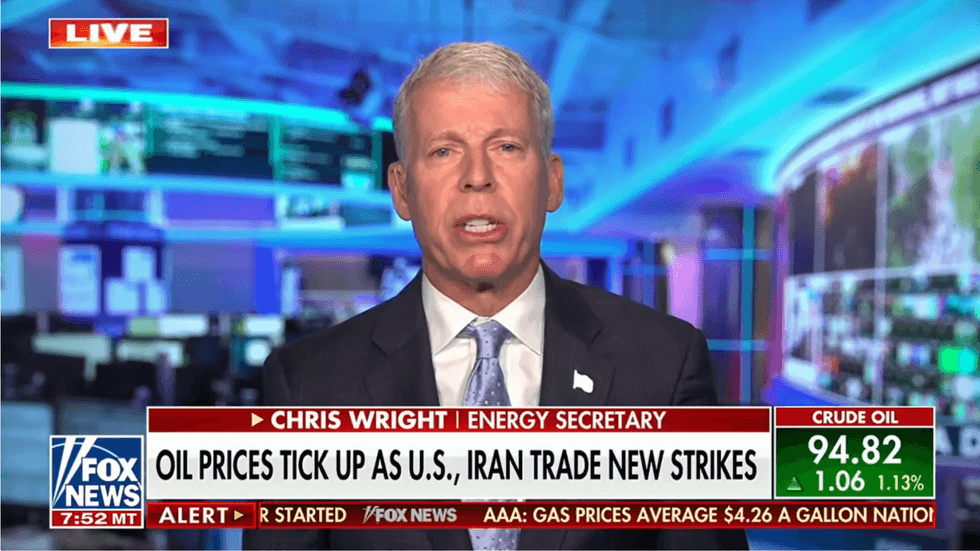
Energy Secretary Chris Wright appeared on Fox News Wednesday to defend the Trump administration against Democratic criticism over gasoline prices spiking amid the president’s deeply unpopular war against Iran, and provided a stunning explanation for the record-setting price surges.Fox News’ Bill Hemmer cued a compilation clip of Democratic lawmakers criticizing the Trump administration for its war against Iran, placing the blame for rising energy costs squarely on the decision to launch the war. And yet, Wright insisted that the blame lay elsewhere.“It's a little rich, it's a little rich! We're in the middle of solving a 47-year-old problem that's a growing problem about a nuclear-armed Iran,” Wright said.“The bigger problem, the even bigger problem with gasoline prices, electricity prices, heating prices, is Democrat green policies!”Gasoline prices in the United States reached an average of $4.48 per gallon in May, an increase of 42.2% over the previous year, Fox News reported. While the price hike coincided with Trump’s war against Iran – which resulted in major disruptions to the Strait of Hormuz, a critical shipping channel through which 20% of the world’s oil trade flows – Wright continued to insist Democratic policies around renewable energy were to blame.“They've done everything they can for 20 years to drive energy prices up, and now they're upset about high energy prices!” Wright said. “I'm glad, I hope they keep that attitude going forward and will work with us to drive energy prices back down.”Energy @SecretaryWright on what the "bigger problem" is causing soaring gas prices:"The even bigger problem with gasoline prices, electricity prices, heating prices, is Democrat green policies!" pic.twitter.com/vj4U5IheDY— Alexander Willis (@ReporterWillis) June 3, 2026
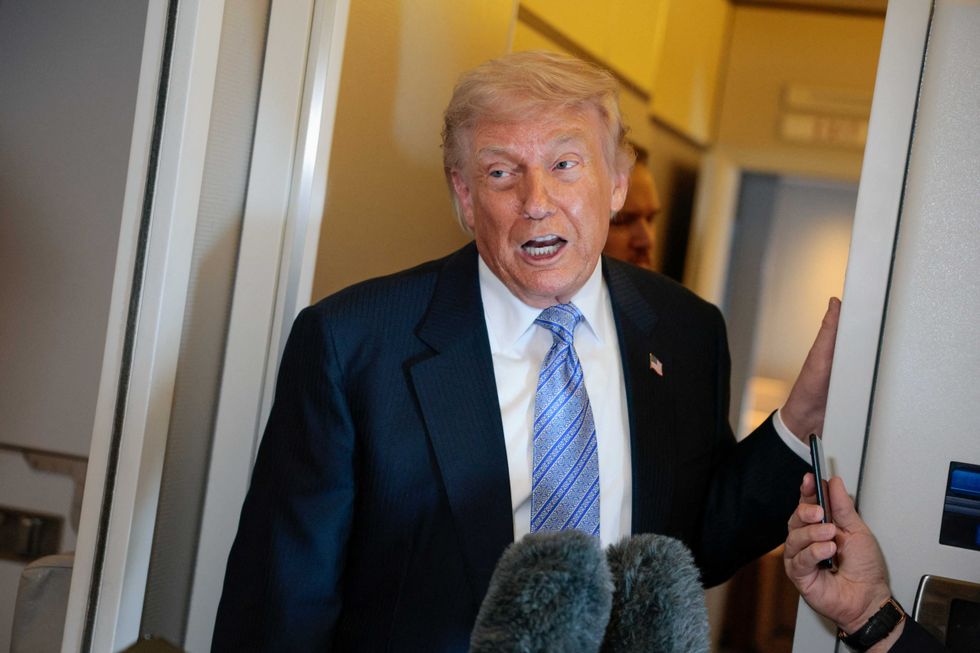
President Donald Trump was pressed in an interview published on Wednesday about the soaring inflation caused by his deeply unpopular war against Iran and its impact on Americans, a line of questioning the president responded to by blurting out a blatant falsehood – one that coincided with reports that directly contradicted his claim.“In your first term, I think that was one of the hallmarks, that peoples' wages – especially working peoples' wages – were rising much faster than inflation,” said The New York Post’s Miranda Devine in a video interview recorded in the White House.Last week, CNBC reported that inflation in the United States had reached a three-year high, citing data released by the Commerce Department. Furthermore, inflation outpaced wage growth for the first time since 2023 per the same data.And yet, despite the data coming from Trump’s own administration, he insisted that the opposite was true.“It's happening now!” Trump falsely claimed, arguing that wage growth was outpacing inflation despite the evidence to the contrary.“We don't have very much inflation. Look, if you take away just the price of gasoline, the energy, we have very little inflation, we're doing very well other than this. That's a big puller – energy and gasoline and all that – that's a big factor.”Trump then offered a prediction he’s shared countless times in the past – that the price of oil would come down “rapidly” once he ends his war against Iran – before bragging about pre-war gasoline prices and insisting the current surge was "not a big price to pay."“When it ends, we'll have a situation where Iran will not have a nuclear weapon, and that's really more important than all of it,” Trump said. “We want low gasoline – I had it down to $1.85 a gallon! Think of it, $1.85 in Iowa just before the war started! And it'll be back there again at some point in the probably not-too-distant future.”Devine: In your first term one of the hallmarks was that peoples' wages were rising much faster than inflationTrump: It's happening now! We don't have very much inflation. Look, if you take away just the price of gasoline, the energy, we have very little inflation. pic.twitter.com/28oOjJViRq— Alexander Willis (@ReporterWillis) June 3, 2026
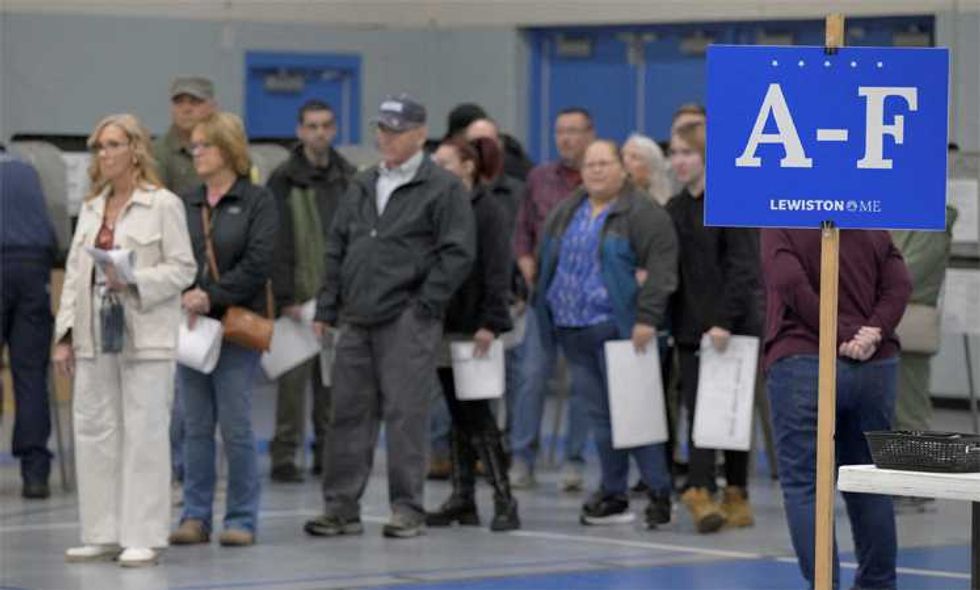
Ahead of the November midterm elections, President Donald Trump and his Republican allies have demanded Congress pass sweeping voting restrictions, including showing proof of citizenship to register — all in the name of election security.At the same time, the only federal agency dedicated solely to helping states and localities run smooth and secure elections operates on a meager budget. It provides grants for election security far smaller than in the past. And U.S. House Republicans have signaled they want sizable further cuts.The agency, the U.S. Election Assistance Commission, sits at the center of a fight playing out in Congress over how to best ensure secure elections. The debate has thrown into sharp relief a yawning gap between GOP rhetoric over election tampering and actual congressional support for election security efforts.“If my colleagues truly cared about protecting our elections from foreign interference, they’d put the resources behind it,” Rep. Sanford Bishop, a Georgia Democrat, said at a House Appropriations Committee meeting this spring. “Instead, we get empty rhetoric, zero urgency, while putting the right of citizens to vote at risk.”Congressional support of the EAC’s election security grant program has fluctuated over time, but has generally trended downward.Congress has approved election security grant funding at much lower levels than the program’s early years. (Credit: U.S. Election Assistance Commission 2025 Annual Report)Lawmakers approved $380 million in 2018 and $425 million in 2020, along with an additional $400 million in election-related pandemic aid that year.Since then, grant funding has slowed to a trickle. Congress appropriated $75 million in 2022 and again in 2023. That was followed by $55 million in 2024 and $15 million in 2025.This year’s amount, $45 million, is an increase from the previous year — consistent with enhanced needs in an election year — but substantially lower than other recent years and a far cry from the program’s early years.Trump and many GOP lawmakers support the SAVE America Act, which would impose new restrictions on voting. It would require voters to show a photo ID at the polls, as well as require them to bring documents proving their citizenship, such as a passport or birth certificate, with them when they register to vote.The requirements are needed, the bill’s supporters say, to combat noncitizen voting, an extremely rare occurrence.“The cheating is rampant in our elections,” Trump asserted without evidence in his 2026 State of the Union address. He has called the SAVE America Act “commonsense, country-saving legislation.”The House passed the bill in February but it has floundered in the Senate amid opposition from Democrats and a handful of Republicans. Trump continues to seek new avenues to advance the measure, including urging lawmakers to attach it to housing legislation.President Donald Trump delivers his State of the Union address on Feb. 24, 2026. During the address, Trump claimed, without evidence, “cheating is rampant” in U.S. elections. (Photo by Andrew Harnik/Getty Images)Cuts to election security agencyThe Trump-led push for voting restrictions has largely ignored concrete election security needs in favor of chasing the phantom specter of noncitizen voting, Democrats and experts on election administration say. The result, they say, has been the possibility of sharp cuts at the EAC.The House Appropriations Committee in April approved a bill that would cut the EAC’s salaries and expenses from $23.86 million to $17 million. It would mark the first time in four years the agency’s budget has dropped below $20 million.The bill would also sharply cut the EAC’s election security grant program from $45 million to $15 million, the same as the last non-election year.Since 2018, the agency has distributed the grants to election officials for technology upgrades, including cybersecurity, physical security improvements at election sites and efforts to combat voter misinformation. Lawmakers created the election security grants in response to foreign interference in the 2016 election.U.S. Rep. Steny Hoyer, a Maryland Democrat, at a Democratic rally in 2022. (Photo by Danielle E. Gaines/Maryland Matters)“Republicans claim falsely that our elections are plagued by fraud and that more needs to be done to secure the vote,” Rep. Steny Hoyer, a Maryland Democrat, said in a statement to States Newsroom.“Yet, they have consistently undermined the security of our elections, including by proposing to cut election-security grants by two-thirds and the Election Assistance Commission’s (EAC) overall budget by almost 30% in Fiscal Year 2027,” Hoyer said.