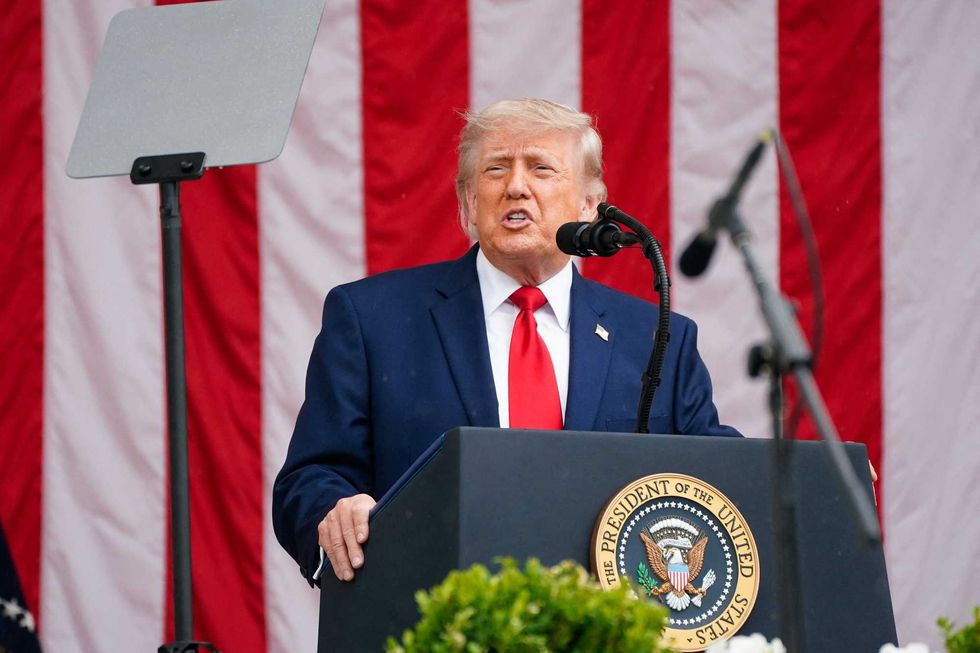
Ahead of the November midterm elections, President Donald Trump and his Republican allies have demanded Congress pass sweeping voting restrictions, including showing proof of citizenship to register — all in the name of election security.At the same time, the only federal agency dedicated solely to helping states and localities run smooth and secure elections operates on a meager budget. It provides grants for election security far smaller than in the past. And U.S. House Republicans have signaled they want sizable further cuts.The agency, the U.S. Election Assistance Commission, sits at the center of a fight playing out in Congress over how to best ensure secure elections. The debate has thrown into sharp relief a yawning gap between GOP rhetoric over election tampering and actual congressional support for election security efforts.“If my colleagues truly cared about protecting our elections from foreign interference, they’d put the resources behind it,” Rep. Sanford Bishop, a Georgia Democrat, said at a House Appropriations Committee meeting this spring. “Instead, we get empty rhetoric, zero urgency, while putting the right of citizens to vote at risk.”Congressional support of the EAC’s election security grant program has fluctuated over time, but has generally trended downward.Congress has approved election security grant funding at much lower levels than the program’s early years. (Credit: U.S. Election Assistance Commission 2025 Annual Report)Lawmakers approved $380 million in 2018 and $425 million in 2020, along with an additional $400 million in election-related pandemic aid that year.Since then, grant funding has slowed to a trickle. Congress appropriated $75 million in 2022 and again in 2023. That was followed by $55 million in 2024 and $15 million in 2025.This year’s amount, $45 million, is an increase from the previous year — consistent with enhanced needs in an election year — but substantially lower than other recent years and a far cry from the program’s early years.Trump and many GOP lawmakers support the SAVE America Act, which would impose new restrictions on voting. It would require voters to show a photo ID at the polls, as well as require them to bring documents proving their citizenship, such as a passport or birth certificate, with them when they register to vote.The requirements are needed, the bill’s supporters say, to combat noncitizen voting, an extremely rare occurrence.“The cheating is rampant in our elections,” Trump asserted without evidence in his 2026 State of the Union address. He has called the SAVE America Act “commonsense, country-saving legislation.”The House passed the bill in February but it has floundered in the Senate amid opposition from Democrats and a handful of Republicans. Trump continues to seek new avenues to advance the measure, including urging lawmakers to attach it to housing legislation.President Donald Trump delivers his State of the Union address on Feb. 24, 2026. During the address, Trump claimed, without evidence, “cheating is rampant” in U.S. elections. (Photo by Andrew Harnik/Getty Images)Cuts to election security agencyThe Trump-led push for voting restrictions has largely ignored concrete election security needs in favor of chasing the phantom specter of noncitizen voting, Democrats and experts on election administration say. The result, they say, has been the possibility of sharp cuts at the EAC.The House Appropriations Committee in April approved a bill that would cut the EAC’s salaries and expenses from $23.86 million to $17 million. It would mark the first time in four years the agency’s budget has dropped below $20 million.The bill would also sharply cut the EAC’s election security grant program from $45 million to $15 million, the same as the last non-election year.Since 2018, the agency has distributed the grants to election officials for technology upgrades, including cybersecurity, physical security improvements at election sites and efforts to combat voter misinformation. Lawmakers created the election security grants in response to foreign interference in the 2016 election.U.S. Rep. Steny Hoyer, a Maryland Democrat, at a Democratic rally in 2022. (Photo by Danielle E. Gaines/Maryland Matters)“Republicans claim falsely that our elections are plagued by fraud and that more needs to be done to secure the vote,” Rep. Steny Hoyer, a Maryland Democrat, said in a statement to States Newsroom.“Yet, they have consistently undermined the security of our elections, including by proposing to cut election-security grants by two-thirds and the Election Assistance Commission’s (EAC) overall budget by almost 30% in Fiscal Year 2027,” Hoyer said.