Trump, House GOP leadership lose fight to block war powers resolution
Far Right
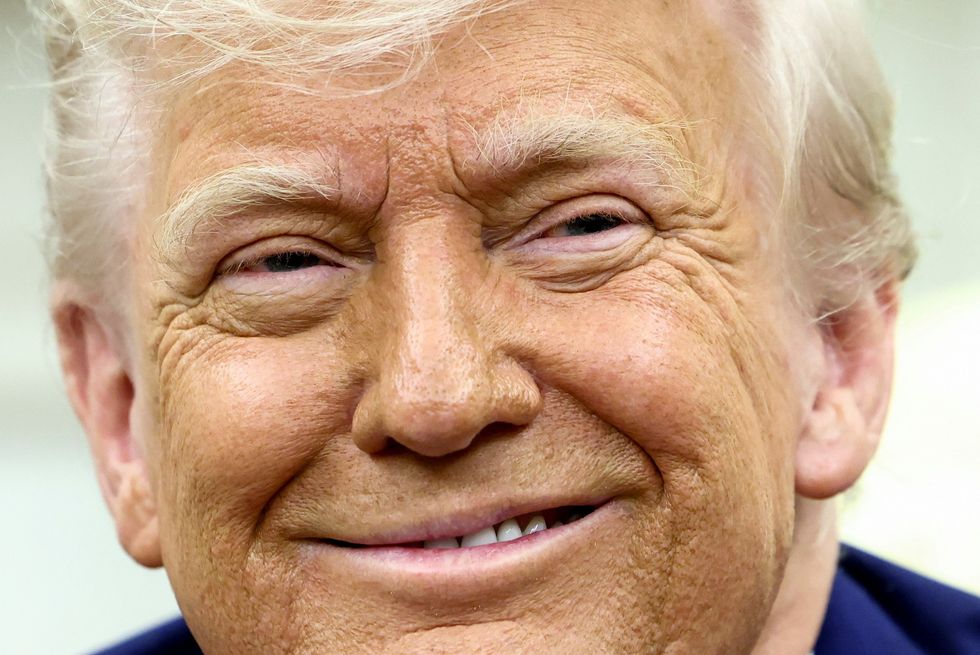
President Donald Trump and House Republican leaders lost their attempt to defeat a Democratic-led war powers resolution Wednesday that would limit President Donald Trump’s authority to wage […]
THE FINAL FOUR: After repeated attempts by House Democrats to pass a war powers resolution to assert Congress’s authority to declare war, finally, a handful of Republicans were disenchanted enough with the progress of the war in Iran to cross the aisle and vote to send the legislation to the Senate, by a vote of […]
Senate Republicans are bracing for an end-of-week slog of votes as tension continues to build with the Trump White House, Punchbowl News reported on Thursday morning.Senate Majority Leader John Thune (R-SD) and Whip John Barrasso (R-WY) face "a marathon of twisting arms and whipping votes on two pieces of legislation that have little in common" other than the fact that "Trump has made passing them much harder than it needed to be," said the report — namely, the passage of the Foreign Intelligence Surveillance Act (FISA) authorization, and the Homeland Security reconciliation package to fund immigration enforcement.The "heartburn" Republicans face, per the report, is that Trump has complicated all of this by demanding $1 billion for "security" for his White House ballroom project, something the GOP has finally rejected outright; introduced and backed off the "Anti-Weaponization Fund" which has forced Senate Republicans to consider banning it directly in their legislation; and nominating his unqualified and highly partisan housing finance chief Bill Pulte to serve as Director of National Intelligence, which has caused Democrats to threaten a boycott of FISA.The weaponization fund alone has created additional pain points by causing some Republicans to demand a formal ban on the fund in the reconciliation as a condition for their vote, with Sen. Thom Tillis (R-NC) saying, “We need to take action here. It’s creating headwinds that we don’t need. If we’ve got the acting AG saying it’s done, then let’s just stick a fork in it.”Senate Minority Leader Chuck Schumer (D-NY), meanwhile, plans to introduce an amendment requiring a rewrite of the bill to include this language. Only four Republican votes would be needed to pass it.The upshot, per other reports, is that Republicans on Capitol Hill are privately enraged at Trump for constantly tripping up not only their priorities, but his own.
President Donald Trump has privately told aides he would consider resuming bombing campaigns against Iran under one specific condition, and it has the fragile ceasefire teetering on the edge.Trump privately told aides he would consider ending the ceasefire if Tehran becomes responsible for the deaths of American troops, according to U.S. officials cited by the Wall Street Journal. The president has signaled a willingness to tolerate smaller military flare-ups for weeks or even months rather than risk a broader conflict.The leak comes as the ceasefire — originally signed April 7 as a two-week pause and later extended indefinitely — faces its most serious test yet. On Tuesday, U.S. forces struck and disabled an Iranian-linked oil tanker, prompting Iranian drone attacks on Gulf shipping and U.S. airstrikes on Iranian military sites on Qeshm Island. The escalation peaked Wednesday when Iran launched its largest barrage since the truce began, firing missiles and drones at Kuwait and Bahrain, temporarily shutting Kuwait's international airport and causing casualties.Trump addressed reporters in the Oval Office Wednesday with a characteristic shrug. “In that part of the world, ceasefire is when you’re shooting in a more moderate manner,” Trump said. He claimed the situation was under control and peace talks were progressing.“It takes two to tango. We hit them very hard on something else and so they were responding,” he said.Experts warn the cycle of retaliation is making the ceasefire increasingly unstable, with each side feeling compelled to respond to avoid appearing weak. Meanwhile, the House voted this week to invoke war powers to end the conflict entirely, with four Republicans breaking ranks to pass the measure.Steve Bannon captured the growing sense of alarm among Trump's own allies, according to the Daily Beast."Is this how MAGA ends — with a whimper, not a bang?"
Scott Bessent traveled to the Reagan National Economic Forum last week and delivered a message that would have been almost unthinkable from a Republican treasury secretary a decade ago: America got globalization wrong. Speaking before an audience of Reagan Republicans, Bessent argued that both parties spent decades sacrificing industrial capacity, supply-chain resilience, and national security […]
There were cheers in the House of Representatives after four Republicans broke from President Donald Trump, joining Democrats to pass a preliminary resolution to stop the war on Iran. The president said a deal with Iran could come soon and that the near-daily exchanges of fire between the United States and Iran and attacks on U.S. allies on the Gulf, are normal. NBC’s Richard Engel reports for TODAY.
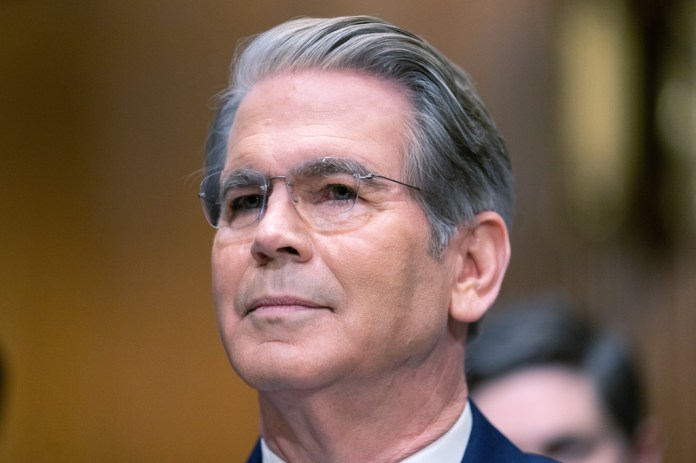
Just when President Trump removed one thumb from the eye of Senate Republicans — scrapping his $1.8 billion "anti-weaponization fund" — he put another right back in with his choice of Bill Pulte as director of national intelligence.Why it matters: This time, the stakes are even higher: Democrats are threatening to let the government's spy powers lapse next week unless Trump yanks the appointment.State of play: Democratic outrage over Trump's latest moves usually doesn't amount to much. But Republicans need at least eight Democratic votes in the Senate to prevent the Foreign Intelligence Surveillance Act Section 702 from lapsing on June 12, potentially forcing Trump to choose between sticking with Pulte or keeping Section 702 alive.The warning lights started flashing on Monday when Sen. Mark Warner (D-Va.) teed off on the appointment. "I thought I had gotten to the stage where I could no longer be shocked by Donald Trump's choices," he told MS NOW, "but this may be the most outrageous of all."As vice chair of the Senate Intelligence Committee, Warner is a key player in the Section 702 renewal debate.Now Warner is pressing Senate Majority Leader John Thune to urge the White House to drop Pulte, per Punchbowl. As DNI, he would play a key role overseeing the Section 702 program.Senate Minority Leader Chuck Schumer said Tuesday that renewal of surveillance powers, which has already been delayed for months, is in further jeopardy. "The timing of this announcement could not be worse," he said. "With just over a week until FISA Section 702's authorities expire, this announcement and its timing clearly make passing an extension of FISA much harder."The big picture: The backlash isn't just coming from Democrats. Some of the sharpest criticism has come from Trump's own party.Thune himself did not mince words about Pulte, who used his perch as head of the Federal Housing Finance Agency to target Trump's adversaries. "We don't need a weaponized DNI, we need professionals there," he said.Thune's predecessor as Senate leader, Mitch McConnell, also came out against Pulte. "Anyone performing this role of such immense public trust must have the extensive national security experience required by statute, and no nominee who falls short of this requirement will earn my vote," he said.At a Tuesday hearing, Sen. Thom Tillis (R-N.C.) asked Treasury Secretary Scott Bessent whether he actually threatened to punch Pulte in the face, as journalist Rachael Bade reported last year. "No sir, I actually said I was going to kick his ass," Bessent replied. To which Tillis said, "Good … I share the emotion."Tillis also said Pulte is "not fit" to be DNI and that "the timing of this nomination couldn't have been worse."Sen. John Cornyn (R-Texas) said of Pulte, "I don't see any evidence of qualifications for that job, but I'm willing to listen."Yes, but: Hitching Pulte to the FISA extension "is a really risky strategy," Thune told reporters Tuesday, per Axios' Hans Nichols and Kate Santaliz. Tillis and Sen. Susan Collins (R-Maine) also indicated they oppose linking the two.For the record: "Bill Pulte is a great selection and he will do a great job on behalf of the American people," White House spokesman Davis Ingle said in a statement. "Holding FISA hostage puts America's national security at risk and it is shameful that some Democrats are threatening to put partisan politics ahead of the safety of the American people." The bottom line: The administration abandoned the anti-weaponization fund. Now it has to decide whether to do the same with Pulte.
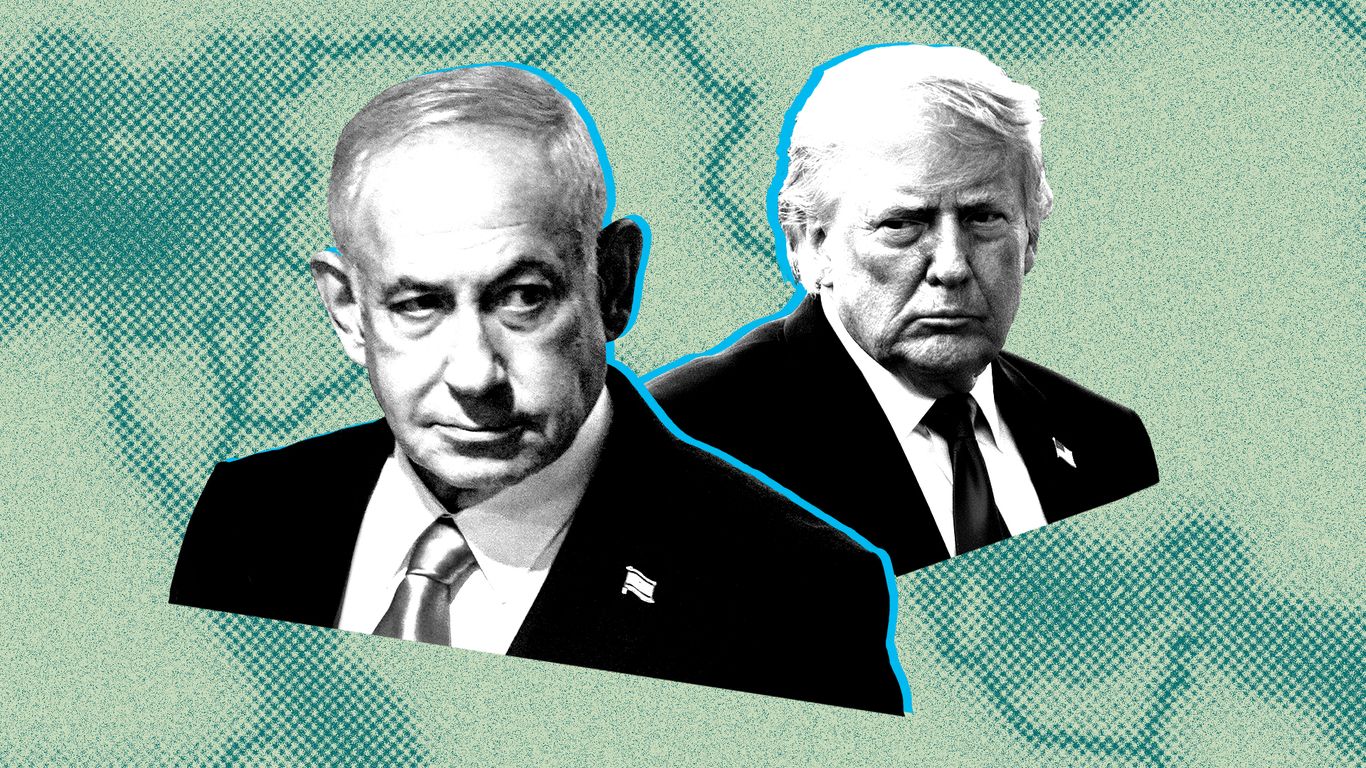
Israeli Prime Minister Benjamin Netanyahu's recent spat with President Trump over Lebanon underscored how his military objectives, and possibly his political survival, are dependent on a U.S. president who doesn't share his appetite for escalation.Why it matters: Trump and Netanyahu have coordinated very closely on Iran and speak almost daily. But officials on both sides have been cognizant that there could be a point in time when the allies' interests and objectives diverge. Some in Netanyahu's camp worry that time is now.Netanyahu himself said Tuesday that it was an "open question" as to whether he and Trump were aligned on how the war with Iran should end.The big picture: With an election expected by October, Netanyahu hasn't delivered on his promise to destroy Hamas or his plans for regime change in Iran, and he's under immense criticism at home over the ongoing Hezbollah attacks. Every time a siren near the border heralds an incoming drone or missile, Netanyahu faces domestic pressure to respond.It was in that context that he vowed to conduct major strikes on Hezbollah targets in Beirut — before being forced into retreat by an angry Trump, who cares far less about Lebanon than a deal with Iran.Driving the news: When Trump chastised Netanyahu in a call on Monday and pulled the brakes on the Beirut strikes, he also kicked up a political firestorm in Israel.Rivals and even some hawkish government allies claimed Netanyahu had made Israel an American "vassal," or surrendered Israeli sovereignty to Trump.The Trump-Netanyahu call came after Iran threatened to abandon the negotiations with the U.S. over Israel's actions in Lebanon and to launch missiles at Israel. "It was a terrible phone call. Trump really hammered Bibi. He demanded that he immediately back down from the plan to strike Beirut in order to not blow up the situation in Lebanon — and through that, the negotiations with Iran," an Israeli source said.What they're saying: Netanyahu didn't deny that Trump had called him "crazy" or claimed he'd been in jail without Trump's help. Instead, the prime minister told CNBC he and Trump had argued before but always maintained their close partnership. Similarly, Trump confirmed Axios' reporting about the call to the NY Post while adding that he likes Netanyahu and has worked well with him.Between the lines: While the call may have been just a blip in their personal relationship, their differences over the Iran endgame are more stubborn.Two senior U.S. officials told Axios that while Trump wants to end the war, Netanyahu seems to want to resume it."Sometimes Bibi doesn't know when to stop," one of the U.S. officials said.The fact that Netanyahu quickly abandoned the plan to strike Lebanon, and moved to clean up any perception of a rift, underscored the degree to which Netanyahu's military maneuvers and political standing are subject to Trump's influence. Zoom in: Netanyahu is concerned the tense call is a prelude for further U.S. limitations on Israel's freedom of operations in Lebanon, an Israeli source who speaks regularly with the prime minister and his close advisers said.The source said Netanyahu fears the U.S. will apply much stricter criteria to Israeli strikes in Lebanon — not just Beirut — before giving its "green light."What to watch: On Wednesday, after two days of talks between Israeli and Lebanese diplomats in Washington, the two countries announced a plan for a full ceasefire, contingent on steps from Hezbollah.It was not immediately clear whether the Shia militia would accept the new terms.If a stable ceasefire isn't reached and Hezbollah continues firing at Israel, Netanyahu might be able to convince Trump to allow him to bomb Beirut after all.Trump said on Wednesday that he's trying to separate the conflict between Israel and Hezbollah from the war with Iran, and thinks a deal with Iran could be reached as early as this weekend.The bottom line: Netanyahu is skeptical of restraint in Lebanon and of a deal with Iran, and both are politically toxic for him. U.S. officials have worried he might try to undermine their diplomacy on both fronts.What he can't afford to do, however, is openly split with Trump four months before an election.