
New York Post
Bill Maher Presses JD Vance on Iran, ICE, and Election Denial on ‘Real Time’: “That S**t Has to Stop”
The HBO host tried to pin the VP down. It didn't exactly go as planned.
Right

Op-ed views and opinions expressed are solely those of the author. Across the country, data centers have become a flashpoint in local politics. Residents have questions about […]
The HBO host tried to pin the VP down. It didn't exactly go as planned.

Even state-level legal protections for trans people have not always extended to those behind bars.

'His speeches feature the words I, me, and my over and over again. He loves tweeting pictures of himself on holidays and when anything is in the news that he can somehow make all about himself'
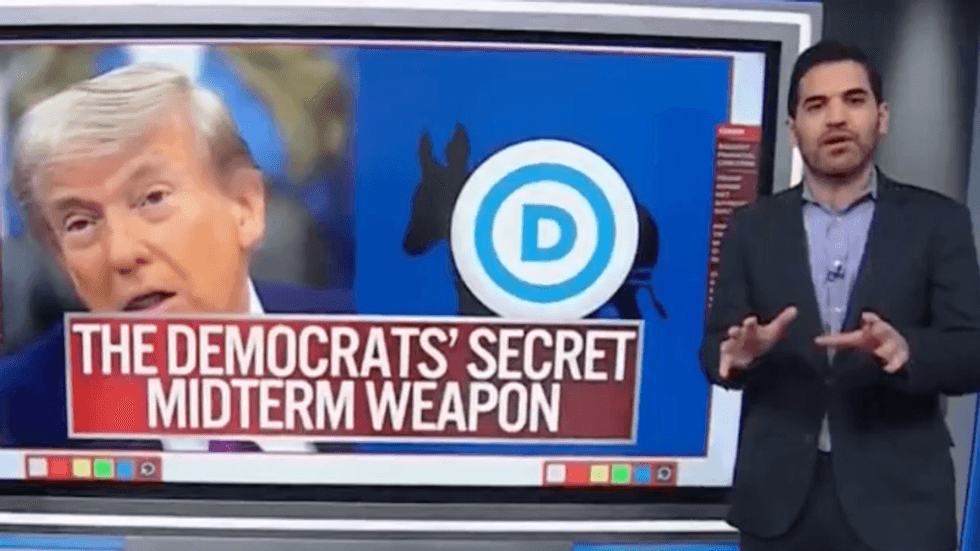
Democrats hold a "secret weapon" heading into this fall's midterm elections, according to CNN's Harry Enten.Health care costs have surged past gas prices, food and housing to become Americans' single biggest financial concern, Enten said, and Democrats hold a decisive advantage over Republicans on that topic."This, to me, is the Democrats' secret weapon," he said.According to Enten's analysis of polling data, 22 percent of Americans cite healthcare as their primary financial worry, well ahead of food at 18 percent, housing at 14 percent and gas prices at just 8 percent, and highlighted the finding as particularly notable given the outsized media attention typically paid to gas prices in affordability discussions.The numbers get worse for the Trump administration from there, Enten said. Its net approval rating on healthcare costs sits 36 points underwater, with disapproval far outpacing approval. Among independents — a group already showing signs of frustration with the administration — that gap widens dramatically to 50 points underwater, a figure Enten called striking."So you see, you know Trump really struggling here, but here, even with the obvious, there's an interesting little nugget going on here," he said.Enten pointed to a substantial Democratic advantage in trust on the issue. Democrats currently hold a 21-point edge over Republicans on health care, he noted — larger than the 17-point advantage they held in 2018, when health care-driven momentum helped the party secure a net gain of 40 House seats during Trump's first midterm cycle.Much of the current frustration traces back to early 2026, when enhanced Affordable Care Act subsidies that millions of Americans relied on were not extended, according to Enten. Prediction markets have grown increasingly pessimistic about a reversal: Enten noted that betting markets gave a 43 percent chance in January that the subsidies would eventually be extended, but that figure has since collapsed to just 7 percent.Taken together, Enten argued, the data — high public anxiety over health care costs, the administration's weak approval numbers, and Democrats' growing trust advantage — closely resemble the conditions that fueled the party's strong performance in 2018."It will be interesting to see if Democrats really try to re-engage with that issue," Enten said. "They absolutely should be running on health care. It is a big win for them." - YouTube youtu.be
A president, by Constitutional design, has no legal authority or direct role in administering, altering, or conducting elections. Authority over the mechanics of elections is legally split between state governments and Congress, leaving no constitutional role for the executive branch.That did not stop Trump from commandeering the US Post Office with instructions to deliver mail ballots only to people on Trump-approved, Trump-purged voter lists. Trump’s “ENSURING CITIZENSHIP VERIFICATION AND INTEGRITY IN FEDERAL ELECTIONS” Executive Order, issued March 31, 2026, is his bold scheme to wrest election control from the states, which are Constitutionally vested with that authority, to transfer it to the federal government, which is not. On May 29,an eagerly compliant United States Postal Service issued proposed rules to effectuate Trump’s EO. On June 25, a federal judge ruled that “no federal law permits (Trump) to control mail-in voting through U.S.P.S.”Trump’s fear of the midterms and the accountability they threaten is palpable. Alongside his unprecedented post office ploy, he has ordered FBI raids and DOJ investigations of democratic voter outreach organizations, as he teases the deployment of armed federal agents to polling places. Sending armed troops to intimidate voters is, for obvious reasons, forbidden by federal law, and has not been done by any US president since the Civil War era.Trump is complementing these nefarious efforts with an all-out appropriation of state voter rolls, from which he has extracted data to build a master federal data base which has also been ruled illegal.A federal judge blocks Trump’s Orwellian databaseThreatening to cut funding to states that refuse to turn over their rolls, he has already sent federal agents to seize voter records in Arizona, Georgia, and Michigan. It’s plain extortion: To avoid losing federal resources they have already paid into, states must agree to run their voter rolls through the administration’s SAVE database (Systematic Alien Verification for Entitlements, not to be confused with Trump’s SAVE America Act), to verify citizenship. The SAVE database has been expanded, widely tested, and determined to be deeply flawed. In St. Louis County alone, for example, roughly 35% of the people labeled noncitizens were citizens who registered to vote at naturalization ceremonies.Trump has been using states’ voter roll data to build an illegal, nationwide database of Americans’ private information including home addresses, social security numbers, and other confidential “data-mined” information extracted by Palantir Technologies, a data mining and analytics firm co-founded by JD Vance promoter Peter Thiel. On Monday, a federal judge put a stop to it.In League of Women Voters v. DHS, US District Judge Sparkle Sooknanan ruled that the federal government “knowingly trampled on the privacy rights of American citizens in a manner that threatens the sacred right to vote” by utilizing an unauthorized voter-screening database. The court found the administration’s actions presented “major violations” of the Privacy Act, the Social Security Act, and the Administrative Procedure Act.A closer lookIn her landmark 75-page ruling, Judge Sooknanan excoriated the Trump administration for ignoring federal privacy laws as it overhauled and expanded the SAVE system into what she characterized as a “faulty citizenship checker.” The worst of her criticism was reserved for how recklessly the administration handled Americans’ personal data to expand the program. She wrote that “agencies were scrambling to comply with (Trump’s March 31) Executive Order aimed at reshaping federal elections, which directed them to create a system for mass voter verification,” and that in doing so, they “haphazardly combined and repurposed the private information of millions of Americans, including citizenship data that they knew to be unreliable.”She found that the system specifically violated the Social Security Act’s prohibition on disclosing Social Security numbers. The judge sharply condemned real-world consequences, noting that (Republican) states had “partnered with the federal government to access the database and are actively removing United States citizens from voter rolls based on inaccurate information.”She pointed to concrete examples from Texas where naturalized citizens were wrongly flagged and had their registrations canceled or placed under review, but citizens in Texas are not alone. The SAVE system merged Social Security data with immigration files extracted across multiple state and federal platforms, resulting in widespread data flaws and false positive matches. System studies revealed faulty data matching, outdated records, and user compliance failures resulting in high rates of false positives.

The entire sports world is tuned in to the 2026 World Cup, much of which is taking place in the United States. And this iconic tournament has been doing wonders for California’s beer industry. A recent economic research study from the New Beer Institute showed that California’s on-premise beer sales are up 17.9% year-over-year through the first...
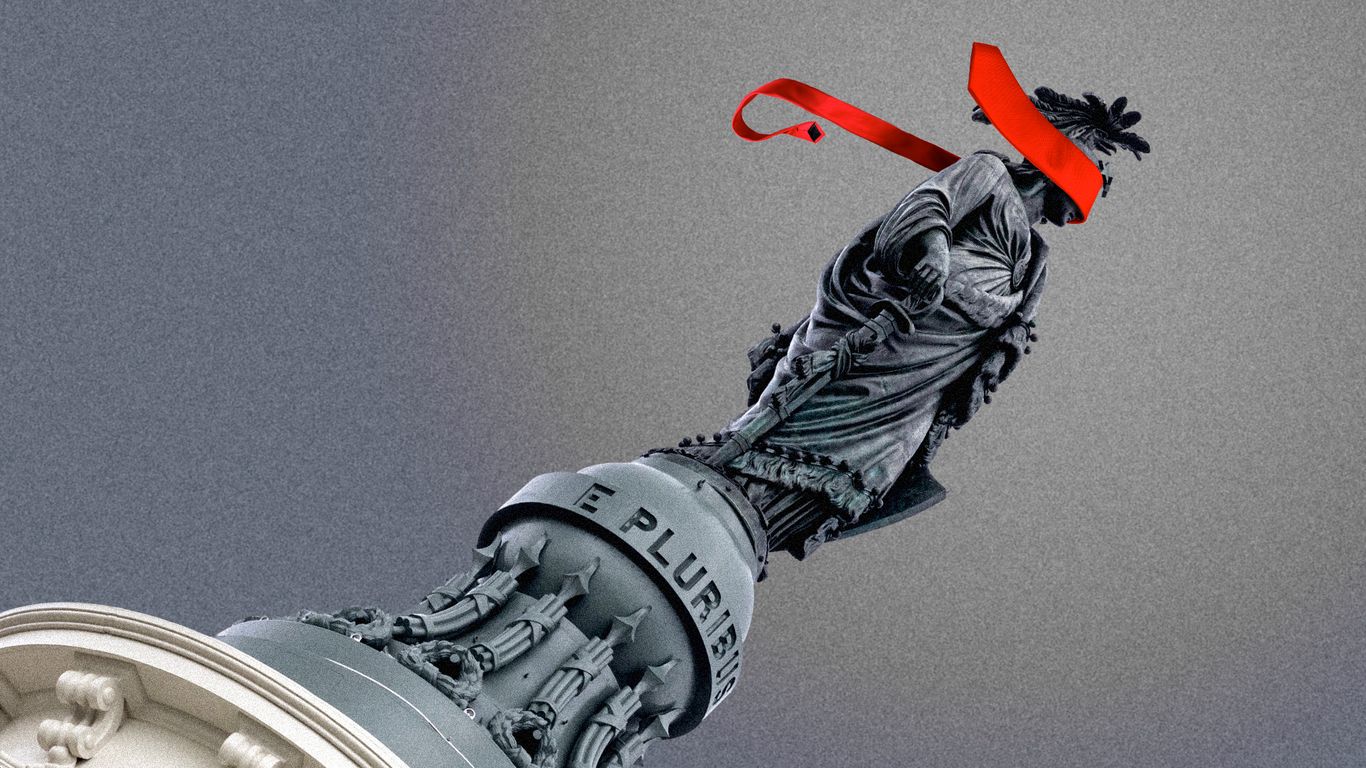
President Trump trained elected Republicans to obey him, even when they disagreed.Elected Republicans trained Trump to expect obedience, even as his demands grew impossible to satisfy.Why it matters: Years of Republicans submitting to Trump, often against their own judgment, have curdled into a rolling crisis as Washington nears the likely end of the GOP's two-year monopoly.The big picture: Trump has spent his second term steamrolling his own party, confident the lawmakers he humiliates will keep voting his way. You see it everywhere: He canceled the signing of a landmark bipartisan housing bill just hours before the ceremony — trying to strong-arm the Senate into passing the SAVE America Act, a sweeping voter ID bill with no realistic path to 60 (or even 50) votes.He dismissed the housing bill — which his own White House had called "one of the most significant pieces of housing affordability legislation in American history" — as "of minor importance."He berated the "Four Republican Losers" in the Senate who voted this week to rein in his Iran war powers, calling the rebuke "poorly timed and meaningless." (Hours after his barrage, Republicans passed a symbolic reversal.)He blew up a bipartisan scramble aimed at renewing the government's FISA surveillance powers, demanding the SAVE Act on voting rules be bolted on. He let the authority lapse rather than back down.He yanked his own intelligence nominee, Jay Clayton, from a confirmation hearing hours before it began, leaving the nation's spy agencies under an acting director both parties distrust.He refused to brief Senate Majority Leader John Thune (R-S.D.) and other senators on his Iran deal until after the text was finally released, leaving them to defend terms they hadn't seen.He blindsided senators by proposing a $1.8 billion "anti-weaponization" fund just as they moved a $70 billion immigration package, defending Jan. 6 rioters who attacked the building where the senators work.Between the lines: Trump is governing like a term-limited president with little patience for Congress, few concerns about the midterms, and an insatiable appetite for executive power.Republican lawmakers are still stuck with Senate rules, swing-state politics and the long-term consequences of his maximalist demands — like blowing up the filibuster to pass the SAVE Act."I don't think about Americans' financial situation," Trump told reporters in May when asked whether domestic economic pressure was shaping his Iran negotiations."I don't care about the midterms," he said to his Cabinet two weeks later, dismissing the idea that Iran could wait him out on peace talks.What we're hearing: The first sustained check on Trump's second-term power is coming from rebellious GOP senators, especially those whose careers he cut short for insufficient loyalty.Sen. Bill Cassidy (R-La.), beaten in a Trump-backed primary, was initially among those voting to curb the president's Iran war powers. Trump and Cassidy got in a shouting match during a closed-door Senate lunch.Sen. Thom Tillis (R-N.C.), who chose retirement over a humiliating primary, has become the face of GOP resistance in the Senate — publicly savaging Trump nominees, opposing any move to weaken the filibuster and vowing to "do everything I can" to block the SAVE Act.Sen. John Cornyn (R-Texas), who voted with Trump 99% of the time before Trump backed a primary challenger anyway, joined Tillis and Cassidy in refusing to advance attorney general nominee Todd Blanche over concerns about the "anti-weaponization" fund.Top Republicans tell us Trump's response — lashing out ineffectively — could be a preview of how he'll play his cards over the next 2½ years as his power wanes.He'll technically be a lame duck after November's midterms. A favorable midterm environment could hand Democrats the House, even with Republicans' redistricting edge. The Senate is in play, too."The Senate is now behaving like the Senate," said a longtime Trump ally who knows Congress well. "More to come. If he loses the Senate, his presidency will be effectively over. Yet he's acting like it doesn't matter."Axios' Zachary Basu contributed reporting. 📈 If you're a CEO or on a CEO's team: Ask to join Jim's new weekly Axios C-Suite newsletter.Go deeper: "America's great political implosion."

A legal expert called out the irony in the majority opinion of a Supreme Court decision upending immigration protections for thousands.Leah Litman, a veteran legal analyst, spoke about the Supreme Court decision in Mullin v. Doe during an appearance on MS NOW. The Supreme Court ruled 6-3 in a decision that sided with the Trump administration and will take temporary protected status away from Haitians and Syrians.Justice Samuel Alito wrote the majority opinion and shot down the defense's argument that the Trump administration was motivated by racial animus to take away TPS from Haitians and Syrians, a decision that will take away their immigration protections.According to Litman, the majority opinion ruled that comments made by Trump during his 2024 presidential campaign that accused Haitians of eating cats and dogs "did not count as overtly racial." However, Litman asked, "Given that, what would it take to be considered overtly racial?"Justice Alito "did not even have the strength to reprint the comments that the president made," Litman said. "In the opinion that excused those comments as not racist, and if you are unwilling to reprint, recite the comments from the person you say isn't racist, maybe that is a sign that it is racist."She also pointed to a decision in Louisiana v. Callais two months ago. In the majority opinion for that case, Justice Alito wrote that "when Congress attempted to get states to draw districts that were actually representative of a multiracial democracy, namely complying with the Voting Rights Act, that, Sam Alito said, was racism," Litman said.