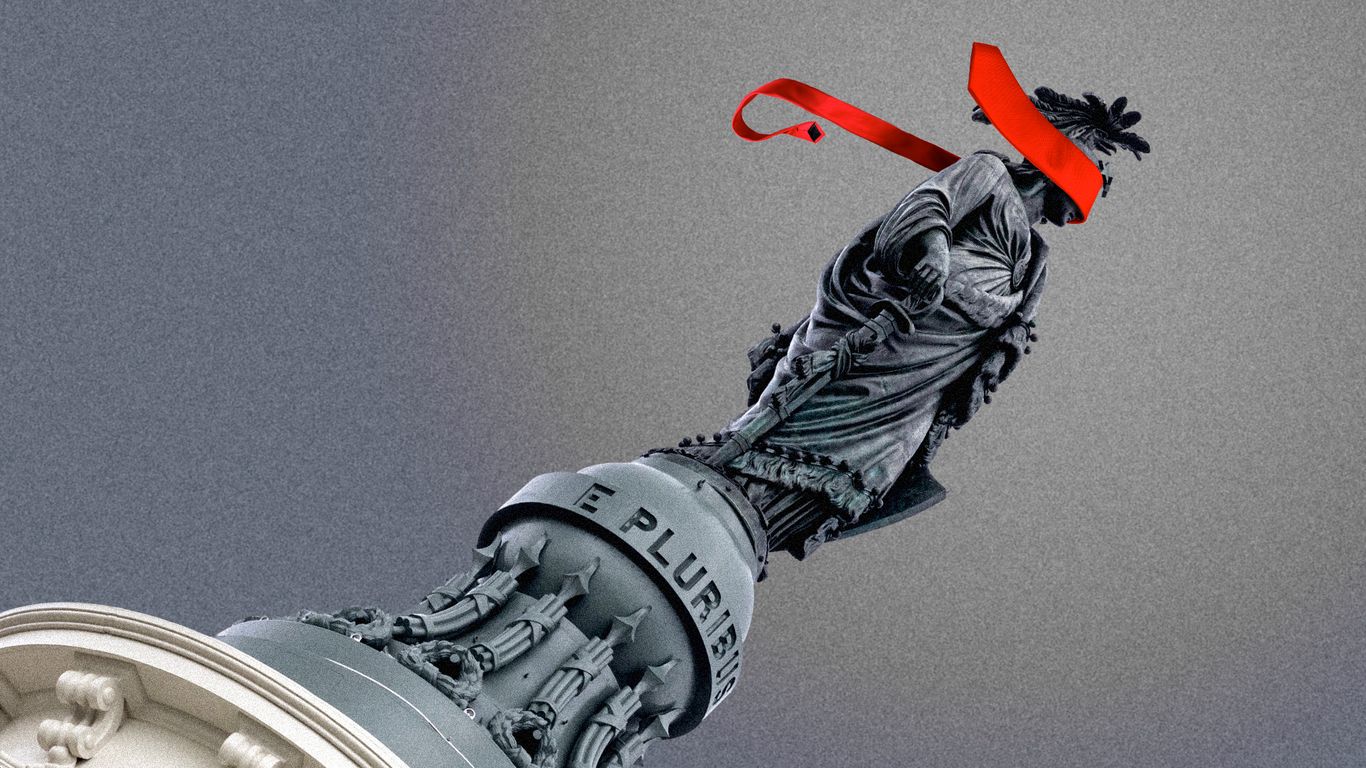
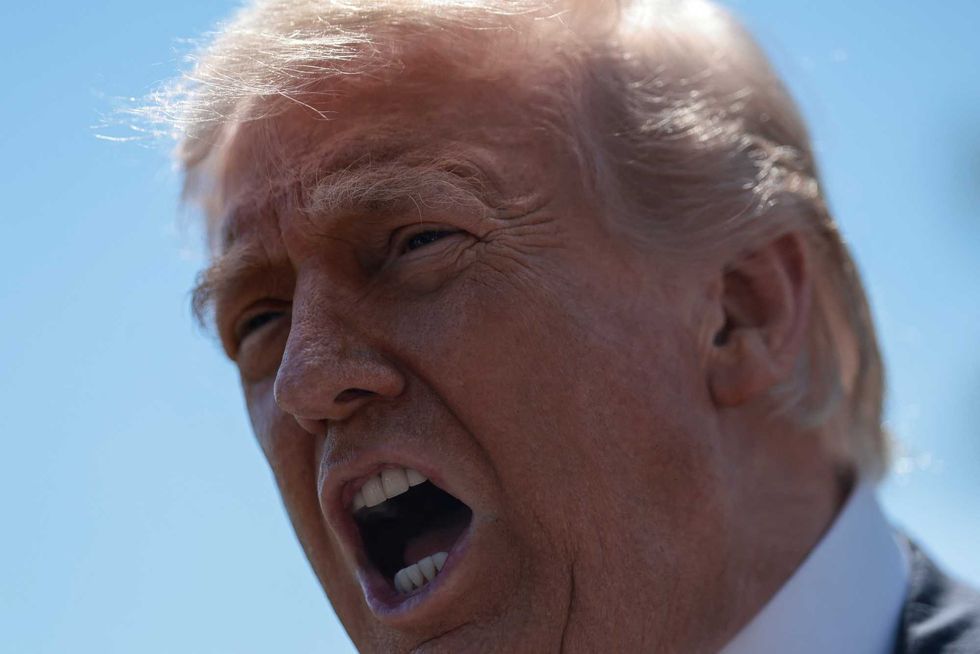
President Trump trained elected Republicans to obey him, even when they disagreed.Elected Republicans trained Trump to expect obedience, even as his demands grew impossible to satisfy.Why it matters: Years of Republicans submitting to Trump, often against their own judgment, have curdled into a rolling crisis as Washington nears the likely end of the GOP's two-year monopoly.The big picture: Trump has spent his second term steamrolling his own party, confident the lawmakers he humiliates will keep voting his way. You see it everywhere: He canceled the signing of a landmark bipartisan housing bill just hours before the ceremony — trying to strong-arm the Senate into passing the SAVE America Act, a sweeping voter ID bill with no realistic path to 60 (or even 50) votes.He dismissed the housing bill — which his own White House had called "one of the most significant pieces of housing affordability legislation in American history" — as "of minor importance."He berated the "Four Republican Losers" in the Senate who voted this week to rein in his Iran war powers, calling the rebuke "poorly timed and meaningless." (Hours after his barrage, Republicans passed a symbolic reversal.)He blew up a bipartisan scramble aimed at renewing the government's FISA surveillance powers, demanding the SAVE Act on voting rules be bolted on. He let the authority lapse rather than back down.He yanked his own intelligence nominee, Jay Clayton, from a confirmation hearing hours before it began, leaving the nation's spy agencies under an acting director both parties distrust.He refused to brief Senate Majority Leader John Thune (R-S.D.) and other senators on his Iran deal until after the text was finally released, leaving them to defend terms they hadn't seen.He blindsided senators by proposing a $1.8 billion "anti-weaponization" fund just as they moved a $70 billion immigration package, defending Jan. 6 rioters who attacked the building where the senators work.Between the lines: Trump is governing like a term-limited president with little patience for Congress, few concerns about the midterms, and an insatiable appetite for executive power.Republican lawmakers are still stuck with Senate rules, swing-state politics and the long-term consequences of his maximalist demands — like blowing up the filibuster to pass the SAVE Act."I don't think about Americans' financial situation," Trump told reporters in May when asked whether domestic economic pressure was shaping his Iran negotiations."I don't care about the midterms," he said to his Cabinet two weeks later, dismissing the idea that Iran could wait him out on peace talks.What we're hearing: The first sustained check on Trump's second-term power is coming from rebellious GOP senators, especially those whose careers he cut short for insufficient loyalty.Sen. Bill Cassidy (R-La.), beaten in a Trump-backed primary, was initially among those voting to curb the president's Iran war powers. Trump and Cassidy got in a shouting match during a closed-door Senate lunch.Sen. Thom Tillis (R-N.C.), who chose retirement over a humiliating primary, has become the face of GOP resistance in the Senate — publicly savaging Trump nominees, opposing any move to weaken the filibuster and vowing to "do everything I can" to block the SAVE Act.Sen. John Cornyn (R-Texas), who voted with Trump 99% of the time before Trump backed a primary challenger anyway, joined Tillis and Cassidy in refusing to advance attorney general nominee Todd Blanche over concerns about the "anti-weaponization" fund.Top Republicans tell us Trump's response — lashing out ineffectively — could be a preview of how he'll play his cards over the next 2½ years as his power wanes.He'll technically be a lame duck after November's midterms. A favorable midterm environment could hand Democrats the House, even with Republicans' redistricting edge. The Senate is in play, too."The Senate is now behaving like the Senate," said a longtime Trump ally who knows Congress well. "More to come. If he loses the Senate, his presidency will be effectively over. Yet he's acting like it doesn't matter."Axios' Zachary Basu contributed reporting. 📈 If you're a CEO or on a CEO's team: Ask to join Jim's new weekly Axios C-Suite newsletter.Go deeper: "America's great political implosion."