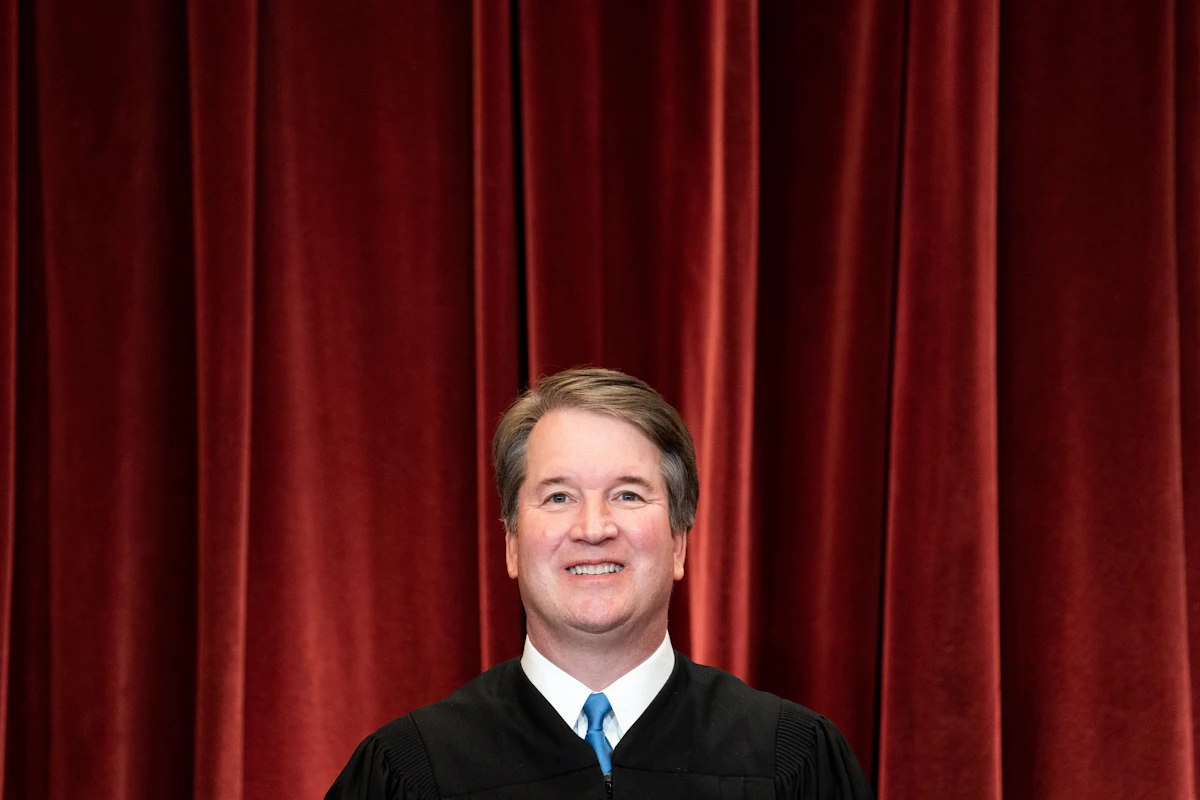
Sotomayor apologizes for public remarks she made about Brett Kavanaugh
Source: BizPac Review · Bias: Far Right
Summary
Justice Sonia Sotomayor issued an unusual apology on Wednesday after she acknowledged making critical remarks about the upbringing of her conservative colleague, Justice Brett Kavanaugh. Sotomayor released […]
Sotomayor apologizes for public remarks she made about Brett Kavanaugh
Far Right
Justice Sonia Sotomayor issued an unusual apology on Wednesday after she acknowledged making critical remarks about the upbringing of her conservative colleague, Justice Brett Kavanaugh. Sotomayor released […]
New York Mayor Zohran Mamdani delivered his July 4 address from behind George Washington's desk at City Hall. The mayor was joined by recently naturalized U.S. citizens as he highlighted the ideals the founders of the nation put forward 250 years ago.
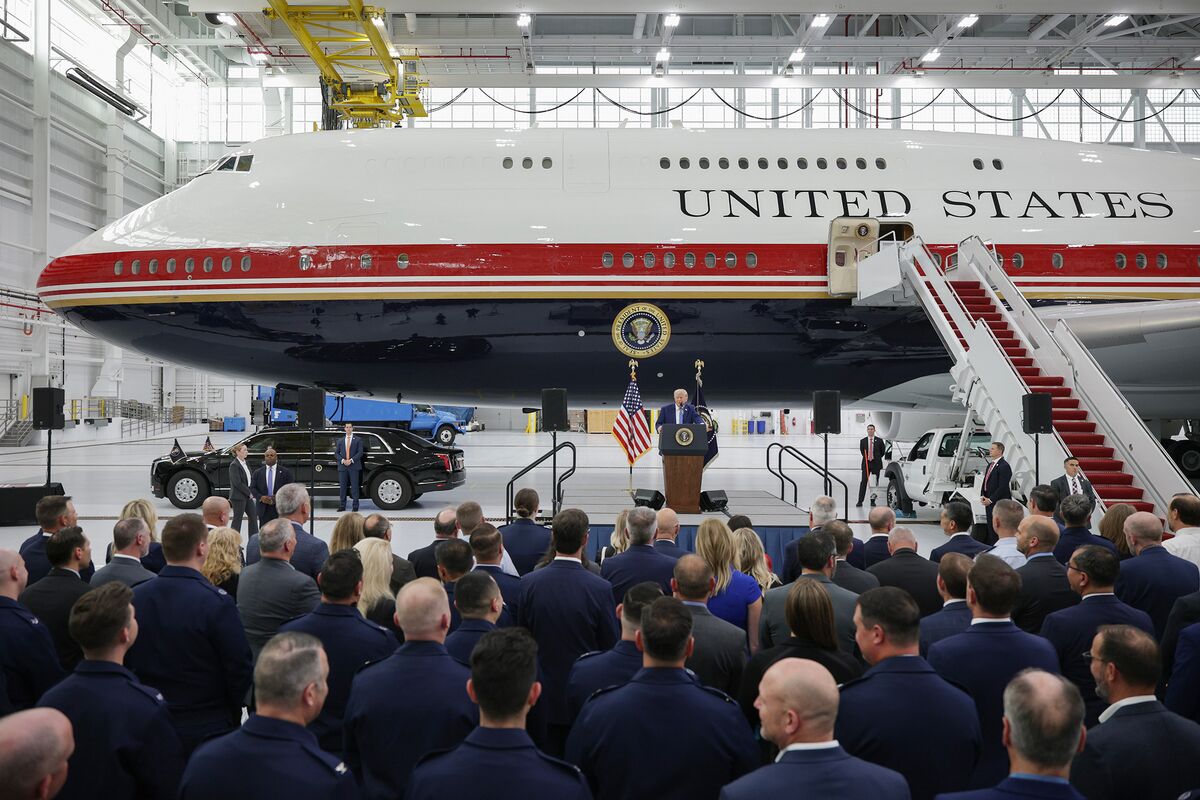
Boeing Co. reduced some of the technical challenges dogging its delayed delivery of two jets that will serve as Air Force One, according to congressional auditors.
President Trump bought hundreds of stocks the day before he paused tariffs and caused the stock market to rally. Trump filed his latest financial disclosure on Monday, and it shows that he made 327 individual stock purchases worth as much as $12.8 million on April 8, 2025, from companies including Apple, Microsoft, Nvidia, Amazon, and Alphabet (Google’s parent company), according to an analysis from investigative outlet Sludge. The next day, Trump announced that he was pausing his sweeping tariffs for 90 days, and the S&P 500 went up by nearly 10 percent, one of its largest one-day increases ever.The timing of these trades suggests he planned to cash in, realizing that markets would rally after his announcement. Those weren’t the only suspicious stock trades he made last year, either. On August 18, Trump’s accounts bought between $250,000 and $500,000 of stock in chipmaker Intel, four days before the president announced that the federal government would take a nearly $9 billion equity stake in the company. Intel’s stock price went up 6 percent after that announcement.Trump also bought stock in defense contractor Palantir Technologies throughout the year, publicly praising the company while increasing its federal contracts, particularly those with Immigration and Customs Enforcement. One of his top advisers, White House deputy chief of staff and anti-immigration hawk Stephen Miller, also owns between $100,001 and $250,000 of Palantir stock. This year, Trump singled out Palantir on Truth Social in April and sent its stock price soaring.By law, Trump and other executive branch officials are supposed to publicly disclose securities transfers, including stock purchases, over $1,000 within 45 days. Not only did Trump wait more than a year to disclose the April stock purchases, he didn’t disclose any other of the thousands of stock trades he made in 2025.In all, Trump reported $2.2 billion in income in 2025, from crypto, stock trades, foreign real estate, suing news organizations, and other grifts. His administration is openly engaging in market manipulation and insider trading without any fear of consequences.
The Supreme Court’s ruling this week on birthright citizenship in Trump v. Barbara totaled approximately 194 pages. I wrote earlier this week about the various positions that each of the justices took. But it is worth dwelling for an extra moment on the unusual position taken by Justice Brett Kavanaugh in just 10 strange pages.Unlike the rest of his colleagues, Kavanaugh took the position that Trump’s executive order was constitutionally permissible but statutorily illegal. In other words, the Fourteenth Amendment’s citizenship clause did not block Trump’s effort to curtail birthright citizenship, but an act of Congress that used identical language did.At a very superficial level, this might sound sensible and moderate by implicitly inviting Congress to address the situation. Kavanaugh certainly positions the opinion—and himself—as such. On closer inspection, it might be the most dangerous and extreme view of U.S. citizenship to be articulated by the justices this week.To understand Kavanaugh’s position, a brief sketch of the other justices’ views is necessary. Last January, Trump issued an executive order that instructed federal agencies to not recognize the U.S. citizenship of children whose parents were undocumented immigrants or living in the United States on temporary visas. A group of plaintiffs sued, arguing that this violated the Fourteenth Amendment’s citizenship clause.That clause reads as follows: “All persons born or naturalized in the United States, and subject to the jurisdiction thereof, are citizens of the United States.” In the 1898 case United States v. Wong Kim Ark, the Supreme Court ruled that the son of two Chinese immigrants in San Francisco had acquired U.S. citizenship at birth solely by virtue of being born on American soil. The “subject to the jurisdiction” exception was narrowed to a handful of situations that rarely apply today.In Tuesday’s ruling in Barbara, the justices essentially took four separate positions. Five of them took what can be described as the consensus view. Americans had inherited the rule of birthright citizenship from the English common law, Chief Justice John Roberts explained in his majority opinion. Dred Scott v. Sandford’s holding that people of African descent were ineligible for U.S. citizenship was a violation of that rule, and the Fourteenth Amendment’s citizenship clause restored and entrenched the original understanding.Two of Roberts’s fellow conservatives, Justices Clarence Thomas and Neil Gorsuch, took a different view. Thomas affirmed Wong Kim Ark as correct but argued a person’s domicile status—or, more specifically, that of their parents—also determined whether that person had U.S. citizenship at birth. Since Trump’s executive order was lawful in at least some circumstances, like birth tourism, the two justices rejected the facial challenge to its constitutionality.At the same time, both justices signaled that even if their domicile-focused view had prevailed, it would not grant total victory to the Trump administration. Thomas and Gorsuch concluded that children of temporary visa holders would not be eligible, and their respective dissents largely focused on that aspect of the order. But both justices wrote that they would not necessarily reach the same conclusion for children of undocumented immigrants, especially if they had lived long-term in the U.S.The third position was adopted solely by Justice Samuel Alito, who argued that the clause “confers citizenship on only those children who, at birth, owe allegiance solely to this country.” He argued that Wong Kim Ark should be read much more narrowly by the court since, in his view, it showed “little respect for precedent.” Instead, Alito leaned heavily on phrasing in the Civil Rights Act of 1866, which only extended U.S. citizenship to those “not subject to any foreign power,” a narrower phrasing than the clause that was ratified three years later.Even then, Alito ultimately concluded that Wong Kim Ark was correctly decided. The Chinese Exclusion Acts had made it impossible for Chinese immigrants to be naturalized, so Wong’s parents faced a different threshold under the clause. “By establishing domicile, they had done everything within their power to express their desire and intent to become Americans,” Alito explained.“Wong Kim Ark is therefore best understood as holding that people who are lawfully present here, establish the United States as their intended permanent home, and do everything within their power to become United States citizens can be seen as no longer subject to any foreign power,” Alito argued.That brings us, at last, to Kavanaugh. He voted with the majority to strike down the order on different grounds from those of Roberts and the other four justices in the majority. Kavanaugh said that he found the constitutional issue to be “far more complicated” than the statutory one.
US President Donald Trump once called cryptocurrency a “scam”. It’s now a major moneymaker for him: his just-released annual financial disclosure shows he made more than US$1 billion from cryptocurrency last year.This news has raised the ire of Trump’s critics. Juliana Stratton, the Illinois lieutenant governor and a Democratic Senate candidate, accused Trump of using his public office “to make billions while American families struggle to afford their basic needs. His infinite greed is disgusting.” The White House denied Trump or his family has engaged in conflicts of interest. Deputy press secretary Anna Kelly said “all actions by President Trump and his administration are taken in the best interest of the American people”. But how exactly has Trump earned so much money from cryptocurrency?How does cryptocurrency work?A cryptocurrency is simply digital money. It differs from traditional money in two ways. First, traditional currencies are issued by central banks of each country, while cryptocurrencies are issued according to rules written in computer code. The computer code behind crypto may be controlled by a company. Or the code may be predefined ahead of time (for example, in a “white paper” that sets up the algorithm behind crypto) and controlled by no one at all.Second, transactions in traditional money happen via the banking system, while transactions in cryptocurrency happen on blockchains, which are databases that store information on who owns what.Bitcoin is the oldest and best-known cryptocurrency, with a decentralised structure and no single entity controlling its issuance or making profits off it.Aside from Bitcoin, there are tens of thousands of privately issued coins, which run on public blockchains such as Ethereum or Solana. But private coins, unlike Bitcoin, are issued by private companies to make money. Transactions on a blockchain can involve transferring many different versions of private crypto assets – anything that can be written into a piece of code, regardless of whether that digital asset has any value at all. What are the Trump’s crypto businesses?Trump and his family are involved in three kinds of digital assets: the $TRUMP memecoin, a governance token called WLFI, and a stablecoin called USD1.Memecoins are coins with no real business behind them. They derive their value from investor attention – a digital equivalent of buying a kid’s scribble because it’s your kid, not because the scribble has value in the outside world. Stablecoins, by contrast, are a digital equivalent of a fiat currency like USD. For example, each unit of USD1 is designed to be worth exactly US$1. To maintain this value, stablecoins are typically backed by short-term government bonds and cash. Governance tokens are yet another type of coin, which give holders voting rights over a crypto project, but no ownership over the project itself, and no claim on its profits.The $TRUMP memecoin launched three days before Trump’s inauguration in January 2025. About 80% of its supply is held by Trump-affiliated companies, which also collect a fee every time the coin changes hands.WLFI and USD1 are issued by World Liberty Financial, cofounded in 2024 by the Trump family and business partners. A Trump business entity owns about 60% of the company and is entitled to 75% of net proceeds from token sales.Trump’s annual financial disclosure shows World Liberty brought him more than $500 million last year, while the memecoin business brought in more than $600 million. Forbes now estimates Trump’s net worth at $6 billion, up from $2.3 billion in 2024.How do you make a billion dollars from tokens?Let’s start with the stablecoin, USD1. As a stablecoin issuer, you take in dollars, hand out coins, and use the dollars to buy US Treasury bonds. Then, you earn interest on Treasury bonds. The more coins you issue, the greater the amount of money you earn interest on. So the main trick is to convince someone to use your stablecoin and hand in the dollars to you, preferably in large amounts.For USD1, that someone handing in the dollars was Binance, the world’s largest crypto exchange, which had pleaded guilty to US money-laundering violations in 2023. Binance reportedly wrote the computer code underpinning USD1 and promoted it on its platform. Then, in May 2025, MGX – an Abu Dhabi state fund chaired by the United Arab Emirates’ national security adviser, Sheikh Tahnoon bin Zayed Al Nahyan – invested $2 billion in Binance and paid in USD1. This instantly created $2 billion of interest-earning reserves for the Trump venture, worth an estimated $80 million a year. Binance today holds 87% of all USD1.The Securities and Exchange Commission dropped its lawsuit against Binance days after the exchange listed USD1, and in October 2025 Trump pardoned Binance’s founder, Changpeng Zhao.