SCOTUS Smacks Down Limits On Political Party-Candidate Spending Coordination
Far Right
The U.S. Supreme Court ruled on Tuesday that federal limits on political party-candidate spending coordination are unconstitutional. The ruling was 6-3, with Justices Sonia Sotomayor, Elena Kagan, and Ketanji Brown Jackson in the dissent. The case, known as NRSC v. FEC, stems from a 2022 challenge to a provision of the Federal Election Campaign Act […]
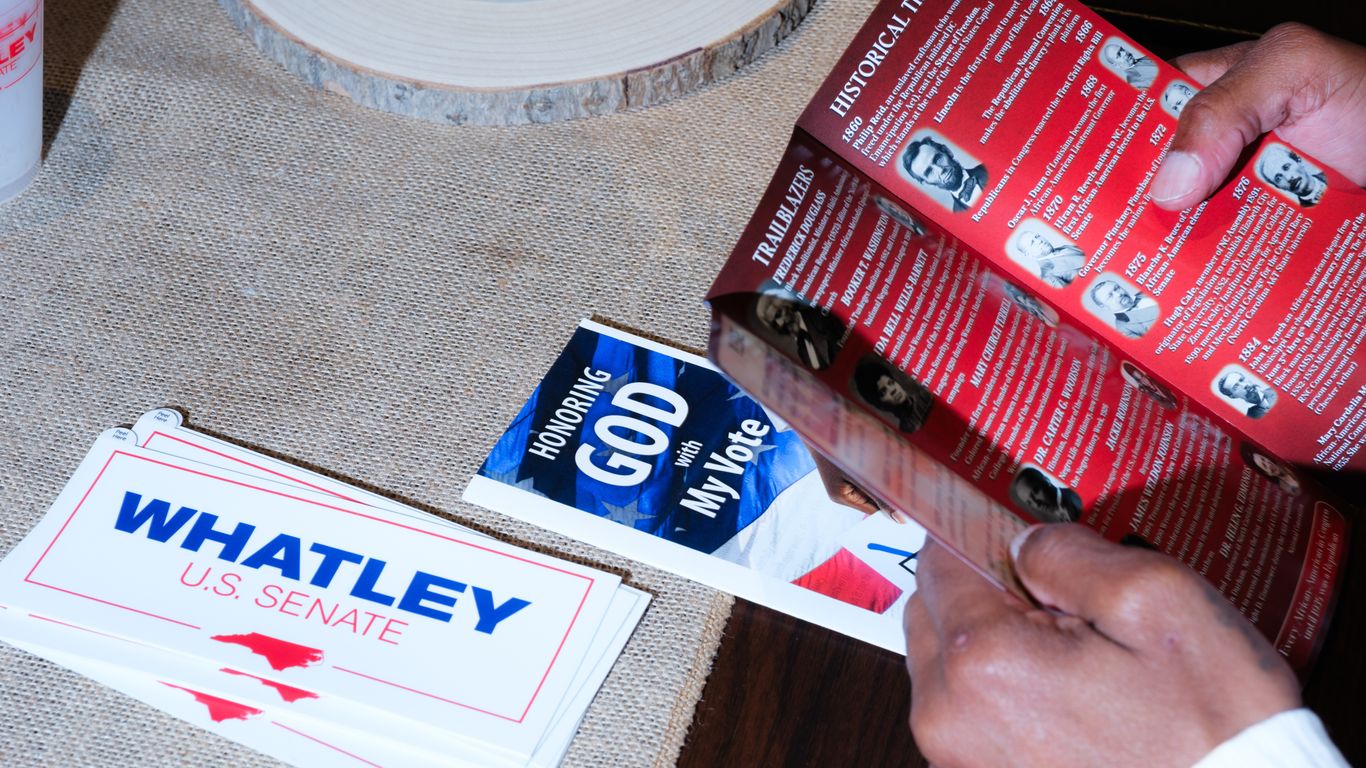
The Supreme Court on Tuesday struck down federal limits on how much political parties may spend in coordination with candidates, handing party committees a major win and reshaping campaign-finance rules ahead of the midterms.Why it matters: Freed from the caps, party committees can now spend without limit alongside their candidates — making them a far more powerful magnet for the big-dollar money that's flooded into super PACs over the past 15 years.Driving the news: In a 6–3 decision with a majority opinion by Justice Brett Kavanaugh, the court held that the coordinated party expenditure limits violate the First Amendment.The decision overturns a 25-year-old precedent that had upheld the same limits.The intrigue: The decision comes at a time when insurgent anti-establishment candidates have garnered success in both parties.Supporters of striking down Congress' limits on coordination have said the guardrails weaken parties while super PACs and other outside groups have become dominant players, especially after the court's landmark 2010 Citizens United decision.Critics say removing the caps could let major donors evade the few remaining anti-corruption safeguards, which is a stepping stone to allowing PACs to directly coordinate with candidates.The decision could make party committees more attractive vehicles for donor money in competitive races.What they're saying: "More speech is generally better than less speech," Kavanaugh wrote for the majority.In dissent, Justice Elena Kagan warned that the ruling brings about an old era of corruption: The "Court ushers back in the same opportunities for quid pro quo corruption that the contribution limits were meant to check."President Trump praised the ruling on Truth Social, calling it "A BIG WIN FOR REPUBLICANS and, more importantly, The First Amendment!" His administration had declined to defend the law in court.Catch up quick: The case, National Republican Senatorial Committee v. Federal Election Commission, was brought by two Republican committees, Vice President Vance and former Ohio Rep. Steve Chabot.They argued the law prevented party committees from coordinating effectively with their own candidates on core political speech.The ruling is the latest in a line of Supreme Court campaign-finance decisions narrowing the government's power to restrict political spending.
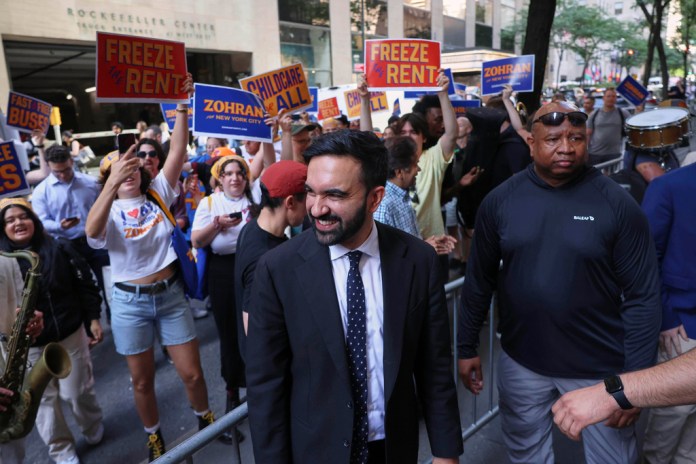
New York Mayor Zohran Mamdani unveiled his solution to Gotham’s housing crisis, invoking the free-market housing renaissance in Austin, Texas. Weeks later, his Rent Guidelines Board installed historic price controls. The Rent Guidelines Board, six of whose nine members were appointed by Mamdani, voted 7-1 Thursday to pause rent increases for up to two years. […]
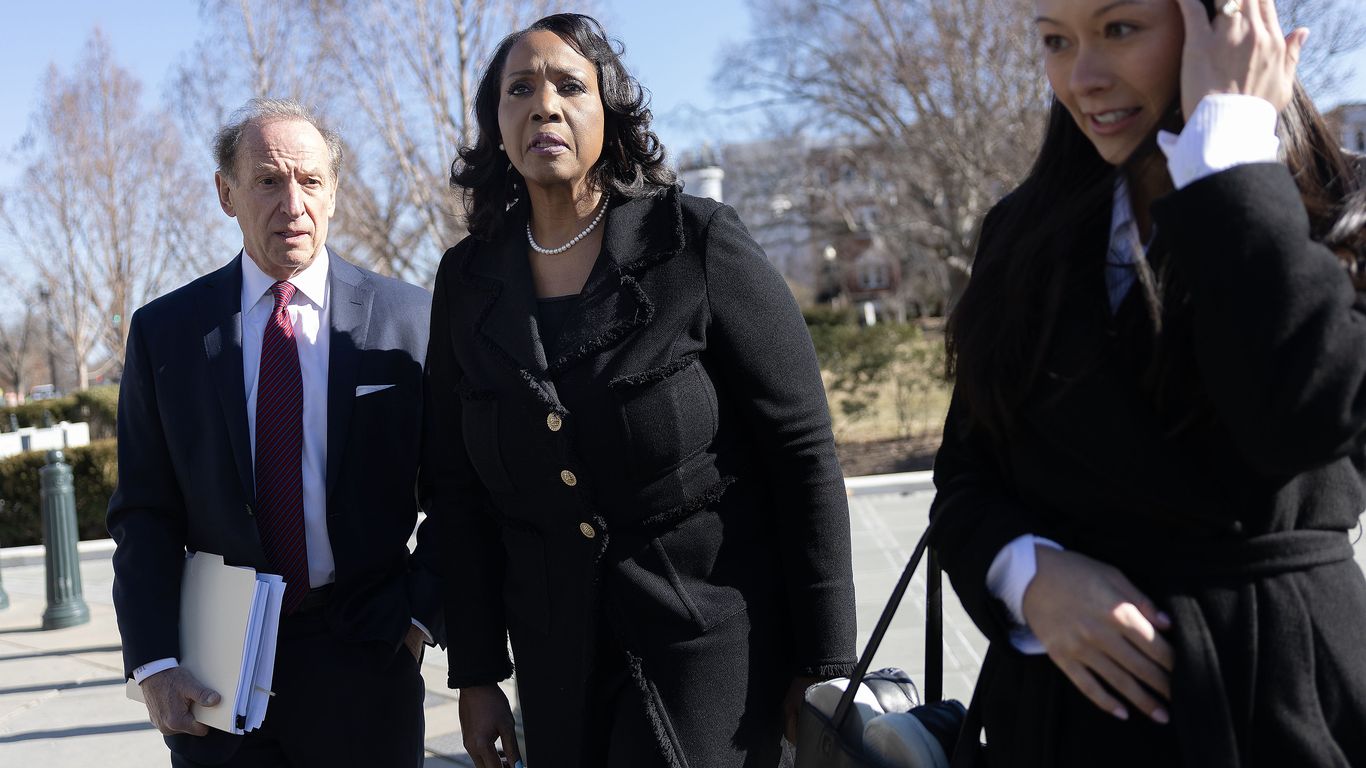
On the surface, Monday's Supreme Court ruling that keeps Lisa Cook in place as a Federal Reserve governor for now was a win for believers that the central bank works best when insulated from the day-to-day control of the president. The details aren't so clear.The big picture: The court punted on several key questions that will determine how much ability President Trump and his successors have to fire Fed governors.Moreover, the decision was closer than many court watchers anticipated, with four of six conservative justices dissenting.Another key ruling Monday grants the president broad latitude to fire heads of independent agencies that aren't the Fed, contrary to a 91-year-old precedent. It shows deep skepticism among the conservative majority about the constitutionality of Congress insulating agencies from presidential control.Fed independence is hanging by a narrow legal asterisk citing America's long, tenuous history with central banking.State of play: Cook will remain on the Board of Governors following the ruling. But the Supreme Court gave little guidance on how high the bar is for a president to fire a Fed governor for cause, nor did it indicate what procedures a president must follow to overcome that bar.In Monday's Trump v. Cook decision, Chief Justice John Roberts, writing for the 5-4 majority, rejected both the Trump administration's arguments that a Fed governor can be fired over mere concerns about their integrity and the argument made by Cook's attorneys that she can be fired only for "inefficiency, neglect of duty, or malfeasance.""Having rejected both parties' positions, we need not fully demarcate the contours of 'cause' today." Of note: The court similarly suggested that Cook was entitled to some due process to establish cause, rather than to be fired on presidential whim. But it declined to lay out exactly what that should be."At minimum, Cook was entitled to some explanation of the evidence at issue, some avenue for a response, and a deadline by which a response would be due." But Roberts then wrote that the court can only assess the "validity and sufficiency of such charges" after the president sets up this legal process and Cook has responded.What they're saying: "The court is now in the position of procrastinators everywhere: let's let future SCOTUS handle that one," quipped Peter Conti-Brown, the University of Pennsylvania legal scholar.Between the lines: Cook's role as a governor has been in legal limbo for 10 months now, and we still don't know exactly what the standard is for the president to fire her or how he can legally do so.If anything, the majority opinion seemed to bend over backward not to prejudge those issues. That raises the possibility that a president has wide latitude to fire Fed governors for pretext so long as they dot a few more i's and cross more t's than Trump did in the Cook case.If Trump or a future president wants to fire Fed governors over policy differences, it raises the possibility they can find any ticky-tack rationale, convene a legal process run by sycophants and achieve the same goal.Reality check: The original sin here is that Congress, in establishing the Fed, left things vague as to what would constitute "cause" for a president to fire a Fed governor and how that cause should be properly adjudicated.The Federal Reserve Act says only that governors' terms are 14 years "unless sooner removed for cause by the President" without giving more detail.The bottom line: If Congress wants to create clearer guardrails around the firing of Fed governors, it will need to pass legislation. In the meantime, the protections offered by the courts are limited, and still unresolved.
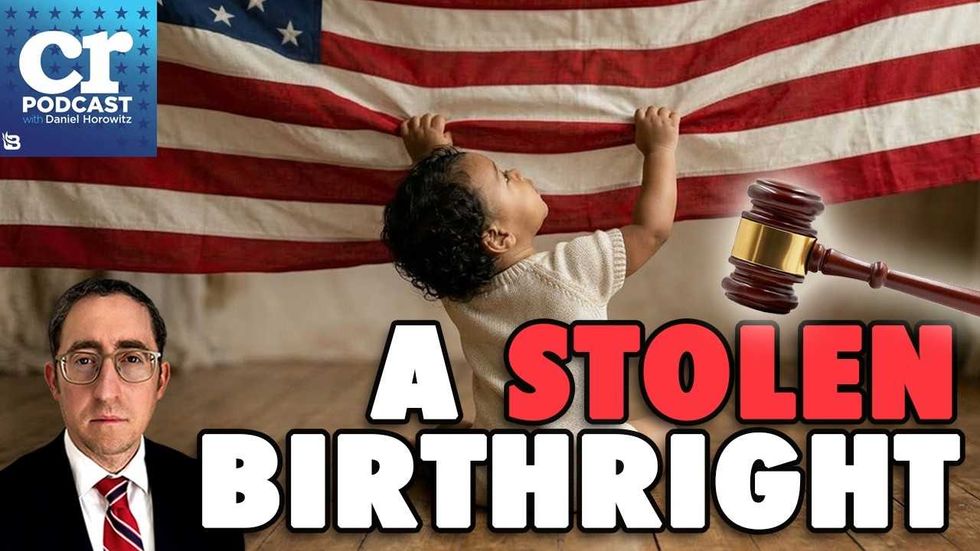
Eleven years ago, after the Supreme Court’s ruling on Obergefell redefined marriage, Daniel Horowitz published his book “Stolen Sovereignty," warning that a day was coming soon when the court would redefine what citizenship means — “the ultimate question” of every civilization. Today, his prediction came true. In a 6-3 ruling, the Supreme Court ruled in favor of birthright citizenship — determining that any child born in the United States, regardless of the parents’ immigration status, is a U.S. citizen under the 14th Amendment. Now that the gavel has fallen, what is needed, says Horowitz, is not an “analysis of the [majority] opinion,” but a willingness to “[look] forward” to what comes next. On this episode of “Conservative Review,” Horowitz explains why this SCOTUS ruling is only a travesty if we allow it to be. “The important thing is not what the court said but what Trump and the Republican Party in control of Congress and, frankly, the red states … will do with this opinion,” he declares. Calling the ruling “the Waterloo moment of judicial supremacism,” Horowitz argues that the executive and legislative branches have “an obligation to act in concert with what [they] know to be true” — namely, to “say no and not issue it.” Because the judiciary lacks the power of the purse or the sword, its rulings are not self-executing on the other branches; they depend on the executive and legislative branches choosing to give them effect.“The action item from here is very simple,” says Horowitz. “Congress, in budget reconciliation and/or the appropriation bills to fund the government past October 1, [fiscal year] 2027, must prohibit the funding for the issuance of passports and, obviously, birth certificates to people [who] cannot show that one parent is a [legal permanent resident].”As for the executive branch, it “should just say no,” Horowitz states bluntly.“This should be Trump’s entire focus — just this,” he says. “All the political capital they're going to expend on holding up the NDAA, holding up the Farm Bill ... — it needs to be for defunding the issuance of … citizenship documents to illegals and tourist visas.” To accept a ruling from SCOTUS — made up of unelected, life-tenured judges — as unassailable law, Horowitz warns, is like allowing “tyranny worse than King George” to govern our land. “How fortuitous and tragic that it's on the week of July Fourth 250th celebration … that we are being told that [] the unelected branch, without consent, could engage in social transformation without representation … that they could determine [birthright citizenship] with finality, including allowing the entire world to come in and dilute our citizenship and help vote and determine everything else as well,” he exclaims. “That is not a thing. That is something that we never adopted, and it cannot and must not go through.” To hear more, watch the episode above.
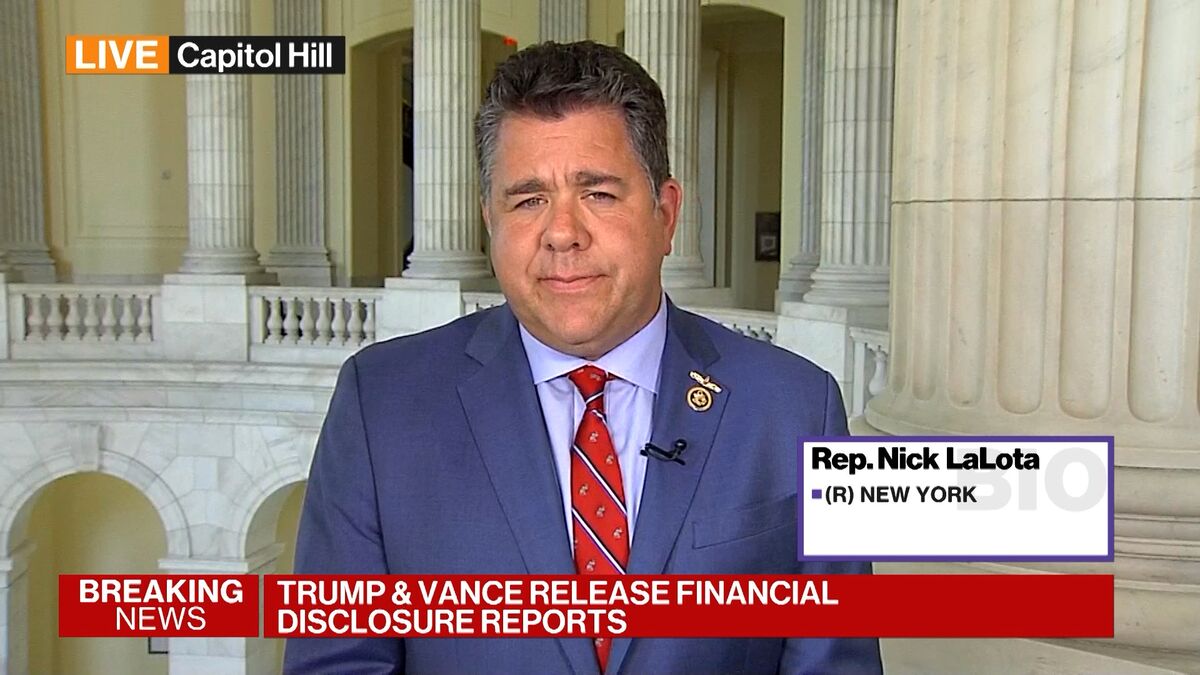
Representative Nick LaLota, a New York Republican and member of the House Appropriations and Homeland Security committees, says he was “a little disappointed” by the Supreme Court’s birthright citizenship ruling but believes the opinion leaves room for Congress to act. LaLota says he sees a path for lawmakers to pursue legislation “to narrow the scope” and limit birthright citizenship to those lawfully present in the US and not on tourist visas. He also discusses the court’s campaign-finance ruling, the outlook for Iran talks, gas prices and President Donald Trump’s financial disclosures. He speaks with Kailey Leinz and Joe Mathieu on the late edition of Bloomberg’s “Balance of Power.” (Source: Bloomberg)