
National Review
Supreme Court Drives a Stake Through Hawaii’s ‘Vampire Rule’
This was the right result, but the decision should have been unanimous.
Center Right

Supreme Court Associate Justice Samuel Alito derided legal arguments presented by Hawaii in an opinion released Thursday that invalidated a state law targeting concealed carry gun owners. […]
This was the right result, but the decision should have been unanimous.
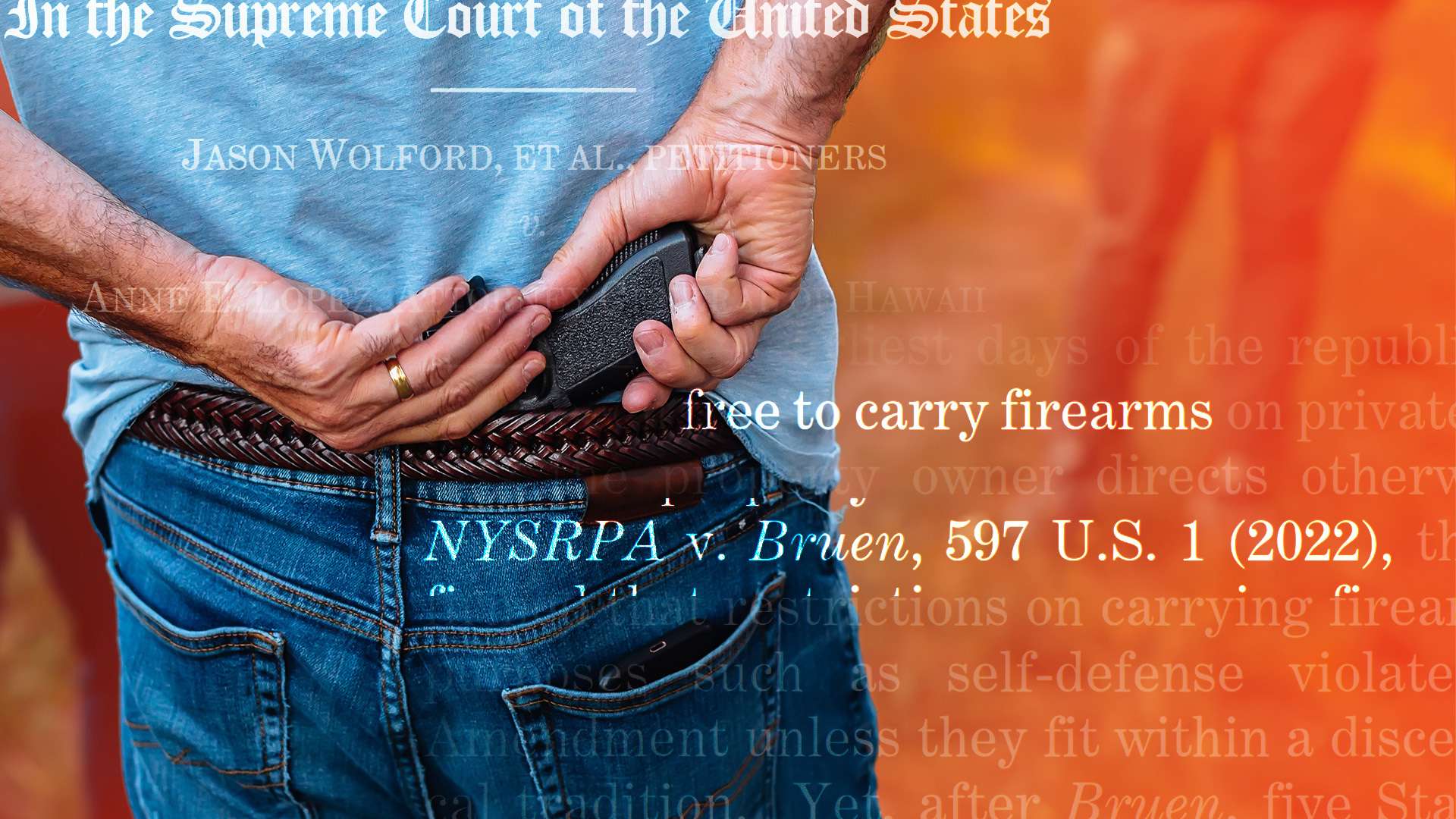
The decision means similar laws in other states likewise violate the Second Amendment, and it casts doubt on the constitutionality of location-specific gun bans that cover a lot of territory.

The proposal grew out of President Donald Trump’s March executive order on election integrity.

The White House commended two major decisions from the Supreme Court on Thursday morning, which bolster the Trump administration’s ability to crack down on immigration. In these rulings, the high court decided that the Trump administration could cut off temporary legal protections for thousands of Haitians and Syrians and cleared the path for the administration…
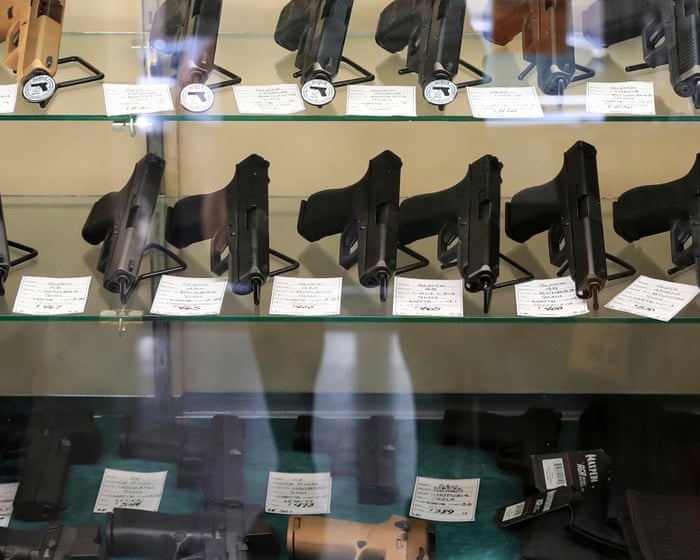
The law banned people from carrying guns in most public spaces and private property without owner’s permissionUS politics live – latest updatesSign up for the Breaking News US email to get newsletter alerts in your inboxThe US supreme court struck down a restrictive gun law in the state of Hawaii that bans people from carrying guns in certain public spaces and on private property without the permission of the property’s owner.The decision was made in a 6-3 vote, with Justice Samuel Alito offering the majority opinion – backed by the other members of the court’s rightwing supermajority – and Ketanji Brown Jackson writing the dissent. Continue reading...
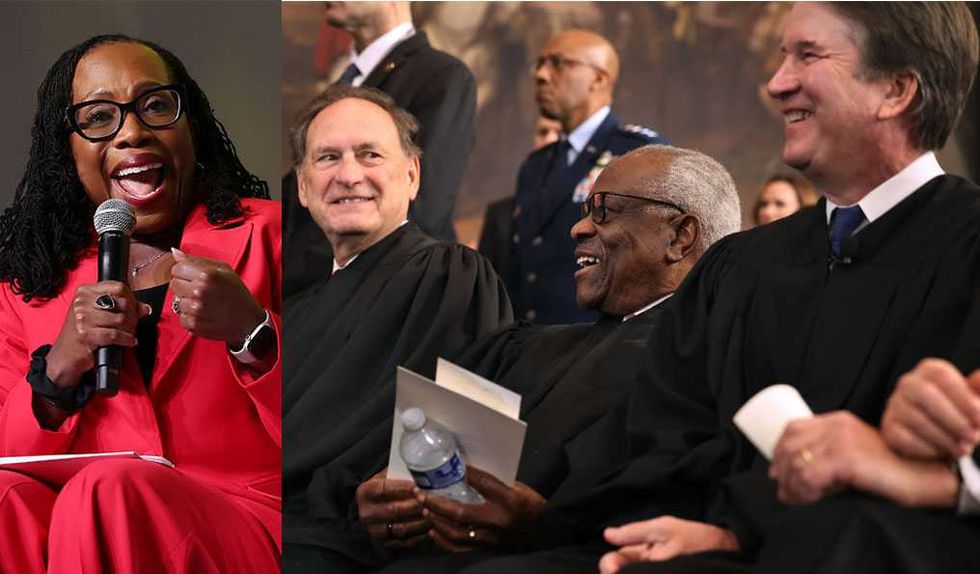
The U.S. Supreme Court ruled four years ago in New York State Rifle & Pistol Association Inc. v. Bruen that the Second and 14th Amendments protect Americans' right to carry handguns outside of their homes for self-defense. Hawaii Democrats came up with an apparent workaround to curb gun rights in their state, passing a law in 2023 that banned the carrying of guns onto private property without verbal or written consent of the property owner. Those who ran afoul of this law faced up to a year in prison.'Hawaii's law does not restrict the right to carry a gun at all,' Jackson wrote.This didn't sit well with a trio of Maui County residents with concealed-carry permits who, with the Hawaii Firearms Coalition, sued on the basis of the understanding articulated again by Solicitor General D. John Sauer last year: "Because most property owners do not post signs either allowing or forbidding guns, Hawaii’s default rule functions as a near-complete ban on public carry."To the great chagrin of liberal Justice Ketanji Brown Jackson, the Supreme Court determined in a 6-3 ruling on Thursday that Hawaii's so-called "vampire law" is unconstitutional.The court, which reversed a 2024 decision from the San Francisco-based 9th Circuit Appeals Court, noted that law-abiding permit-holders "not only must ... take care to avoid all the territory where the possession of a gun is prohibited outright, but they may also be barred from entering many places that people routinely visit in the course of their daily routines, such as gas stations, restaurants, and stores."While recognizing the right of establishments that are open to the public "to admit or exclude persons who are carrying guns for self-defense under either the common-law rule or Hawaii’s law," the court noted that the so-called vampire law "flips the default rule at common law, under which anyone has an implied license to enter property held open to the public unless the property owner withdraws consent."Justice Samuel Alito noted in the opinion that the "regime" established in Hawaii "hobbles what the Second Amendment protects: the right of Americans to carry arms for self-defense as they go about their daily lives."RELATED: ‘Shall not be infringed’ — even if you're high, Supreme Court rules Maxine Wallace/The Washington Post/Getty ImagesJackson was once again of a different mind than her conservative colleagues on the meaning of the "right to bear arms."At the outset of her dissenting opinion, which was joined by Justice Sonia Sotomayor, Jackson framed — in Orwellian fashion — Hawaii's infringement on Americans' constitutional rights as an effort to "protect the rights of its residents — both those who wish to carry guns and those who prefer that guns are not carried on their private property without their express permission."Jackson —who repeatedly stressed that she still disagrees with the decision in Bruen, calling it a "grave mistake" — claimed that "the court's objective is protecting guns, not consistently preserving any principle of law."According to Jackson, the vampire law that effectively requires law-abiding citizens to everywhere obtain consent before exercising their Second Amendment right not only "does not implicate the Second Amendment" — "Hawaii's law does not restrict the right to carry a gun at all."The liberal justice apparently assigns state law and custom greater weight than federal law on the matter of guns, stressing that "recognizing state autonomy in this respect is especially appropriate here, since Hawaii has never had a custom of armed carry."Jackson concluded her 32-page dissent with yet another attack on her colleagues, writing, "While purporting to constrain judges, the majority has unmasked the discretionary choices that lie beneath the court’s decisions regarding which analogues are 'vastly different' ... and whose historical experiences are worthy of inclusion."Justice Elena Kagan wrote a separate dissenting opinion.This ruling will reportedly impact a handful of blue states, including New York, Maryland, and California, which took a similar approach to Hawaii.John Commerford, executive director of the National Rifle Association's Institute for Legislative Action, said of the outcome, "Law-abiding gun owners will no longer be forced to beg for special permission simply to exercise their constitutional right to bear arms in public places."Like Blaze News? Bypass the censors, sign up for our newsletters, and get stories like this direct to your inbox. Sign up here!
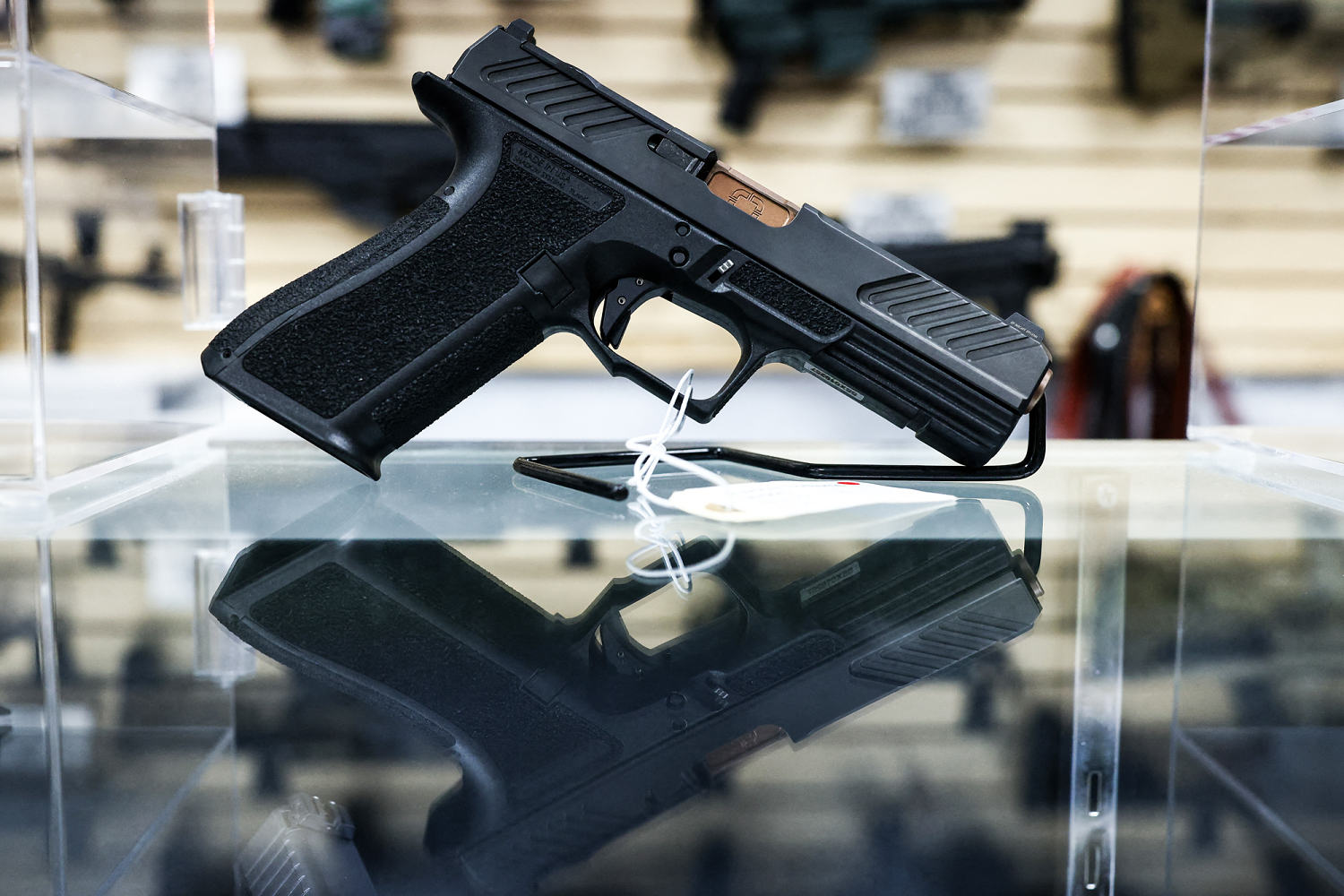
The Supreme Court struck down a Hawaii gun restriction that limits when people can carry firearms on certain private properties, known as the “vampire rule.”
Legal analysts and scholars are lashing out at the U.S. Supreme Court conservatives after another round of decisions.Taking to social media on Thursday morning, commentators trashed one ruling in particular: President Donald Trump's decision to block asylum seekers at the U.S.-Mexico border. The case concerned the temporary protected status (TPS) for Haitian immigrants, which the U.S. had allowed until Trump paused it in 2021. The law states that any noncitizen who is “physically present in the United States” or “arrives in the United States” can apply for asylum. Anyone who announces that they seek protection are entitled to have their claim evaluated, according to the Constitution. What the High Court did was play on the technicality of the asylum seekers' location. "The Supreme Court’s rightwing majority rules that courts cannot review the Department of Homeland Security’s decision to terminate temporary protected status for refugees fleeing particularly dangerous countries," complained Kate Riga, who covers the Supreme Court for TPM."In effect, this means that thousands of Haitian and Syrian refugees will be sent back to places so dangerous that, in Haiti’s case, the State Department recommends leaving behind dental records to help identify remains," she added before bashing Justice Samuel Alito's ruling, in particular, as "racist."New York Times columnist Jamelle Bouie also bashed Alito by paraphrasing the justice. "Sam Alito: It is the worst kind of discrimination to create majority-minority congressional districts and so we are going to kill the Voting Rights Act. Also, Sam Alito: There is nothing we can do if the president cancels legal status because he thinks the United States is a white country," said Bouie. "It is abundantly clear from Alito's jurisprudence that he thinks the only real racism is discrimination against white people," Bouie added. "Like, this is sophistry. Why does the administration oppose TPS Justice Alito? Why does it reject asylum claims from virtually every group of people other than white South Africans?"Jerry Edwards, associate professor of law at West Virginia University, wrote, "Samuel Alito shares Andrew Johnson's vision of the Constitution." Johnson was widely considered a white supremacist, the Constitution Center explains. As Politico's Kyle Cheney cited, "SCOTUS majority says there are 'race-neutral' reasons why Trump/Noem ended TPS but notes that their commentary on Haitian immigrants would have 'scandalized the public just a short time ago.'"Lawfare editor Tyler McBrian commented, "Every SCOTUS opinion now is like "in a 6-3 opinion, the Court rules that doctors can start prescribing cocaine to children again."Constitutional scholar Robert Black wrote, "Y'know how I'm always saying that when people say 'I'm not racist' what they mean is 'I am correct in my racist beliefs?' Well, uhhh, Supreme Court edition..."One responder asked, "So is the idea here that courts are obligated to see if they can construct even a ludicrous non-racist rationale for a policy before they can rule against it?"Edwards replied to the comment saying, "Only if the conservatives want to rule in favor of the government. Not long ago, Thomas and Alito had an absolute meltdown when SCOTUS denied cert in a case race-neutral affirmative action case because they claimed two of the school board members made racist comments (proving it was an AA policy)."But Alito wasn't the only one drawing criticism. Justice Clarence Thomas penned his own individual opinion on the matter. As appellate attorney Gabriel Malor wrote on BlueSky, "Justice Thomas, writing only for himself, says that the Fifth Amendment's due process clause does not guarantee equal protection."He referenced Thomas' statement saying, "Because the Fifth Amendment has no Equal Protection Clause, this Court was wrong to read equal protection into it in Bolling v. Sharpe ... And even the Due Process Clause does not prohibit some discrimination, it would not do so in a case about immigration status."Associate Professor Evan Bernick at the University of Illinois School of Law said he would refrain from yelling about the ruling at length. Instead, he wrote, "I'm just going to observe that the equal protection analysis is almost entirely unsupported by citations to relevant authority. There's a cursory cite to one leading opinion and then a bunch of handwaving. Nothing in the Constitution or even SCOTUS doctrine — even at its worst — requires that we think about race in the context of immigration decisions this way, and we simply should not."