Supreme Court Drives a Stake Through Hawaii’s ‘Vampire Rule’
This was the right result, but the decision should have been unanimous.

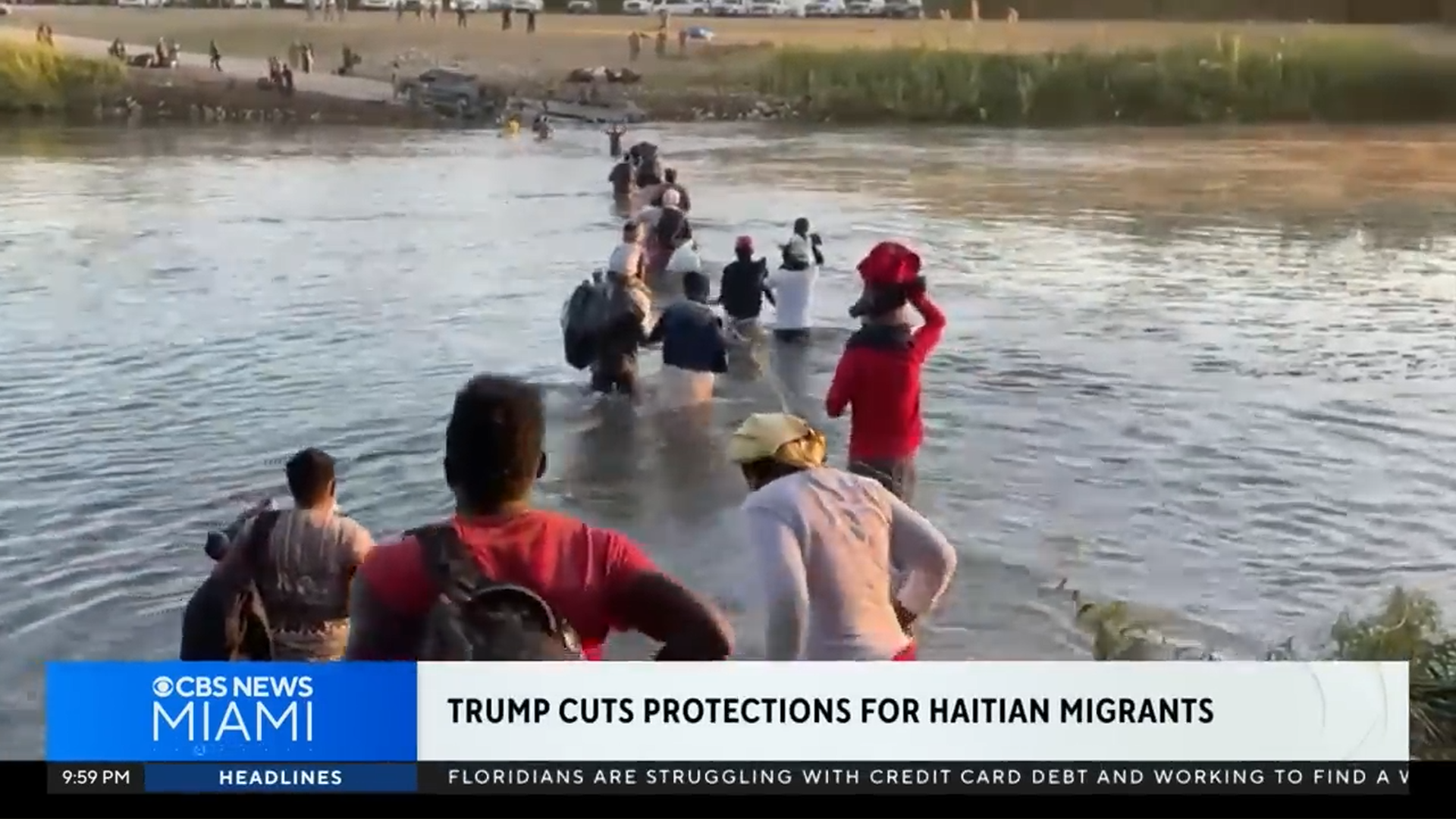
Legal analysts and scholars are lashing out at the U.S. Supreme Court conservatives after another round of decisions.Taking to social media on Thursday morning, commentators trashed one ruling in particular: President Donald Trump's decision to block asylum seekers at the U.S.-Mexico border. The case concerned the temporary protected status (TPS) for Haitian immigrants, which the U.S. had allowed until Trump paused it in 2021. The law states that any noncitizen who is “physically present in the United States” or “arrives in the United States” can apply for asylum. Anyone who announces that they seek protection are entitled to have their claim evaluated, according to the Constitution. What the High Court did was play on the technicality of the asylum seekers' location. "The Supreme Court’s rightwing majority rules that courts cannot review the Department of Homeland Security’s decision to terminate temporary protected status for refugees fleeing particularly dangerous countries," complained Kate Riga, who covers the Supreme Court for TPM."In effect, this means that thousands of Haitian and Syrian refugees will be sent back to places so dangerous that, in Haiti’s case, the State Department recommends leaving behind dental records to help identify remains," she added before bashing Justice Samuel Alito's ruling, in particular, as "racist."New York Times columnist Jamelle Bouie also bashed Alito by paraphrasing the justice. "Sam Alito: It is the worst kind of discrimination to create majority-minority congressional districts and so we are going to kill the Voting Rights Act. Also, Sam Alito: There is nothing we can do if the president cancels legal status because he thinks the United States is a white country," said Bouie. "It is abundantly clear from Alito's jurisprudence that he thinks the only real racism is discrimination against white people," Bouie added. "Like, this is sophistry. Why does the administration oppose TPS Justice Alito? Why does it reject asylum claims from virtually every group of people other than white South Africans?"Jerry Edwards, associate professor of law at West Virginia University, wrote, "Samuel Alito shares Andrew Johnson's vision of the Constitution." Johnson was widely considered a white supremacist, the Constitution Center explains. As Politico's Kyle Cheney cited, "SCOTUS majority says there are 'race-neutral' reasons why Trump/Noem ended TPS but notes that their commentary on Haitian immigrants would have 'scandalized the public just a short time ago.'"Lawfare editor Tyler McBrian commented, "Every SCOTUS opinion now is like "in a 6-3 opinion, the Court rules that doctors can start prescribing cocaine to children again."Constitutional scholar Robert Black wrote, "Y'know how I'm always saying that when people say 'I'm not racist' what they mean is 'I am correct in my racist beliefs?' Well, uhhh, Supreme Court edition..."One responder asked, "So is the idea here that courts are obligated to see if they can construct even a ludicrous non-racist rationale for a policy before they can rule against it?"Edwards replied to the comment saying, "Only if the conservatives want to rule in favor of the government. Not long ago, Thomas and Alito had an absolute meltdown when SCOTUS denied cert in a case race-neutral affirmative action case because they claimed two of the school board members made racist comments (proving it was an AA policy)."But Alito wasn't the only one drawing criticism. Justice Clarence Thomas penned his own individual opinion on the matter. As appellate attorney Gabriel Malor wrote on BlueSky, "Justice Thomas, writing only for himself, says that the Fifth Amendment's due process clause does not guarantee equal protection."He referenced Thomas' statement saying, "Because the Fifth Amendment has no Equal Protection Clause, this Court was wrong to read equal protection into it in Bolling v. Sharpe ... And even the Due Process Clause does not prohibit some discrimination, it would not do so in a case about immigration status."Associate Professor Evan Bernick at the University of Illinois School of Law said he would refrain from yelling about the ruling at length. Instead, he wrote, "I'm just going to observe that the equal protection analysis is almost entirely unsupported by citations to relevant authority. There's a cursory cite to one leading opinion and then a bunch of handwaving. Nothing in the Constitution or even SCOTUS doctrine — even at its worst — requires that we think about race in the context of immigration decisions this way, and we simply should not."
This was the right result, but the decision should have been unanimous.
The decision means similar laws in other states likewise violate the Second Amendment, and it casts doubt on the constitutionality of location-specific gun bans that cover a lot of territory.
The Supreme Court has ruled in favor of Homeland Security Secretary Markwayne Mullin and the Trump administration regarding when asylum-seekers officially "arrive" in the U.S.In a 6-3 decision split along ideological lines, the Court held that aliens seeking asylum do not “arrive in the United States” until they physically cross the border into the country and therefore are not entitled to inspection by border officials until they have entered onto U.S. soil.'An alien "arrives in the United States" only when he crosses the border.'The case stems from the federal government’s “metering” policy — first adopted in 2016 amid a surge of migrants at the southern border — that limited the number of aliens whom Customs and Border Patrol agents would inspect each day for asylum. When a port of entry reached capacity, officials physically prevented additional aliens from entering until capacity became available again. In 2017, asylum-seekers and Al Otro Lado, an immigration advocacy organization, brought forward a class-action lawsuit arguing that the federal government was unlawfully denying aliens access to asylum procedures. The federal district court in Southern California granted summary judgment in favor of the noncitizens and declared the government’s policy unlawful. The metering policy was then discontinued in November 2021, though the second Trump administration has attempted to revive it. A divided Ninth Circuit panel affirmed the summary judgment, ruling that an alien “arrives in the United States” when said alien — even while standing on the Mexico side of the border — encounters a U.S. official and thus must be inspected for asylum claims. Writing for the majority, Justice Samuel Alito reversed the lower court’s ruling. The court held that the meaning of “arrives in the United States” requires physically entering the country. Therefore, under the Immigration and Nationality Act of 1952, an alien standing on the Mexico side of the border is not entitled to inspection by a U.S. official. “We hold that an alien who is standing in Mexico does not ‘arriv[e] in the United States’ by attempting, and failing, to set foot in this country. An alien ‘arrives in the United States’ only when he crosses the border,” Alito wrote.RELATED: Ketanji Brown Jackson melts down over SCOTUS ruling against Hawaii gun law: 'The court's objective is protecting guns' U.S. Supreme Court Associate Justices Samuel Alito (L) and Clarence Thomas (R).Chip Somodevilla/POOL/AFP/Getty ImagesThe court highlighted the text of other INA provisions and subsequent amendments to the statute to indicate that Congress intended asylum and inspection rights to apply only after an alien enters the country. “That Congress amended §1158(a) in IIRIRA to replace ‘at a land border or port of entry’ with ‘arrives in the United States’ suggests that we should not read those phrases — which carry different ordinary meanings — to have the same meaning.”Justice Sonia Sotomayor, joined by Justices Elena Kagan and Ketanji Brown Jackson, dissented, arguing that Congress intended border officials to inspect and process all aliens who present themselves at ports of entry, regardless of whether they have physically stepped into the U.S. The dissent contended that the majority’s decision “ignores the statutory context and history” of the INA and weakens the asylum protections Congress created for people fleeing persecution. "The Court today holds that the Executive Branch may circumvent all these mandatory procedures by having U.S. immigration officers stand at the border and physically block noncitizens from setting a foot onto U.S. soil.” Sotomayor added, "The Court's illogical interpretation is driven almost entirely by a fixation on a single word: 'in.'"Like Blaze News? Bypass the censors, sign up for our newsletters, and get stories like this direct to your inbox. Sign up here!
The Supreme Court has ruled to allow the Trump administration to end the Temporary Protected Status for thousands of immigrants from Haiti and Syria. NBC News' Gary Grumbach reports on the court's split among ideological lines and how the ruling impacts the administration's immigration policies.
The U.S. Supreme Court upheld President Donald Trump’s efforts to revoke temporary status for foreign nationals in the United States on Thursday. The decision was 6-3, with Justices Sonia Sotomayor, Elena Kagan, and Ketanji Brown Jackson in the dissent. The ruling in the consolidated cases Mullin v. Doe and Trump v. Miot dates back to […]
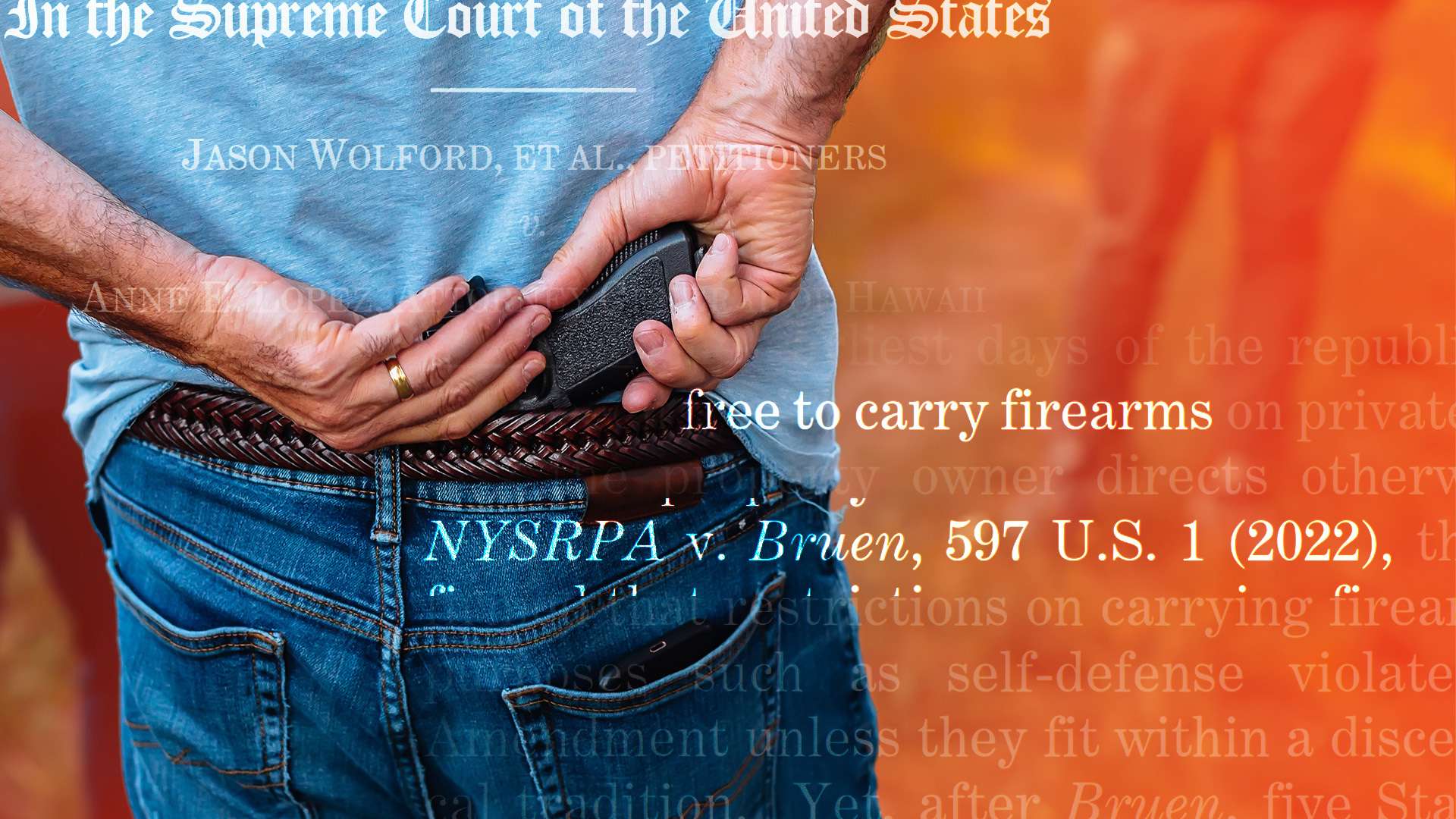
Supreme Court Associate Justice Samuel Alito derided legal arguments presented by Hawaii in an opinion released Thursday that invalidated a state law targeting concealed carry gun owners. […]
The White House commended two major decisions from the Supreme Court on Thursday morning, which bolster the Trump administration’s ability to crack down on immigration. In these rulings, the high court decided that the Trump administration could cut off temporary legal protections for thousands of Haitians and Syrians and cleared the path for the administration…
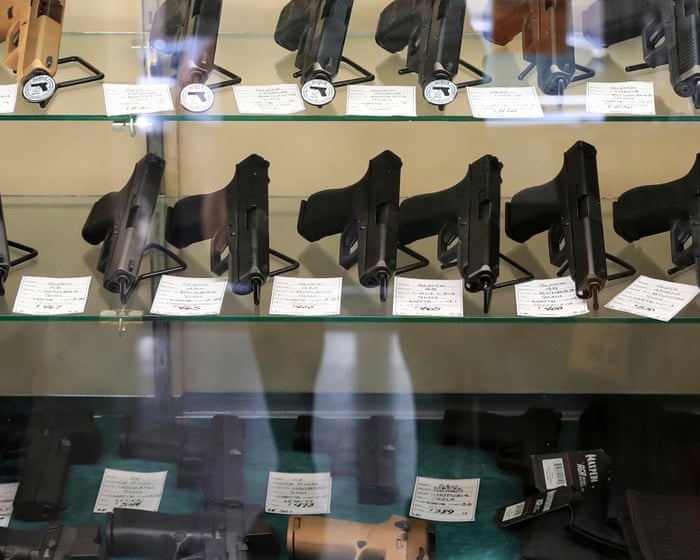
The law banned people from carrying guns in most public spaces and private property without owner’s permissionUS politics live – latest updatesSign up for the Breaking News US email to get newsletter alerts in your inboxThe US supreme court struck down a restrictive gun law in the state of Hawaii that bans people from carrying guns in certain public spaces and on private property without the permission of the property’s owner.The decision was made in a 6-3 vote, with Justice Samuel Alito offering the majority opinion – backed by the other members of the court’s rightwing supermajority – and Ketanji Brown Jackson writing the dissent. Continue reading...