Missiles fly in Persian Gulf as US, Iran deal hangs in balance
Far Right
The U.S. military and Iran exchanged fire over the weekend, despite an ongoing ceasefire and the two sides still trying to hammer out a peace deal. The […]
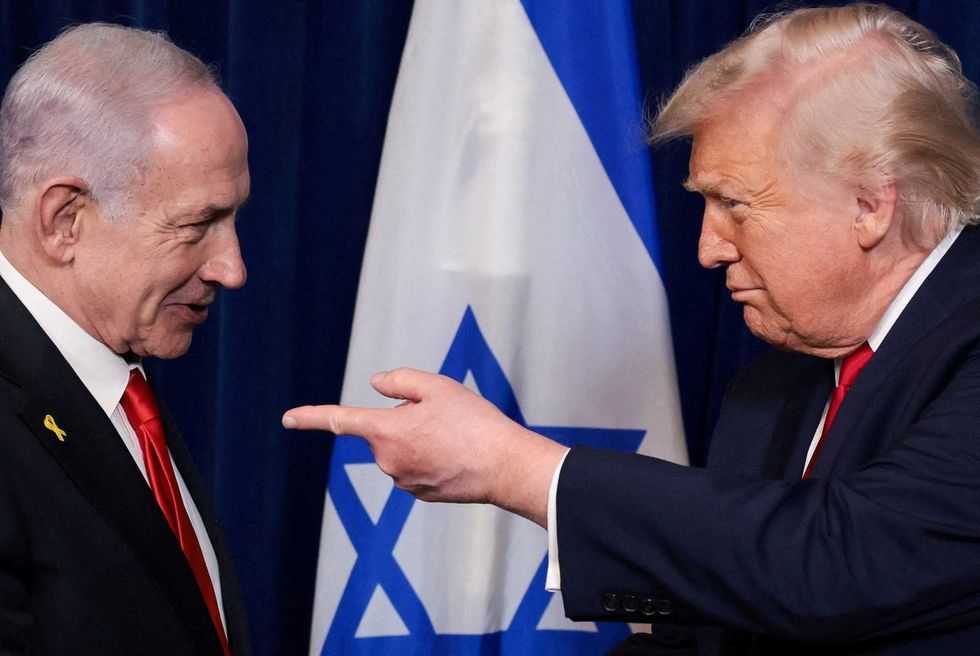
President Donald Trump announced Monday that a key obstacle standing in the way of his administration’s negotiations with Tehran to end the U.S. war against Iran had apparently been addressed, potentially clearing the path to an end to the conflict.“I had a very productive call with Prime Minister Bibi Netanyahu, of Israel, and there will be no Troops going to Beirut, [Lebanon], and any Troops that are on their way, have already been turned back,” Trump wrote on his social media platform Truth Social. “Likewise, through highly placed Representatives, I had a very good call with Hezbollah, and they agreed that all shooting will stop – That Israel will not attack them, and they will not attack Israel.”Trump’s inability to pressure Israel to halt its bombardment and invasion of Lebanon – which he explicitly demanded in April – has been a key factor in the negotiation stalemate between Washington and Tehran. Iranian officials have demanded that any agreement to end the conflict include Israel halting its bombardment of Lebanon, which since early March has killed more than 3,100 Lebanese and injured nearly 10,000.Whether Israel abides by Trump’s latest request to cease hostilities remains to be seen, with the Middle East nation having flagrantly disregarded the president’s demands in the past.
Former bureau officials have created the FBI Support Network, an organization designed to provide legal, mental health and job search assistance to current bureau employees struggling under what they characterize as a politically motivated restructuring of the agency under Director Kash Patel.The initiative, an offshoot of the Justice Connection organization comprised of former Justice Department employees, emerged in response to what former officials describe as unprecedented strain within the bureau, reported the New York Times."There's an incredible amount of tension inside the agency right now," said Michael Mason, a former senior executive. "People are being fired without any due process as the Justice Department is being weaponized in a way that is totally unfamiliar to those of us who served long and distinguished careers there."The network includes Brian Driscoll, who served briefly as acting FBI director in early 2025 and clashed repeatedly with the administration until he was fired in August."It's time for those of us who served our country with the F.B.I. to offer our assistance to the special agents, intelligence analysts and the professional staff who are under attack," Driscoll said in announcing the group.Patel has consistently denied firing agents for political reasons, claiming terminations target individuals biased against the president. However, his statements have triggered angry confrontations during congressional hearings, with Democratic lawmakers accusing him of dishonesty.Former counterintelligence agent Michael Feinberg criticized the transformation, emphasizing that law enforcement should remain apolitical. “You investigate threats and prosecute criminals without fear or favor," Feinberg said. "Seeing that norm not just eroded but purposely destroyed is fundamentally changing the nature and culture of the FBI.”He added that Patel's denials demonstrated a "wide gulf" between the director's public statements and what FBI employees see on the job.“I think the way a lot of employees feel right now is that at least some senior career executives have been willing to compromise with Kash Patel in those matters in an effort to secure their own employment," Feinberg said. "It’s difficult to articulate how much of a betrayal of the FBI ethos this is.”
As the war with Iran enters its fourth month and President Donald Trump struggles to reach a peace deal to end the conflict he started, the Hill reports that Senate Republicans have become deeply divided over how to proceed. This ‘messy debate’ comes as the GOP is already at odds over several key legislative priorities. According to the Hill, several hawkish Senators led by Senate Armed Services Committee Chair Roger Wicker (R-MS), Lindsey Graham (R-SC) and Ted Cruz (R-TX) reject the deal that has been emerging with Iran, urging the president “not to agree to any deal that would allow Iran to continue its nuclear enrichment program or ease sanctions while it continues to support Hezbollah and Hamas.” American Enterprise Institute senior fellow Danielle Pletka typifies this view, “arguing that it would be even weaker than the Joint Comprehensive Plan of Action that the Obama administration negotiated with Iran in 2015 — a deal Trump abandoned in his first term.”“The reporting on it suggests that it’s a terrible deal, that the president has gotten basically nothing that he said he was getting, and that his negotiators have embarrassed him,” she said. “Anything that ends with Iran believing that it can open and close Hormuz at times of its choosing is a loss for the United States.”For the senators’ part, Wicker has warned that the deal would be a “disaster,” Graham argues that it would make Iran the region’s “dominant force,” and Cruz asserts that giving Iran billions in sanctions relief while allowing the country control over the Strait of Hormuz would be a “disastrous mistake.” According to Republican strategist and ex-Trump National Security Council spokesperson John Ullyot, however, “They will certainly make their feelings clear, and loudly, but it’s hard for the Senate to stand in the way of a deal by any president in an ongoing military operation since it’s not subject to a vote that would block it.”But the views of other GOP lawmakers have the party further divided, as “a growing number of Republican senators are losing patience with the lack of a clear plan for ending the conflict, which has caused gas prices to rise by nearly $1.40 per gallon since late February.” Four Republican senators recently voted to discharge a war powers resolution that would have directed Trump to withdraw U.S. troops from the war. These include Republican senators Rand Paul (R-KY), Susan Collins (R-ME), Lisa Murkowski (R-AK), and Bill Cassidy (R-LA), and the measure advanced because three Republicans were absent. It would have passed if just one more Republican had voted for it, “sending a loud rebuke to Trump over his handling of the conflict.”“The Senate is expected to vote this week on a motion to proceed to the resolution to end the war, but Senate Majority Leader John Thune (R-SD) and Democratic Leader Chuck Schumer (D-NY) need to work out a time agreement,” explained the Hill. “The measure is close to having enough support to pass the House as well, though Trump is certain to veto it.”According to the Hill, Republican senators on both sides of the divide will likely extend Trump some latitude as the deal is negotiated, but that once details are revealed, the backlash could be pronounced. Many are watching how Senator John Cornyn (R-TX) votes as he just lost a primary race to a Trump-endorsed opponent. Now that Cornyn knows he’s leaving office, he has little incentive to bend to Trump’s will, who has recently accused the senator of being “very disloyal.”
Iran on Monday suspended all peace talks with the U.S., just hours after President Trump claimed Iran “really wants to make a deal.”Tehran placed the blame on Israel, which it said violated the trifold ceasefire agreement when Israeli troops captured Beaufort Castle, a twelfth-century Crusader fortress in southern Lebanon, over the weekend.Israel previously used the castle, also known as Qalaat al-Shaqif, as a military base during its occupation of southern Lebanon between 1982 and 2000. The offensive marked Israel’s deepest incursion into Lebanon in more than 26 years. On Monday, Israel issued an evacuation order to residents in southern Beirut.Iranian state media reported that “there will be no dialogue” regarding U.S.-Israel-Iran peace efforts until the “aggressive and brutal operations of the Zionist regime’s army in Gaza and Lebanon” is quelled.Tehran said it would completely close the Strait of Hormuz, as well as another narrow trade route nestled between Yemen on the Arabian Peninsula—the Bab el-Mandeb Strait—as a consequence.Trump optimistically insisted on Truth Social late Sunday that Iran was eager to negotiate, and blamed his negotiating woes on Democrats and dissident Republicans. It is unclear what comes next: Trump casually revealed on Saturday that the U.S. would “finish it off militarily” if he did not reach a good deal with Tehran.The president repeated that he’s in “no hurry” to negotiate, and that—despite the war’s monumental impact on global gas prices—he believes if he’s in a hurry he’s “not going to make a good deal.”“And slowly but surely, we’re getting, I think, what we want. And if we don’t get what we want, we’re going to end it a different way,” Trump told his daughter-in-law on Fox News’s My View With Lara Trump.In the same interview, Trump referred to Venezuela as a “one-day win” and said that the situation with Iran is “a win already,” as the U.S. has “essentially defeated their military.”But it’s difficult to ascertain exactly what a “win” in the Middle East looks like when the aims of the war were never clear to begin with. While the Iranian regime has suffered major losses over the span of the conflict—including dozens of senior leaders—it has also become more extreme as a result.Rajan Menon, a senior research scholar at Columbia University’s Saltzman Institute of War and Peace Studies, argued in The Guardian late last month that Trump would—at this late stage—be “lucky” to strike a deal similar to former President Barack Obama’s 2015 Iran nuclear deal, which Trump ended during his first term.The U.S. has so far been at war with Iran for more than 13 weeks and spent an estimated $98 billion in the process. The regional conflict has damaged strategic alliances, stalled global trade, and thrust the world into an energy crisis due to the blockade on the Strait of Hormuz. It has also killed thousands of people.This story has been updated.
Iran said it would halt talks with the US in protest over Israel’s expanded ground assault in Lebanon, escalating tensions as Washington and Tehran seek to reach an interim peace agreement.
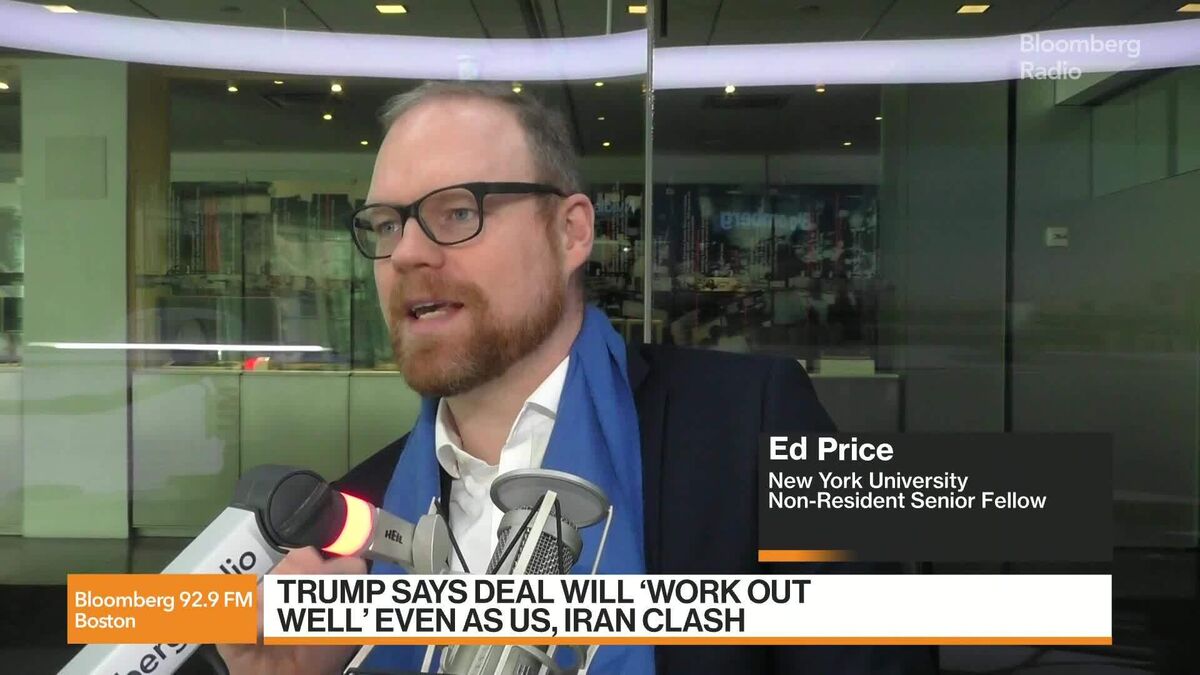
Ed Price, Senior Non-Resident Fellow at New York University, discusses the latest out of the Middle East and how the conflict is playing out in sectors across the globe. (Source: Bloomberg)
Iran has struck at least 20 American military facilities across the Middle East since the start of the war, according to a new satellite imagery and video analysis — significantly more than the United States has publicly acknowledged.The attacks have targeted key bases across eight countries, including Saudi Arabia, the United Arab Emirates, Qatar, Kuwait, Iraq, Jordan, Bahrain and Oman, causing damage that analysts say runs into the hundreds of millions of dollars, according to the analysis by BBC Verify – and some experts put the number of bases hit as high as 28.Among the most significant losses are three Terminal High Altitude Area Defense — or THAAD — batteries, among the most sophisticated anti-missile systems in the American arsenal. The U.S. is known to operate only eight such batteries worldwide, each costing approximately $1 billion to manufacture, and a former senior Irish defense official told BBC Verify the batteries form the core of a "highly complex" regional defense network that cannot be "quickly or easily replaced."At Prince Sultan Airbase in Saudi Arabia, satellite images show damaged refueling and surveillance aircraft, smoking craters and what analysts identified as a destroyed E-3 Sentry surveillance plane that could cost up to $700 million to replace and the report showed least 42 aircraft in total — including F-15s, F-35s, 24 MQ-9 Reaper drones and an A-10 attack plane — have been destroyed or damaged since February.Analysts say Iran's tactics evolved significantly as the conflict progressed, shifting from mass missile barrages designed to overwhelm defenses to smaller, precisely targeted strikes on high-value assets. Experts told BBC Verify that American forces "appear to have been guilty of a degree of early-war complacency" in failing to relocate aircraft as Iranian tactics sharpened.The Pentagon has not disputed the BBC's findings, with a defense official declining to comment citing "operational security." The U.S. also requested that Planet, a major satellite imagery provider, impose an indefinite restriction on new images of Iran and much of the Middle East.With the fragile U.S.-Iran ceasefire again under strain, analysts warn that depleted air defense stocks leave American bases across the Gulf increasingly vulnerable should fighting resume.
Iran has suspended peace negotiations with the US on Monday, saying Israel's attacks in Southern Lebanon violated the fragile ceasefire. As The Gateway Pundit reported, negotiations between the US and Iran were ongoing as Trump sought amendments to the “largely negotiated” framework for a 60-day “memorandum of understanding” (MOU) that he announced last weekend.
The post JUST IN: Iran Suspends Negotiations with US Over Israeli Strikes in Lebanon appeared first on The Gateway Pundit.