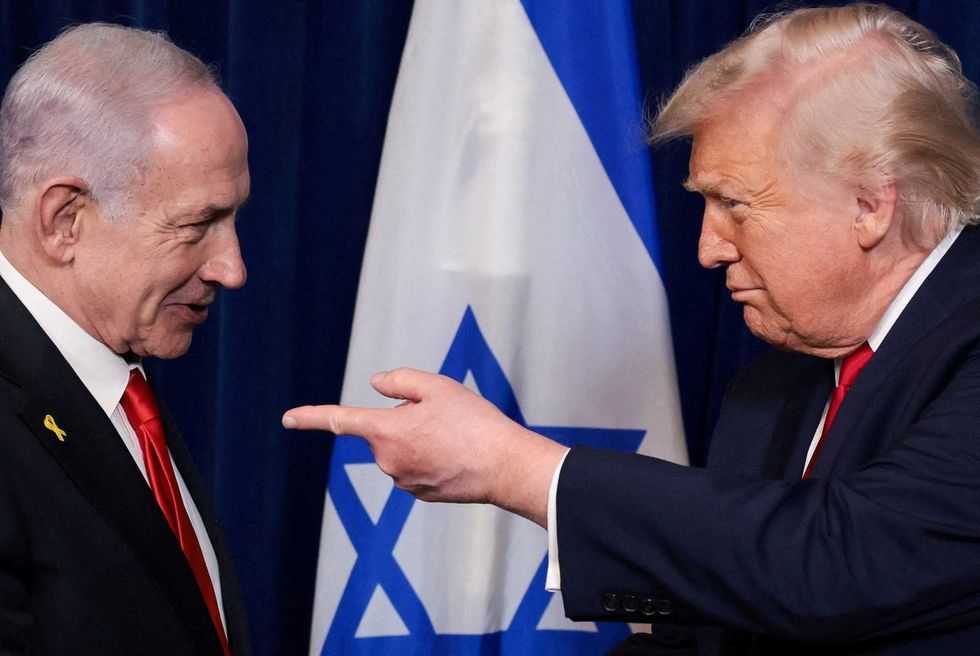
Iran on Monday suspended all peace talks with the U.S., just hours after President Trump claimed Iran “really wants to make a deal.”Tehran placed the blame on Israel, which it said violated the trifold ceasefire agreement when Israeli troops captured Beaufort Castle, a twelfth-century Crusader fortress in southern Lebanon, over the weekend.Israel previously used the castle, also known as Qalaat al-Shaqif, as a military base during its occupation of southern Lebanon between 1982 and 2000. The offensive marked Israel’s deepest incursion into Lebanon in more than 26 years. On Monday, Israel issued an evacuation order to residents in southern Beirut.Iranian state media reported that “there will be no dialogue” regarding U.S.-Israel-Iran peace efforts until the “aggressive and brutal operations of the Zionist regime’s army in Gaza and Lebanon” is quelled.Tehran said it would completely close the Strait of Hormuz, as well as another narrow trade route nestled between Yemen on the Arabian Peninsula—the Bab el-Mandeb Strait—as a consequence.Trump optimistically insisted on Truth Social late Sunday that Iran was eager to negotiate, and blamed his negotiating woes on Democrats and dissident Republicans. It is unclear what comes next: Trump casually revealed on Saturday that the U.S. would “finish it off militarily” if he did not reach a good deal with Tehran.The president repeated that he’s in “no hurry” to negotiate, and that—despite the war’s monumental impact on global gas prices—he believes if he’s in a hurry he’s “not going to make a good deal.”“And slowly but surely, we’re getting, I think, what we want. And if we don’t get what we want, we’re going to end it a different way,” Trump told his daughter-in-law on Fox News’s My View With Lara Trump.In the same interview, Trump referred to Venezuela as a “one-day win” and said that the situation with Iran is “a win already,” as the U.S. has “essentially defeated their military.”But it’s difficult to ascertain exactly what a “win” in the Middle East looks like when the aims of the war were never clear to begin with. While the Iranian regime has suffered major losses over the span of the conflict—including dozens of senior leaders—it has also become more extreme as a result.Rajan Menon, a senior research scholar at Columbia University’s Saltzman Institute of War and Peace Studies, argued in The Guardian late last month that Trump would—at this late stage—be “lucky” to strike a deal similar to former President Barack Obama’s 2015 Iran nuclear deal, which Trump ended during his first term.The U.S. has so far been at war with Iran for more than 13 weeks and spent an estimated $98 billion in the process. The regional conflict has damaged strategic alliances, stalled global trade, and thrust the world into an energy crisis due to the blockade on the Strait of Hormuz. It has also killed thousands of people.This story has been updated.