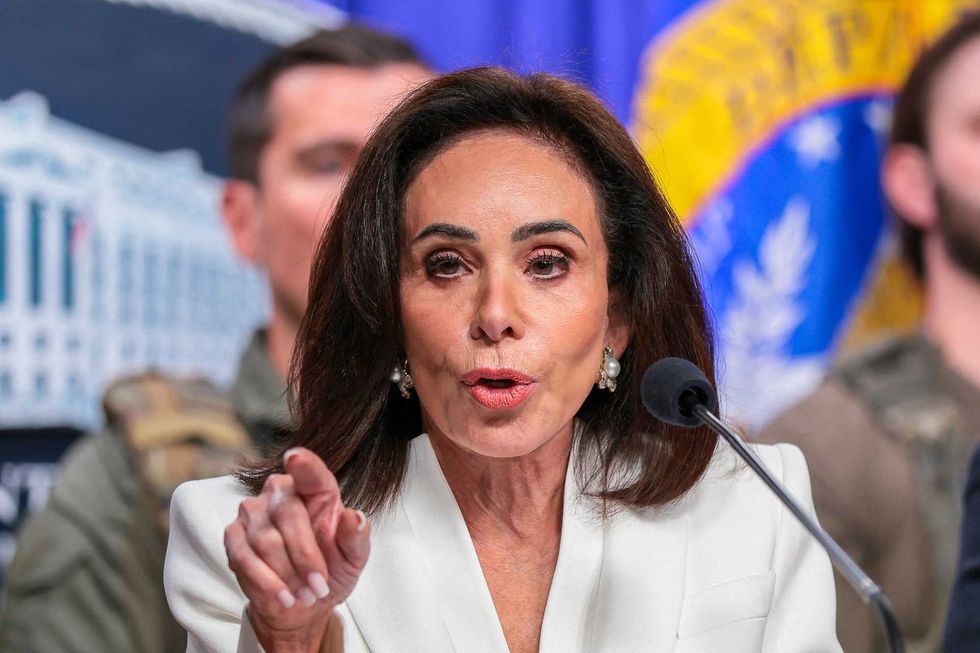
Lawyers in the District of Columbia revealed on Sunday how President Donald Trump's U.S. Attorney in the area has affected their ability to do their work, according to a new report. U.S. Attorney Jeanine Pirro has billed herself as a tough-on-crime prosecutor in D.C., but her actions inside the grand jury room have caused headaches for other lawyers in the District, The Washington Post reported. Pirro's pursuit of overtly political cases, like prosecuting a former Justice Department paralegal for assaulting a Border Patrol agent after he threw a sandwich at the officer, and a slew of other cases that have resulted in acquittals or mistrials, have made grand jurors more skeptical of government cases and could lead to more hung juries in the future. Eugene Gorokhov, a long-time defense attorney, told the Post that he has seen a noticeable shift in how D.C. residents disclose their biases during jury selection. “I’d never had a case with so many people coming in the door saying, ‘I’m going to have a hard time believing the feds,’” Gorokhov told the outlet about a case that ultimately ended in a deadlock. There is one case in particular that illustrates the problems Pirro has caused in the District, according to the report. Days after Pirro took office, a jury convicted four-star Navy Admiral Robert P. Burke of government contracting abuses that were described by prosecutors as a "stunning abuse of power." However, Pirro's office failed to secure convictions against two executives of a New York-based company involved in the bribe, which the Post noted was "the only known case in which a public official was behind bars for collecting a bribe that no one was guilty of paying."“Two juries that heard the full evidence could not convict the alleged bribe payers, yet Admiral Burke remains in prison,” Burke’s attorney, Timothy Parlatore, told the Post. “This incoherent result speaks for itself.”A spokesperson for Pirro's office told the Post in a statement that the criminal justice system is working "exactly as designed."
City officials revealed new details Sunday about what could be the biggest parade in Big Apple history — the ticker-tape extravaganza for the NBA champion Knicks.
Federal authorities are investigating large markings spelling out "8647" that were etched into the grass on the National Mall in Washington, D.C.
The post Anti-Trump Vandals Etch ’86 47′ Threat into National Mall Grass Near White House, Federal Authorities Launch Investigation appeared first on The Gateway Pundit.
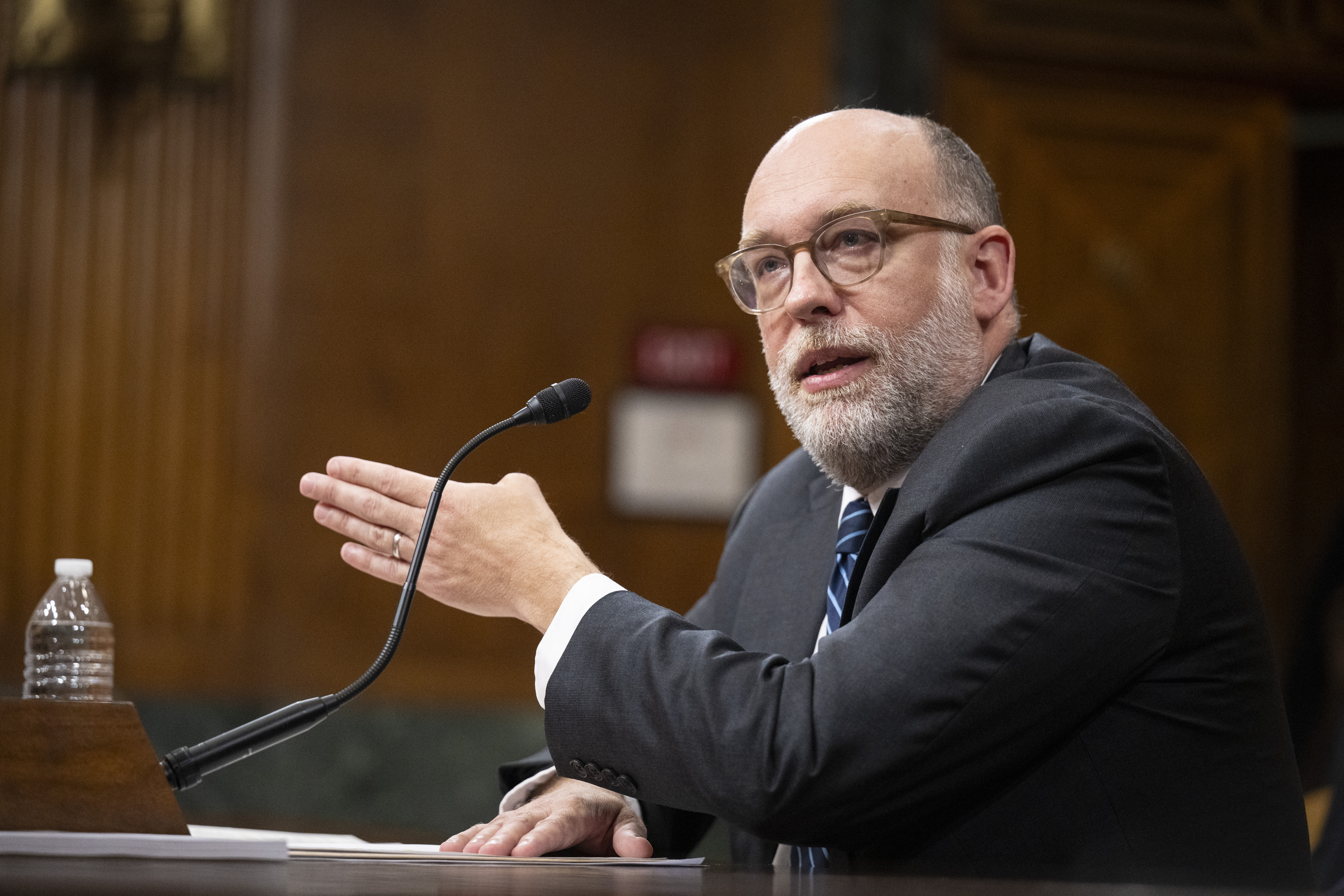
A Trump White House plan to give political appointees more power over federal grant money has sparked alarm among scientists, public health organizations, environmental groups, and others who fear that the proposal amounts to an attempt to subordinate critical funds to the whims of the president and his far-right allies.More than 300 organizations signed a joint letter on Friday calling on White House budget director Russell Vought, the proposed rule’s architect, to extend the public comment period that’s set to end on July 13, warning that the “scope and impact of [the Office of Management and Budget’s] rule is vast.”“The rule will impact the entirety of government grant-making across the United States,” the groups warned. “OMB itself says the revisions suggested would relate to over $179 billion of funds to small entities.”Politico, which exclusively obtained the letter, noted that the “proposed rule has already garnered over 15,000 public comments, with many expressing alarm that the changes could undermine research across fields.”Under Vought’s rule, federal agencies would be required to perform “pre-issuance reviews” of federal grants—funds appropriated by Congress—to ensure their distribution is consistent with “applicable law, federal agency priorities, and the national interest.”The rule lays out a number of standards that political appointees at federal agencies must screen for when deciding whether an organization can receive federal grant dollars. For instance, the rule would prohibit the distribution of federal grants to organizations that “promote anti-American values” or support “ideologies that deny the biological reality of sex or the sex binary in humans.”The New York Times reported that the consequences of Vought’s rule “could fall hardest on health and science, a field in which [President Donald Trump] has pursued some of the steepest cuts in his second term.”“In exchange for federal assistance, researchers would face limits on the subjects that they can explore, the foreign labs with which they may collaborate and even the conferences at which they can appear,” the Times noted. “Dr. Georges C. Benjamin, the chief executive of the American Public Health Association, a professional organization and advocacy group, said the policy could ‘devastate innovation, science, and research’ in the United States.”Earlier this month, Lawyers for Good Government and the Environmental Protection Network said that “if finalized, the rule would put senior political appointees in charge of approving and canceling individual grants, while stripping recipients of due process rights” while attaching “ideological conditions to nearly every federal dollar, raising First Amendment and equal-protection concerns.”The two organizations published a fact sheet warning that the proposed rule has the potential to halt billions of dollars in funding that communities across the US depend on for “health, public education, scientific research, public safety, and economic development projects.”“This is an executive power grab that would hand presidential political appointees unchecked control over more than a trillion dollars that Congress appropriated in the interests of all Americans,” said Jillian Blanchard, senior vice president for climate change and environmental justice at Lawyers for Good Government. “Conditioning funding for critical programs on ideology and viewpoint discrimination, while erasing basic due-process protections, violates freedoms of speech, equal protection, and eviscerates Congress’ power of the purse.”Democratic lawmakers have also sounded the alarm about Vought’s proposal. Rep. Rosa DeLauro (D-Conn.), the top Democrat on the House Appropriations Committee, said Thursday that she has given her Republican colleagues two opportunities to denounce Vought’s rule—and they declined both times.“Vought continues to attempt to steal from communities across the country. Now, he is trying to set a new political test on grants for a wide swath of the federal government,” said DeLauro. “The test will be a simple one: Are you sufficiently loyal to the president? If the answer is no, it will result in the denial of lifesaving disaster relief, funding for research into cures, the closure of Head Start offices, and more. If you are not loyal enough, if you speak out against this administration, the president and his cronies will take away resources Congress provided.”