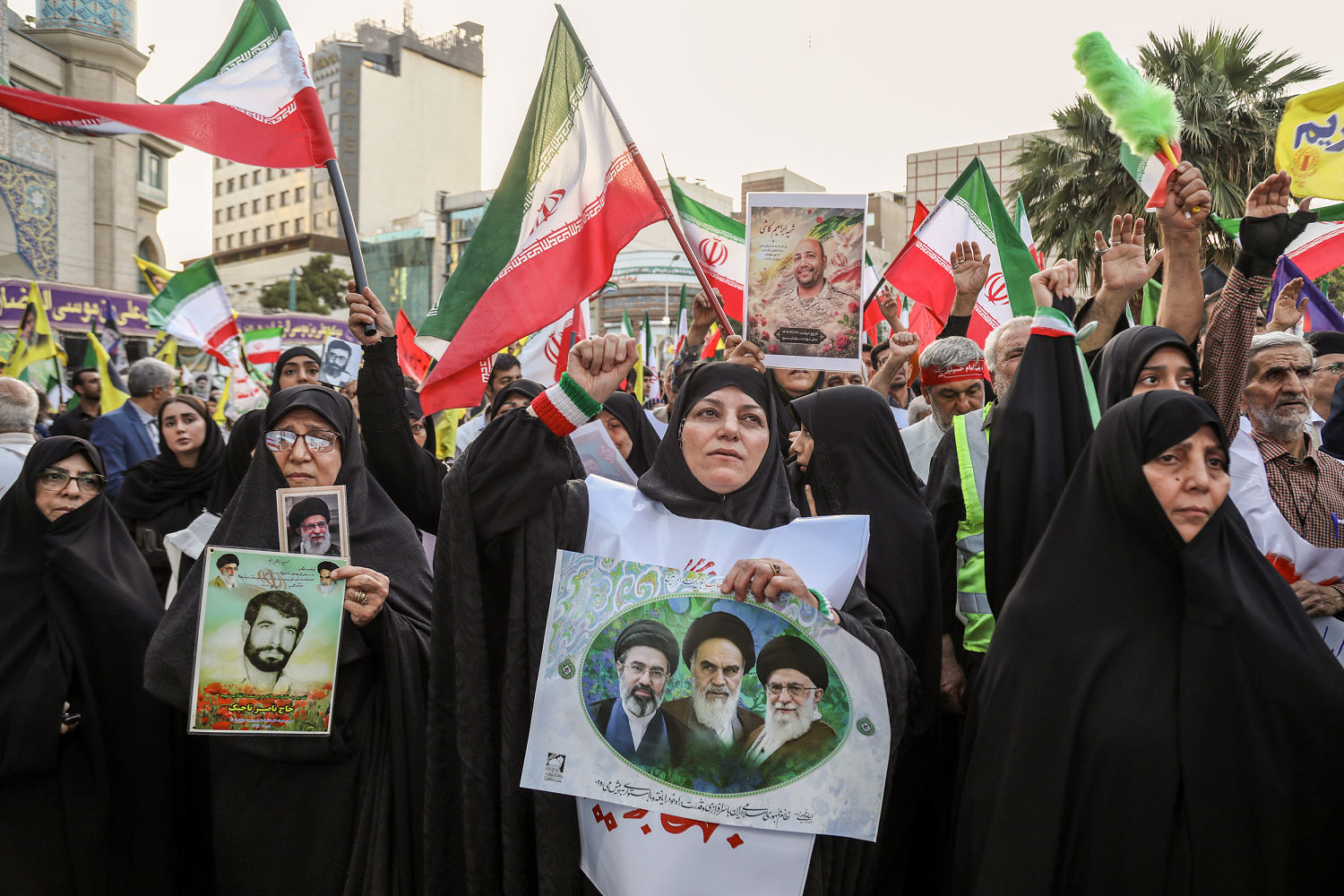
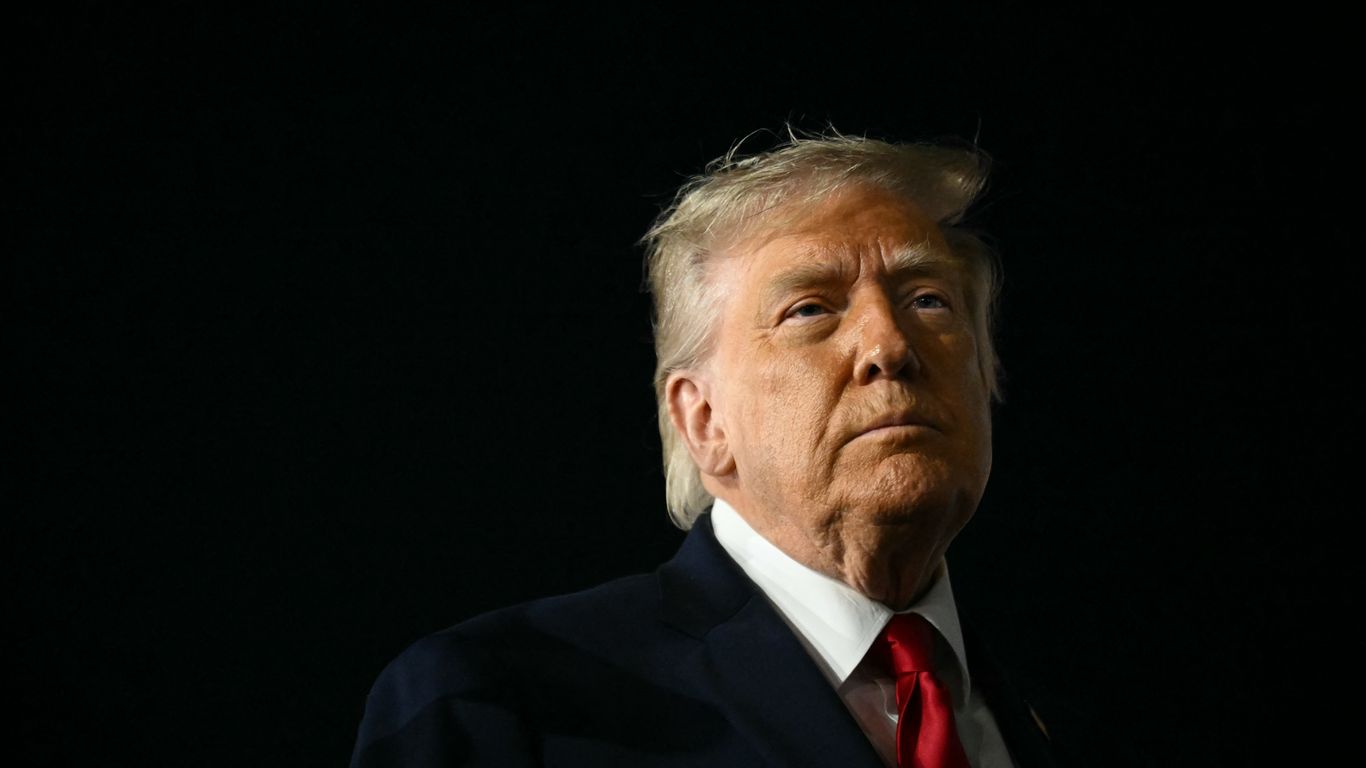
An agreement has been reached between the United States and Iran to end fighting and reopen the Strait of Hormuz, according to President Donald Trump and details of a draft memorandum of understanding released by Iranian state-affiliated media Sunday.
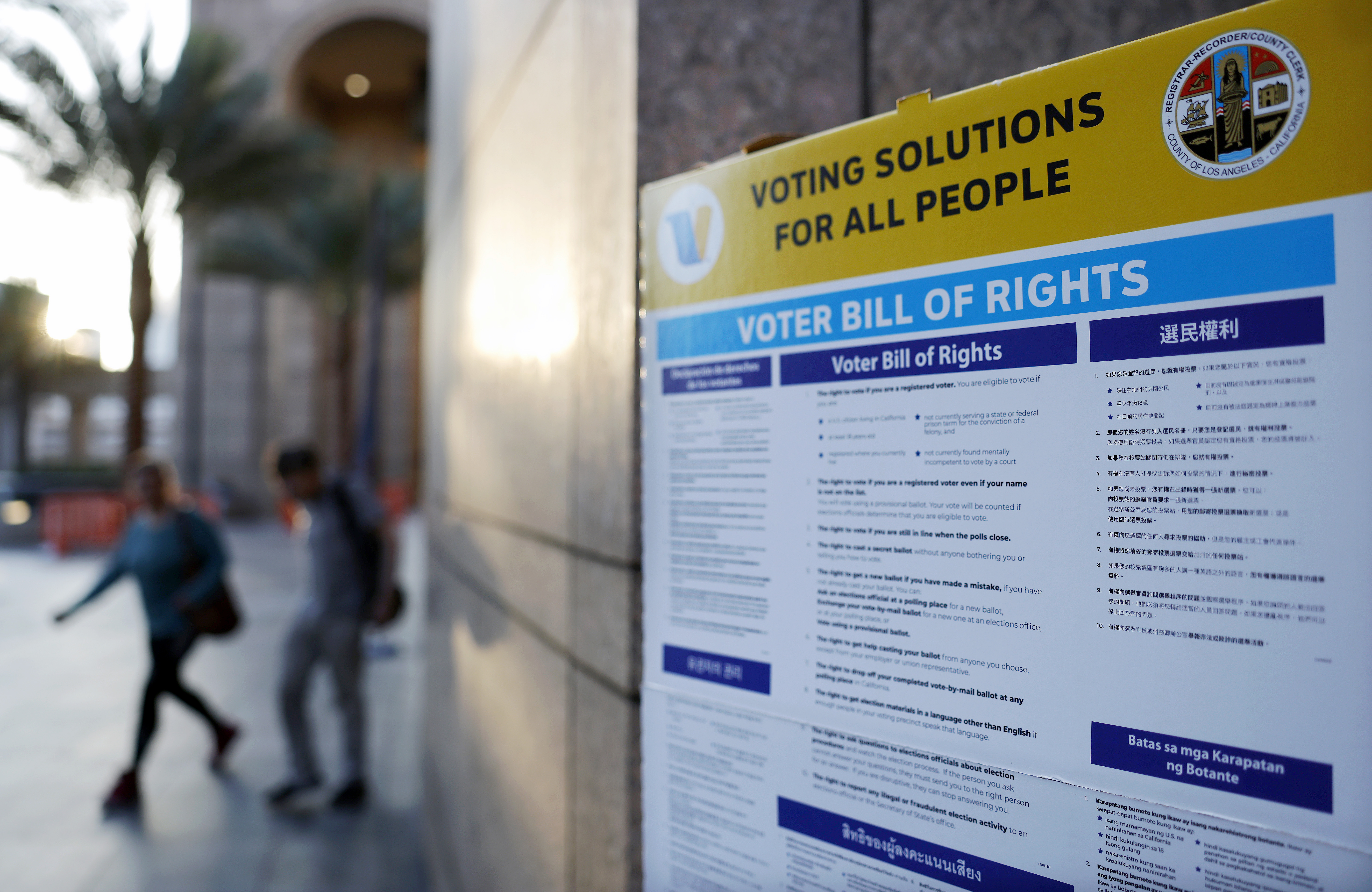
President Trump is demanding Congress attach his sweeping voting overhaul to legislation renewing a key U.S. surveillance authority.Why it matters: Section 702 of the Foreign Intelligence Surveillance Act is among the government's most contested surveillance authorities, long opposed by privacy advocates and supported by security hawks. Its fate now hinges on Trump's unrelated demands for a voting bill.Driving the news: In a Truth Social posts Sunday, Trump tied renewal of Section 702 to the SAVE America Act, his stalled bill requiring proof of citizenship to register and photo ID to cast a ballot."I'm against FISA if it doesn't come with The Save America Act (Full version!) firmly attached to it," Trump wrote in one post.He also defended his controversial pick of Bill Pulte, a MAGA enforcer and housing regulator with no national security experience, as acting director of national intelligence.Between the lines: Trump had appeared to defuse the fight by naming Manhattan U.S. Attorney Jay Clayton as his permanent nominee. But on Sunday, he slammed Republicans for "moving too fast on nominations!!!" to replace Pulte.Clayton has a confirmation hearing set for Wednesday.Catch up quick: Section 702 lapsed Friday for the first time since the program began in 2008. The House failed to extend it following a 198–218 vote, with 19 Republicans joining Democrats to block the law.The law allows the government to surveil foreigners abroad, and, in the process, sweep up and search Americans' communications when they're in contact with those targets.Conservatives, led by Reps. Thomas Massie and Chip Roy and Sen. Mike Lee, have pushed unsuccessfully to require warrants for searches involving Americans.The big picture: The FISA fight is now another front in Trump's yearlong push for stricter voting laws, a campaign that has increasingly targeted his own party's senators. He has pressured Senate Majority Leader John Thune (R-S.D.) to scrap the filibuster and pass the bill on a party-line vote, even as Thune has said the votes "aren't there."The SAVE America Act drew 50 votes earlier this month but couldn't clear the 60-vote threshold.Supporters say the law ensures only citizens cast ballots and bolsters confidence in elections.Critics warn the new rules would block millions of eligible Americans from voting.Reality check: Audits and studies by election officials and researchers have found noncitizen voting, which is already illegal and carries severe penalties, is rare.What they're saying: Thune and other Republican senators have refused to vouch for Pulte, who has used his housing post to send criminal referrals against Trump's perceived enemies. "We don't need a weaponized DNI," Thune told reporters.Lawmakers on both sides of the aisle worried what Pulte could do with FISA's expansive warrantless spy powers. Screenshot / Truth Social
The legislation, which Gov. Kathy Hochul has until the end of the year to approve or veto, allows DOI explicit access to previously withheld records from Administration from Children's Services.
On June 1st, despite a ceasefire ostensibly underway in the US-Israeli war on Iran, Israel’s prime minister launched a major escalation against Lebanon, including threatening airstrikes against the Lebanese capital. The US president called the Israeli leader, furiously demanding an end to Israel’s escalation. Six days later, Israel attacked Beirut’s southern suburbs, long understood to be a red line for Hezbollah. The Lebanese resistance organization launched a limited response, sending 11 rockets towards Israel, almost all of which were intercepted; no one was hurt or killed. Trump called Netanyahu again, telling him in a brief call that now that Iran and Israel had each “had their fun,” that Israel should stand down.Commentators across the Middle East and beyond debated whether Netanyahu would abide by Trump’s demand. What virtually none of them mentioned was that Trump had refused to even mention his most important pressure point: that if Israel resisted his order to stand down, the US would simply stop sending tons of weapons and tens of billions of dollars to the Israeli military. The close but sometimes divergent interests of the Middle East’s two powers, the global and the regional, was on full display. It’s now been 106 days since Trump launched his preemptive and illegal military attack on Iran. On February 28, 2026, the world awoke to the fury of a new war in the Middle East after the United States and Israel had launched their joint assault against Iran, with President Trump and Prime Minister Netanyahu standing shoulder to shoulder against their common foe. Claiming unbridled hegemony was on the agenda for both.The US-Israeli war on Iran is rooted in longstanding US imperialist strategy and Israel’s national goals.Today, with yet more fresh promises of a so-called “peace deal” that is nearly ready to be signed by Trump and Iranian leadership, the Israeli military is bombing the suburbs of Beirut despite ongoing claims of a “ceasefire.” Trying to understand the current doom loop, it’s vital we remember how we got here.In the opening salvo of the US-Israeli attack, Iran’s supreme leader Ali Khamenei, along with an unknown number of other top military and political leaders, was assassinated with a ballistic missile. Just an hour later, the US fired a Tomahawk missile directly at the Shajareh Tayyebeh Elementary School in the northern Iranian city of Minab—killing 156 people, 120 of them children, and destroying the school. The war’s official reasons, initially, were to eliminate the ostensible threat of Iran creating a nuclear weapon, and to destroy its conventional military capacity. The no-daylight US-Israeli partnership, Trump and Netanyahu as BFFs, the collaboration between the US and Israeli warplanes, bombers, drones, missiles… all seemed seamless and perfect.Three months later, and half a dozen or so “ceasefires” announced, renounced, ignored and denounced, headlines around the world gleefully recounted a Trump phone call with Netanyahu. Focused on Israel’s escalating bombing of Lebanon threatening to derail the latest US-Iran ceasefire, the June 1 call reportedly started with Trump telling Netanyahu “you’re fucking crazy—you’d be in prison if it weren’t for me.“ The US president then went on to his ”Everybody hates you now“ remark. ”Everybody hates Israel because of this,“ he reportedly said.Trump acknowledged saying it, and then, as is his usual style, moved on, quickly reclaiming his friendship with the Israeli prime minister. As was true with so many earlier ceasefires, Israel continued its massive bombing and its brutal occupation of south Lebanon, making a US-Iran ceasefire impossible. In the meantime, throughout the months of the war, commentators, politicians of all stripes, journalists and analysts across the globe were struggling to figure out what that war was actually being fought for. War for What?Real fear of an actual nuclear bomb was certainly not the answer. After all, US intelligence agencies have agreed for years that “Iran is not building a nuclear weapon and that [Supreme Leader Ali] Khamenei has not reauthorized the nuclear weapons program he suspended in 2003.” Despite that clear assessment, US B-2 stealth bombers still dropped 14 of their 30,000-pound “bunker-buster” bombs on Iran’s civilian centrifuges at Fordo, Isfahan and Natanz at the end of Israel’s 12-day war in June 2025. Trump and his supporters bragged of having “completely and totally obliterated” Iran’s nuclear facilities. And then, eight months after that, in the early days of the US-Israeli 2026 war, those B-2s were back in the air, dropping more 30,000-pound and some smaller versions of the bunker-busters on Iran.
Ukrainian forces struck a major Russian oil storage facility located more than 700 kilometers from the Ukrainian border, marking one of the deepest attacks inside Russian territory in recent months.
The post Ukraine Strikes State Oil Reserve Deep Inside Russia, Triggering Massive Blaze and ‘Fuel Rain’ (VIDEO) appeared first on The Gateway Pundit.
In the first two years of post-Dobbs America, 412 people were charged with “pregnancy-related” crimes, with 399 of these being related to substance use—including alcohol. These charges, which most frequently alleged either child abuse or neglect of the fetus, were made possible by politicians who have slow-dripped the language and ideology of fetal personhood into lawmaking for decades, a process that has only amplified since the overturning of Roe v. Wade. For years, anti-choice lawmakers have sought to lay down legal precedents for fetuses and embryos to be considered fully fledged persons in need of legal protections as part of a wider framework to criminalize abortion as murder. But this language and this broader approach to so-called public health have ramifications beyond abortion: If a fetus is a person, then consuming alcohol or narcotics while pregnant and putting the fetus at risk for fetal alcohol spectrum disorder, or FASD, and other substance-related birth defects is a form of child endangerment.Not only does this result in the criminalizing of pregnant people, it also hinders the prevention, research, and treatment for both the FASD and substance use disorders being weaponized to advance this anti-abortion agenda. What’s more, this ideology has proven to be wholly ineffective in the effort to “protect fetuses.” Laws around “pregnancy-related crimes” have only prevented mothers from seeking support, while simultaneously creating legal frameworks for restricting abortion access, creating a climate where pregnant patients are increasingly policed and where public health policies around prenatal substance exposure, FASD, and reproductive justice movements are increasingly linked.Dr. Sarah Roberts is a professor and legal epidemiologist at the Advancing New Standards in Reproductive Health initiative at the University of California at San Francisco, and one of the only researchers in the United States working on the intersections of health care practices and policies around abortion and the criminalization of behaviors while pregnant. “Singling out drinking while pregnant isn’t effective,” she explains, noting that none of the punitive or so-called “supportive” FASD prevention policies that she’s analyzed actually prevented FASD.The only policies that actually prevented FASD and offered support to mothers and babies with FASD were those that addressed alcohol consumption across the board. “People who are drinking while pregnant were drinking before they got pregnant and are in families and communities where people are drinking as well, so by reducing drinking at a population level, that also relates to improved outcomes during pregnancy,” Dr. Roberts explains.In her research, Dr. Roberts has found that the states that criminalize pregnant people consuming alcohol largely overlap with states restricting abortion.“Anti-abortion laws have always opened up the potential for greater surveillance, policing, and punishment of pregnant people. We see that in the way that miscarriage is policed, the way that substance use during pregnancy is increasingly policed, in the way that people have been punished for this, under a range of laws that have nothing to do with abortion,” explains Dr. Gretchen Sisson, sociologist at the University of California at San Francisco, and the author of Relinquished: The Politics of Adoption and the Privilege of American Motherhood.As Roberts explains, many of the policies that target pregnant people who drink also target those who consume other substances. These policies have deep roots, often dating back to the “war on drugs,” and, more specifically, the racist “crack baby” scare in the 1980s and 1990s. Media outlets of that era often presented sensationalist narratives that babies born to mothers using crack cocaine would be born with brain damage and overwhelm welfare systems, leading to a widespread targeting and policing of Black pregnant people, in particular. These policies were often ignored or brushed aside by mainstream pro-choice, often white-led organizing groups at the time, without the foresight of recognizing that this very same positioning of fetuses as people would be used to dismantle abortion access in the years to come. “There is a racist history to this, an ableist history to this, and a classist history to this, that these issues weren’t considered ‘mainstream’ abortion rights or reproductive rights issues,” explains Dana Sussman, the vice president of Pregnancy Justice.Today, Roberts’s research has found that Black mothers are still excessively targeted by “total welfare reporting,” or laws that require physicians to report pregnant patients to Child Protective Services if alcohol consumption is suspected. This reporting is linked to an increase in adverse effects for Black women and babies, despite the “pro-family” rhetoric behind them.