Catholic Tom Homan: Church leaders ‘don’t know what they are talking about’ on immigration
Source: BizPac Review · Bias: Far Right
Summary
Border czar Tom Homan welcomed the chance for “discussion” with leaders of the Catholic Church amid a feud between the White House and the Vatican, finding himself […]
Catholic Tom Homan: Church leaders ‘don’t know what they are talking about’ on immigration
Far Right
Border czar Tom Homan welcomed the chance for “discussion” with leaders of the Catholic Church amid a feud between the White House and the Vatican, finding himself […]
Stop slacking, allies.
The post NATO Leaders Will Meet for Key Summit in Turkey After Trump Puts Freeloading Allies on Blast appeared first on The Gateway Pundit.
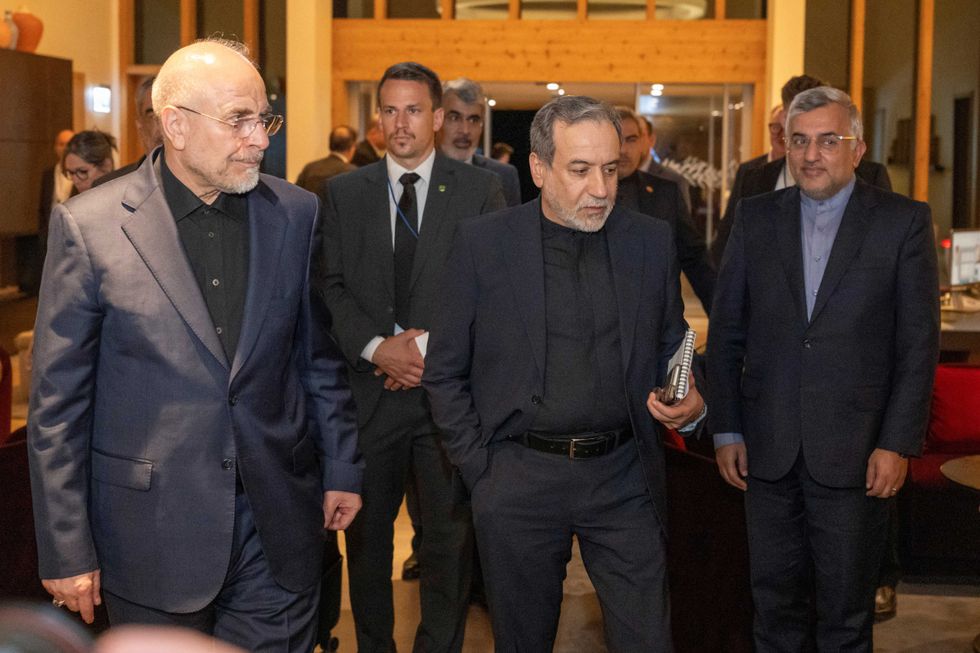
Iran's entire regime made a red carpet entrance to the first of three funeral ceremonies for late Supreme Leader Ali Khamenei — except the dead ayatollah's own son and successor.
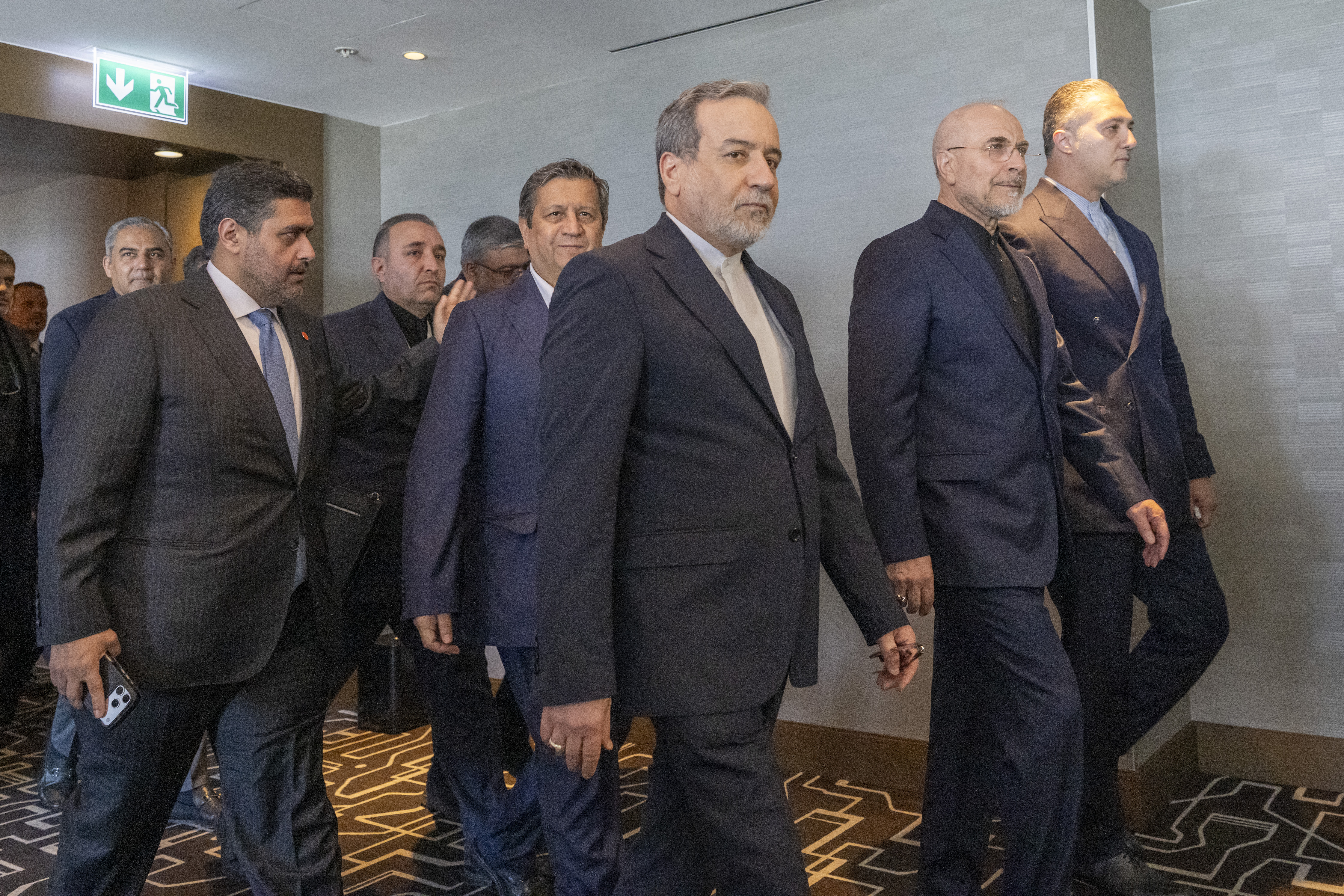
Trump administration officials reportedly believed that the Israeli government intended to assassinate Iran’s top negotiators—including the country’s foreign minister—during peace talks with the US in an effort to sabotage diplomatic progress.The New York Times reported Thursday that “American concerns about the targeting of two particular Iranian officials—Abbas Araghchi, Iran’s foreign minister, and Mohammad Bagher Ghalibaf, the speaker of the Parliament—spiked during delicate ceasefire negotiations that began in April.” In response, the US “went so far as to ask other countries in the region to warn Iran about the possibility Israel could target the two officials,” according to the Times, which cited unnamed current and former American officials.The US and Israel have killed dozens of top Iranian officials since launching their illegal joint war in late February. But the allied countries reportedly removed Araghchi and Ghalibaf from their target list in late March, opening the possibility of high-level negotiations to end the war.But Israel remained bent on targeting the negotiators, according to the Times, whose reporting was later corroborated by The Washington Post.The Times detailed one dramatic incident in April, when Ghalibaf was planning to travel to Pakistan’s capital to meet with US Vice President JD Vance:Pakistani fighter jets escorted the Iranian airplanes carrying a delegation of more than 70 Iranians from the border of Iran to Islamabad and back again when the session was over.But on the way back to Tehran, an Israeli security threat emerged.Iran’s security forces notified the plane carrying Mr. Ghalibaf back to Tehran that they had picked up intelligence that Israel planned to attack the plane and that two Israeli fighter jets had entered Iran’s airspace from its western border near Iraq, the two officials said.Mahdi Mohammadi, a senior adviser for Mr. Ghalibaf, who accompanied him to Islamabad, confirmed this account on his social media page. The plane made an emergency landing in the city of Mashhad, Iran’s closest airport to the Pakistani border, and the Iranian delegation traveled some eight hours by land back to Tehran, Mr. Mohammadi and the two officials said.The Post reported that “cracks emerged” between the US and Israeli approaches to the war following Israel’s assassination of top Iranian national security official Ali Larijani in March.“They’ve wiped out everybody,” Trump told reporters in late March, suggesting Israel’s assassination campaign was making it difficult to find potential negotiating partners.Trita Parsi, executive vice president of the Quincy Institute for Responsible Statecraft, wrote in response to the new reporting that “Israel is a state that, on paper, is a US partner, but in reality is so extreme in its obsession to undermine US diplomacy that it even tries to assassinate those the US engages with in crucial negotiations.”“I can’t recall a government as terrified of peace as the one running Israel,” Parsi added.At present, the Israeli government—led by Prime Minister Benjamin Netanyahu—is endangering tenuous US-Iran peace talks with its continued occupation of and assault on Lebanon, which Iran has highlighted as a key factor in the negotiations.Visiting occupied southern Lebanon earlier this week, Netanyahu declared to Israeli troops that “our insistence is that we will not leave... until the threat is removed.”Parsi wrote earlier this week that “beyond his long-standing desire to use American force to subjugate Iran to Israeli domination and achieve a regional balance favorable to Israel,” Netanyahu “now also has stark political and personal reasons to restart the war” with Iran.“The [US and Iran’s memorandum of understanding] has come at a steep political cost for Netanyahu,” wrote Parsi. “His prospects for reelection in October are weaker than they have been in months. Once seen as the Israeli leader uniquely capable of delivering President Trump, he now confronts the prospect that both the war and the ensuing diplomacy will leave Israel in a strategically weaker position—undermining the very case he has made for his leadership.”“And of course,” Parsi added, “if he loses the elections, he will likely spend the next few years in jail, as he will lose his immunity as prime minister and face trial over corruption charges.”The story was published in partnership with Common Dreams, read the original here.
A stream of foreign dignitaries, officials and mourners gathered in Tehran on Friday to pay their respects to Supreme Leader Ayatollah Ali Khamenei, who was killed by U.S.-Israeli airstrikes on Feb. 28 that triggered the war. Pakistani Prime Minister Muhammad Shehbaz Sharif, a key mediator in the U.S.-Iran talks to end the war, joined mourners…
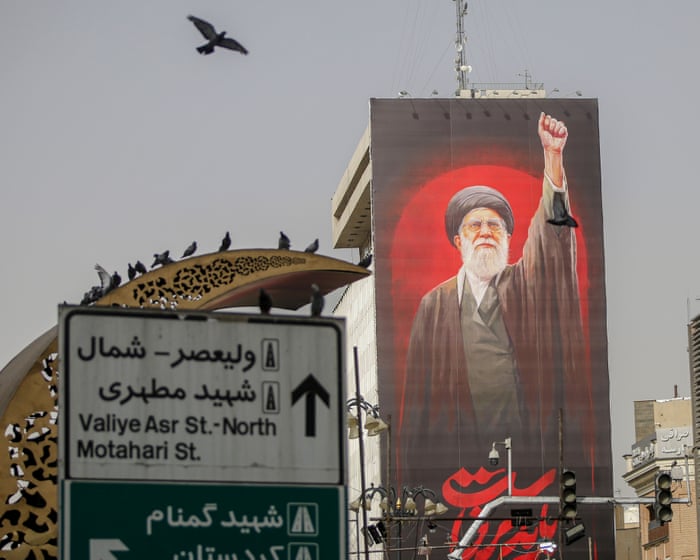
The country's theocracy hopes to see millions flood the streets of the capital beginning Saturday in scenes reminiscent to the burial of the late Supreme Leader Ayatollah Ruhollah Khomeini in 1989.
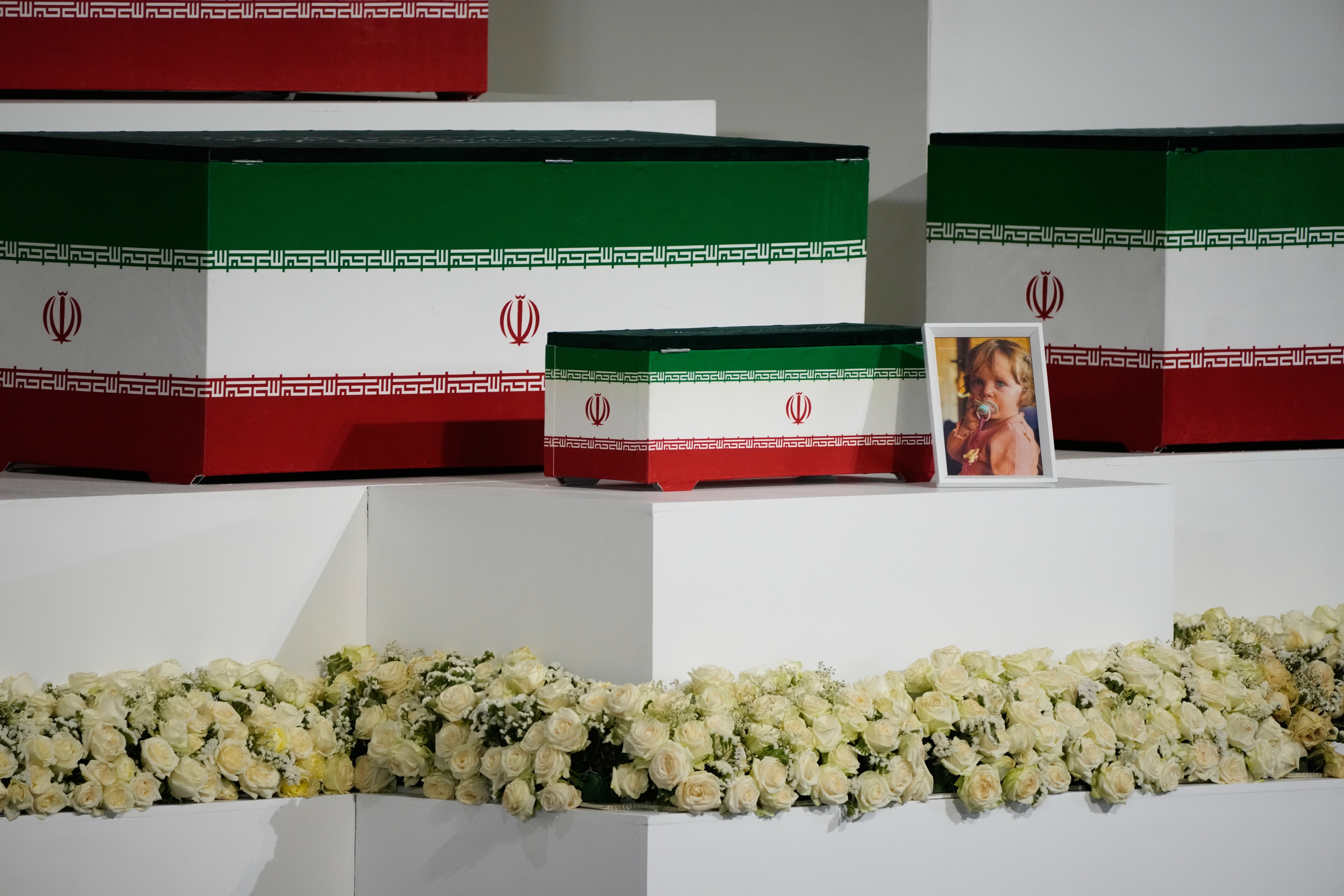
Ceremony for Ali Khamenei intended to be epic display of national power. Plus, the expected wedding of Taylor Swift and Travis Kelce pays dividend to good causesGood morning. Final preparations are under way for Ali Khamenei’s six-day funeral. The farewell to the former supreme leader is expected to draw millions in Iran. Khamenei was killed in the opening salvo of the US-Israeli attack on the country in February, and the funeral is intended to be an epic display of personal mourning, national power, resilience and social cohesion.Iran’s first vice-president, Mohammad Reza Aref, who is the lead funeral organiser, described the ceremony, which begins on Saturday in Tehran and will end with Khamenei’s burial on Thursday in Mashhad, as “the most important event of this century” and the most attended event since the 1979 revolution. The scale of the funeral has been conceived to relay political and religious messages of resistance to the rest of the world. At the request of Iraqi politicians, Khamenei’s body will also be carried through the Iraqi Shia cities of Karbala and Najaf.Will Ali Khamenei’s successor take part? Khamenei’s son and successor, Mojtaba Khamenei, is not expected to make an appearance at his father’s funeral. He was severely injured in the same US-Israeli strike that killed his father and also killed Mojtaba’s wife and his 14-month-old daughter. The extent of Mojtaba’s injuries is unknown and he has so far issued only written statements, including one that distanced himself from the ceasefire negotiations but sanctioned their continuance. Israel’s defence minister, Israel Katz, threatened to kill him this week, saying he was marked for death.Why is Trump so unhappy with Nato? Aside from the failure of countries such as the UK and France to join in with the US-Israeli war on Iran, Trump has long complained that Europe does not spend enough on defence. Under pressure from the US, Nato leaders agreed at a gathering last year to boost defence-related spending to 5% of GDP by 2035. Continue reading...