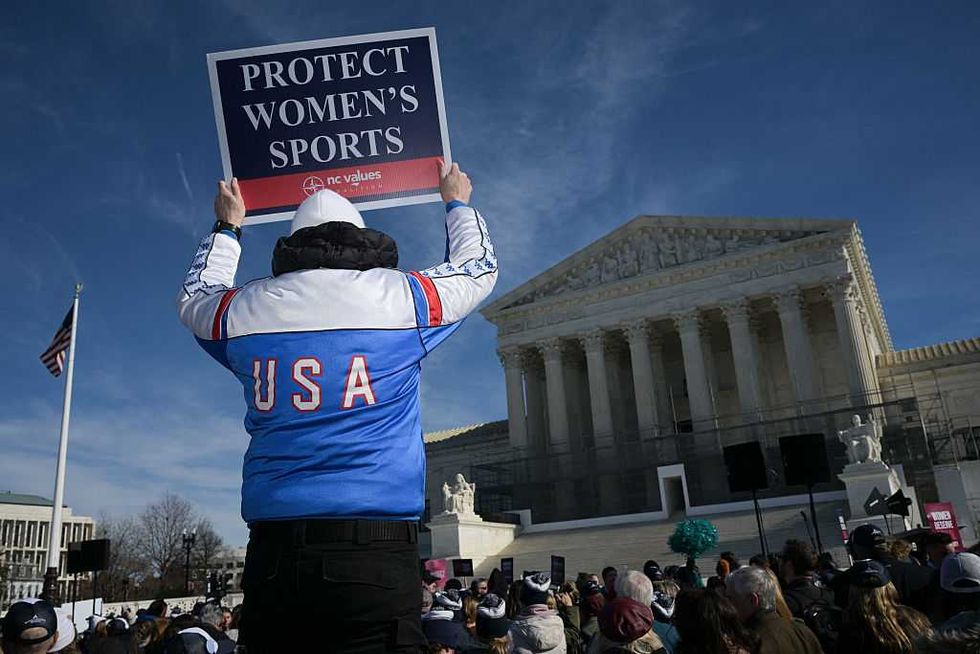
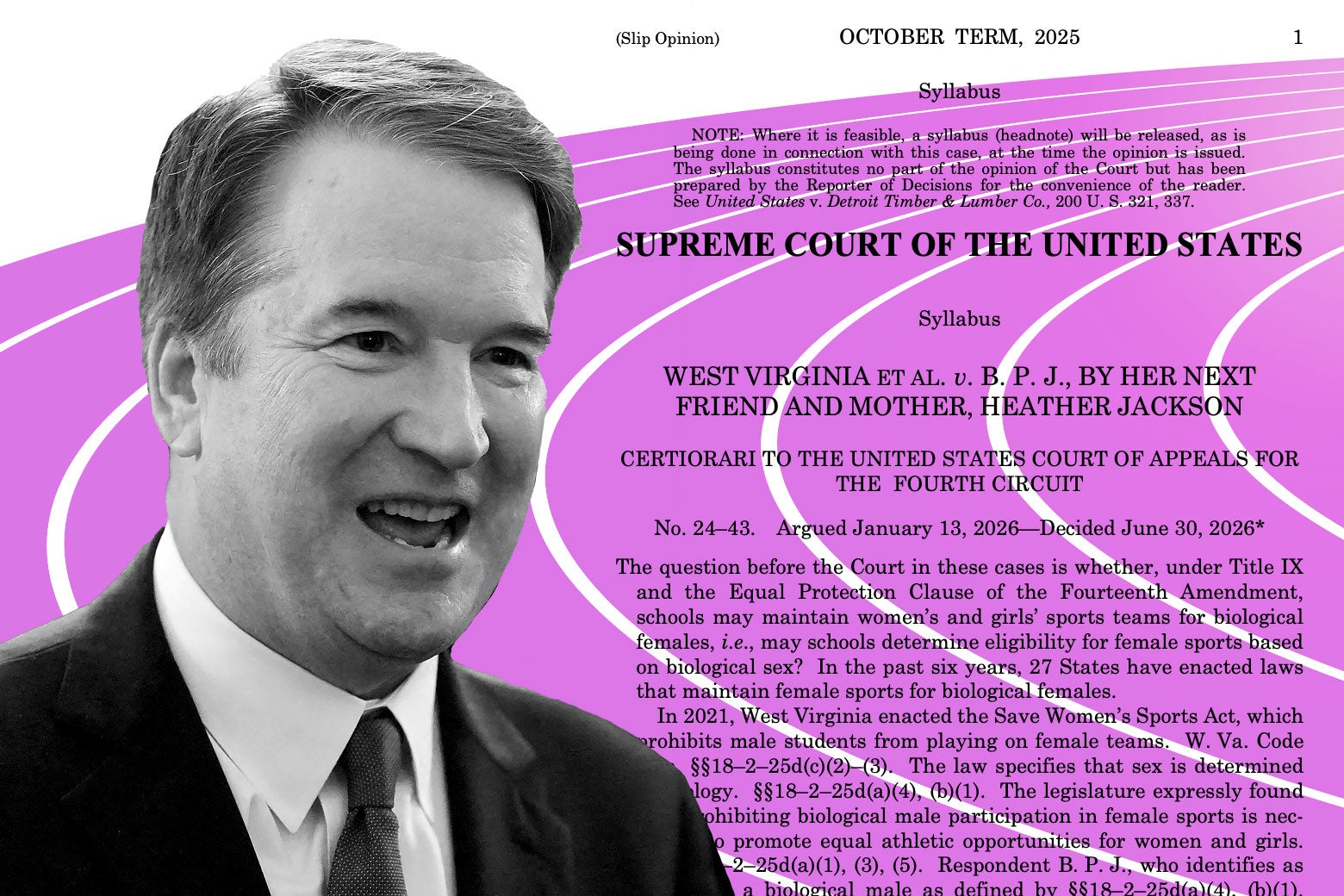
In a decisive ruling Tuesday, the Supreme Court has settled the most consequential legal question for women's sports in a generation — affirming what biology and fairness have always made clear: Women's sports must remain protected spaces for female athletes.The court ruled 9-0 that Title IX — the federal law that ensures equal opportunities for women in education and sports — and 6-3 that the Equal Protection Clause allow states to protect female athletes with sex-based categories in sports.Changing the culture means rejecting the lie that biology is bigotry.The decisions in Little v. Hecox and West Virginia v. B.P.J. mark a watershed. The court recognized that sex is a biological fact, not a feeling, and that it shapes athletic performance in ways no paperwork or policy can undo.Writing for the majority, Justice Brett Kavanaugh held that Title IX "cannot plausibly be interpreted to refer to anything other than biological sex."By upholding the constitutionality of state laws safeguarding sex-based categories in athletics, the court has reinforced the rights of girls and women in the 27 states that have already passed protective legislation. This is a win worth celebrating.No longer will biological males like B.P.J. dominate girls’ shot-put competitions in West Virginia next season. The ruling draws a firm line: Sex is not a feeling, and paperwork and lip gloss cannot rewrite reality.Female athletes deserve fair competition, safe locker rooms, and equal opportunity — the principles Title IX was built to protect and that reflect simple scientific truth. The majority opinion emphasizes immutable biological differences in strength, speed, and physiology and rejects the claim that gender identity can override sex in the context of physical athletics.Yet this victory, meaningful as it is, remains incomplete.In the remaining 23 states — California chief among them — business as usual persists. Biological males can still claim girls’ and women’s titles, taking podium spots from female athletes they outperform.The patchwork nature of this decision means fairness remains geographically contingent. But a girl’s right to compete on a level playing field should not depend on her zip code.We have made progress. President Trump’s 2025 executive order provided critical momentum, functioning with the force of law and prompting the NCAA to reaffirm that women’s categories are for women. The International Olympic Committee has committed to protecting the female category starting with the 2028 Los Angeles Games. Ballot initiatives in blue states like Colorado and Washington this November will let voters decide directly whether girls deserve their own sports. In Maine, fathers have mobilized to put the Protect Girls’ Sports in Maine initiative on the ballot so their daughters can have the same opportunities their mothers did.These developments are encouraging. But the challenges remain formidable.The NWSL and the WNBA still operate without meaningful sex verification. Professional leagues, private events such as the Boston Marathon, and college athletics remain fractured. Birth certificates — the only proof of sex required by the NCAA — can be changed in 44 states. Given the fungible nature of paperwork and other IDs, documents cannot substitute for actual biological testing at the highest levels of sport.Blue states continue to defy federal guidance, treating fairness as optional. Interstate competition creates impossible inconsistencies. A female athlete protected in Tennessee could still face unfair qualification scenarios against out-of-state males if she advances to national competition.How is that fair?The deeper truth is that a Supreme Court ruling can set a legal boundary, but it cannot change the culture by itself. That work falls to all of us — parents, athletes, coaches, journalists, and everyday citizens who refuse to stay silent.RELATED: Democrats can’t escape their trans problem Kirby Lee/Getty ImagesFor too long, institutions have prioritized feelings, optics, and activist pressure over the safety, dignity, and opportunity of girls and women. We saw a version of the same pattern in the gymnastics sex abuse scandals I helped expose decades ago: Adults in power looked the other way while vulnerable athletes paid the price.The Safe Sport Act now exists to protect young athletes from abuse, but the coaching culture has not changed enough, and abuse still occurs. SafeSport faces a four-year backlog of abuse reports.Changing the culture means rejecting the lie that biology is bigotry.It means parents showing up at school board meetings, statehouses, and ballot initiatives with unrelenting clarity. It means athletes — female and male — finding the courage to speak the truth even when it costs them.