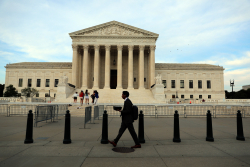
Trump calls Supreme Court's birthright citizenship ruling "too bad," asks Congress to intervene
The Supreme Court gutted one of President Trump's signature policies, rejecting his effort to end birthright citizenship. Jan Crawford has more details.

The Supreme Court decision on Little v. Hecox out of Idaho and West Virginia v. B.P.J. allows states to do what's right.
The Supreme Court gutted one of President Trump's signature policies, rejecting his effort to end birthright citizenship. Jan Crawford has more details.
The Supreme Court justices weighed in on whether states can ban transgender athletes from competing in female school and college sports. Jan Crawford has more.
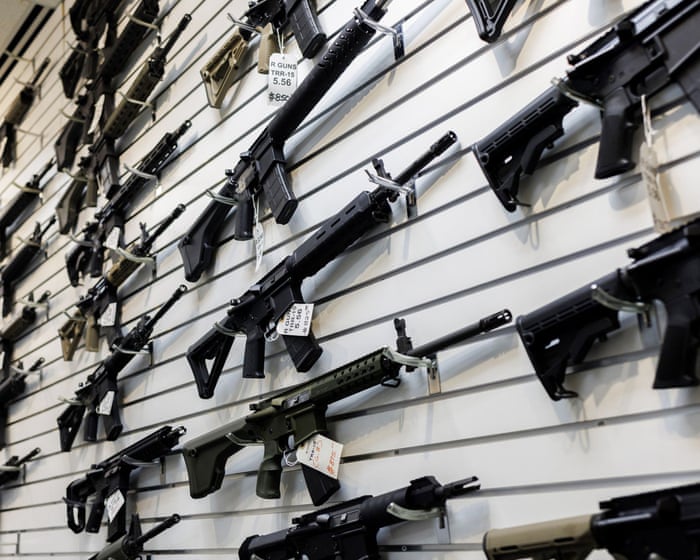
Justices to consider whether bans on AR-15s and similar semi-automatic firearms violate second amendmentThe US supreme court will consider whether bans on AR-15 rifles and similar semiautomatic firearms are constitutional.The justices said on Tuesday they will hear appeals challenging bans in Connecticut and the Chicago area in the next term. Continue reading...
The Supreme Court on Tuesday struck down federal limits on how much political parties may spend in coordination with candidates, handing party committees a major win and reshaping campaign-finance rules ahead of the midterms.Why it matters: Freed from the caps, party committees can now spend without limit alongside their candidates — making them a far more powerful magnet for the big-dollar money that's flooded into super PACs over the past 15 years.Driving the news: In a 6–3 decision with a majority opinion by Justice Brett Kavanaugh, the court held that the coordinated party expenditure limits violate the First Amendment.The decision overturns a 25-year-old precedent that had upheld the same limits.The intrigue: The decision comes at a time when insurgent anti-establishment candidates have garnered success in both parties.Supporters of striking down Congress' limits on coordination have said the guardrails weaken parties while super PACs and other outside groups have become dominant players, especially after the court's landmark 2010 Citizens United decision.Critics say removing the caps could let major donors evade the few remaining anti-corruption safeguards, which is a stepping stone to allowing PACs to directly coordinate with candidates.The decision could make party committees more attractive vehicles for donor money in competitive races.What they're saying: "More speech is generally better than less speech," Kavanaugh wrote for the majority.In dissent, Justice Elena Kagan warned that the ruling brings about an old era of corruption: The "Court ushers back in the same opportunities for quid pro quo corruption that the contribution limits were meant to check."President Trump praised the ruling on Truth Social, calling it "A BIG WIN FOR REPUBLICANS and, more importantly, The First Amendment!" His administration had declined to defend the law in court.Catch up quick: The case, National Republican Senatorial Committee v. Federal Election Commission, was brought by two Republican committees, Vice President Vance and former Ohio Rep. Steve Chabot.They argued the law prevented party committees from coordinating effectively with their own candidates on core political speech.The ruling is the latest in a line of Supreme Court campaign-finance decisions narrowing the government's power to restrict political spending.
All Things Considered host Scott Detrow speaks with NPR's editor-in-chief Thomas Evans and Nina Totenberg about her reporting on the final day of the Supreme Court term.
Republican-appointed Justice Clarence Thomas tore into transgenderism as a "lie to the public" in his concurrence on the Supreme Court's decision to uphold state-level policies restricting girls' sports to biological females.
In an apparent admission of defeat, the Trump administration is dismantling the Systematic Alien Verification for Entitlements (SAVE) system, a controversial tool at the Department of Homeland Security to verify people's citizenship that they had been hoping to run every registered voter in the country through.The news was broken on X by ProPublica reporter Jen Fifield on Tuesday.It comes after U.S. District Judge Sparkle Sooknanan, a judge in Washington, D.C., who has shut down a number of President Donald Trump's extralegal schemes, issued an order further prohibiting the use of SAVE as a violation of data privacy laws."The revamped tool allowed officials to check entire voter rolls for noncitizens, using partial or full Social Security numbers," wrote Fifield, noting that prior reporting from ProPublica and the Texas Tribune "revealed that DHS had rushed it into use before it could discern voters’ most up-to-date citizenship information," with the result that "hundreds of voters had been falsely flagged as potential noncitizens."This system was integral to the SAVE America Act, the controversial legislation pushed by Trump and Republican hardliners in Congress to curtail voting rights. Among much else, the law would have required all voter rolls in the country to be checked through the SAVE database."It's unclear if that provision will survive now," wrote Fifield.In a further indignity, she noted, even with all of the false positives being flagged by the system, SAVE "hasn’t validated President Donald Trump’s repeated claims that millions of noncitizens are registered to vote" for the time it was in use.All of this comes as the SAVE America Act itself hit yet another dead end in Congress, with House Speaker Mike Johnson (R-LA) failing in his attempt to pass a rule tying it to the national defense budget bill and leaving the House floor paralyzed.
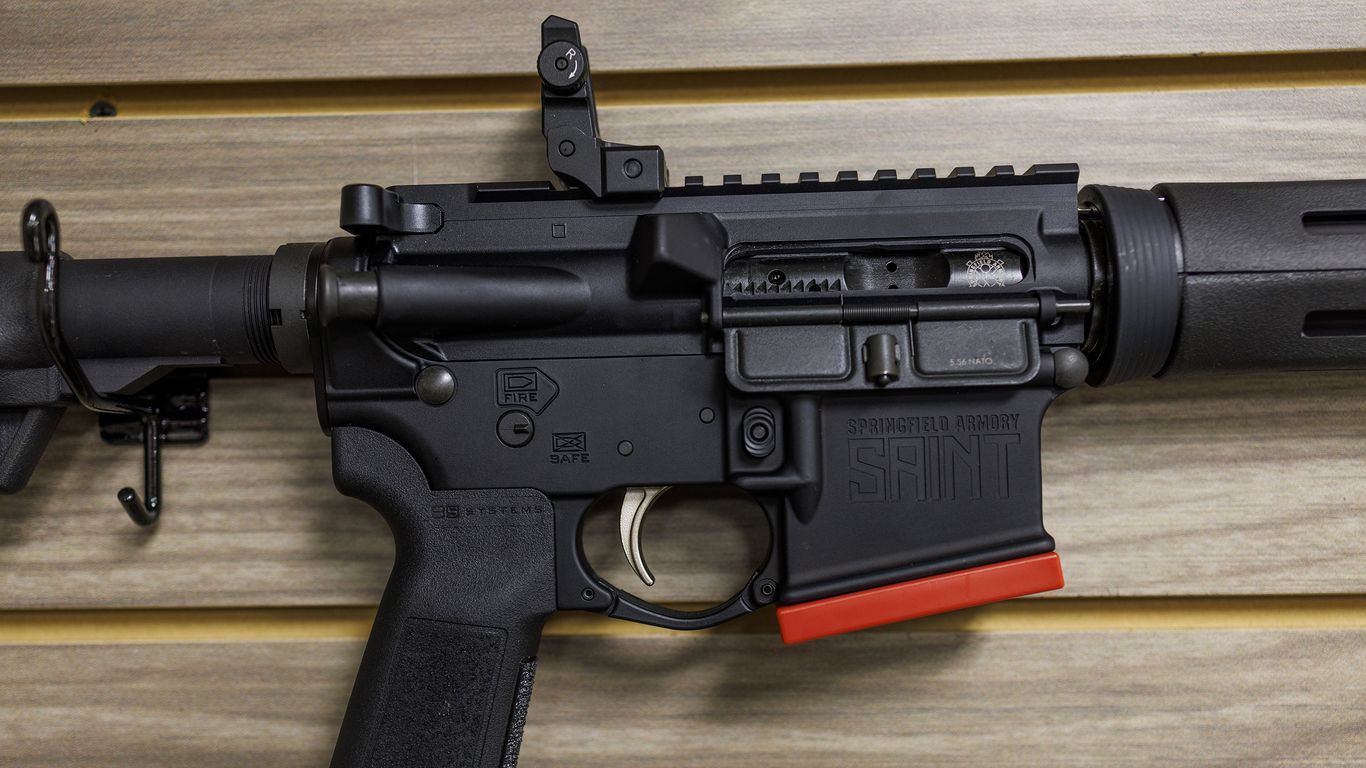
The Supreme Court in its next term will hear challenges to local bans on the AR-15 rifle, one of the most popular firearms in the country.Why it matters: The court previously rejected a case challenging Maryland's ban on the AR-15, but Tuesday's grant suggests the justices are interested in reviewing the restrictions in light of recent decisions expanding citizens' access to firearms.The court Tuesday said it would take up two cases challenging AR-15 restrictions in Cook County, Ill., and Connecticut for the term beginning in October.There are an estimated 30 million AR- and AK-style rifles in circulation in America.What they're saying: Justice Brett Kavanaugh signaled his willingness to take up states' semiautomatic rifle bans when the court rejected challenges to Maryland's law in June 2025."AR–15s are semi-automatic, but so too are most handguns. ... Law-abiding citizens use both AR–15s and handguns for a variety of lawful purposes, including self-defense in the home," he wrote in a dissent.Gun rights advocates seized on Kavanaugh's dissent after federal Circuit Courts split over whether the state bans are lawful.They argued AR-15s are "in common use" for self-defense, as the Supreme Court set out in its decision in New York State Rifle & Pistol Association v. Bruen."The AR-15 platform rifle is the modern descendant of the rifles that were borne by the militiamen of the Revolution and the pioneers who struck out West in search of a better life. The question can be fairly asked, if the Second Amendment does not protect it, what could it possibly protect?" gun rights advocates wrote in their brief challenging Cook County's ban.The other side: "For over three decades, the democratically elected officials of respondent Cook County, Illinois, have been faced with the overwhelming, mounting, and unrefuted evidence showing that assault rifles are the weapon of choice for criminals and terrorists set on quickly massacring innocents, but are rarely put to lawful public use," Cook County argued in its response.