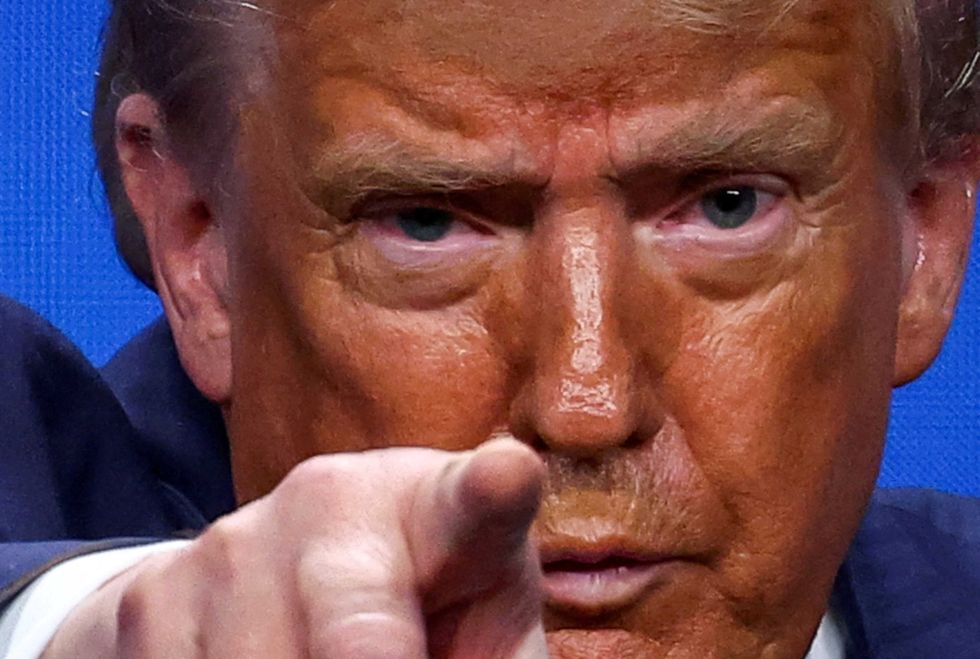
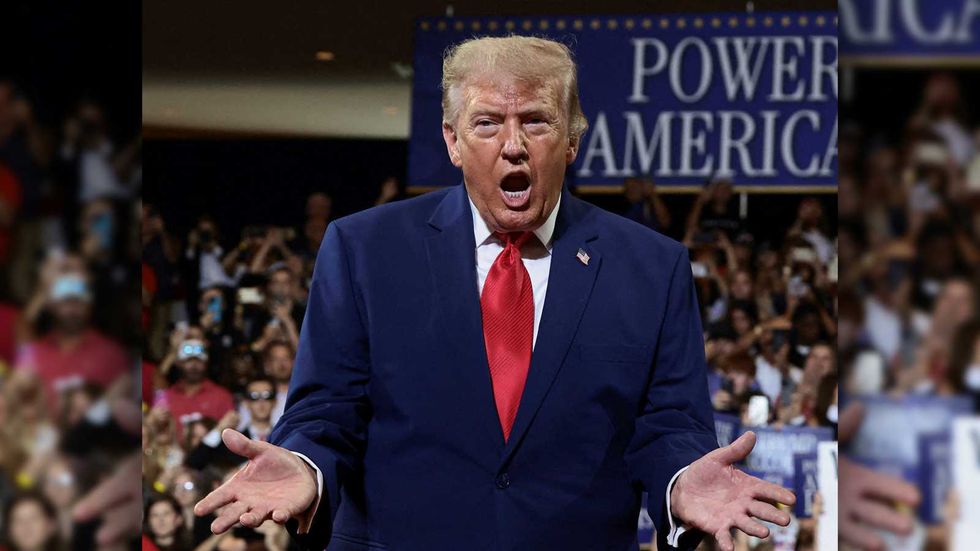
In recent months, experts have pointed to various warning signs that President Donald Trump is engaged in a “slow-moving coup” as he attempts to maintain his grip on power. On Monday, with the highly consequential midterms less than 100 days away, a leading presidential historian took to Vanity Fair to assert there is an “antidemocratic plot afoot,” and to explain Trump’s “authoritarian formula.”According to lawyer and presidential historian James Robenalt, “There's a radical, antidemocratic plot afoot, cooked up at the highest levels of the Trump executive branch — drawing in the Department of Justice, the leadership of the intelligence community, and possibly even the Pentagon — to tilt November’s midterm elections to Republican candidates, so as to ensure that the president’s party retains control of the House and Senate." As Robenalt explains, the plot is revealed by Trump’s effort to federalize elections, which the Constitution very clearly states are to be overseen by states. Trump has attempted to assert federal control via executive order, but has been “consistently” and “easily” rebuked by the courts, as the Constitution allows only Congress to override state mandates.“Trump’s defeats in court help explain his fixation on the so-called SAVE America Act, short for ‘Safeguard American Voter Eligibility,’” writes Robenalt. “The president has even admitted, however grudgingly, that only Congress can create new election standards. The proposed bill, already considered by a somewhat skeptical House, and even more wary Senate, fuses two of Trump’s favorite obsessions: illegal immigration and voter fraud. Illegal immigration helped carry him to victory in 2016; alleged rigged elections powered some of his political messaging in 2024.”“If enacted, the SAVE America bill would make states demand documentary proof of citizenship — passports, birth certificates and the like — before voters could register or update their registration, and would require the corresponding paperwork to be presented in person to a local board,” but according to Robenalt, repeated pushback from both sides of the aisle suggests that Congress won’t pass the bill. “Here, then, is where the story turns thorny,” he writes. “If Congress chooses not to support initiatives to curb certain types of voting or certain types of voters, Trump and his surrogates have other options.”“First off,” he explains, “they have been using what many observers consider an authoritarian formula to attack democracy itself: attempting, through public pronouncements and a flurry of activities, to slowly and steadily degrade voters’ confidence in election integrity; raise the specter of criminal indictments of enemies; increase the rhetoric against ‘violent left-wing extremists’ and ‘communists’; and take endless swipes at the free press.”“Secondly,” Robenalt continues, “the administration’s recent moves fit a pattern. Remove election guardians and guardrails. Weaken intelligence channels that might deter foreign interference. Use strong-arm tactics, such as the confiscation of old ballots, to intimidate officials and possibly serve as a dress rehearsal for federal muscle-flexing in future elections. Threaten prison time for those who refuse to comply. Announce to America’s adversaries that US elections are vulnerable, thereby inviting the very interference the administration decries. Then, theoretically, use that alleged foreign interference as a pretext to cancel elections, invoke the Insurrection Act, or send troops or ICE agents to the polls.”“It could all play out,” warns Robenalt, “as several pundits have remarked, very much as Hemingway famously described bankruptcy: gradually, then suddenly. Some catalytic event — a Reichstag Fire analogue, or another January 6, or a bogus declassification purporting to show foreign hackers changing votes — could be used to manufacture a phony rationale for emergency action.”As journalist Jonathan Alter pointed out, “Trump never made any secret of his intentions, explaining to Republicans in January of 2026 on the fifth anniversary of the January 6 insurrection, ‘You’ve gotta win the midterms, because if we don’t win the midterms, they’ll find a reason to impeach me.’” According to Robenalt, “The president has shown, time and again, that he will go to unprecedented lengths so as not to relinquish power,” and Americans must not take for granted that he will give up without a fight. “Those who cherish democracy must stay alert,” Robenalt concludes. “Vigilance remains the first defense. But the essential act is simpler still: vote. Vote early, if you can, because early voting makes election-day obstruction that much harder to pull off.”
Over the course of his war with Iran, President Donald Trump has made inflammatory remarks that many have suggested implied his intention to use nuclear weapons. Now a whistleblower from his first term warns that he “watched Donald Trump talk about nuclear weapons like they were presidential toys,” and that “he may be closer to playing with them than you think.”This is according to Miles Taylor, who served as deputy chief of staff at the Department of National Security during Trump’s first administration, at the time famously penning an anonymous article revealing the existence of a resistance movement working within the White House. On Monday, he published a new piece explaining why Trump has a “fixation” with using nuclear weapons. “Last week,” writes Taylor, “the president told Axios he was ‘close’ to ordering a ‘massive attack’ on Iran … The threat had the same ominous feel of his April comments that ‘a whole civilization will die tonight.’ It was an insinuation that he possessed super powers — and might break the world’s nuclear taboo to end the stalemate.” The pause didn’t mean the war was off, however, and Trump told Axios why he thought the war had to continue: “They haven’t received enough pain yet.” “Not enough pain,” notes Taylor. “I’ve heard rhetoric like that from him before. And it wasn’t about Iran.”“Back in 2017,” Taylor explains, “Trump judged that the only way to bring North Korea to heel was to make it suffer. He tweeted furiously at ‘Rocketman’ Kim Jong-un and promised ‘fire, fury and frankly power the likes of which this world has never seen before’ if the hermit kingdom didn’t meet his demands. That was Trump’s first wink-nod to the fact that he possessed an arsenal of nuclear bombs and was ready to use them. Kim answered by threatening to fire missiles at Guam and testing a nuclear-capable missile that could strike the U.S. mainland.”Taylor says the situation escalated so rapidly that Defense Secretary James Mattis began preparing DHS officials for an all-out nuclear war. “For the first time in the Department of Homeland Security’s history, we ran exercises for a potential real-life nuclear strike on American soil, because frankly, we couldn’t rule out that our own president might take us into such an apocalyptic situation.”According to Taylor, the president’s motivation was simple: “Trump wanted to see something blow up, and the rest of us built contingency plans around that desire. Thankfully, he didn’t launch nukes at North Korea. But General Mattis also isn’t at the Pentagon anymore. ‘Pistol Pete’ Hegseth is.”Taylor asserts that “Trump’s nuclear fantasies go way back. When he was a candidate in 2016, MSNBC’s Joe Scarborough said a foreign policy adviser had come away from a briefing with Trump rattled, because Trump asked, three separate times, some version of the question: ‘If we have nuclear weapons, why can’t we use them?’ Candidate Trump also told The New York Times he wasn’t sure it ‘would be a bad thing for us’ if Japan built its own nuclear deterrent against North Korea, and he told CNN’s Anderson Cooper that Saudi Arabia should have nukes, too, ‘absolutely.’” And “since then, Trump has toyed with nuclear weapons more openly and more recklessly than any American president ever entrusted with the stewardship of the bomb.”Now, amid an “unresolved war with Iran,” warns Taylor, “you get the picture of a president who’s just one mood swing away from putting his finger on the proverbial red button.”Taylor says that Trump’s motivation is not difficult to grasp, writing, “Donald Trump has spent his entire presidency on a power quest, always hunting for the next most powerful thing he can do. And nuclear weapons are at the top of that list. To say that he’s ‘toying’ with extreme powers is probably the wrong phraseology. He’s addicted to power. Very much like it’s an intoxicant. When his own chief of staff, Susie Wiles, told The Atlantic that her boss had an ‘alcoholic’s personality,’ it wasn’t a mere slip of the tongue. That’s how everyone who’s served the man has come to see him … He has an uncontrollable, pathological, junkie-like urge to power.”“If deploying troops to seize foreign leaders and raining missiles on other nations isn’t cutting it anymore,” Taylor concludes. “I worry about where the quest leads next. I’ve written before about how close Trump got to using the bomb the first time. Let’s not forget what Trump reportedly absconded with after he left the presidency: U.S. nuclear secrets. Back in office, the fixation has returned.”
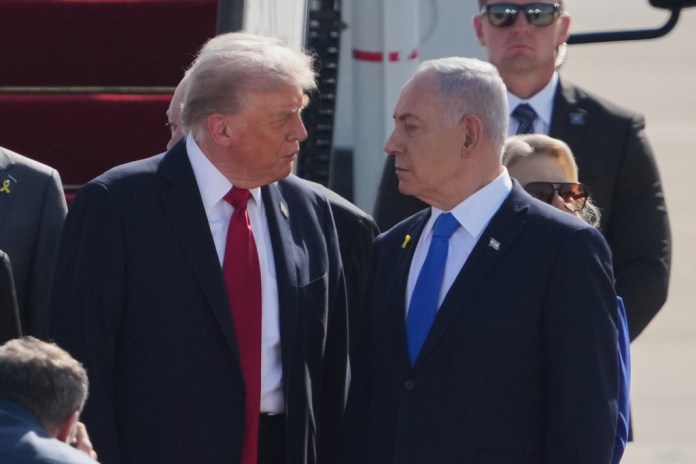
As President Donald Trump prepares to meet Israeli Prime Minister Benjamin Netanyahu once again, both leaders confront a question that has shaped the Middle East for nearly half a century: how did the West so profoundly misread the Islamic Revolution in Iran — and can that mistake still be corrected? The roots of this miscalculation […]
Three people were killed and four others, including a child, were injured after a gang related shooting at the Bite of Seattle food festival on Sunday evening.
The post Update: Three People Killed, Four Are Injured Including Child After Gang-Related Shooting at Bite of Seattle Food Festival appeared first on The Gateway Pundit.
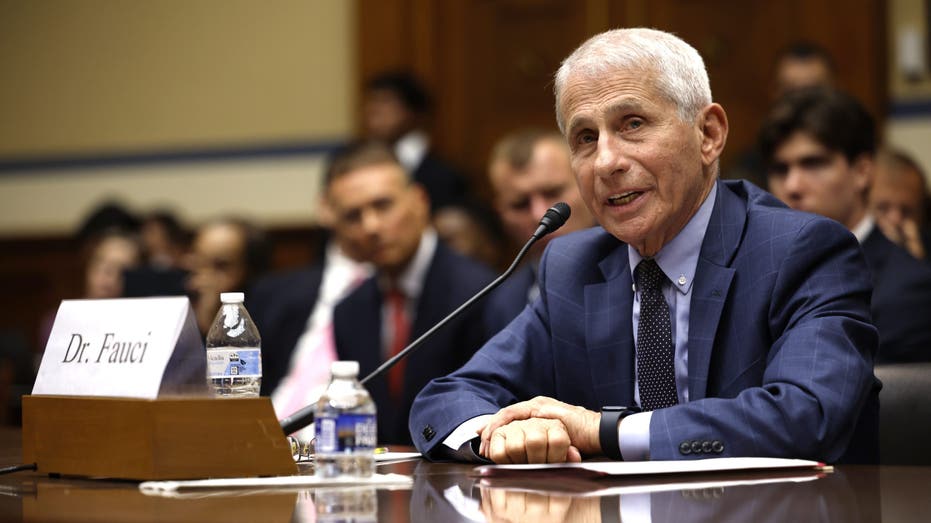
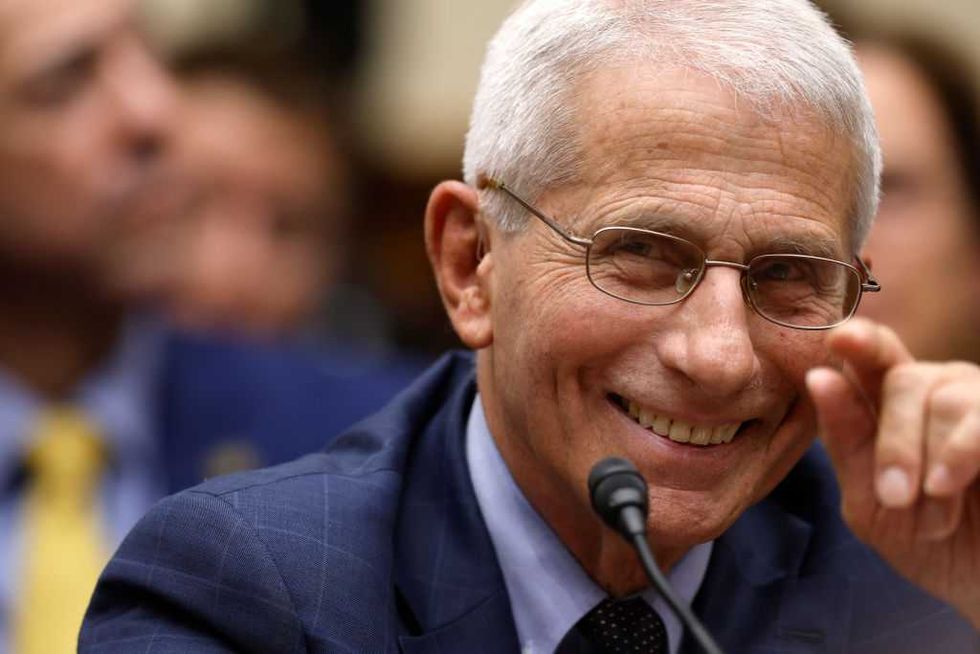
Sen. Rand Paul (R-Ky.) tried repeatedly in recent years to get the Justice Department to nail former National Institute of Allergy and Infectious Diseases Director Anthony Fauci over apparent false testimony before Congress in 2021.The statute of limitations on charging Fauci over the alleged perjury expired in May, and Fauci also has a "full and unconditional" autopen pardon from President Joe Biden that covers January 2014 until January 2025.'I am the most famous and talked about person in the country.'However, Paul has secured for the 85-year-old another opportunity to potentially trip over his words and record, requiring Fauci to testify on Wednesday before the Senate Homeland Security and Governmental Affairs Committee.Days prior to grilling Fauci in person, Paul released a treasure trove of damning documents — including a series of apparent diary entries from Fauci where the immunologist not only comes across as a megalomaniac but undermines the official narrative he publicly championed regarding COVID-19, its origin, and school closures.The documents released by Paul show that in a diary entry dated May 21, 2020, Fauci apparently noted the number of COVID infections and deaths, both globally and in the United States, then proceeded to spend the remainder of the entry boasting about his newfound fame."Big front page article abut [sic] me appeared in the Washington Post," says the entry. "Very flattering. The situation with my national and international fame is explosive and really unimaginable. It is not hyoperbole [sic] to say that today I am the most famous and talked about person in the country and one of the most recognizable peson [sic] in the world."The author of the entry bragged that he couldn't keep up with all the things written about him; that President Donald Trump "seems to be enamored of me even though I am taking the spotlight away from him"; and that U.S. Secret Service personnel "let me into the first gate without even checking ID."Days later, the author excitedly wrote that the press was simultaneously "going wild" with him while "crucifying the POTUS for not listening to me and making crazy statements about 'game-changing' therapies and praising me fot [sic] stivking [sic] to my guns."RELATED: Days after Biden inauguration, FBI shielded Wuhan lab collaborator from investigation after China trip HECTOR RETAMAL/AFP/Getty ImagesAlthough he ultimately came around to admitting that there was a "steep cost" associated with school closures during the pandemic, Fauci told ABC News' "This Week" that he "had nothing to do" with closing schools.The diaries published by Paul suggest otherwise.An entry dated March 15, 2020, states, "I spoke with Bill de Blasio (Mayor – NYC) and convinced him based on what I was saying publicly and my conversation tonight to close the NYC schools (he had already decided based on what I was saying on TV). I went on to tell him he should close the bars and restaurants in NYC. He said that he would base this on my recommendation."The same entry notes further that Fauci had a call with the chief of staff of Democratic California Gov. Gavin Newsom, who informed him that based on his televised commentary, "The Governor has decided to close the schools in California as well as the bars and restaurants."Sen. Paul also highlighted that in a Jan. 26, 2020, entry, Fauci appeared to admit that he knew COVID-19 did not originate in a Chinese wet market, which was the prevailing theory among some so-called experts."It now appears using epi data and genomic data that the first infection was in early December and was not connected to the market," Fauci wrote, according to the documents published by Paul. "The infections spread among people weeks before the Chinese reported that they were dealing with a new infection and that gave the virus time to establish itself in multigenerational (sustained) spread.""Remember, early on the Chinese were saying that there is no human to human transmission and all the original 27 cases were from the market," continued the Jan. 26 entry. "Now we know the market was not the source, it was the amplifier. Having said that, somewhere the virus jumped from animals to humans."While Fauci seems to have privately admitted that the Huanan wet market was where the pandemic started, he nevertheless publicly promoted the infamous paper published in Nature Medicine on March 17, 2020, "The Proximal Origin of SARS-CoV-2," which stated, "As many early cases of COVID-19 were linked to the Huanan market in Wuhan, it is possible that an animal source was present at this location."Fauci used this paper on multiple occasions to suggest to the American public that COVID-19 was not a lab leak but rather an animal virus that jumped to a human.Though Fauci apparently understood that the "market was not the source," two studies published in the journal Science in July 2022 — "The Huanan Seafood Wholesale Market in Wuhan was the early epicenter of the COVID-19...
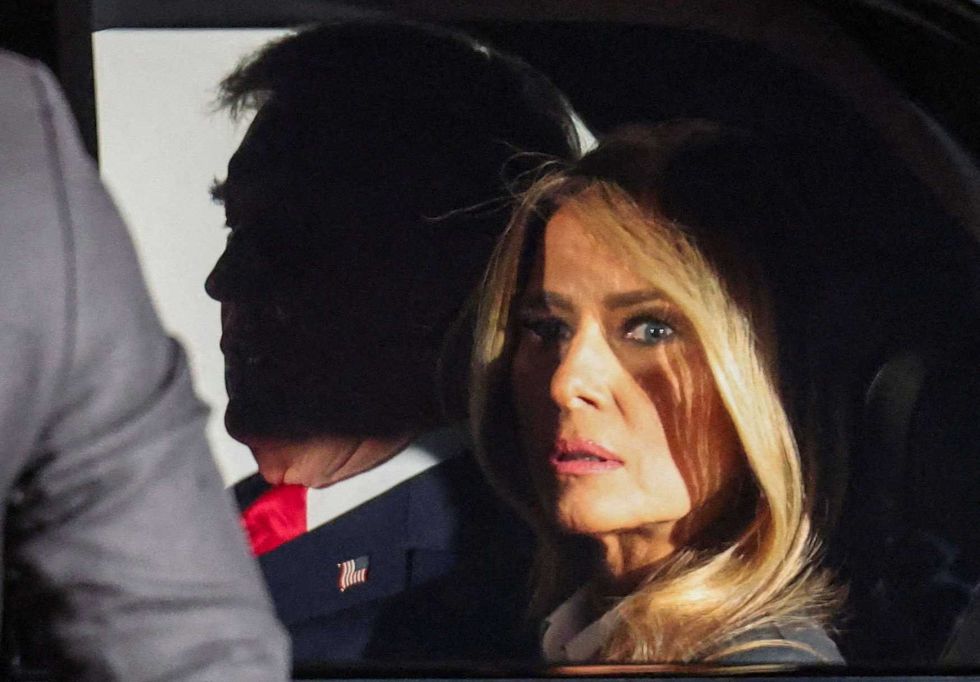
First Lady Melania Trump is engaged in an ongoing legal spat with an outspoken former biographer of her husband, and according to said author, her approach has "Trump law in a nutshell" and exposed how the family uses courts to "harass and intimidate" their enemies.Michael Wolff, the longtime author and reporter who has extensively covered the political career of President Donald Trump, filed an anti-SLAPP lawsuit against the first lady earlier this year, after she herself threatened to sue him over his comments about her connections to Jeffrey Epstein. In May, Trump-appointed New York District Judge Mary Kay Vyskocil dismissed Wolff's suit, ruling that he would have to wait for an actual defamation suit from Melania Trump before filing his own response.Later still, Vyskocil warned the first lady against plans to seek sanctions against Wolff's legal team and an effort to force them to pay her legal fees, explaining that the bar for such a motion was high and urging her to take matters outside of the legal system."I wonder if it’s in the interest of the parties to continue litigating in this court," she said. "I think sometimes people get so caught up in the fervor of the moment that they don’t really stop and think about the cost-benefit analysis of motions that are contemplated and the burden you put a court to."Nevertheless, this past week, the first lady's team filed a motion for sanctions against Wolff, moving forward with her plan to seek payment. “Plaintiff filed a patently meritless lawsuit and used it to harass Mrs. Trump in public,” the motion read. “Plaintiff and his counsel asserted a legally frivolous claim, propped it up with factual contentions that lacked any evidentiary support, and used them to run a political and commercial campaign. They should pay for Mrs. Trump’s fees and expenses incurred for the process they abused.”During the latest episode of his Daily Beast podcast, "Inside Trump's Head," the author touched on this latest development in his legal dispute with Melania Trump, saying that one might have expected that she and her lawyers "would have their tail between their legs," after Vyskocil's warning, "But instead, they actually have gone through."In doing so, Wolff explained, the first lady has exposed the whole playbook behind her husband's approach to legal warfare."And, of course, nobody knows what’s gonna happen there," Wolff said. "But the larger point is that they will have added months and months and months to the legal calendar... and countless expense. So that is... Trump law in a nutshell—delay, harass, intimidate, exhaust, and avoid... testifying at all costs."Elsewhere in the episode, Wolff claimed that his lawsuit had caught everyone in the White House off-guard, citing conversations with a source inside the administration. His success raising $837,000 for the legal battle via GoFundMe also allegedly scared "the bejesus out of... Melania and her lawyers."