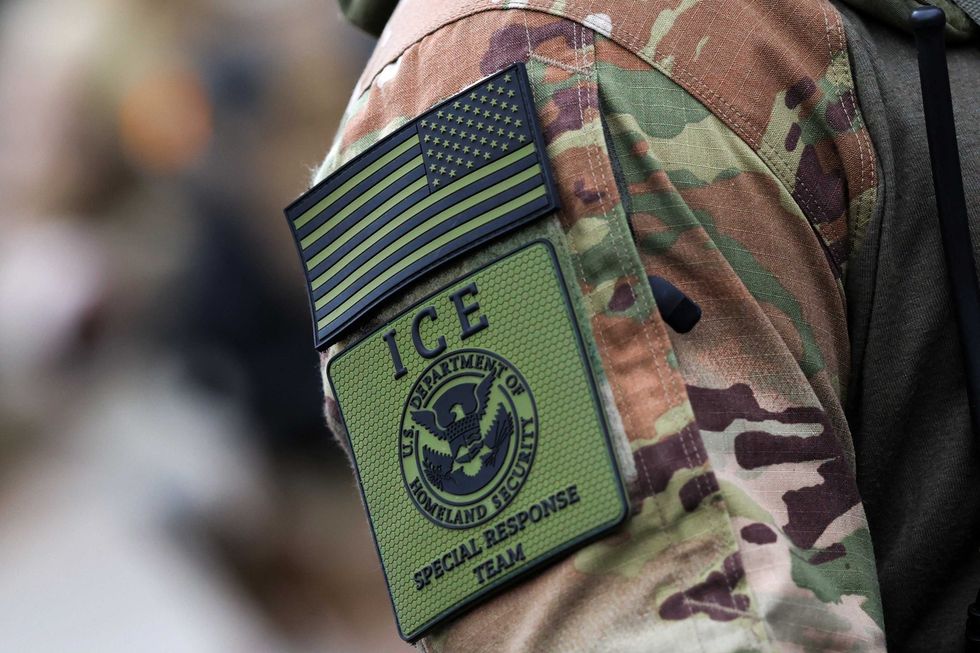
Faith leaders are calling on US Immigration and Customs Enforcement to immediately free a pair of pastors who advocates say were wrongfully detained by ICE agents in Texas on Thursday while traveling to a religious retreat.Pastor Nepthalí Zozaya Saucedo and his wife, pastor Cinthia Saraí Cardona Otero, were detained by federal immigration enforcers after arriving at McAllen International Airport.According to the couple and their church leaders, the longtime pastors at the Comunidad Cristiana Emanuel Assemblies of God congregation in Edinburg, Texas were on their way to a marriage retreat in North Carolina organized by the Billy Graham Evangelistic Association when they were detained and taken to a US Border Patrol processing center in McAllen.At a Friday press conference hosted by leaders from the Assemblies of God and the Latino Christian National Network, LCN board member Sandy Ovalle said that the couple has valid R-1 religious worker visas.“We are calling for their immediate release, the protection of their due process rights, and an urgent oversight into ICE’s conduct,” Ovalle said. “No one should be pressured to give up their rights under the threat of losing their children.”A Department of Homeland Security spokesperson told Religion News Service that the pastors are “illegal aliens” who overstayed their visas.Addressing the conference by phone from the detention center, Nepthalí said that the couple was threatened with separation from their US citizen children if they did not sign papers authorizing their “voluntary” deportation.“They spoke with us about separation—to be separated from our children and even as married people,” he said, according to Religion News Service. “They spoke about how much time that we could end up spending here.”Speaking during the press conference, Comunidad Cristiana Emanuel senior pastor Sarai Martinez Luna said, “I think it’s very cruel that somebody that had no status for deportation be pressured to sign a voluntary deportation based on the separation of their children.”Friday’s news conference followed a Wednesday press briefing by faith leaders at the Texas Capitol in Austin to condemn the killings of Johan Sebastián Durán Guerrero in Maine, Juan Jairo Coronilla Durán in Florida, and Lorenzo Salgado Araujo in Houston.“This is not of God. This is no peace that we want a part of because let’s be honest, this isn’t a peacekeeping initiative. This is a terror campaign with the mission of traumatizing our neighbors until they self-deport,” said Dan De Leon, senior pastor at Friends Congregational Church in College Station. “We don’t need terror. We need peace.”Elyse Rosenberg of the National Council of Jewish Women and Temple Beth Shalom in Austin said during the press conference that “throughout our history, we have repeatedly seen first-hand the consequences of governments exercising unchecked power on vulnerable populations.”Friday’s event also preceded nationwide vigils in more than 300 communities across the nation on Saturday to demand justice for the dozens of people who have been killed by federal enforcers or died in ICE custody during President Donald Trump’s second term.“We refuse to grieve quietly. We refuse to accept this terror and violence as inevitable," Crystal Cron, executive director of Presente! Maine, said ahead of the vigils. “Johan Sebastián should still be here with his wife and daughter—and instead, his name joins a growing list of people killed by an institution that treats our communities as disposable.”“This is bigger than one shooting,” Cron added. “We will not stop fighting until there is justice for the Durán Guerrero family and a total dismantling of this lawless, criminal agency that took him from them.”
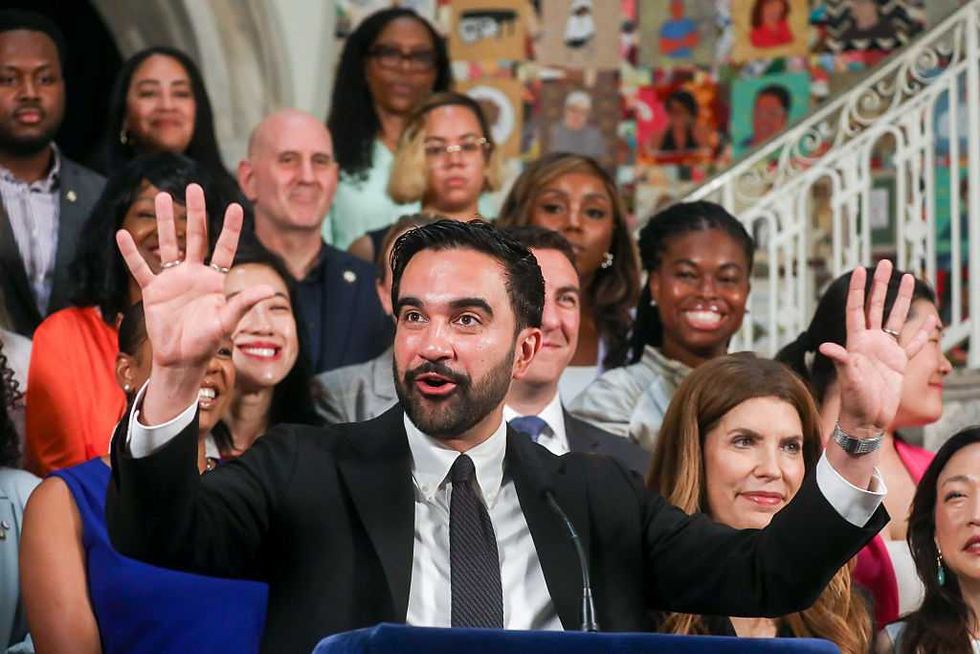
"Have you ever been to the U.S.-Mexico border?” “No.”One word. That may have been the most revealing moment of New York City Democratic Mayor Zohran Mamdani’s recent interview with the New York Times.Sanctuary policies are easy to defend from a podium at New York City Hall. They are much harder to defend before communities that have already paid the price.Mamdani defended his city’s sanctuary policies, which he reinforced after taking office by signing an executive order reaffirming them.The problem is not so much that Mamdani has never visited the border. It is that he seems unwilling to understand why communities that lived through the border crisis reached a very different conclusion.That lesson is visible far beyond the Rio Grande.Consider Goliad County in South Texas. The rural county has about 7,000 residents and sits roughly 160 miles from the U.S.-Mexico border.Testifying before the Senate Judiciary Committee last year, Sheriff Roy Boyd described how the crisis transformed the community he serves.Boyd’s office averaged 77 arrests a year during the five years before 2021. From 2021 through 2024, that average jumped to 413. Deputies discovered 16 cartel stash houses, and pursuits involving suspected human smugglers became routine.Residents began hearing voices and movement on remote properties after dark. Many no longer felt safe alone in their own homes.Those facts expose what Mamdani’s answer overlooks. The border crisis did not remain at the border. Cartel activity and illegal immigration reached inland communities that lacked the personnel and equipment to confront them. Former Border Patrol agent and Texas Public Policy Foundation senior fellow Ammon Blair calls cartels “hybrid threats.”As Blair puts it, “Cartels don’t just smuggle. They destabilize.” Boyd has described them as “contractors and subcontractors” in a network moving migrants and drugs from the border into Texas’ largest cities.That reality changed Texas’ response. In 2021, as illegal crossings surged under President Joe Biden, Goliad became one of the first inland counties to declare a local disaster. Boyd suggested giving local law-enforcement agencies flexible grants for overtime, new officers, patrol vehicles, and other equipment.Those grants became part of Operation Lone Star.According to Texas Republican Gov. Greg Abbott’s office, Operation Lone Star has produced more than 535,700 apprehensions and referrals, 57,400 criminal arrests, and 47,500 felony charges. Texas law enforcement has also intercepted more than 779 million lethal doses of fentanyl.RELATED: The revolution will not be televised — it will be livestreamed in 4K Andrew Lichtenstein/Corbis/Getty ImagesBoyd later launched the Operation Lone Star Task Force, which allows local agencies to share deputies, intelligence, and resources across jurisdictional lines while targeting human smuggling, cartel activity, and organized crime.New York has felt the downstream effects too. Former Mayor Eric Adams warned that the migrant crisis would “destroy New York City.” Mamdani nevertheless continues to defend sanctuary policies that impede cooperation with federal immigration authorities.Goliad’s experience carries a national lesson. Criminal organizations do not recognize state boundaries. The same networks that move people across the border traffic drugs, weapons, and money into communities nationwide. They exploit ports of entry, the northern border, and weaknesses far from either frontier.The farther those networks spread, the more Americans discover that border security is not someone else’s problem.Mamdani may be proud of New York City’s sanctuary stance.His one-word answer showed more than where he has never been. It revealed what he refuses to see.Sanctuary policies are easy to defend from a podium at city hall. They are much harder to defend before communities that have already paid the price.
President Donald Trump's escalating military campaign against Iran is achieving the “opposite” of its intended effect, according to a senior U.S. official cited in a New York Times report Saturday.“The official said the strikes have the opposite effect of what is intended, keeping Iran cohesive and allowing Iranian leaders to focus attention on an external threat,” the Times’ report reads.The assessment came after insiders leaked details to the Times about a Friday meeting between Trump and his top advisers and Cabinet members, where officials weighed whether or not to escalate the war further. According to the Times, few, if any, in Trump's inner circle believed intensifying the bombing campaign was wise.A separate senior official who was briefed on the discussion expressed doubts that resuming major combat operations would push Iran back to the table at all.The “private deliberations” focused on what officials warned was the Pentagon’s “shrinking inventory of Patriot interceptors and other air defenses,” the Times reported.“Gen. Dan Caine, the chairman of the Joint Chiefs of Staff, has cautioned privately that resuming major combat operations against Iran was doable but that it would dangerously deplete interceptors available to the military’s Central Command, which is responsible for operations in the Middle East, the officials said,” the Times’ report reads.Earlier this week, Defense Secretary Pete Hegseth told a congressional committee that Trump’s deeply unpopular war against Iran had cost taxpayers $37.5 billion so far.The internal skepticism adds to a growing list of signs that the administration's approach to Iran isn't producing the results Trump has publicly promised, even as the financial and human costs of the conflict continue to climb.
The ruling on Saturday was the latest rebuke to President Trump’s attacks on mail-in voting. The government says it may take the case to the Supreme Court.
Three-judge panel of Democratic appointees let stand lower court’s ruling that fee constitutes an unlawful tax A federal appeals court on Friday rejected a bid by Donald Trump’s administration to halt a judge’s order preventing it from imposing a $100,000 fee on new H-1B visas for highly skilled foreign workers.The Boston-based first US circuit court of appeals declined to put on hold a lower court judge’s 8 June ruling in a lawsuit filed by 20 Democratic state attorneys general, striking down the fee on the basis that it constituted an unlawful tax Congress never authorized. Continue reading...
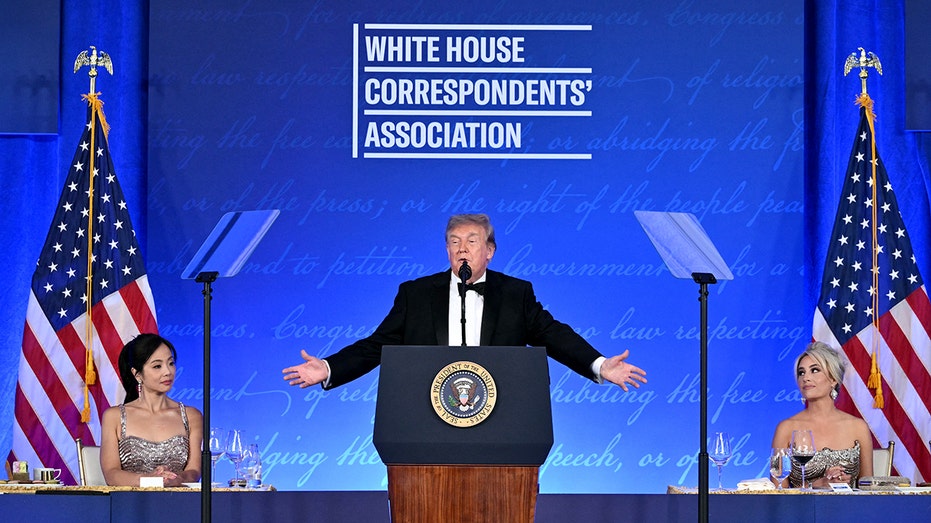
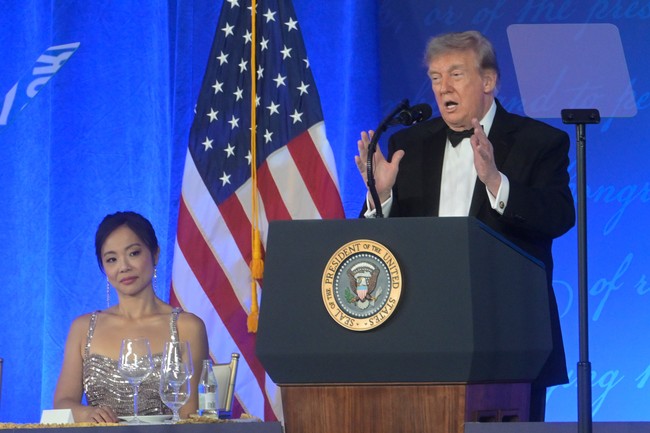
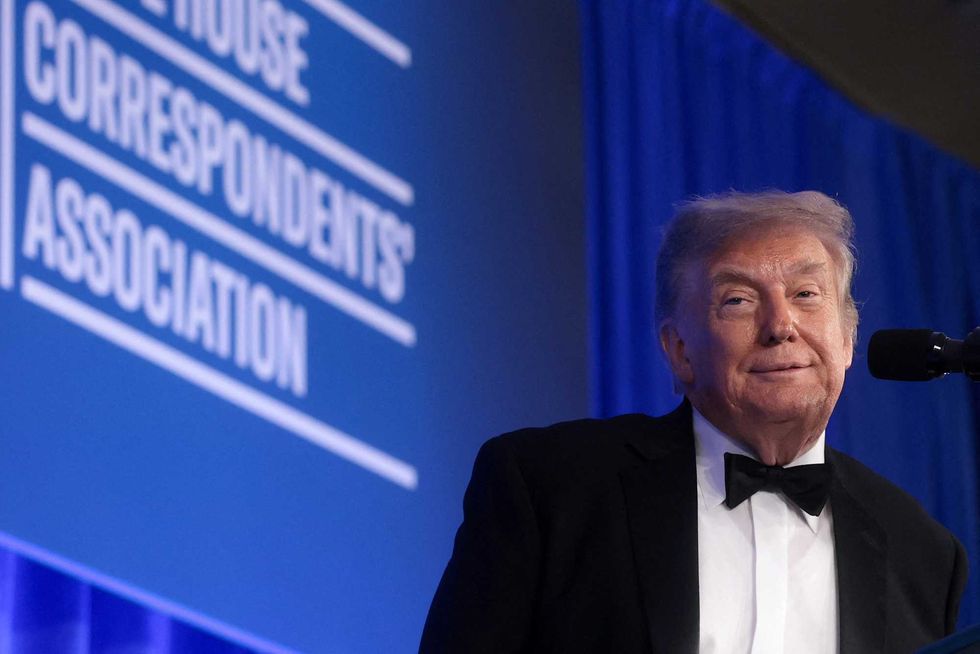
President Donald Trump faced backlash Saturday after critics accused him of recycling a joke that had circulated online for decades during his speech Friday at the White House Correspondents' Dinner.During the event, Trump joked about a text message a senator apparently received from his wife, who said, “when you get home, I want you to immediately come up the stairs and make love to me.” Trump then recalled that the senator said “I can’t do both.”As flagged by the progressive media organization MeidasTouch, Trump’s joke – which the president later claimed to have thought was “the only thing good in this whole frickin’ stupid speech they wrote” – had existed for decades.“Trump (well, his writers) recycled this joke,” reads a Saturday post from MeidasTouch’s X account. “It appeared in a Brad Paisley song released in 2007, a Tampa Tribune article back in 2000, and has been shared numerous other times on the Internet throughout the years.”The recycled material was just one part of what reviewers widely panned as a flop performance. CNN reported that Trump bombed at the dinner, even attempting to meta-joke his way out of it, though his self-deprecating jokes also fell flat.Writer Nick Bryant summed up the reaction bluntly on X."I don't think anybody would label him the comedian-in-chief. Excruciating to watch," Bryant wrote.In his rambling remarks, Trump insulted journalists by name, repurposed old nicknames for political opponents, and made a string of fat jokes that fell flat, and at points appeared to grow frustrated with his own writers over the material he'd been given.Trump (well, his writers) recycled this joke. It appeared in a Brad Paisley song released in 2007, a Tampa Tribune article back in 2000, and has been shared numerous other times on the Internet throughout the years. https://t.co/9ptq6G8tXX pic.twitter.com/QIRjT3Kvn1— MeidasTouch (@MeidasTouch) July 25, 2026