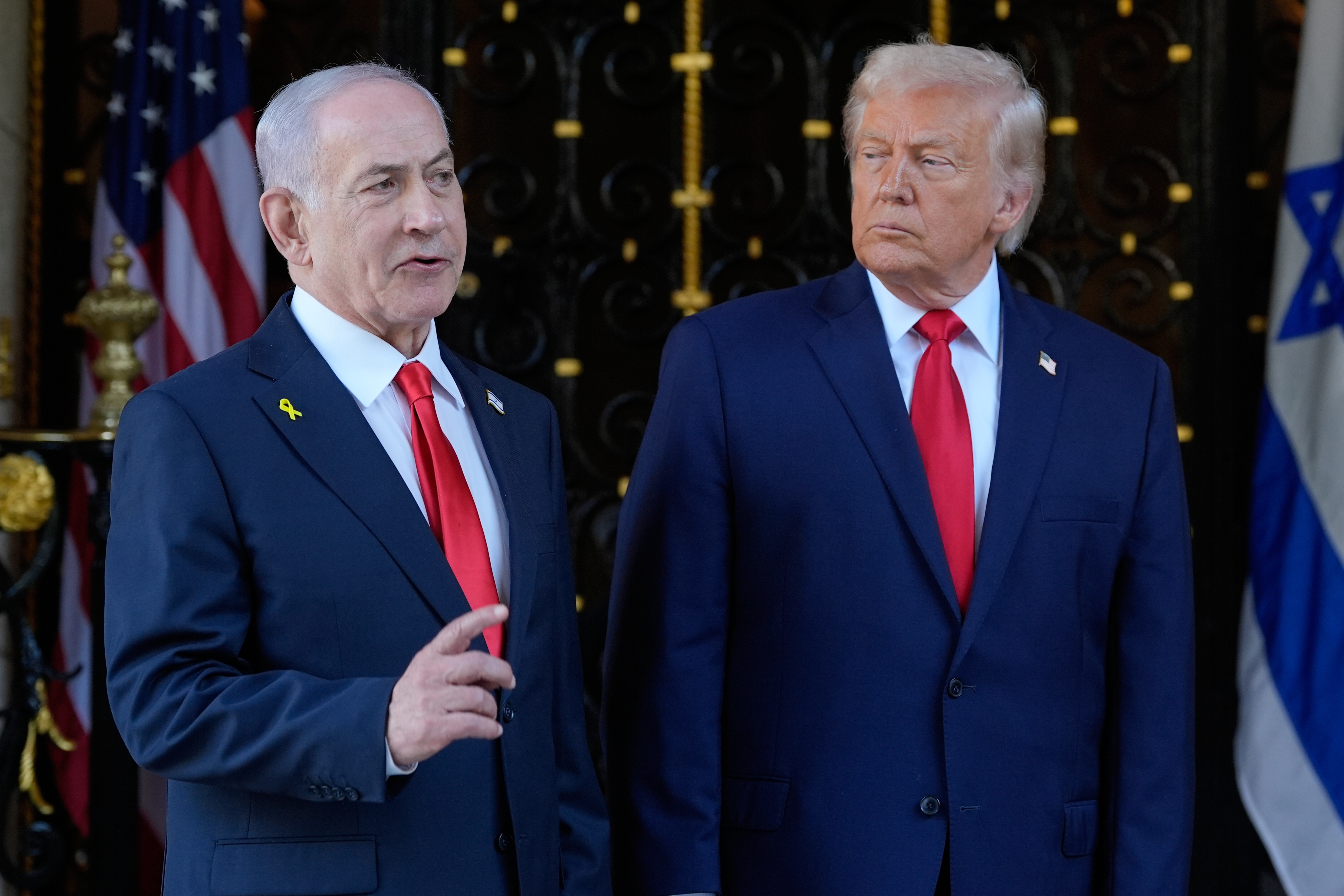
The meeting comes as both face pressures at home. Netanyahu is up for reelection, embattled in part due to his deteriorating relationship with Trump. Trump is under pressure to end an unpopular war.
In an interview posted on Monday, conservative host Ryan Girdusky spoke with Maggie Haberman and Jonathan Swan about their latest book, Regime Change. Girdusky argued that as people age and particularly as they reach 80, those "around them start dying.""What effect did that have on Trump's just opinion of legacy and his overarching idea of, like, what his life would be?" Girdusky asked the reporters."I mean, look, it's not like Donald Trump sits around doing sort of therapy sessions with people, but he makes — he makes comments to advisors that — and to various people and associates and confidants that they all interpret as him thinking about his own mortality," said Haberman.She said that they didn't include it in the book but that Trump was seeing the late President Jimmy Carter lying in state and commented, "about how that would be him in, you know, twenty years or something like that." "Obviously that would be a very long lifespan for him," she added, as Trump would be 100 at that age. She said that Trump claims to have a "longevity gene in his family." Still, it's something he's been thinking about "for a while." "When Ivana Trump died, it affected him pretty deeply, according to everybody around him," Haberman continued. "His sister was a complicated relationship. But he is talking about it a lot. You even heard him talk about it with Lindsay Graham the other day, just sort of drifting into it at a defense industry event with Dave McCormick and Pennsylvania. So getting things done and how limited his time on this Earth is, let alone in office and in power, is significant."Girdusky said that Trump has "scaled back public appearances" since the 2024 assassination attempt, but even prior to the shooting in Pennsylvania, Trump's public events had shrunk from multiple times a week to at most once a week. Axios reported that in 2016, Trump held a whopping 72 rallies, and in 2024, during the same period, that number shrank to 24. There were just a few months left in the election after the assassination attempt. They went on to describe just how small Trump's world has become. Girdusky said he remembered the first term in which Trump would respond to people's comments on Twitter and now he hardly has contact with anyone outside of a very small group of advisors. Swan described Trump playing music on his iPad while eating at the patio at Mar-a-Lago with a steady stream of elderly, mostly Florida, residents coming up to him to tell him how amazing he is. Even as he was making decisions about the Iran war, Swan said that having people in the room like the secretary of energy or Treasury secretary would likely have been helpful in warning him of what could happen with gas prices and the economy if he went to war with Iran. Another point they didn't detail in the book is how many people are using their relationship with Trump for financial gain. "And you're right, we didn't get into that specific area of money-making in Trump 2.0 because, frankly, if we spent everything we included on the ways everybody is making money around him, the book would have been two thousand pages long," Haberman said. She noted that he talked about "draining the swamp" in 2017, but never did it then anyway. Now it's far worse. "Lobbyists had a lot of access to him. A lot of people who had, you know, clients facing any number of issues had access to him. You know, we had — there was a whole controversy around vaping, and I think it was twenty nineteen, and that was people hiring various folks who were close to Trump, perceived as close to Trump on this. Now, it is there are so many different ways to either get close to Trump or to put money directly into the Trump family's bank accounts," Haberman added. Meanwhile, the Trump Library is becoming another source of donations to Trump. The influencer culture, she said, is another matter because a lot of that surrounds the crypto industry, which Trump once said he didn't believe in. "But just the scale of moneymaking and the way in which you can get to the president and see a specific outcome is unlike anything that we have seen," Haberman said. "Which is not to say that other presidents have not had donors who you know, bring specific policy matters to them and so forth. But it's what you were saying about the gatekeeping piece."Swan said that he sees many conservatives in the Trump circle who are making more money than they've ever made while their credibility erodes. When it comes to people like Stephen Miller, Swan said that he's very good about disappearing when things are going badly. So, Trump naturally never associates Miller with positivity over negativity.
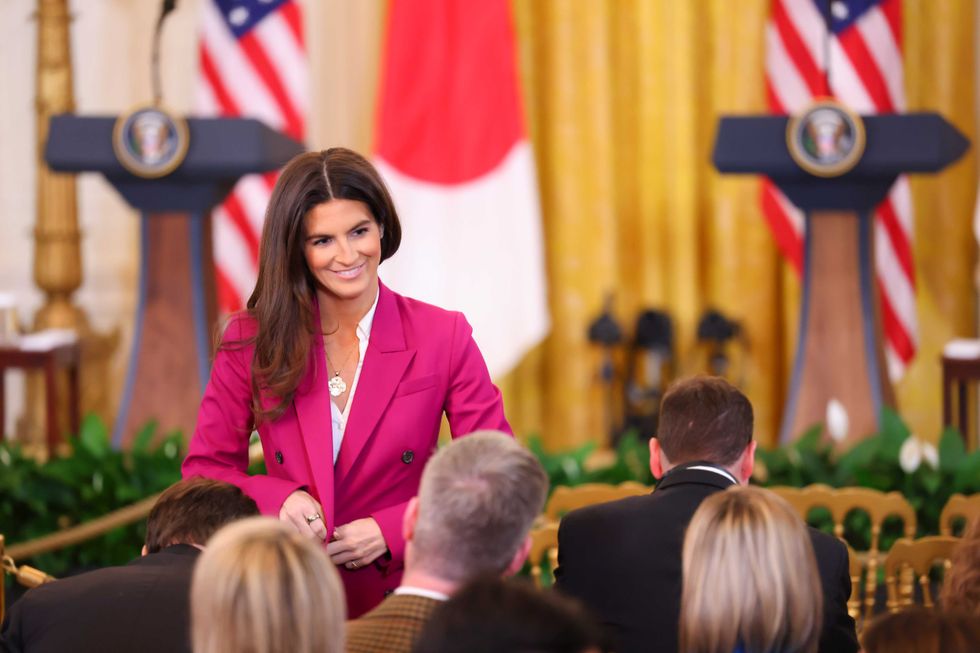
CNN's Kaitlan Collins revealed the "most surprising" part of President Donald Trump's most recent attack against her during a new interview with Jon Stewart on "The Daily Show."Collins was the subject of some of Trump's jokes at the make-up White House Correspondents Dinner last Friday, where he jabbed her for "not smiling" and said she looked like Dylan Mulvaney, a transgender celebrity who came under fire from MAGA fans over a Bud Light commercial series. Stewart invited Collins to appear on his show on Monday to respond to Trump's barbs. "So, how was your weekend?" Stewart asked tepidly. "There are times that I say to myself, this can't be real," Stewart added. "This can't be America. America, you've heard of us. Like, this can't be ..."Collins nodded along as Stewart spoke. "In the room when it happened, did it feel surreal? Was he bombing as hard as it appeared on the TV?" the comedian eventually asked. "In the room, I was not surprised when he insulted me. That happens pretty regularly inside the Oval Office. This just happens to be a bigger venue. What was most surprising to me was that the room was filled with a lot of his staffers, his allies, Republicans in Congress," Collins said. "It was so quiet in the room during the president's remarks." "That's because of how much they respect him," Stewart quipped.
President Donald Trump's awful jokes at the White House Correspondents Dinner last Friday earned him a sharp rebuke from comedian Jon Stewart on a new episode of "The Daily Show."Trump's speech at the dinner has been widely remembered for the ill-fated jabs he threw at CNN's Kaitlan Collins over her looks and over her choice to smile. But several other remarks seemed to send Trump's allies in the crowd into an existential crisis, Stewart noted. For instance, he pointed to Trump's joke about Rep. Alexandria Ocasio-Cortez (D-NY). Stewart noted that Trump seemed to be setting up a punchline before diverting into a tangent about another topic altogether. Trump also repeated a claim that he hates Sen. Adam Schiff (D-CA), who was one of the impeachment managers during Trump's first trial. "Traditionally, roasts work because at the heart of it all you only roast the ones you love," Stewart said. "Saying you hate someone in the middle of a joke really takes a lot of the pleasure ... Don Rickles might not have been so popular if he ended his act by saying 'No, seriously. F--- the Japanese.'"Stewart then played a montage of the crowd reacting to some of Trump's jokes. "It was a melange of confusion, boredom, shock, and at one point, a literal existential crisis," Stewart said. "Here's the one thing you never want at a comedy show: you never want them rethinking the choices that led them to that night."
White House officials are increasingly concerned President Donald Trump may imminently execute a plan to launch massive attacks on Iran that could have catastrophic consequences, Zeteo reported. Trump intends to stage a major military escalation to force Iran back to the negotiating table on more favorable terms, Trump told Axios. However, virtually everyone in his inner circle believes the plan will fail and cause severe harm. One White House adviser called it a "terrible idea," while another senior official claimed, "Trump has no way out." A third official warned there is "almost no scenario where Americans don't die" if Trump proceeds. Despite this consensus, administration insiders admitted they are "too scared" to tell the president his plan won't work, instead soft-selling concerns. The New York Times reported a Friday meeting where Trump's advisers mostly counseled against intensifying Iran attacks.Watch the video below. Your browser does not support the video tag.
The conservative Wall Street Journal editorial board expressed fury that the Trump administration projected a major vulnerability to Iran in the middle of wartime.New leaked reports indicate the White House was just briefed that the military is running out of critical missile supplies — a sign that even the current, tenuous war position is barely sustainable."Officials in the Trump Administration leaked to the press that the U.S. is running out of ammunition," wrote the board. "Mull over that one. Mr. Trump was saying all last week he is prepared for a major military escalation. But, suddenly, the leakers undermine the credibility of that U.S. resolve by telling the press — and thus the Iranians — that the U.S. can’t sustain the fight."This, the board wrote, is hardly going to make the Iranians more amenable to come to the negotiating table. "Do [the leakers] think it’s wise to tell enemies trying to kill U.S. soldiers not to worry about a sustained American response?" wrote the board. "This is an astonishing display of incompetence, or disloyalty, or both."If the leaks are indeed true, the board wrote, it's a "five-alarm fire" — and immediate action needs to be taken."If the missile gap is being floated for political purposes by officials who want Mr. Trump to stand down, then the President should banish those voices from the Situation Room," the board concluded. "Either way, they’re laughing in Tehran."
A CNN anchor busted President Donald Trump's chops on Monday over a claim he made about mail-in ballots during a recent rally. Trump spoke to a crowd at the General Motors Proving Ground in Milford, Michigan, on Monday, where he defended his record on the economy despite recent polling showing that the cost of living is a top-of-mind issue for most voters heading into the midterm election. During the rally, Trump also made mention of asking the Supreme Court to restrict mail-in ballots ahead of the midterms, calling them "inherently corrupt.""Mail-in ballots have proven to be a disaster. We're the only country in the world that does them in this form," Trump said. There's no other country in the world [that does them] because they're crooked." CNN's John Berman, who hosted "AC360" on Monday, issued a brutal fact check of Trump's claims during the opening segment of the show. "Now, keeping them honest, that's not true," Berman said about Trump's characterization of mail-in ballots. "Many countries permit some or all citizens to vote by mail. As for being inherently corrupt, someone should have told the president that before he cast a mail-in ballot this spring for a special election in Florida!"