

This Memorial Day, these are some of the dead we remember

Source: Blaze Media · Bias: Right

Summary

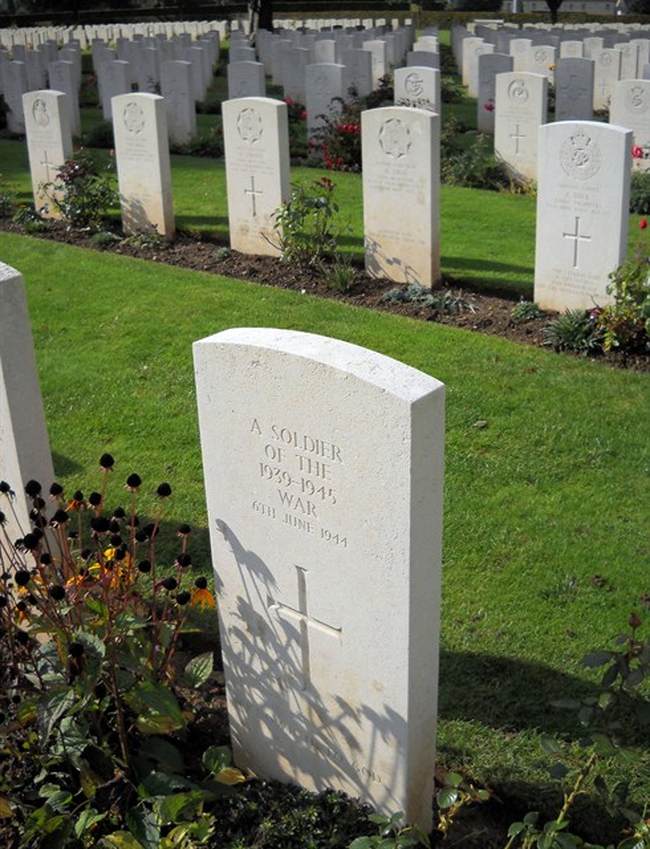
Memorial Day means different things to different Americans. For some, especially those whose losses remain fresh, no national holiday is required to preserve memory. Grief already structures daily life; the formal rituals of remembrance — flags, ceremonies, cemetery visits — may still offer recognition, but the dead are hardly absent.For others, the connection is more distant: a grandfather never met, a name on an old photograph, a relative spoken about only occasionally. The holiday can become less an occasion for immediate mourning than a meditation on inheritance and historical continuity.Memorial Day, like the Tomb of the Unknown Soldier, exists because modern war produces anonymity at a scale human beings struggle to comprehend.Still other Americans may have no direct personal connection to war at all. For them, that distance is itself a kind of blessing. Memorial Day may register primarily as a feeling of generalized gratitude — gratitude for the country itself and for those who fought on its behalf. Yet the holiday’s deeper purpose is more specific and, in some ways, more demanding. Memorial Day asks us to remember individuals whose lives were interrupted by war, individuals with whom we may have nothing in common but our shared nation. In recent years, debates over immigration, national identity, and social cohesion have forced Americans to ask what citizenship actually means. Memorial Day offers one answer older and less ideological than many offered by contemporary politics: Citizenship implies obligations not only to the living, but to the dead. A nation becomes more than a marketplace or administrative zone when its citizens believe they owe remembrance to those whose lives became bound up with the country’s history.Memorial Day is one of our few remaining holidays that ask us to remember strangers. Not celebrities or family members or ideological allies, but ordinary people, fellow Americans whose lives were cut short by violence that history inevitably turns abstract. In an increasingly individualized society, that obligation can feel unfamiliar. Yet to remember our fellow citizens across distance, class, region, and even generations is to affirm that we belong to one another in ways deeper than convenience or self-interest.These are a few of the many Americans we remember today.James Robert Montgomery When Drew Gilpin Faust wrote about the Civil War’s culture of mourning in "This Republic of Suffering," she lingered over a bloodstained letter written by James Robert Montgomery, a 26-year-old Confederate signal corps soldier mortally wounded at Spotsylvania in 1864.A former law student from Mississippi, Montgomery spent his last moments taking pen to paper and — in labored but still elegant script — composing a farewell message to his father: “I write to you because I know you would be delighted to read a word from your dying son.”The word “delighted” now feels shocking. Yet, as Faust observed, Civil War Americans placed immense importance on the final words of the dying. Even in agony, Montgomery worried about consoling those at home.“I would like to rest in the grave yard with my dear mother and brothers but it’s a matter of minor importance,” he wrote, just before signing off as “your dying son.” “Let us all try to reunite in heaven.”His final resting place remains in Virginia. Bert Stiles Before World War II, Bert Stiles was a Colorado college student obsessed with becoming a writer. The son of a Denver electrician and a music teacher, he spent summers working as a junior forest ranger in Estes Park, experiences that became material for his short stories. While attending Colorado College, he wrote constantly — stories, poetry, newspaper features — and briefly embraced the pacifist sentiments common on American campuses before the war.In 1941, convinced he could become a serious writer, Stiles hitchhiked repeatedly to New York to meet literary agents who had shown interest in his work. He eventually found mentors willing to support him, and his stories soon began appearing in publications like the Saturday Evening Post.For many celebrated American writers, war became a harsh but formative education — the crucible from which emerged figures like Ernest Hemingway, Norman Mailer, and James Jones. Looking backward, it can almost seem like a foregone conclusion that their talent would survive long enough to become literature. But for every writer history remembers, there were others swallowed by the machinery of war before their lives had fully begun. History offers no exemption for promise.Stiles continued writing throughout his combat service, producing articles and journal entries while flying bombing missions over Germany with the Eighth Air Force. He completed a full combat tour in B-17 bombers, volunteered for a second tour flying P-51 Mustangs, and was killed in November 1944 during a dogfight south of Hanover. He was 23 years old.Henry T.

Related Coverage

Daily Analysis

Read the full Parallax Pulse for May 25, 2026 — an AI-powered analysis of how Left and Right media covered the biggest stories this day.

More Headlines From May 25, 2026

This Memorial Day, these are some of the dead we remember
Blaze Media

This Memorial Day, these are some of the dead we remember

Right

Memorial Day means different things to different Americans. For some, especially those whose losses remain fresh, no national holiday is required to preserve memory. Grief already structures daily life; the formal rituals of remembrance — flags, ceremonies, cemetery visits — may still offer recognition, but the dead are hardly absent.For others, the connection is more distant: a grandfather never met, a name on an old photograph, a relative spoken about only occasionally. The holiday can become less an occasion for immediate mourning than a meditation on inheritance and historical continuity.Memorial Day, like the Tomb of the Unknown Soldier, exists because modern war produces anonymity at a scale human beings struggle to comprehend.Still other Americans may have no direct personal connection to war at all. For them, that distance is itself a kind of blessing. Memorial Day may register primarily as a feeling of generalized gratitude — gratitude for the country itself and for those who fought on its behalf. Yet the holiday’s deeper purpose is more specific and, in some ways, more demanding. Memorial Day asks us to remember individuals whose lives were interrupted by war, individuals with whom we may have nothing in common but our shared nation. In recent years, debates over immigration, national identity, and social cohesion have forced Americans to ask what citizenship actually means. Memorial Day offers one answer older and less ideological than many offered by contemporary politics: Citizenship implies obligations not only to the living, but to the dead. A nation becomes more than a marketplace or administrative zone when its citizens believe they owe remembrance to those whose lives became bound up with the country’s history.Memorial Day is one of our few remaining holidays that ask us to remember strangers. Not celebrities or family members or ideological allies, but ordinary people, fellow Americans whose lives were cut short by violence that history inevitably turns abstract. In an increasingly individualized society, that obligation can feel unfamiliar. Yet to remember our fellow citizens across distance, class, region, and even generations is to affirm that we belong to one another in ways deeper than convenience or self-interest.These are a few of the many Americans we remember today.James Robert Montgomery When Drew Gilpin Faust wrote about the Civil War’s culture of mourning in "This Republic of Suffering," she lingered over a bloodstained letter written by James Robert Montgomery, a 26-year-old Confederate signal corps soldier mortally wounded at Spotsylvania in 1864.A former law student from Mississippi, Montgomery spent his last moments taking pen to paper and — in labored but still elegant script — composing a farewell message to his father: “I write to you because I know you would be delighted to read a word from your dying son.”The word “delighted” now feels shocking. Yet, as Faust observed, Civil War Americans placed immense importance on the final words of the dying. Even in agony, Montgomery worried about consoling those at home.“I would like to rest in the grave yard with my dear mother and brothers but it’s a matter of minor importance,” he wrote, just before signing off as “your dying son.” “Let us all try to reunite in heaven.”His final resting place remains in Virginia. Bert Stiles Before World War II, Bert Stiles was a Colorado college student obsessed with becoming a writer. The son of a Denver electrician and a music teacher, he spent summers working as a junior forest ranger in Estes Park, experiences that became material for his short stories. While attending Colorado College, he wrote constantly — stories, poetry, newspaper features — and briefly embraced the pacifist sentiments common on American campuses before the war.In 1941, convinced he could become a serious writer, Stiles hitchhiked repeatedly to New York to meet literary agents who had shown interest in his work. He eventually found mentors willing to support him, and his stories soon began appearing in publications like the Saturday Evening Post.For many celebrated American writers, war became a harsh but formative education — the crucible from which emerged figures like Ernest Hemingway, Norman Mailer, and James Jones. Looking backward, it can almost seem like a foregone conclusion that their talent would survive long enough to become literature. But for every writer history remembers, there were others swallowed by the machinery of war before their lives had fully begun. History offers no exemption for promise.Stiles continued writing throughout his combat service, producing articles and journal entries while flying bombing missions over Germany with the Eighth Air Force. He completed a full combat tour in B-17 bombers, volunteered for a second tour flying P-51 Mustangs, and was killed in November 1944 during a dogfight south of Hanover. He was 23 years old.Henry T.

This Memorial Day, these are some of the dead we remember | ParallaxNews.io