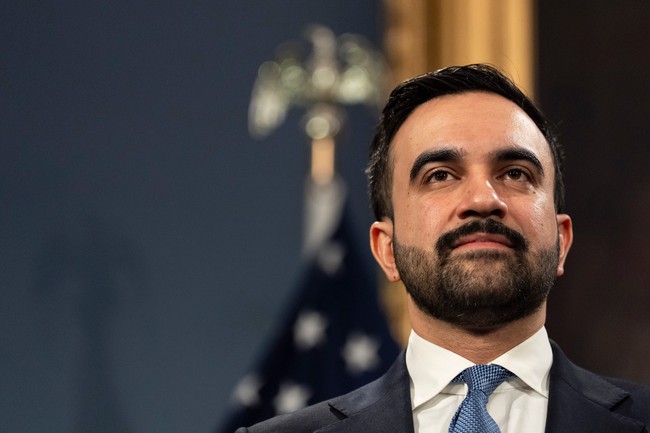
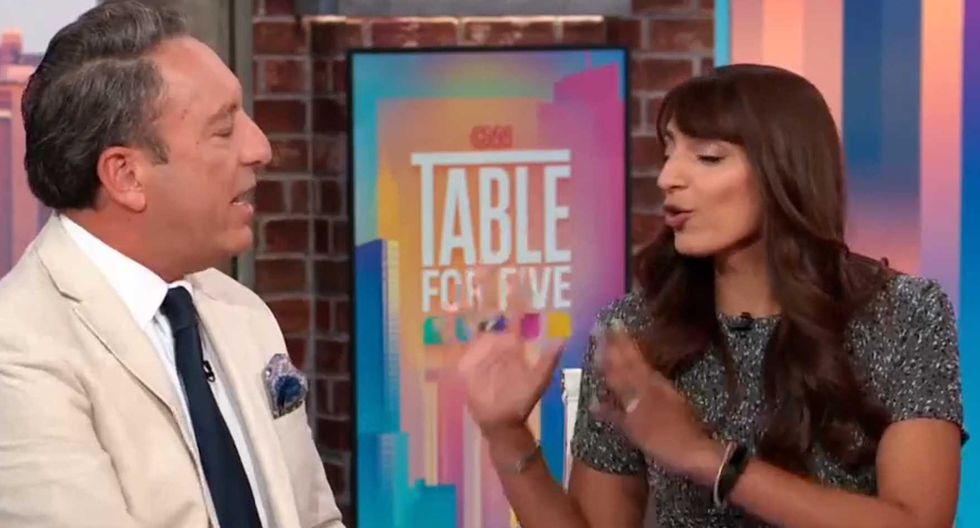
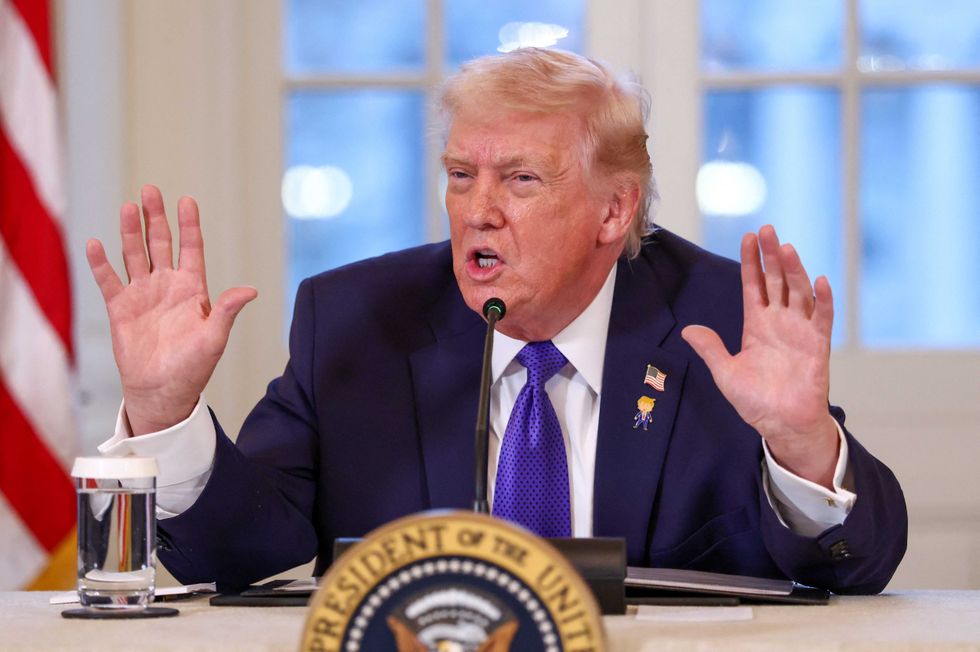
Markets have responded to President Donald Trump’s evaporating ceasefire by wiping out whatever gains it made after Trump’s premature announcement.And now CNN Table for Five host Abby Phillip reports the president is announcing new tariffs between 10 and 12 percentage points to dozens of U.S. trading partners, even as rising oil prices and inflation fears rattle the world's largest bond market and send the 10-year U.S. treasury yield “to its highest level since Trump reclaimed office.”But Saturday morning Table for Five panelist Marc LoPresti, CEO and Senior Market Strategist of Market Rebellion, did not agree with the news.“I kind of respectfully disagree with some of the fundamental premises there. I mean, the economy is actually doing quite well,’ claimed LoPresti. “We just were in the middle of another earnings season where earnings are beating on average expectations. That makes the earnings quarter over quarter in a row of earnings that have beat expectations of high average individuals.”“You're talking about corporations,” said CNN Global Affairs pundit Sabrina Singh. “Yeah, corporations are doing great,” “Well, that's an indication of how the economy is doing,” LoPresti argued.“I would say the family that's going to fill up a gallon of gas that's over $4 from where it was in May, would say it does not,” Singh countered.Phillip pointed out that while the economy has indeed been resilient, that is in spite of Trump's war and tariff policies, which have heaped new unnecessary costs upon Americans. But LoPresti said it was all for a good cause: “What the president's been trying to do, as it relates to tariffs and other policies, are to level the playing field, it's long-term gain for some short-term inflationary pressure.”“For who,” Phillip said.“For everyone,” said LoPresti.“What do you mean ‘leveling the playing field’? Who is paying the tariffs?” demanded Phillip.At that point, Singh busted in: “The tariffs get shifted to the consumer, which are Americans who buy goods from countries that are being taxed like Canada or Mexico.” “The last three quarters of corporate earnings nave not demonstrated that,” LoPresti said“You’re talking about corporate earnings, which is very different from a family living in Michigan, who is going to the gas pump to fill up with either diesel or gas, and they're seeing higher gas prices, higher diesel prices, and then they go to the grocery store,” said Singh. “So, on top of the higher gas prices, then they get to get the gift of driving to the grocery store to see grocery prices higher. Because guess what diesel does? It takes the goods coming off of those trucks and [makes them more costly.] So yes, those supermarkets or the corporations might be getting a higher earning paycheck here, but the average family is not.” “That's not the message that I'm trying to transmit here,” LoPresti insisted. “In breaking down corporate earnings reports since Liberation Day, corporations have reported by and large that they are not raising prices and passing the costs.”“That's not true,” Singh countered flatly. “They absolutely are. Grocery prices are higher.”Kmele Foster, editor at large at Tangle news, warned that LoPresti’s argument, which reflects corporations’ take, is doing nothing to encourage voters.“Actually, it seems like any single any moment you have politicians and pundits who are saying things are actually pretty good when in fact people feel otherwise is probably [not a good look.]” said Foster.LoPresti eventually lamented: “there’s no economic patriotism.” - YouTube youtu.be
In late 2021, Joe Biden's German Shepherd was taken away after he bit a Secret Service agent and 'nipped' a member of the National Park Service. Five years on, we reveal what happened to him.
President Donald Trump has already made it clear he plans on rigging the 2026 midterm elections. From trying to implement a multitude of voter suppression measures (like purging voter roles, demanding voter ID, sending troops to the polls, seizing ballot boxes and interfering with mail-in voting) to refusing to give a whit about public opinion, Trump is obviously worried that if the American people have a say, they will put Democrats in control of one or both chambers of Congress.Yet he is not merely doing this to maintain his own personal hold on power. Trump is a man with a plan — the same plan, not coincidentally, that America’s rich and powerful have worked on for more than a century. To better understand this agenda, AlterNet had an in-depth interview with historian Thom Hartmann, whose new book Who Killed the American Dream?: The Greatest Political Crime Ever Told addresses these very topics. While he has plenty of rough words for Trump, Who Killed the American Dream? is far more than just another anti-MAGA book. In great detail, Hartmann lays out how the fascist plutocracy that Trump is trying to make into a literal dictatorship has its roots all the way back in the 19th century.This interview has been lightly edited for clarity and context.MATTHEW ROZSA: First, your book focuses on Santa Clara County v. Southern Pacific Railroad Company, and argues that from this case all the way through Citizens United v. Federal Election Commission, there has been an anti-democratic pattern of the Supreme Court acting like corporations have the same rights as people. Can you elaborate, in layperson's terms, why this jurisprudential assumption has been so toxic?THOM HARTMANN: Sure.For the first, basically, 100 years of the Republic, everybody understood that there were two kinds of persons: natural persons and artificial persons. Natural persons are you and me, human beings — we have protections in the Constitution, and we even have rights specified in the Constitution through the Bill of Rights and the 14th Amendment. Artificial persons were corporations and nonprofits and churches and other kinds of entities that were not human, but had to have some sort of personhood status in order to pay taxes, sign contracts, sue or be sued, open checking accounts, things like that. And that distinction was always quite clear. In 1886, the railroads tried to argue that they were being unfairly taxed between two different counties in California because the tax rates were different, and that this was not equal protection under the law, which is what the 14th Amendment says all persons are entitled to.The court did not rule in their favor, at least with regard to that argument in that case. But the clerk of the court and one of the Supreme Court justices conspired to assert that it had. And that assertion, which was in the headnote of the 1886 decision, kind of lay around like a hand grenade until it was picked up by Lewis Powell in 1978 with the Bellotti v. Baird decision, and then really set off with the Reagan Revolution — John Roberts, the Reagan Justice Department, and then the Supreme Court. I think Citizens United in 2010 is probably the most classic example of it. Now, to more directly answer your question: the reason a corporation can pour money into a politician or a political campaign to get a politician elected who will do their bidding is because the Supreme Court has since ruled that corporations have rights under the First Amendment, and those rights include the right to free speech.But because a corporation doesn't have a mouth, they did this workaround, saying, "Well, its money is the same thing as its mouth, so it can speak with its money." There's another example, under the Fourth Amendment. The Fourth Amendment says the government cannot invade your privacy unless somebody swears before a judge that there's reason to believe you committed a crime. Well, Dow Chemical was illegally venting benzene into the air over one of their chemical factories, and the EPA found out about it and flew an airplane over the factory to photograph it and use it as evidence to stop them. Dow Chemical sued and took it all the way to the Supreme Court, and the court ruled that under the Fourth Amendment, Dow Chemical has privacy rights. So now it's almost impossible for the federal government, or state governments for that matter, to do surprise inspections of factories and polluting facilities, et cetera.Corporations have also claimed rights under the Fifth Amendment, which says you cannot be forced to testify against yourself and that the government can't take your assets without due process of law — that they don't have to admit to crimes in court, they don't have to testify in ways that could hurt them, and that the government can't take their property if they commit crimes.
Oil surged to $100 per barrel after Iran-backed Houthi rebels attacked two Saudi tankers in the Red Sea. And, President Trump overnight replaced expiring tariffs with a slew of new ones.