What SCOTUS Election Ruling Means for Trump's Tantrums
Republicans lost a bid to throw out Mississippi's three-day grace period for absentee ballots, but the president is still itching for a fight.

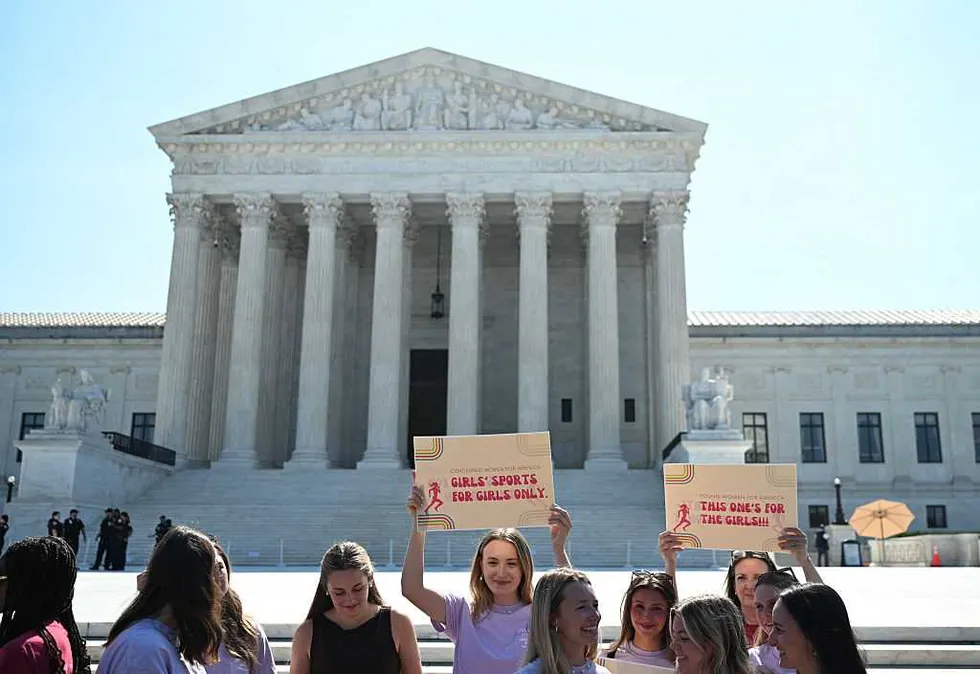
The Supreme Court has come down on the side of common sense when it comes to boys infiltrating girls' sports.In a decision in which all nine justices concurred at least in part, the court ruled that laws in West Virginia and Idaho could limit sports teams to biological sex without violating the Equal Protection Clause of the Constitution.'The challenged laws do not classify based on gender identity or transgender status ... but instead on the basis of biological sex.'"The argument that the challenged laws unconstitutionally discriminate against transgender individuals is unavailing. Under this Court’s decision in Skrmetti, the challenged laws do not classify based on gender identity or transgender status, see 605 U. S., at 517, but instead on the basis of biological sex," Justice Brett Kavanaugh wrote in an opinion released Tuesday in which six total justices concurred on the core issues."The classification at issue readily satisfies rational basis review or intermediate scrutiny."Justices Clarence Thomas and Samuel Alito wrote separate concurring opinions. Justice Sonia Sotomayor wrote a separate opinion, joined by Justices Elena Kagan and Ketanji Brown Jackson, that concurred in part and dissented in part.Jackson also wrote a separate opinion that concurred in part and dissented in part.In his opinion, Thomas went further and affirmed that so-called transgender identity does not affect biological reality:Men and boys with gender dysphoria are not women or girls, even if they believe that they are. Sex is an immutable “biological” characteristic, see ante, at 10; it is binary; and “man” and “woman,” “boy” and “girl,” are the terms that correspond to adults and children of each sex. See A. Byrne, Are Women Adult Human Females? 177 Philosophical Studies 3783, 3786–3787 (2020). To use language to obscure reality — to show “indifference regarding the truth” — is to lie to the public and cease to treat our fellow citizens “as equal[s].” This is a breaking story.Like Blaze News? Bypass the censors, sign up for our newsletters, and get stories like this direct to your inbox. Sign up here!
Republicans lost a bid to throw out Mississippi's three-day grace period for absentee ballots, but the president is still itching for a fight.
Chief Justice Roberts and Justice Barrett joined the liberals in ruling that children of illegal aliens born on U.S. soil are American citizens under the 14th Amendment.
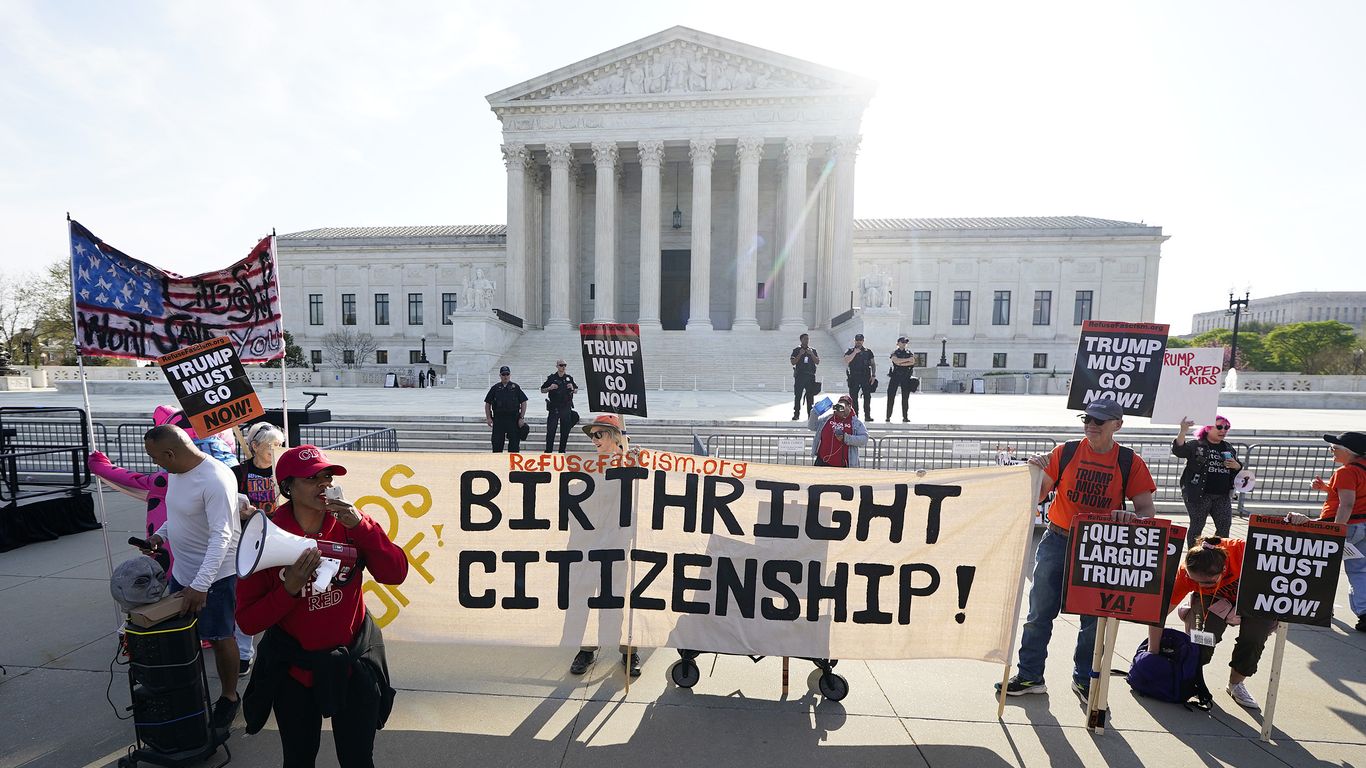
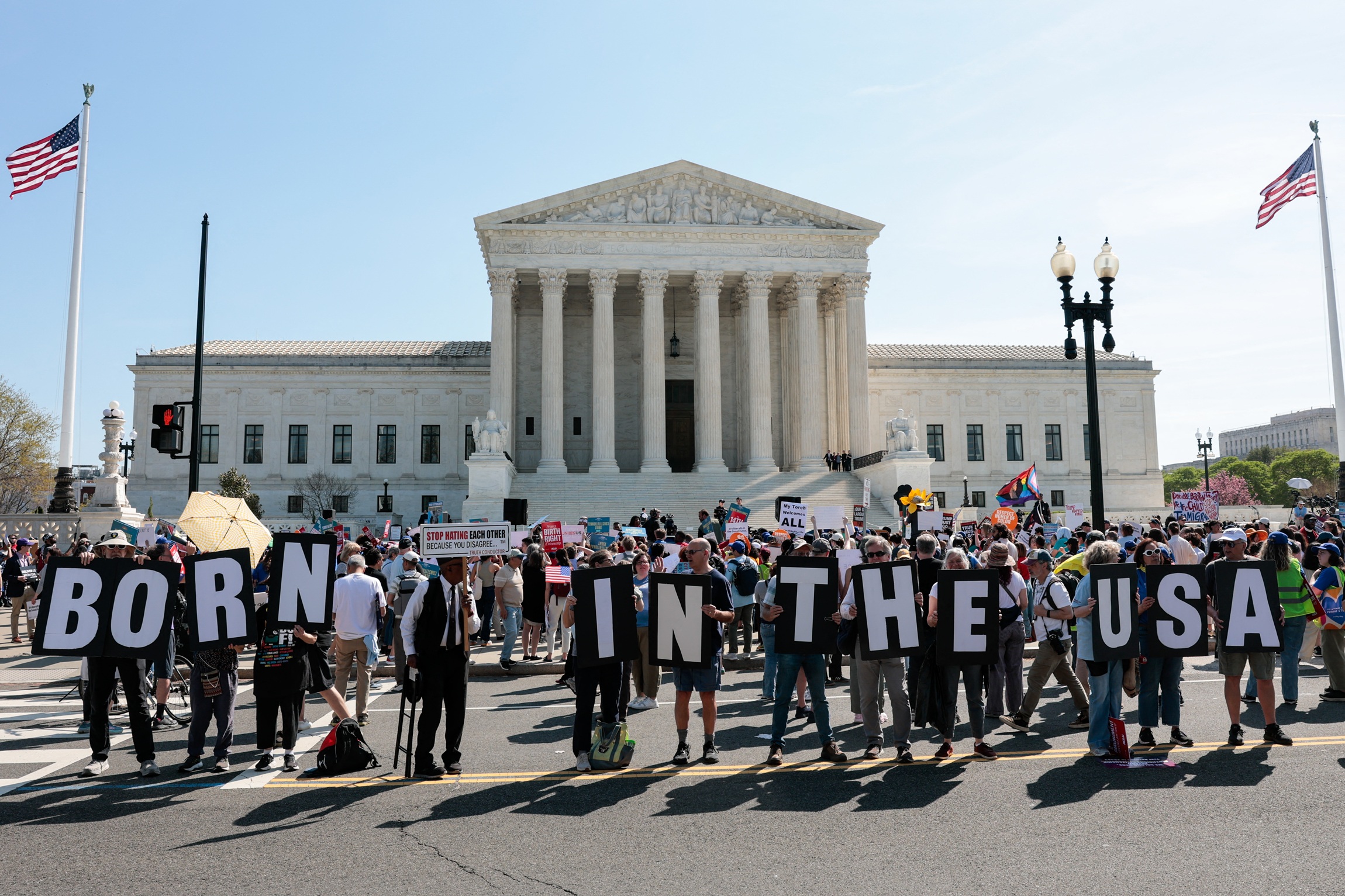
The Supreme Court struck down President Trump's executive order restricting birthright citizenship on Tuesday, reaffirming the long-held belief that any person born on American soil is a citizen.Why it matters: The decision is a blow to Trump, who sought to limit by executive fiat who is eligible for American citizenship as part of his widespread immigration crackdown.What they're saying: "Citizenship, then and now, was the right to have rights— to freely participate in our political community," Chief Justice John Roberts wrote for the five-justice majority."Children born in the United States to parents unlawfully or temporarily present are 'subject to the jurisdiction' of the United States and are citizens at birth under the Fourteenth Amendment's Citizenship Clause."Yes, but: In a dissenting opinion, Justice Clarence Thomas said "[b]oth the Civil Rights Act and the Citizenship Clause guaranteed citizenship to persons born and domiciled in the United States regardless of their race.""Because many potential applications of the President's Order are consistent with the original public meaning of the Citizenship Clause, I respectfully dissent."Threat level: If the administration had succeeded in its arguments, millions of babies would no longer be eligible for citizenship, losing their rights to work authorization, safety net provisions, voting and more.Some of those children could have become stateless with no guaranteed rights at all if their parents' home countries refused to grant them citizenship. Prior to the decision, Trump had lambasted Justices Neil Gorsuch and Amy Coney Barrett — both of whom he had appointed — on Truth Social, anticipating that they would vote against him on birthright citizenship."I don't want loyalty, but I do want and expect it for our Country," he said.Catch up quick: Trump's order sought to limit birthright citizenship to people who have at least one legally present parent in the U.S.The order was based on a once-fringe position that the 14th Amendment doesn't expand to those present in America illegally because they aren't "subject to the jurisdiction" of America, as required in the amendment.The majority of the justices appeared skeptical of the Trump administration's arguments during the case's initial oral arguments, including Roberts.Zoom in: Two of Trump's three appointees sided, at least in part, with the president.Justice Brett Kavanaugh concurred with the judgment but disagreed with the court's reasoning, arguing that Trump's executive order violated a separate immigration statute. Thomas was joined by Gorsuch, who wrote that "By definition, temporary visitors to this country do not choose to make a permanent home here, and their children thus cannot claim the privilege of citizenship.""Because the executive order is lawful at least to this extent, respondents' facial challenge must fail."By the numbers: Two-thirds of Americans support preserving the 14th Amendment's right to birthright citizenship.That includes the majority of Independents and many Republicans.Roughly 53% of Trump's most religious voting block — white evangelical Protestants — say they support the constitutionally guaranteed right.Go deeper: What's at risk if SCOTUS sides with Trump in birthright citizenship caseEditor's note: This story was updated with additional information and context throughout.
The court’s decision involving laws from West Virginia and Idaho has implications for 25 other states with similar restrictions on transgender female athletes joining women’s sports teams.
Justices voted to overturn judgments issued by lower courts in favor of trans students who sued after being barred from competing in West Virginia and IdahoSupreme court decisions – live updatesSign up for the Breaking News US emailThe US supreme court has upheld laws in two conservative states excluding transgender girls and women from competing in female sports in a far-reaching ruling likely to pave the way for similar bans throughout the US and handing Donald Trump a key “culture war” victory.The court voted to overturn previous judgements issued by lower courts in favor of two trans students who had sued after being barred from competing in West Virginia and Idaho respectively. Continue reading...
The 6-3 ruling means that the 14th Amendment protection of citizenship rights for children born in the U.S. remains.
Delivering another major blow to LGBTQ rights, the Supreme Court on Tuesday upheld state laws that ban transgender athletes from participating in girls' and women's sports.
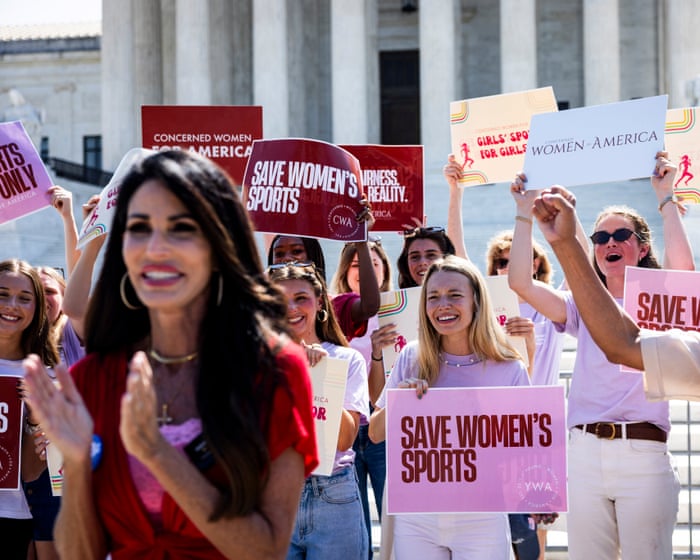
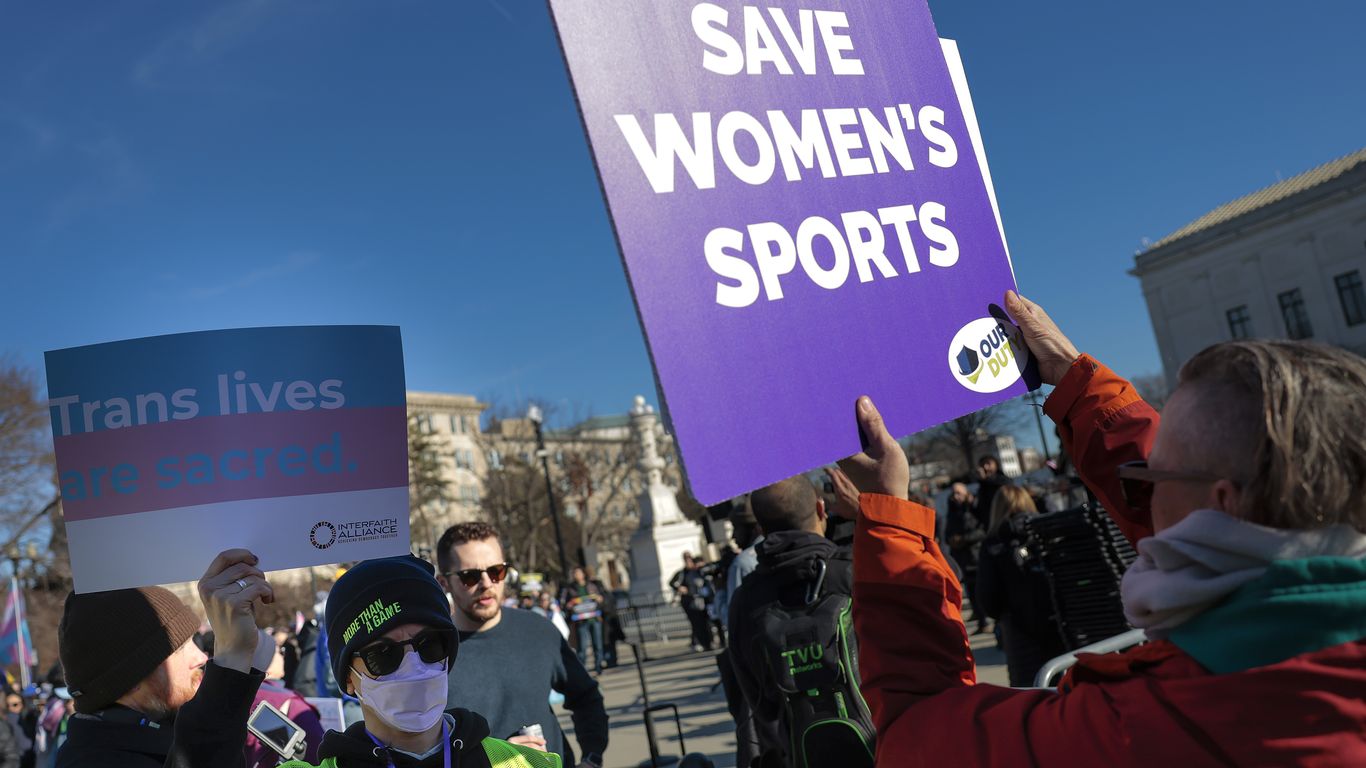
The Supreme Court ruled Tuesday that states can ban transgender girls from girls' school sports teams, handing conservative states a historic victory in their fight to restrict trans rights.Why it matters: The decision caps a yearslong, Republican-led push through statehouses and school boards to define girls' sports by sex assigned at birth.The case also hands that movement its sharpest weapon yet for coming fights over bathrooms, IDs and gender-affirming care.Driving the news: In West Virginia v. B.P.J., the justices held that the state's ban on trans girls in girls' sports does not violate either Title IX or the Equal Protection Clause.The court also upheld a similar Idaho law in Little v. Hecox.Justice Brett Kavanaugh wrote for the 6–3 majority that "The Constitution and Title IX do not require an overhaul of women's and girls' sports throughout America."All nine justices agreed the ban was allowed under Title IX, but they disagreed about whether it was constitutional.The other side: Justice Sonia Sotomayor wrote the main dissent, joined by Justices Elena Kagan and Ketanji Brown Jackson, arguing the court moved "the goalposts" by resolving the case without knowing all the facts."One can only hope that the same misguided approach does not and will not extend to other contexts tomorrow, when any of these considerations are missing," Sotomayor continued.Between the lines: Advocates for transgender students argued that categorical bans discriminate based on sex and transgender status.States defending the laws said sex-separated sports are lawful and necessary to protect fairness and opportunity for people assigned female at birth.Zoom in: B.P.J. is Becky Pepper-Jackson, the 16-year-old who challenged West Virginia's ban the summer before she began the sixth grade.She competed while the case ran through the courts, and won West Virginia's Class AAA state championship in shot put a month ago.Sotomayor noted Pepper-Jackson was the only trans girl publicly known to have sought to play girls sports in the state.What they're saying: President Trump celebrated the ruling on Truth Social, writing that it was a "BIG WIN."He wrote, "The United States Supreme Court just RULED AGAINST MEN PLAYING IN WOMEN'S SPORTS. Wow! That takes that ridiculous situation off the table!!!"What's next: Both cases head back to the lower courts, while states with similar laws are likely to cite it immediately in pending cases.Editor's note: This is a breaking news story and will be updated.