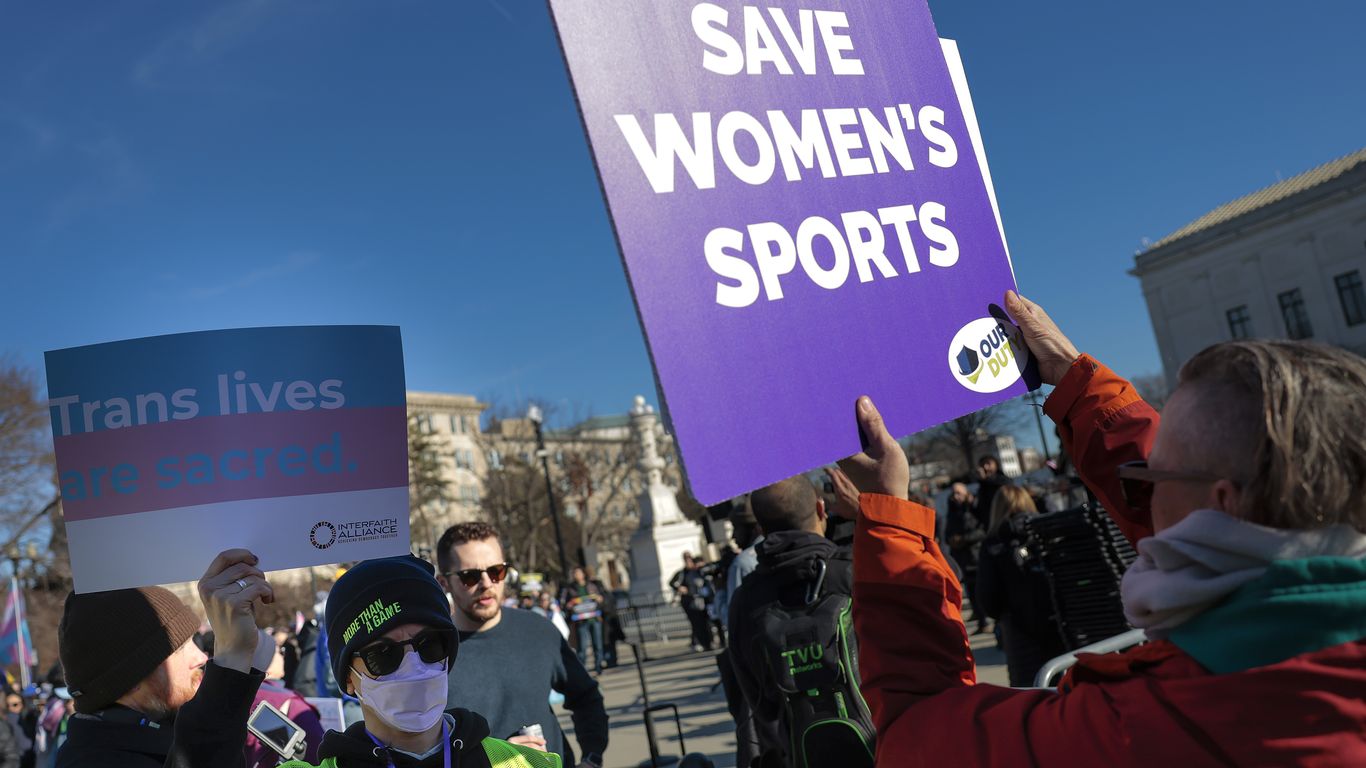
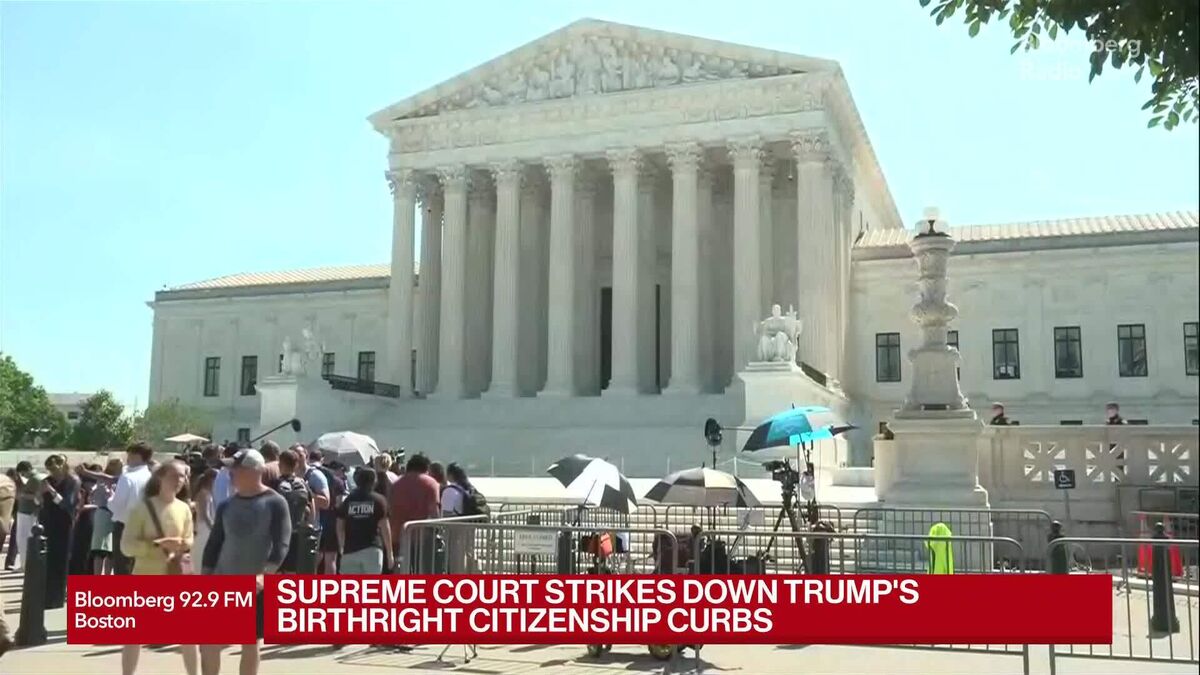
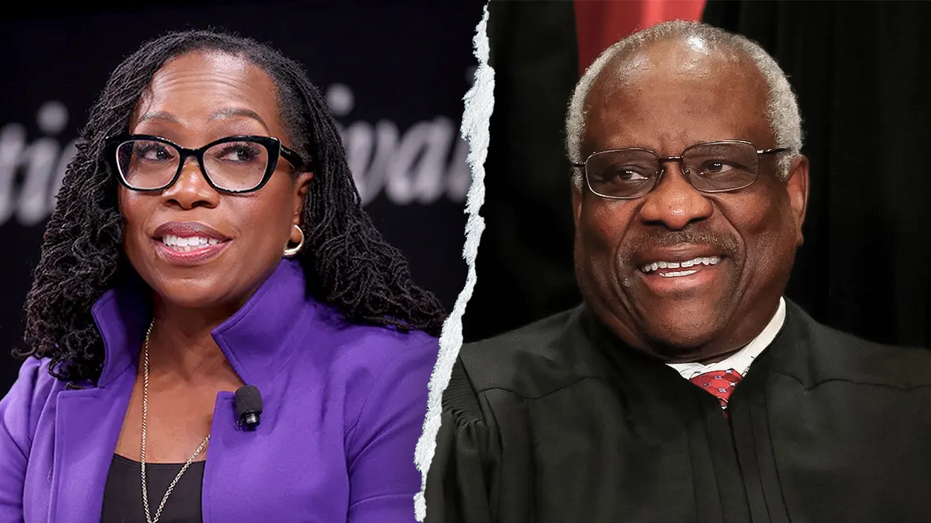
The Supreme Court ruled Tuesday that states can ban transgender girls from girls' school sports teams, handing conservative states a historic victory in their fight to restrict trans rights.Why it matters: The decision caps a yearslong, Republican-led push through statehouses and school boards to define girls' sports by sex assigned at birth.The case also hands that movement its sharpest weapon yet for coming fights over bathrooms, IDs and gender-affirming care.Driving the news: In West Virginia v. B.P.J., the justices held that the state's ban on trans girls in girls' sports does not violate either Title IX or the Equal Protection Clause.The court also upheld a similar Idaho law in Little v. Hecox.Justice Brett Kavanaugh wrote for the 6–3 majority that "The Constitution and Title IX do not require an overhaul of women's and girls' sports throughout America."All nine justices agreed the ban was allowed under Title IX, but they disagreed about whether it was constitutional.The other side: Justice Sonia Sotomayor wrote the main dissent, joined by Justices Elena Kagan and Ketanji Brown Jackson, arguing the court moved "the goalposts" by resolving the case without knowing all the facts."One can only hope that the same misguided approach does not and will not extend to other contexts tomorrow, when any of these considerations are missing," Sotomayor continued.Between the lines: Advocates for transgender students argued that categorical bans discriminate based on sex and transgender status.States defending the laws said sex-separated sports are lawful and necessary to protect fairness and opportunity for people assigned female at birth.Zoom in: B.P.J. is Becky Pepper-Jackson, the 16-year-old who challenged West Virginia's ban the summer before she began the sixth grade.She competed while the case ran through the courts, and won West Virginia's Class AAA state championship in shot put a month ago.Sotomayor noted Pepper-Jackson was the only trans girl publicly known to have sought to play girls sports in the state.What they're saying: President Trump celebrated the ruling on Truth Social, writing that it was a "BIG WIN."He wrote, "The United States Supreme Court just RULED AGAINST MEN PLAYING IN WOMEN'S SPORTS. Wow! That takes that ridiculous situation off the table!!!"What's next: Both cases head back to the lower courts, while states with similar laws are likely to cite it immediately in pending cases.Editor's note: This is a breaking news story and will be updated.