Oil prices decreased early Monday amid negotiations between the Trump administration and Iran on reopening the Strait of Hormuz and ending the Middle East conflict. West Texas Intermediate crude futures, the benchmark for North American markets, dipped by more than 6.1 percent to $90.68 as of early Monday. Brent crude futures, the global benchmark, dropped…
The fallout from Louisiana v. Callais has been nothing short of tragic, with terrible echoes of the past. As Reconstruction ended in 1877, states in the South either killed, expelled, or used other means to force out Black legislators. Over the last two weeks, freed from abiding by Section 2 of the 1965 Voting Rights Act, Southern states have rushed to redraw their district lines to ensure that members of Congress elected by Black voters can’t win reelection. We are in a new era of American democracy, particularly for Black Americans. The Republican Party now views Democratic Party electoral wins and policy success as an existential crisis that it must prevent by any means necessary. Crushing Black political power is therefore essential to the GOP, since African Americans overwhelmingly support the Democratic Party. And the current Supreme Court, more than any in decades, has not only removed virtually all constraints on policies that might negatively affect African Americans but actively looks to outlaw any public policy that might benefit Blacks. This era demands a new framework for Black politics—fresh strategies, tactics, leaders, and goals. We need a “Double Front” approach. And we should be clear-eyed: Even before Callais, the existing models of Black politics were growing stale. It’s worth explaining when and how Black politics lost its effectiveness. There has never been a singular Black political movement or African American ideology. Booker T. Washington and W.E.B. Du Bois famously quarreled. Du Bois’s own views shifted over the course of his life. The reality of the civil rights activism of the 1950s and ’60s was more complicated and messy than beautiful Martin Luther King speeches and smartly organized boycotts. But after the civil rights victories of the 1960s, a clear Black politics emerged and predominated for five decades. Aspiring Black leaders, who had earlier led from the pulpit or protests, sought and won political office, most commonly becoming either mayor or member of Congress in heavily Black areas. A network of Black organizations, such as the National Urban League and the NAACP, focused less on the mass protests of the civil rights era and more on behind-the-scenes lobbying and collaborating with those Black officials in office. Though they varied considerably, these organizations often became synonymous with a single famous leader, such as Jesse Jackson and Al Sharpton. And these leaders were often treated by the media and politicians as spokespeople for the entire Black population. These politicians, groups, and leaders aligned tightly with the Democratic Party, viewing it as the only vehicle to advance Black political goals. The results of this approach have been uneven. On the one hand, African American politicians became increasingly powerful within the Democratic Party, gaining committee chairmanships, the mayor’s office in some of America’s largest cities, Cabinet and judicial appointments, and finally, in Barack Obama, the party’s presidential nomination. These elected officials delivered major policy victories to Black Americans and the country as a whole, from local economic empowerment of Black communities to the Affordable Care Act. On the other hand, African Americans became a “captured minority,” the term invoked by Princeton political scientist Paul Frymer. Democratic Party officials knew that Black voters would back them no matter what, so they had little incentive to push hard for policies and programs that would help African Americans in particular. Electoral pressures led the Democratic Party to set an agenda that would appeal to swing voters in swing states—a very non-Black constituency.As the Democratic Party became increasingly concerned that advancing Black concerns turned off white voters, Black Democratic politicians and prominent activists faced a choice: advance in the party by downplaying and sidelining Black concerns, or advocate Black interests at the expense of their careers. Many chose the former. Contrary to conservative pundits who claim that he stoked racial conflict, Obama actually spoke far less about racial issues than his Democratic predecessors. Prominent activists shifted from pressuring Democratic politicians to being very defensive of them. Sharpton and others negotiated with mayors, presidents, and corporations, but grew unaccountable to Black America at large—operating more like celebrities than community activists. Over time it became difficult to distinguish the policies of Black and white mayors, as both were beholden to the police and corporations in their cities and thereby unwilling (and often lacking any real power) to advance policies to help rank-and-file Black Americans. The Congressional Black Caucus for a time earned its self-given moniker, the “Conscience of the Congress,” pushing the U.S. in radical directions, whether on enforcing civil rights or in the fight against apartheid in South Africa.
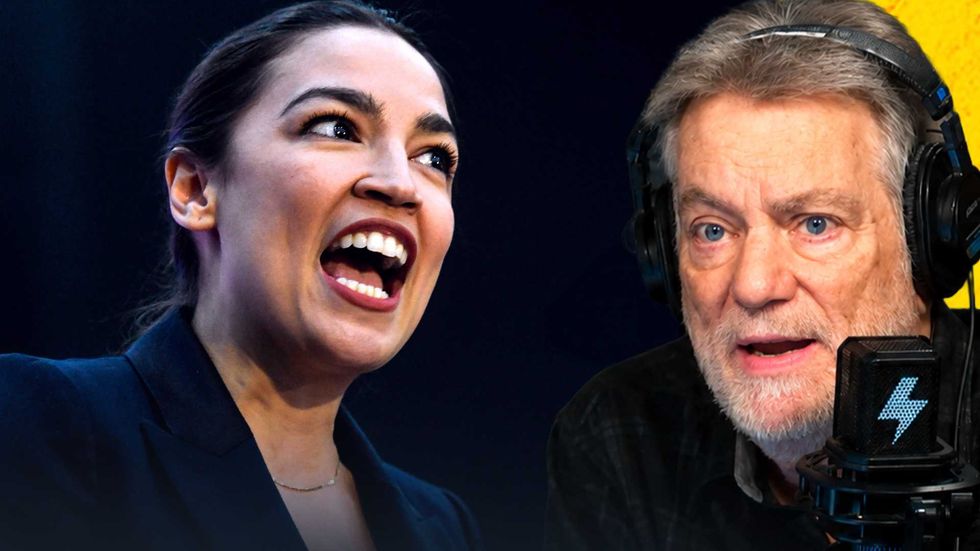
Following redistricting in the South, Rep. Alexandria Ocasio-Cortez (D-N.Y.) delivered a passionate speech on voting rights and political organizing in Alabama, where she called on activists from northern states to “pull up” on their southern neighbors.During the speech, AOC argued that protecting voting rights leads to better schools, expanded health care, and broader political representation, while warning supporters that opponents fear people “coming together” across state lines.“It is time for the North to pull up to the South," AOC yelled, "It is time for New York to pull up to Alabama. It is time for all of us to come to Georgia, to Louisiana, to Tennessee, to Mississippi and let them know exactly what they have uncorked with this injustice."“Because when black Americans have the right to vote and that vote is protected, our schools get funded. When voting rights are protected, health care gets expanded. When voting rights are protected, our country moves forward,” she said.“And Montgomery, that’s what they’re actually afraid of. They’re afraid of us coming together. They’re afraid of us protecting one another. Alabama is the crucible. Georgia is the crucible. Tennessee, Louisiana, Mississippi is the crucible,” she continued.“It is time to pull up. Because what they thought was the final blow is actually just the opening silo,” she yelled.BlazeTV host Pat Gray laughs, saying, “Of course, she means salvo. It’s ‘the opening salvo.’”“She doesn’t know what she’s talking about,” he adds.Want more from Pat Gray?To enjoy more of Pat's biting analysis and signature wit as he restores common sense to a senseless world, subscribe to BlazeTV — the largest multi-platform network of voices who love America, defend the Constitution, and live the American dream.
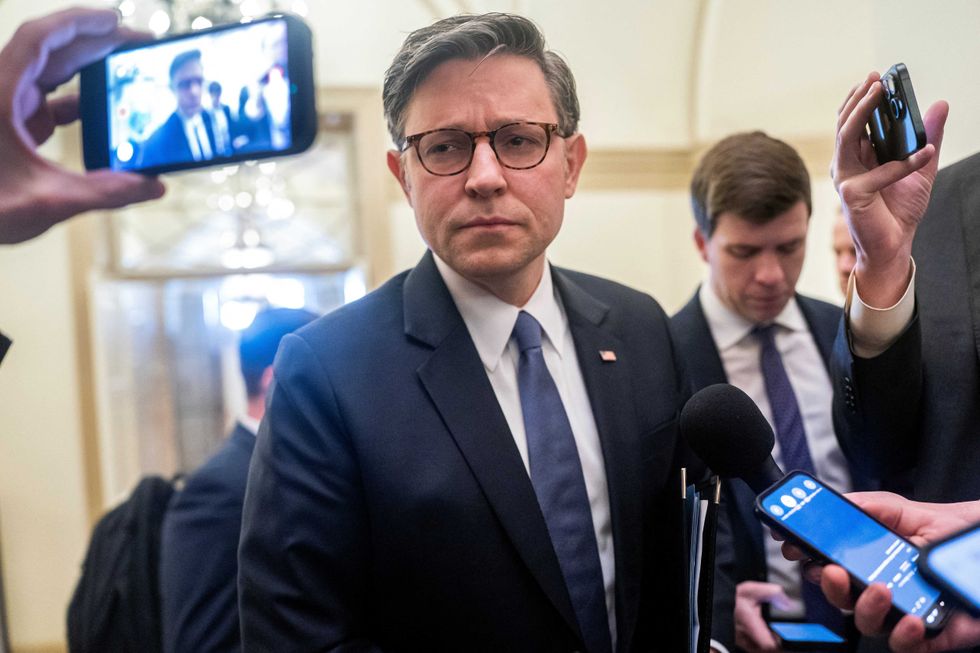
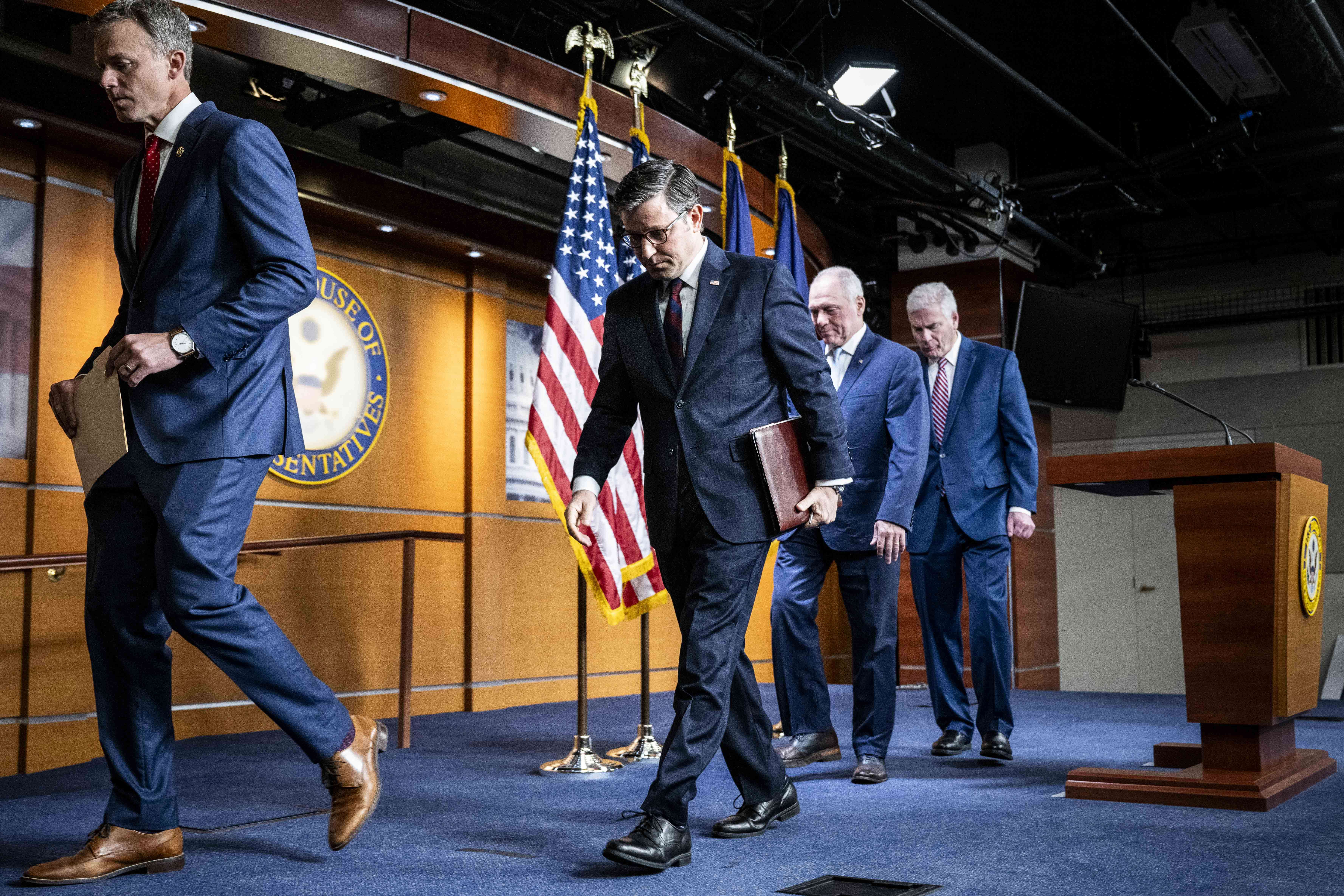
House Speaker Mike Johnson pulled a war powers resolution from the floor after Democrats secured enough Republican support to pass it, according to Rep. Greg Meeks — a stunning allegation that Johnson personally intervened to prevent Congress from reining in Donald Trump's military campaign against Iran."We had the votes to stop this war," Meeks told MS NOW on Saturday. "And he pulled it and said we have to look at voting for it when we get back, after the memorial recess."Meeks, the ranking member of the House Foreign Affairs Committee, said he had assembled a bipartisan coalition sufficient to pass the war powers resolution — which would have asserted congressional authority over Trump's ongoing conflict with Iran — before Johnson abruptly removed it from consideration.The move echoes a pattern that has played out repeatedly under Johnson's speakership: bills with genuine bipartisan support quietly disappearing from the schedule when they threaten to embarrass Trump or constrain his power.The allegation comes as the Senate has separately been wrestling with its own war powers debate. A handful of Republican senators have broken with Trump over the Iran conflict, and a companion effort in the upper chamber was similarly stalled.Meeks framed Johnson's intervention as a deliberate act of protection for Trump rather than a procedural delay."They know," Meeks said, referring to Republican leadership's awareness of shifting sentiment within their own caucus. "That's why they're playing games all over this country."
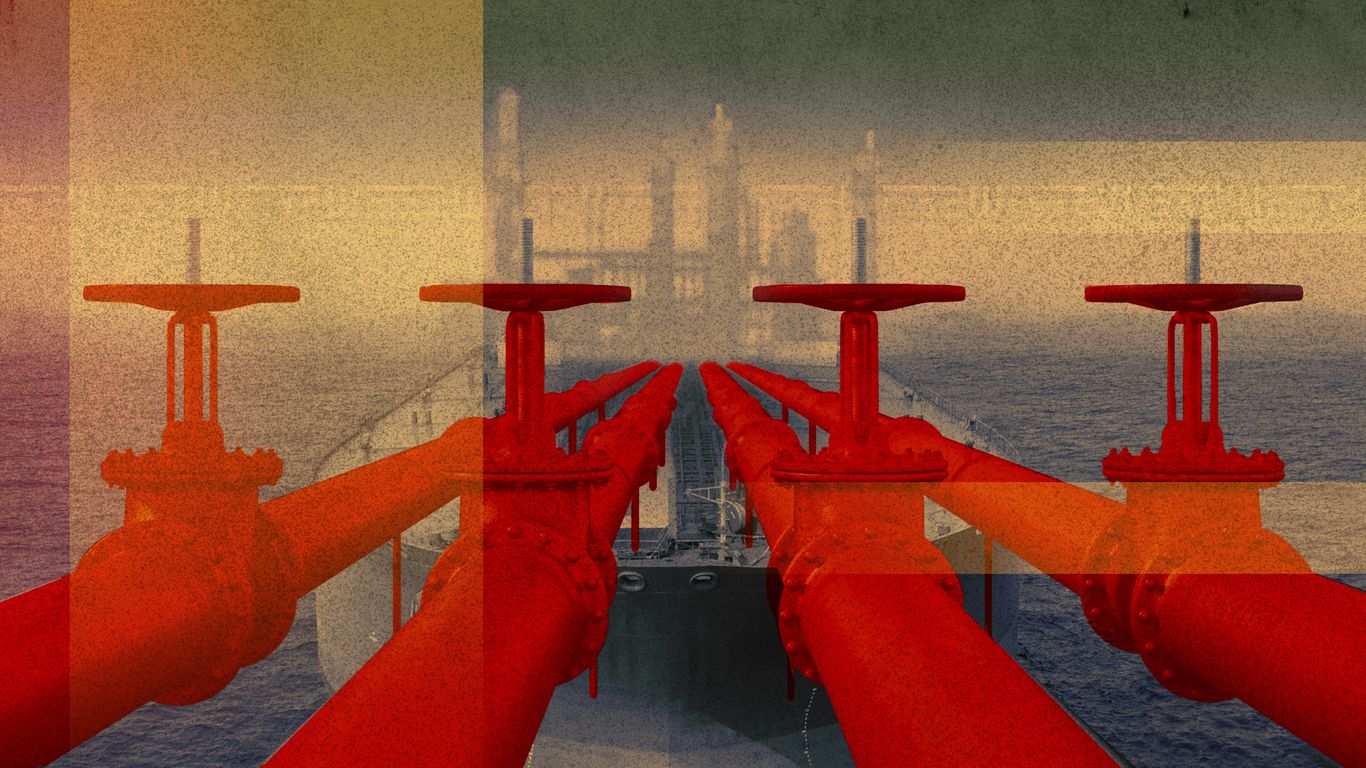
Crude oil prices dropped about $5 per barrel Sunday evening in the first major trading since the emergence of rough and tentative outlines of a deal to end the U.S.-Iran conflict.Why it matters: The throttling of the Strait of Hormuz is raising energy costs and weighing down economies worldwide — including the U.S., where average pump prices are about $1.50-per-gallon above pre-war levels.And the crisis is poised to worsen as global crude oil inventories are depleting at a record pace.The latest: Futures prices from the global benchmark Brent crude are back under $100 per barrel, trading around $98.76 Sunday evening, a 4.62% drop from Friday's close. Reality check: Even if an agreement that opens the Strait is reached — a process that could take days, per Axios' Barak Ravid — energy markets will remain disrupted for months.As of mid-May, the conflict was blocking the flow of around 14 million barrels of oil per day, according to the International Energy Agency.Saudi Arabia and the United Arab Emirates have increased the use of pipelines that bypass the Strait, but those added volumes don't come close to offsetting what normally travels through the narrow waterway.The waterway handles about a fourth of the global maritime oil and a fifth of the liquefied natural gas trade.And several Persian Gulf producers have dialed back production as storage space filled up, and that takes time to come back online.What they're saying: "Gas prices are currently falling but until we see an agreement signed & a significant amount of ships transit through the Strait, the national average price of gasoline will likely remain well above $4/gal," Patrick De Haan, head of petroleum analysis for the data and analysis firm GasBuddy, posted on X.The intrigue: Even if a deal emerges, it's not clear whether shippers will have confidence to quickly resume large-scale transport of crude oil and petroleum products.And some Asian markets with acute fuel needs take weeks to reach from the region.What we're watching: "[D]e-mining the Strait, evacuating trapped tankers and restarting production could take weeks to months," the research firm ClearView Energy Partners said in a client note Sunday."[R]epairing damaged facilities, restoring pre-war output levels, and restocking depleted inventories could take multiple calendar quarters to years," the research firm added in the note sent ahead of markets opening.Editor's note: This story has been corrected to show the strait handles about a fourth of the maritime oil trade (not a fifth).