Reason.com
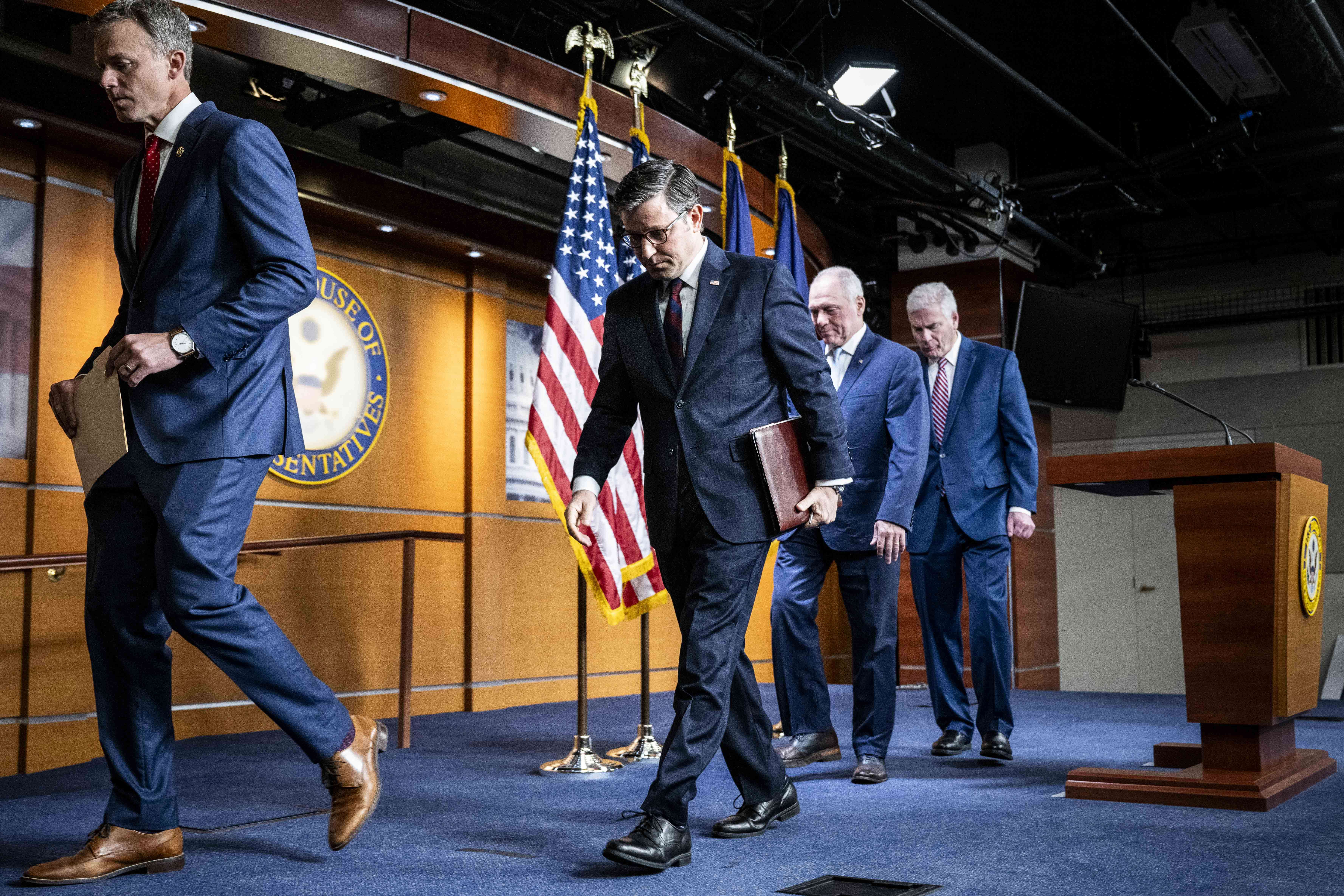
War Powers Vote Is the Latest Embarrassment for House Speaker Mike Johnson
Johnson is seemingly incapable of standing up to the Trump administration, even when one of Congress' core responsibilities is at stake.
Center Right

Following redistricting in the South, Rep. Alexandria Ocasio-Cortez (D-N.Y.) delivered a passionate speech on voting rights and political organizing in Alabama, where she called on activists from northern states to “pull up” on their southern neighbors.During the speech, AOC argued that protecting voting rights leads to better schools, expanded health care, and broader political representation, while warning supporters that opponents fear people “coming together” across state lines.“It is time for the North to pull up to the South," AOC yelled, "It is time for New York to pull up to Alabama. It is time for all of us to come to Georgia, to Louisiana, to Tennessee, to Mississippi and let them know exactly what they have uncorked with this injustice."“Because when black Americans have the right to vote and that vote is protected, our schools get funded. When voting rights are protected, health care gets expanded. When voting rights are protected, our country moves forward,” she said.“And Montgomery, that’s what they’re actually afraid of. They’re afraid of us coming together. They’re afraid of us protecting one another. Alabama is the crucible. Georgia is the crucible. Tennessee, Louisiana, Mississippi is the crucible,” she continued.“It is time to pull up. Because what they thought was the final blow is actually just the opening silo,” she yelled.BlazeTV host Pat Gray laughs, saying, “Of course, she means salvo. It’s ‘the opening salvo.’”“She doesn’t know what she’s talking about,” he adds.Want more from Pat Gray?To enjoy more of Pat's biting analysis and signature wit as he restores common sense to a senseless world, subscribe to BlazeTV — the largest multi-platform network of voices who love America, defend the Constitution, and live the American dream.
Johnson is seemingly incapable of standing up to the Trump administration, even when one of Congress' core responsibilities is at stake.
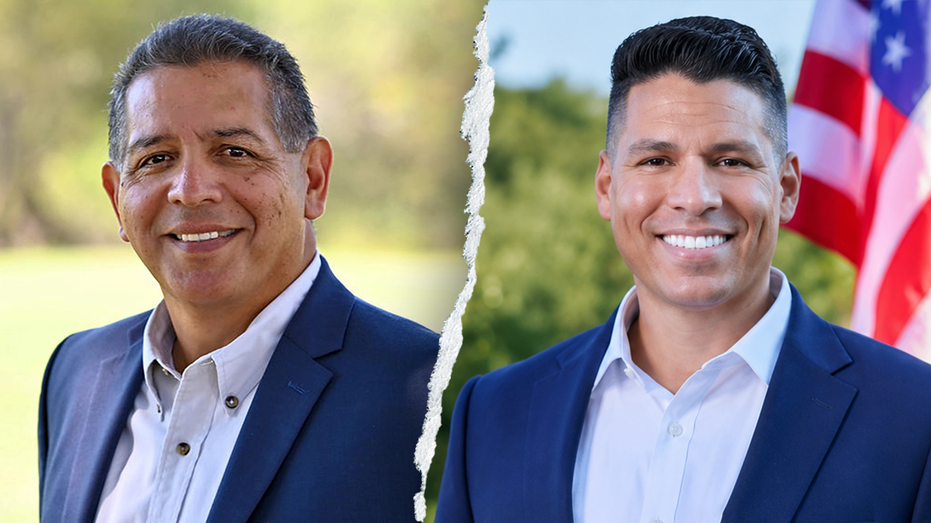
A Texas congressional primary race sparks veteran outrage after a PAC-funded ad mocks candidate Carlos De La Cruz's 100% military disability rating.
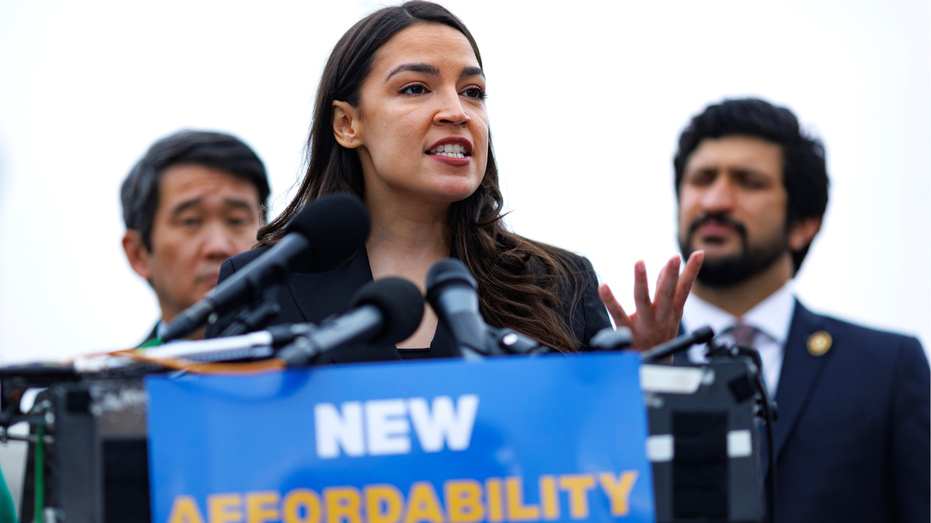
Rep. Alexandria Ocasio-Cortez sparks controversy with fiery Alabama rally speech urging northern progressives to "pull up" to southern red states.

Maine Senate candidate Graham Platner declined to apologize for a deleted Reddit post saying a Purple Heart recipient "didn't deserve to live."
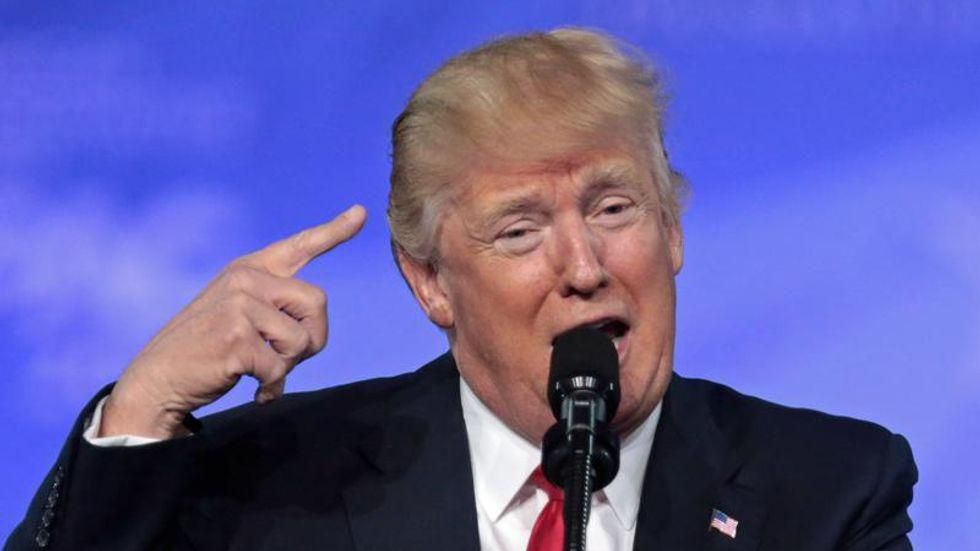
A frequent target of Donald Trump took the same cognitive test that the president keeps bragging about, and came away from it with a major warning for the entire country.Jim Acosta, the former CNN reporter Trump repeatedly attacked from the White House podium, walked through the Montreal Cognitive Assessment on his show this week. He passed it. He also said no president should ever need to take it.The test, known as the MoCA, was administered by Dr. Rob Davidson of the Committee to Protect Healthcare. Acosta drew the cube, copied the clock, identified the lion, rhino, and camel, named the date, and worked through the serial seven subtraction. He needed a category cue to recall one word, but otherwise sailed through the screening.Then he turned to the camera and made his point."This is something that the president of the United States should not be administered," Acosta said. "The president of the United States should not be taking a cognitive test ever, because we should be electing people to the office of the president of the United States where this is not an issue."Acosta's larger point was about Trump's pattern. The president has bragged for years about acing the same test, with his repeated comments about identifying "the squirrel" becoming a running joke during his second term. According to Acosta, the fact that Trump keeps taking the test at all is the actual headline."If he is actually taking multiple cognitive tests, hello everybody, that is a story," Acosta said. "That is a major, major story."Acosta also took aim at Trump's habit of bragging about the results. The MoCA is designed to detect mild cognitive impairment, not measure intelligence, and Acosta compared the appropriate response to a passing score with the way Detroit Lions running back Barry Sanders used to handle touchdowns."Act like you've been there before," Acosta said. "If you take a cognitive test, you get a good score, and you just kind of go back to your day."The full episode is available on Acosta's YouTube channel.

The physician who administered the same cognitive screening that President Donald Trump keeps publicly bragging about says he sees something that should worry the country.Dr. Rob Davidson, head of the Committee to Protect Healthcare, walked former CNN reporter Jim Acosta through the Montreal Cognitive Assessment on Acosta's show this week. Davidson used the appearance to deliver a pointed message about Trump's repeated public claims that he has aced the screening multiple times.The test, Davidson said, is not a routine evaluation that doctors hand to every patient who walks in. It is administered specifically when a provider or a family member has raised a concern about possible cognitive decline. And once is generally enough."It is just not typical, right?" Davidson said. "It isn't typical. It isn't what you would just generally do for any individual when you didn't have a concern."The MoCA is designed to flag mild cognitive impairment, not measure intelligence or detect full-blown dementia. Davidson described it as a screening for someone who might be "slipping a little bit" and whose loved ones or physician are starting to take notice. It is not a test the average healthy adult ever takes, and it is not a test designed to be repeated for self-congratulatory purposes.Davidson stopped short of saying Trump has a diagnosable condition, calling that kind of remote evaluation unethical. But he did not soften the impression Trump's public behavior leaves on him as a physician."I won't make a diagnosis, we don't, it's not ethical to try to diagnose somebody," Davidson said. "And I don't know if the president has a condition, but something just seems not right."He went on to note that Trump's reported pattern of repeatedly requesting and bragging about the MoCA is itself an unusual data point. White House physicians, Davidson said, are typically not in the habit of administering the same impairment screening over and over to a patient when no clinical concern has been raised. That Trump appears to want to keep taking it, he said, is itself worth noticing.Acosta has himself been a frequent target of Trump's attacks, dating back to his days on the White House beat for CNN. He took the test on camera to make the case that no president should be in the position of needing to. By the end of the segment, Acosta was even more alarmed about the president.
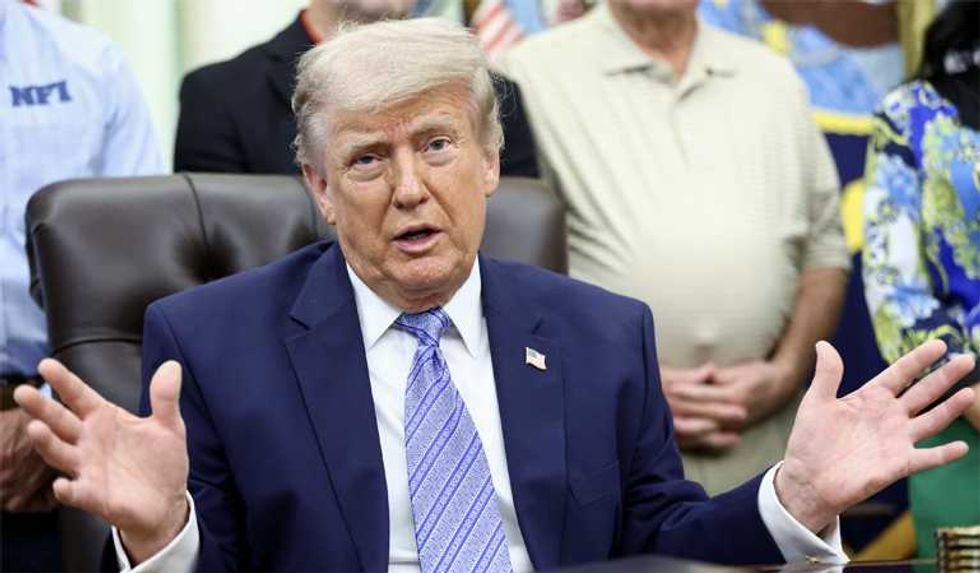
President Donald Trump confirmed Friday afternoon what set off hours of online speculation, posting to Truth Social with an Oval Office statement about a major foreign policy development.In the post, Trump said he had spoken with a long list of Arab and Muslim world leaders about a possible peace agreement involving Iran."I am in the Oval Office at the White House where we just had a very good call with President Mohammed bin Salman Al Saud, of Saudi Arabia," Trump wrote, going on to name the leaders of the UAE, Qatar, Pakistan, Türkiye, Egypt, Jordan, and Bahrain. The call concerned "the Islamic Republic of Iran, and all things related to a Memorandum of Understanding pertaining to PEACE."The president said the framework is close to done."An Agreement has been largely negotiated, subject to finalization between the United States of America, the Islamic Republic of Iran, and the various other Countries, as listed," Trump wrote.He added that he had spoken separately with Israeli Prime Minister Benjamin Netanyahu, and that "final aspects and details of the Deal are currently being discussed, and will be announced shortly."Trump closed with one specific detail."In addition to many other elements of the Agreement, the Strait of Hormuz will be opened," he wrote.
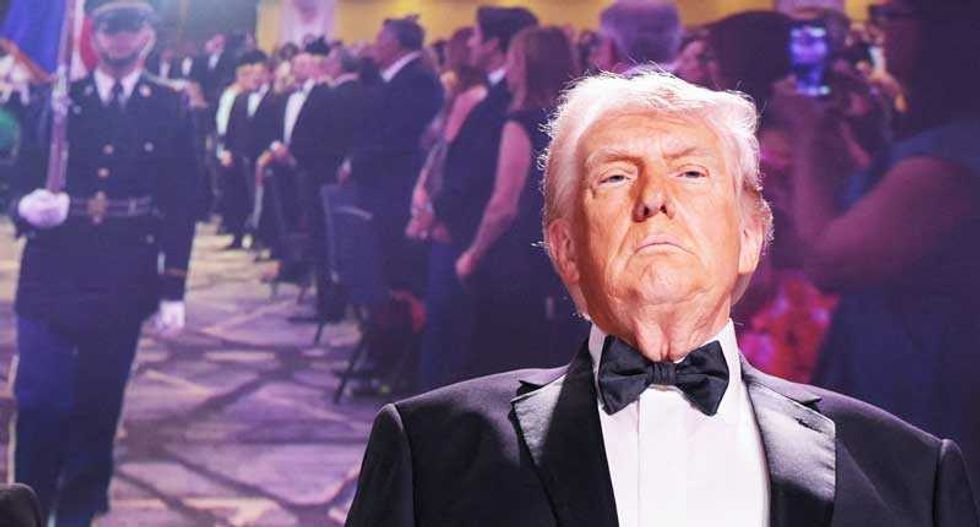
The creation of an “Anti-Weaponization Fund” at the Department of Justice may have shocked a lot of people, but not Paul Figley, a legal scholar and former DOJ staffer who has spent years warning that taxpayer money could be used by an administration for political ends in just this way.The fund, the result of a settlement of legal claims by Donald Trump and his family against the IRS, aims to compensate those who “suffered weaponization and lawfare” at the hands of the federal government. It has already been called a “slush fund” by the New York Times editorial board, which noted – as many have – that it’s likely to pay much of its US$1.8 billion funding to Trump allies who rioted at the U.S. Capitol on Jan. 6, 2021.The money comes from what’s called the Judgment Fund, set up in the Department of Treasury by Congress in the 1950s to pay legal judgments and settlements involving the federal government. In doing so, Congress gave away a portion of its foundational, constitutional role: The power to control government spending. Figley, who worked at the Department of Justice and is also an emeritus professor of legal rhetoric at American University Washington College of Law, has warned Congress and others that by putting decisions about such huge payouts in the hands of the executive branch, the fund would inevitably be hijacked for political purposes. Naomi Schalit, The Conversation’s politics and legal affairs editor, spoke with Figley. What is the Judgment Fund, and why was it created?The Judgment Fund is a permanent, indefinite appropriation that Congress established to pay most judgments and settlements against the federal government. Prior to 1956, whenever a judgment or settlement was agreed upon or finalized, Congress would have to appropriate money to pay it. That meant the administration and Congress would have to go through kind of a karaoke: “Here’s a new settlement, here’s why it should be approved.” “OK, we approve it.” And it took up a lot of time and didn’t produce much good effect. So the old General Accounting Office recommended that Congress set up a system that would pay some claims automatically, and in 1956, Congress established the Judgment Fund. It allows payment of settlements and judgments if those payments were final and not authorized or provided for by some other legally available appropriation. Former Department of Justice lawyer Paul Figley spent years warning that presidents could use the little-known Judgment Fund as a political piggy bank. Congress essentially handed over responsibility for paying for settlements and judgments, which was taking up a lot of time, to the executive branch?Yes, the Department of Justice would do the paperwork and say this is final, or this is an appropriate settlement, send that to Treasury, Treasury then certifies that it was properly documented, and then orders the payment.From the constitutional perspective, it appears that Congress was getting rid of an annoying thing that it had to do, but wasn’t it also giving away its power of the purse?Yes, but only in a limited way to begin with. When the Judgment Fund was first established, any settlement or judgment that could go through the process had to be less than US$100,000. That worked so well that Congress increased the amount a couple of times, and then ultimately in 1977 said there’s no cap. It’s a permanent indefinite appropriation, and once it was established, nobody ever has to go back to Congress to ask that it be updated or refilled. It works automatically. You’ve written and given testimony about concerns you have with the Judgment Fund, over quite a few years and spanning several administrations. What are those concerns?The concern is that under our system, Congress should be responsible for – and is responsible for – appropriating money.Are you worried that this fund can be abused?It has been. For many, many years, it wasn’t abused very often. Occasionally, it was used for political purposes in the foreign policy context. President George H. W. Bush used it in 1991 to settle a claim with Iran for arms that had not been delivered. The Clinton administration used it to settle a similar claim with Pakistan in 1998. The Obama administration secretly paid Iran $1.7 billion for arms that the U.S. had not delivered, and $1.3 billion of that came from the Judgment Fund. Those all had a political context, and while they were arguably good decisions, they were decisions that, absent the Judgment Fund, would have had to go through Congress and have money appropriated after, perhaps, debate and discussion. The Obama administration also went much further in litigation involving claims of civil rights violations by the Department of Agriculture. The Obama administration’s use of the Judgment Fund in class action suits for discrimination in Department of Agriculture civil loan programs struck me as really bad policy.