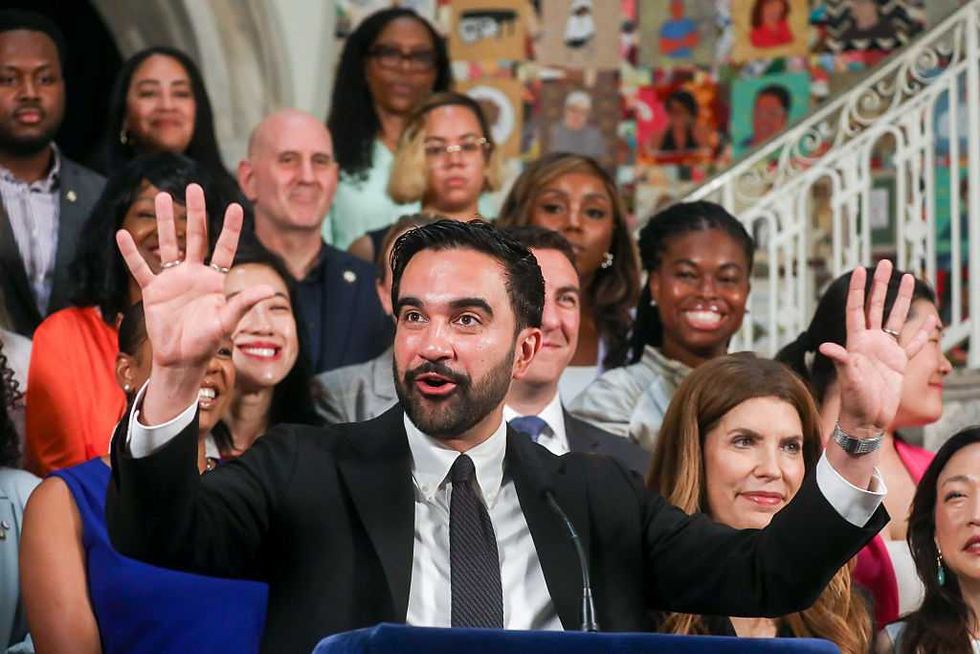
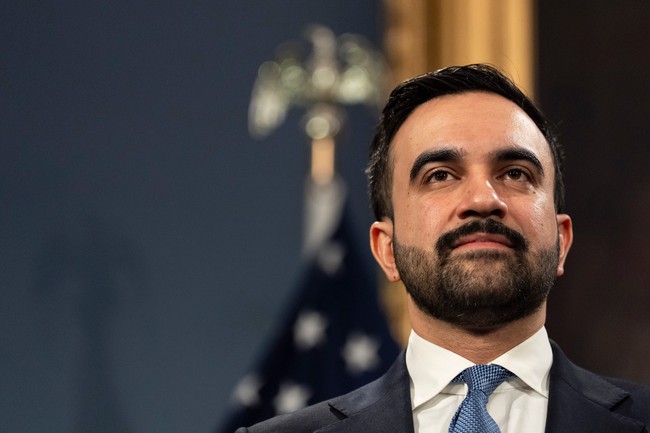
"Have you ever been to the U.S.-Mexico border?” “No.”One word. That may have been the most revealing moment of New York City Democratic Mayor Zohran Mamdani’s recent interview with the New York Times.Sanctuary policies are easy to defend from a podium at New York City Hall. They are much harder to defend before communities that have already paid the price.Mamdani defended his city’s sanctuary policies, which he reinforced after taking office by signing an executive order reaffirming them.The problem is not so much that Mamdani has never visited the border. It is that he seems unwilling to understand why communities that lived through the border crisis reached a very different conclusion.That lesson is visible far beyond the Rio Grande.Consider Goliad County in South Texas. The rural county has about 7,000 residents and sits roughly 160 miles from the U.S.-Mexico border.Testifying before the Senate Judiciary Committee last year, Sheriff Roy Boyd described how the crisis transformed the community he serves.Boyd’s office averaged 77 arrests a year during the five years before 2021. From 2021 through 2024, that average jumped to 413. Deputies discovered 16 cartel stash houses, and pursuits involving suspected human smugglers became routine.Residents began hearing voices and movement on remote properties after dark. Many no longer felt safe alone in their own homes.Those facts expose what Mamdani’s answer overlooks. The border crisis did not remain at the border. Cartel activity and illegal immigration reached inland communities that lacked the personnel and equipment to confront them. Former Border Patrol agent and Texas Public Policy Foundation senior fellow Ammon Blair calls cartels “hybrid threats.”As Blair puts it, “Cartels don’t just smuggle. They destabilize.” Boyd has described them as “contractors and subcontractors” in a network moving migrants and drugs from the border into Texas’ largest cities.That reality changed Texas’ response. In 2021, as illegal crossings surged under President Joe Biden, Goliad became one of the first inland counties to declare a local disaster. Boyd suggested giving local law-enforcement agencies flexible grants for overtime, new officers, patrol vehicles, and other equipment.Those grants became part of Operation Lone Star.According to Texas Republican Gov. Greg Abbott’s office, Operation Lone Star has produced more than 535,700 apprehensions and referrals, 57,400 criminal arrests, and 47,500 felony charges. Texas law enforcement has also intercepted more than 779 million lethal doses of fentanyl.RELATED: The revolution will not be televised — it will be livestreamed in 4K Andrew Lichtenstein/Corbis/Getty ImagesBoyd later launched the Operation Lone Star Task Force, which allows local agencies to share deputies, intelligence, and resources across jurisdictional lines while targeting human smuggling, cartel activity, and organized crime.New York has felt the downstream effects too. Former Mayor Eric Adams warned that the migrant crisis would “destroy New York City.” Mamdani nevertheless continues to defend sanctuary policies that impede cooperation with federal immigration authorities.Goliad’s experience carries a national lesson. Criminal organizations do not recognize state boundaries. The same networks that move people across the border traffic drugs, weapons, and money into communities nationwide. They exploit ports of entry, the northern border, and weaknesses far from either frontier.The farther those networks spread, the more Americans discover that border security is not someone else’s problem.Mamdani may be proud of New York City’s sanctuary stance.His one-word answer showed more than where he has never been. It revealed what he refuses to see.Sanctuary policies are easy to defend from a podium at city hall. They are much harder to defend before communities that have already paid the price.
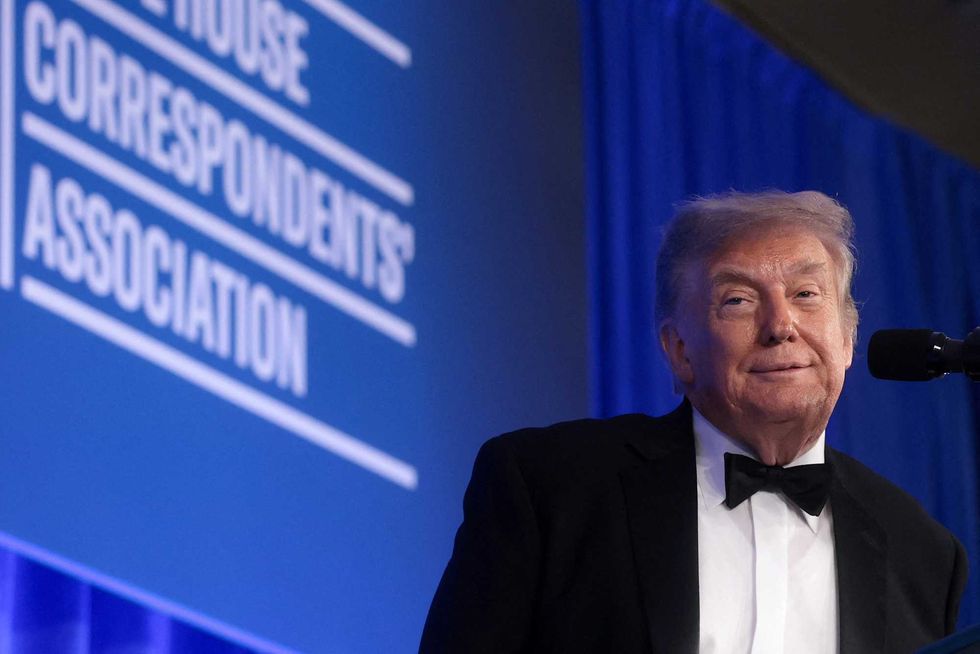
President Donald Trump faced backlash Saturday after critics accused him of recycling a joke that had circulated online for decades during his speech Friday at the White House Correspondents' Dinner.During the event, Trump joked about a text message a senator apparently received from his wife, who said, “when you get home, I want you to immediately come up the stairs and make love to me.” Trump then recalled that the senator said “I can’t do both.”As flagged by the progressive media organization MeidasTouch, Trump’s joke – which the president later claimed to have thought was “the only thing good in this whole frickin’ stupid speech they wrote” – had existed for decades.“Trump (well, his writers) recycled this joke,” reads a Saturday post from MeidasTouch’s X account. “It appeared in a Brad Paisley song released in 2007, a Tampa Tribune article back in 2000, and has been shared numerous other times on the Internet throughout the years.”The recycled material was just one part of what reviewers widely panned as a flop performance. CNN reported that Trump bombed at the dinner, even attempting to meta-joke his way out of it, though his self-deprecating jokes also fell flat.Writer Nick Bryant summed up the reaction bluntly on X."I don't think anybody would label him the comedian-in-chief. Excruciating to watch," Bryant wrote.In his rambling remarks, Trump insulted journalists by name, repurposed old nicknames for political opponents, and made a string of fat jokes that fell flat, and at points appeared to grow frustrated with his own writers over the material he'd been given.Trump (well, his writers) recycled this joke. It appeared in a Brad Paisley song released in 2007, a Tampa Tribune article back in 2000, and has been shared numerous other times on the Internet throughout the years. https://t.co/9ptq6G8tXX pic.twitter.com/QIRjT3Kvn1— MeidasTouch (@MeidasTouch) July 25, 2026
New York City's municipal bond prices continue to decline as Mayor Zohran Mamdani doubles down on his Marxist Third-Worldism, every minute of every day, it seems.