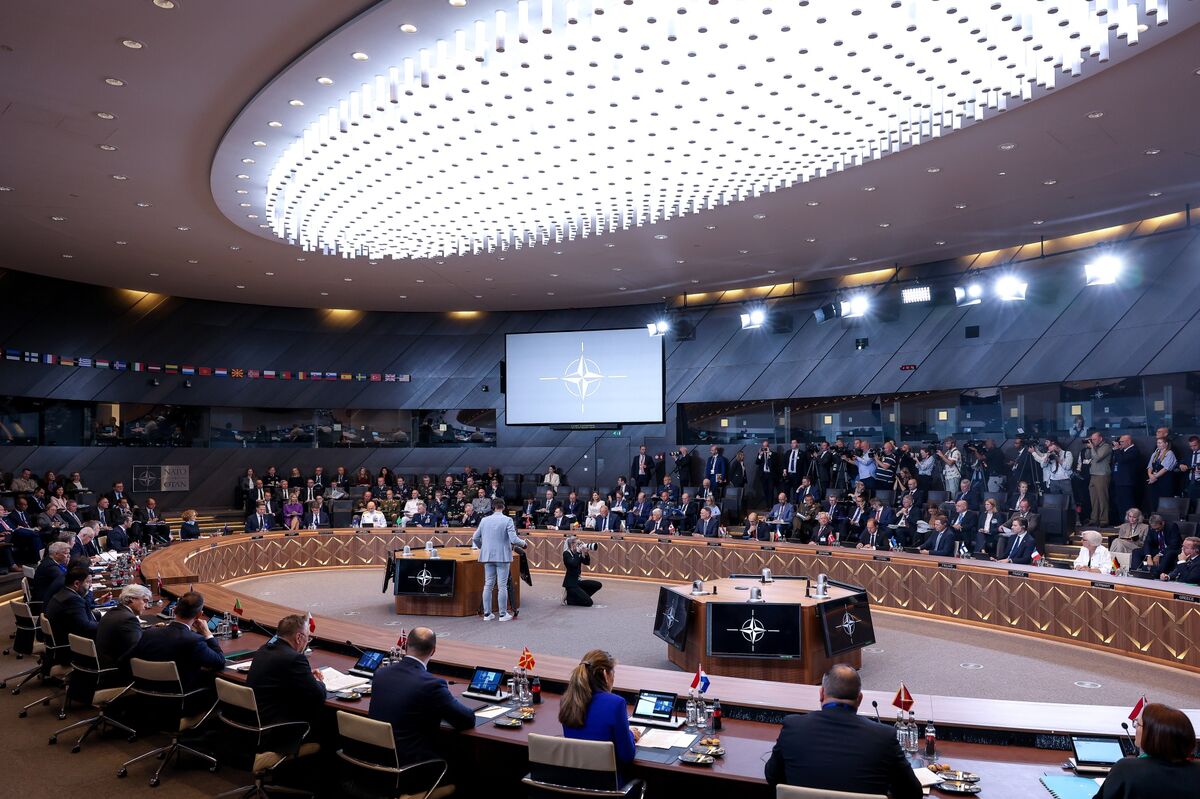
European NATO allies have mostly replaced the assets that the US has cut from its rescue plans in case of a war in Europe, Deputy Supreme Allied Commander Europe Sir John Stringer said in an interview.
The fight that scrubbed the world's most powerful AI models from the internet featured personality clashes, industry confusion, and international backlash.Why it matters: Anthropic's models are back online, but the impact of its 20-day showdown with the Trump administration will be long lasting.Behind the scenes: It began when Amazon, Anthropic's partner and investor, sounded an alarm that was later disputed by cybersecurity experts.It warned about a "jailbreaking" issue it found with the AI lab's latest models, Mythos and Fable — meaning a technical flaw that could have caused a failure of their guardrails.Amazon flagged its concerns to the administration, triggering sweeping export controls. A U.S. official said the government conducted its own tests once it became apparent that the issue needed to be addressed.Cybersecurity experts, however, later wrote in an open letter to the administration that other leading AI models have the same issue Amazon warned about with Anthropic.On June 12, Commerce Secretary Howard Lutnick, at the direction of President Trump, called Anthropic CEO Dario Amodei. Lutnick made clear to Amodei the issue needed to be resolved fast and alerted the CEO that the company would be receiving a letter imposing sweeping export controls, the U.S. official said.Amodei called Lutnick back that night after receiving the letter, realizing it effectively meant the models would have to be taken offline — to which Lutnick responded that was indeed the goal.That decision led to a three-week, multi-agency crash course in AI safety.Anthropic deployed engineers to Washington D.C. According to a U.S. official, the company wanted to prove everything was already resolved and further changes were being fine tuned.But the federal Center for AI Standards and Innovation and the National Security Agency said those changes weren't good enough, prompting further fixes, according to the U.S. official.Gradually, various agency heads approved of the changes, and on July 1 the models were released, the official said.Out of all of the administration officials Amazon's Andy Jassy could have called, it was Treasury Secretary Scott Bessent who first heard about the jailbreaking issue found in the company report, according to a separate source familiar.Bessent was early to sound the alarm on Mythos, work with White House Chief of Staff Susie Wiles to re-engage the embattled company, and help get a cybersecurity executive order across the finish line.While technical discussions to address the jailbreaking issue took place in D.C., it was Bessent who stood next to President Trump during the G7 where allies called for global cooperation on safety standards.At the center of the showdown was Commerce Secretary Howard Lutnick, who also flanked Trump at the G7 meeting while his department's teams led technical discussions.National cyber director Sean Cairncross, the White House Office of Science and Technology Policy, Treasury Department chief information officer Sam Corcos, and the NSA also all participated in technical discussions, according to various sources.Washington mobilized faster to hold scores of meetings and pulled in far more agencies than one would expect for a single technical issue, one source said.The tension spiraled amid personality clashes and poor communication.Anthropic eventually understood that in order to be successful they needed to be on the same side as the government, the U.S. official said.As discussions turned more technical, Anthropic policy chief Sarah Heck and Anthropic co-founder Tom Brown got more involved. Brown also had multiple conversations with Lutnick and Cairncross the weekend of June 12.There was never a moment where Dario stepped offstage and someone else replaced him, one source said, adding that Brown's technical expertise allowed him to sit in a room with government specialists and go line‑by‑line through how models behave under stress.Between the lines: It remains uncertain when and how Anthropic's models will be released to ally countries around the world — which proponents say is key to beating China — or how other labs from OpenAI to Google will release their latest models.OpenAI, whose latest model GPT-5.6 is on hold, did not have visibility into discussions between Anthropic and the White House and is engaged in daily technical discussions on the release of its own model, a source said.The bottom line: There's a lot of work left to be done on a framework for approving future models with a clear inclusive process that has transparency standards and timelines, sources familiar said.
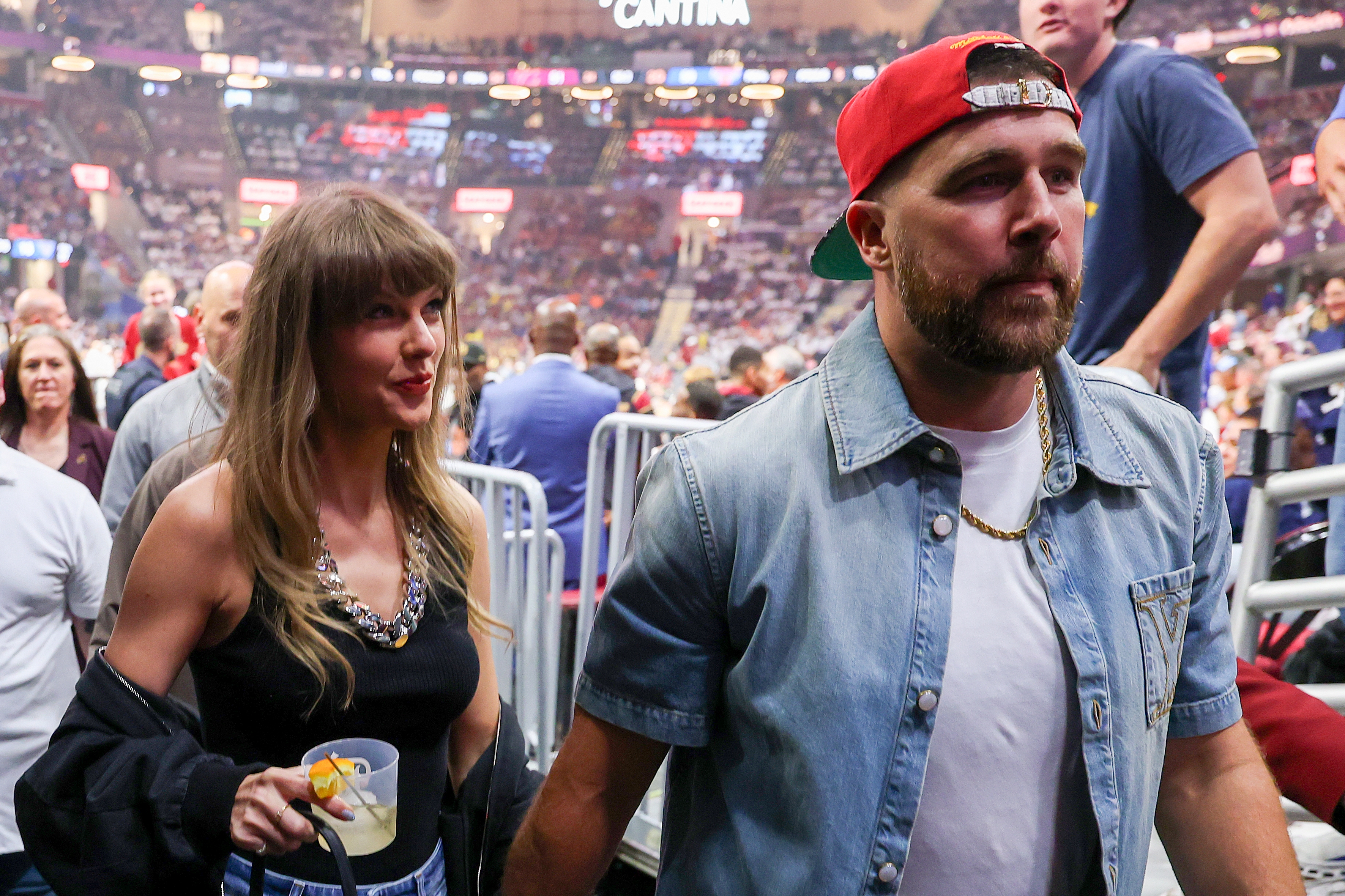
Superfans and sleuths appear to have their hunches confirmed on Friday, as dozens of black cars dropped off elegantly dressed guests outside of Madison Square Garden in New York City. The wedding bash is expected to last into Saturday morning.
Ever since LeBron James informed the Los Angeles Lakers that he would be signing elsewhere in free agency this offseason, one of the biggest stories in basketball has been which team he’ll sign and end his legendary NBA career with. The Golden State Warriors and the Cleveland Cavaliers are thought to be the two favorites....
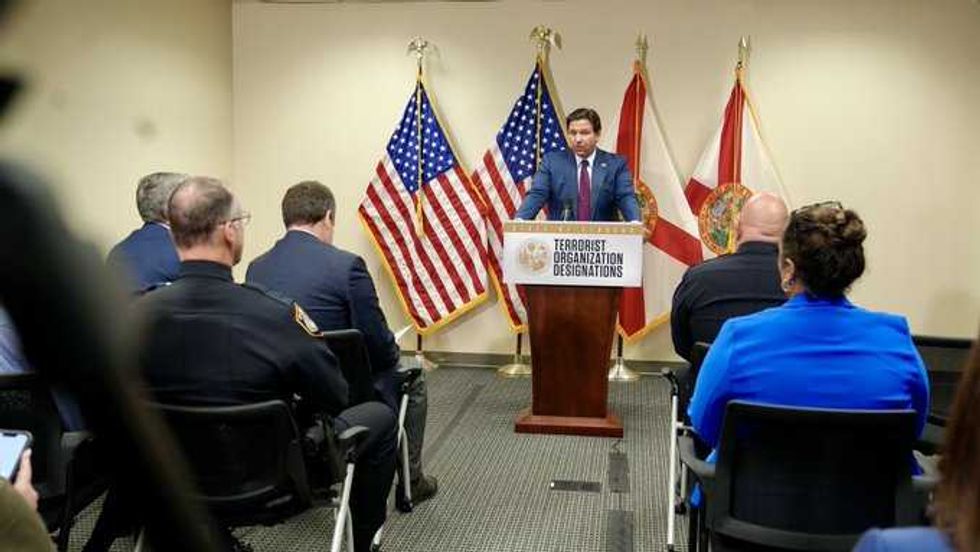
Florida is taking action against nearly 100 organizations that will likely soon have a new "terrorist" designation under Florida law.On Wednesday, Republican Gov. Ron DeSantis announced that some significant legislation, which provides a stronger framework for declaring groups terrorist organizations, took effect on the first day of the month. 'We are not going to fund terrorism in our great state.'During his announcement, DeSantis said that officials "are not going to waste any time" before beginning the "initial tranche" of domestic terrorist designations in Florida, suggesting more to come in the future as well. "Based on the recommendations of Florida's domestic security professionals and the authority, the newly established authority in law, my office and the [C]abinet are poised to officially designate the first slew of terrorist organizations under the new law," DeSantis said in the announcement.RELATED: Florida AG calls for impeachment after judge acquits mother who killed baby and blamed COVID Anna Moneymaker/Getty ImagesAmong those organizations designated, DeSantis named familiar Islamic groups like the Muslim Brotherhood and the Council on American-Islamic Relations, but also mentioned the addition of Antifa to the list. He also named a couple of groups affiliated with drug cartels, like Cartel de Sinaloa and Tren de Aragua.Notably, DeSantis added that the Islamic Revolutionary Guard Corps of Iran would also be added to the list among "more than 90 Foreign Terrorist Organizations."Florida Department of Law Enforcement Commissioner Mark Glass, who also serves as the state’s chief domestic security officer, explained that the new law gives more tools to prevent taxpayer dollars from reaching those organizations that have been designated as terrorist groups, Florida's Voice reported."We are not going to fund terrorism in our great state," Glass told Florida's Voice. "We’re just not going to do it."Glass added that the new framework will allow greater transparency for the public to see where taxpayer dollars are being distributed: “It’s actually even a public service campaign to ensure that you know where you’re receiving dollars or you’re giving dollars."These actions, however, have been under legal threat for months, dating back to before the legislation was signed. DeSantis acknowledged to Florida's Voice that "we'll definitely get sued," though he believes the outcome "will be beneficial." The new law, which went into effect on Wednesday, builds upon an executive order from DeSantis on December 8, which laid the groundwork for legislation to be drafted and signed by the governor in early April. The December executive order singled out CAIR and the Muslim Brotherhood. As a result, CAIR sued the administration over the executive order, arguing that its rights had been violated.On March 4, United States District Judge Mark Walker granted the motion for a preliminary injunction, freezing the use of the executive order. The DeSantis administration appealed the injunction two days later in the 11th Circuit Court of Appeals.The law, signed almost exactly a month later, will likely be used as a new legal support in the ongoing legal fight over the executive order. Like Blaze News? Bypass the censors, sign up for our newsletters, and get stories like this direct to your inbox. Sign up here!
According to conservative commentator Tucker Carlson — who used to be among President Donald Trump’s closest allies — the U.S. is “not a democracy,” and he’s now working to “help build a third party” that will uphold the “America first” values he says Trump has betrayed. Carlson made these assertions via an interview with the Columbia Journalism Review, which he gave following his announcement that he had left the Republican Party. While he says that he was a “consistent defender” of the party for 35 years, he now argues he can no longer support the way it has changed under Trump. Central to his criticism of both president and party was the war in the Middle East. While Carlson was instrumental to Trump’s success during the 2016 and 2024 campaigns, explains the New York Times, “he broke sharply with the president after the United States started the war with Iran in late February, declaring Mr. Trump was violating a core campaign promise to avoid foreign conflicts. By April, Mr. Carlson said he was ‘tormented’ by his past support for the president. He told the Columbia Journalism Review that he had not spoken to Mr. Trump since the start of the war.”“I’m not interested in talking to him,” said Carlson.While Carlson has in the past attempted to maintain a public perception of alliance with Trump, texts revealed in 2023 during a defamation lawsuit filed by Dominion Voting Systems showed his true feelings. “I hate him passionately,” texted Carlson in 2020, just two days before Trump spurred on the January 6 insurrection. A few days later, he texted that the president was “a demonic force, a destroyer.” Trump regained Carlson’s loyalty — or at least his willingness to fake it — in time for the 2024 election, but then over the course of the following year, growing daylight could be seen between their policy positions. Then Trump launched conflict with Iran, which Carlson said betrayed the “America first” ethos as well as blatant promises to start “no new foreign wars.” Speaking with the Columbia Journalism Review, Carlson said that there was no longer any contrast between “war and finance.”“That’s not a democracy,” asserted Carlson. “That’s a one-party state posing as a democracy, and it needs to be broken, and there’s going to be a third party, and I’m going to do everything I can to bring that about.” While some have suggested that he may be preparing for a presidential run himself, Carlson has rejected this idea, saying, “I’m not a politician, that’s for sure. I’m not a rival to Trump for power. I have no power. I’m someone who knows Trump, and I know him well, and I’ve known him for a long time.” Carlson isn’t the only prominent figure from the MAGA movement to lose faith in Trump. Former Representative Marjorie Taylor Greene had her own dramatic falling out with the president, and on Wednesday announced plans to create a new political party specifically to oppose the MAGA agenda.