Mamdani, 34, said it's a turning point in the Democratic Party with rank-and-file members opposing -- rather than supporting -- Israel in Middle East conflicts.
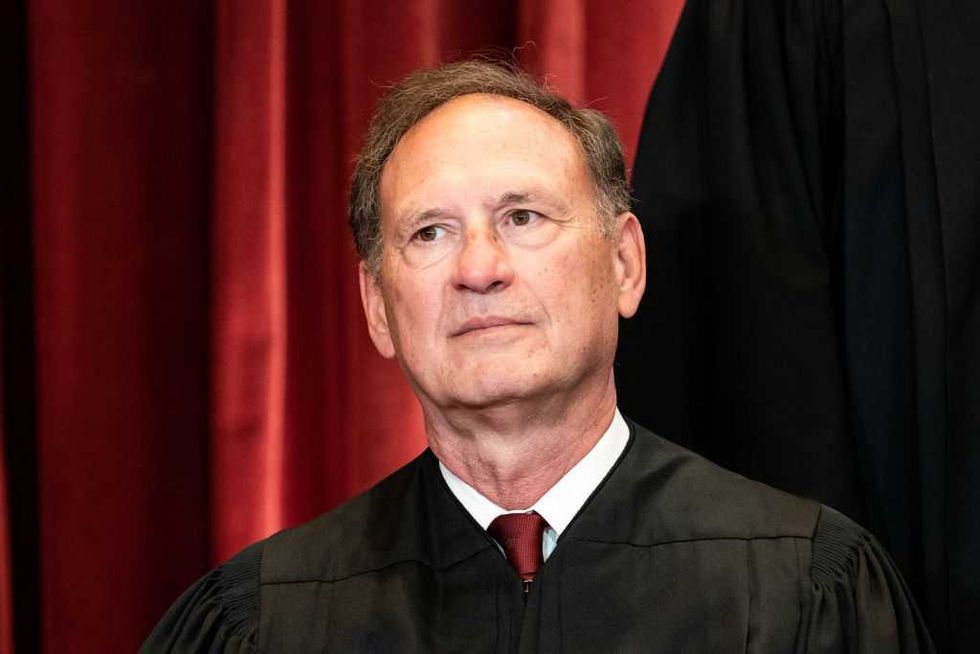
Supreme Court Justice Samuel Alito authored the dissenting opinion in the Supreme Court's decision on mail-in ballot deadlines on Monday, blasting the majority's disregard for federal law.
The post Alito Blasts Mail-in Ballots Received After Election Day in Dissent to SCOTUS Allowing Mail-in Ballots to Be Received AFTER Election Day appeared first on The Gateway Pundit.
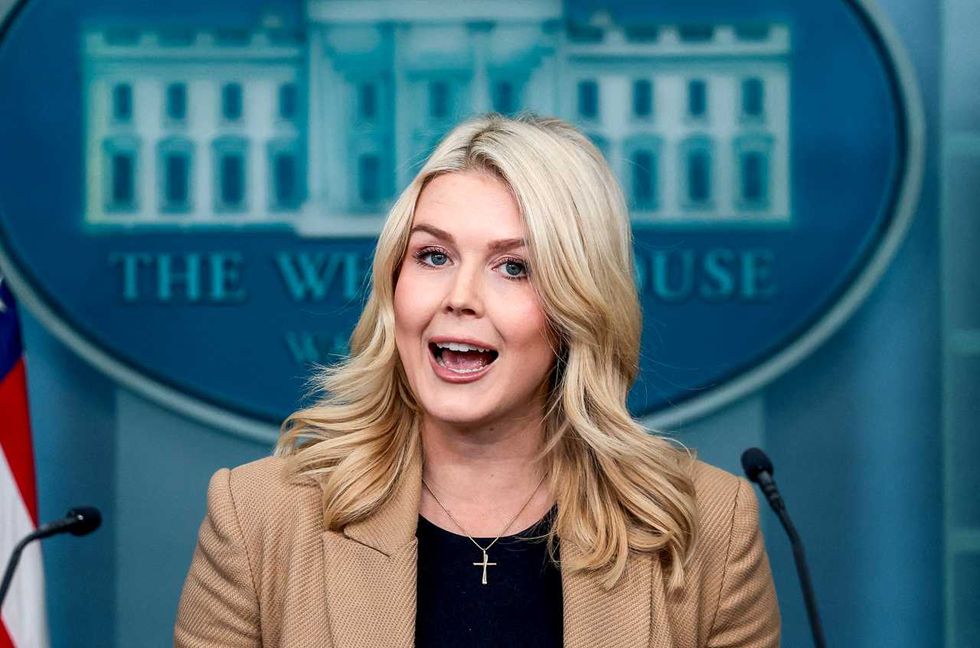
White House press secretary Karoline Leavitt marked her return from maternity leave Monday by immediately attacking Democratic candidates as "communists" on Fox & Friends.Leavitt gave birth to her daughter, Viviana "Vivi" Riccio, eight weeks ago and stepped away from the briefing room podium in late April. Her first TV appearance back was on Fox & Friends Monday morning."How does it feel to return for America 250?" co-host Lawrence Jones asked."Well, becoming a mother changes your perspective on everything," Leavitt said. "And you realize how blessed we are to live in this country, to bring up babies in a nation where they can be whatever they want to be," she continued. "And I look forward to raising them in this wonderful country.""So I'm back to work, and motherhood is in full swing," she added.In a pivot to Iran, co-host Brian Kilmeade noted that American forces had recently exchanged fire with Iranian-backed attackers. The targets included U.S. bases in Bahrain and Kuwait, as well as merchant ships in the region."So as far as we're concerned, we're holding up our end of the ceasefire," Leavitt insisted. "Violence will be met with violence."Then co-host Ainsley Earhardt raised the rise of democratic socialists — including New York City Mayor Zohran Mamdani (D-NY) and D.C. mayoral Democratic primary winner Janeese Lewis George (D-DC) — and asked why President Donald Trump would agree to meet with them."Well, the president is always willing to sit down and meet with anyone," Leavitt replied. "However, I know the president and many Americans are extremely concerned about how far left the Democrat [sic] party is moving.""You see these candidates — this is not your granddaddy's Democrat [sic] party," she charged. "These are communists! The president is right to call them that.""They want to abolish private prisons. They want to abolish the police. They want to abolish private property," Leavitt continued. "These are radical Marxist ideas that have never worked in the history of the world.""And I think it's a choice coming up between communism and common sense," the press secretary continued. "And you see Democrat elected officials right here on Capitol Hill — Hakeem Jeffries, Chuck Schumer — are afraid to stand up and speak out against these radical communists who are taking over their party," Leavitt said. "It's quite scary."Trump's approval rating sits 16 points underwater, according to the RealClearPolitics polling aggregate, with public perceptions of his economic stewardship sinking even lower, the Washington Examiner reported.
President Trump’s fragile ceasefire with Iran is under new strain after Tehran demanded control over all ship traffic through the Strait of Hormuz, raising fresh questions about whether peace talks can survive. New York City Mayor Zohran Mamdani shuts down talk of a future presidential run while embracing a growing role in reshaping the Democratic...
The U.S. Supreme Court delivered a big defeat on Monday to conservatives seeking to prevent Election Day from becoming little more than an "abstraction."The high court ruled 5-4 that the "federal election-day statutes do not prevent Mississippi from counting absentee ballots postmarked by Election Day but received up to five days thereafter," adding that "nothing in the federal election-day statutes requires ballots received by election day."'Today’s decision compounds these vulnerabilities.'The case in question, Watson v. Republican National Committee, was the result of a years-long battle over a COVID-era Mississippi law passed by the Magnolia State's Republican trifecta that permits the counting of mail-in absentee ballots postmarked by the date of the election but received up to five business days after Election Day.Republicans were wary, in part, because mail-in voting is starkly polarized by party and "the late-arriving mail-in ballots that are counted for five additional days disproportionately break for Democrats."While it has narrowed since 2020, the partisan divide in mail-in voting remained substantial in the 2024 election — which helps explain why so many Democrat-aligned groups have defended the practice and the Mississippi law.In 2024, the RNC, the Mississippi GOP, and several individuals sued Mississippi's secretary of state and other state election officials, arguing that federal law bars Mississippi from counting absentee ballots received after Election Day.RELATED: Stopping the steal: Sen. Lee, Republicans demand Election Day integrity ahead of SCOTUS fight over 'rolling' ballot counts Chip Somodevilla/Getty ImagesIn October 2024, the Fifth Circuit Court of Appeals ruled in the plaintiffs' favor. Last year, however, the state asked SCOTUS to get involved and reinstate its post-Election Day grace period.Mississippi maintained that late counts are acceptable as "federal election-day statutes require only that the voters cast their ballots by election day" — that "an election requires ballot casting — not ballot receipt."Justice Amy Coney Barrett, who delivered the majority opinion, wrote that "this is not a case about the Constitution. We do not consider the scope of Congress' authority to regulate federal elections. The sole question before us is whether counting ballots postmarked by election day, but received up to five days later, violates the federal election-day statutes."Barrett answered that the existing statutes "do not preempt Mississippi's law.""As we have said before, the federal election-day statutes 'simply regulate the time of the election,'" wrote Barrett.While the relevant federal statutes determine when the electorate must make its choice, Barrett noted that "choice is made when voting is complete, not when ballots are received.""The framers recognized the difficulty of crafting election laws 'applicable to every probable change in the situation of the country,'" Barrett wrote in her conclusion, citing the Federalist No. 59. "So instead of constitutionalizing election law, they decided that 'a discretionary power over elections' needed to be lodged 'somewhere.' ... Suffice it to say, that power was not lodged in this court. The election-day statutes say nothing about ballot receipt, and we cannot add to the words Congress chose."Justice Samuel Alito — who dissented along with Justices Clarence Thomas, Neil Gorsuch, and Brett Kavanaugh — torched his liberal and nominally conservative colleagues' arguments in a lengthy takedown, emphasizing at the outset that "if ballots received after election day are added to the set of ballots that dictate the election’s outcome, the electorate’s choice does not occur on election day, and the federal election-day statutes are violated.""The acceptance of these late-arriving ballots effectively postpones the date on which the electorate's choice is made, and federal law precludes that postponement," added Alito.He further emphasized that for most of America's history, the expectation was that votes were received and American elections were decided on Election Day."Two centuries of historical practice reinforce the proposition that holding an 'election' on a particular day means that poll workers had to receive the ballots by that date," wrote the conservative justice. "From this country’s founding until the late 20th century, election-day ballot collection was the near-uniform practice, with only a few, late-arriving exceptions."Alito noted this was the case "even when the Civil War took soldiers hundreds of miles from their usual polling places."In his scathing critique of the majority's opinion, Alito also accused his colleagues of attempting "to fend off two centuries of American election practice" and noted that "when Congress enacted the three election-day statutes, having the 'election' on a particular date meant that ballots would be collected by that date."Alito stressed that the ruling not only "threatens to produce...
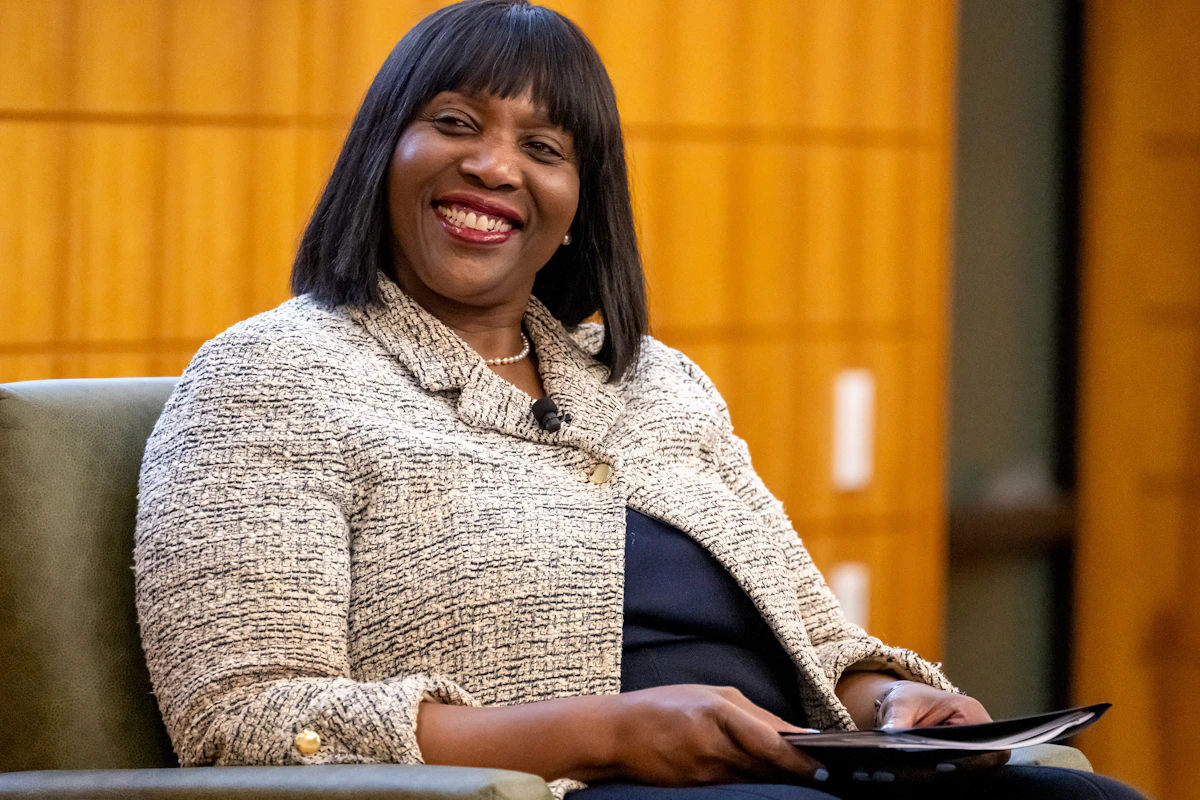
The Supreme Court has blocked President Trump from firing Federal Reserve Governor Lisa Cook, preserving the central bank’s independence for now. In a 5-4 decision Thursday split across ideological lines, the Supreme Court blocked Trump’s attempt to become the first president to remove a Federal Reserve official since it was created in 1913.Conservative Chief Justice John Roberts and fellow conservative Justice Brett Kavanaugh joined the court’s three liberal justices to rein in Trump.Last August, Trump declared that he was booting Cook—the first Black woman on the Federal Reserve board—over claims she committed mortgage fraud with two primary residencies. Cook refused to step down, and sued, stating that “President Trump purported to fire me ‘for cause’ when no cause exists under the law, and he has no authority to do so.” A lower court ruled that Cook could not be dismissed while her case proceeded. The Department of Justice then requested that the Supreme Court stay that ruling, so that Cook could be removed from her position. The Supreme Court refused. “No matter the precise definition of cause, or the scope of our review of any such determination, the President failed to afford Cook the procedural protections to which she was entitled by statute,” wrote Roberts, who wrote the majority’s ruling.The case will now return to a lower court, where Cook will fight to save her job. Cook was appointed by former President Joe Biden, and her term was set to expire in 2038.In a separate decision Monday, the Supreme Court gave the president more power over independent agencies, ruling that Trump had the authority to fire Rebecca Slaughter. The ruling shifted quite a lot of power from Congress to the president, and has ushered in one of the largest changes to the federal government in decades.This story has been updated.
The Supreme Court upheld a Mississippi law allowing mail-in ballots to be counted up to five days after Election Day so long as they are postmarked by voting day, handing Democrats a massive win heading into the midterm elections.
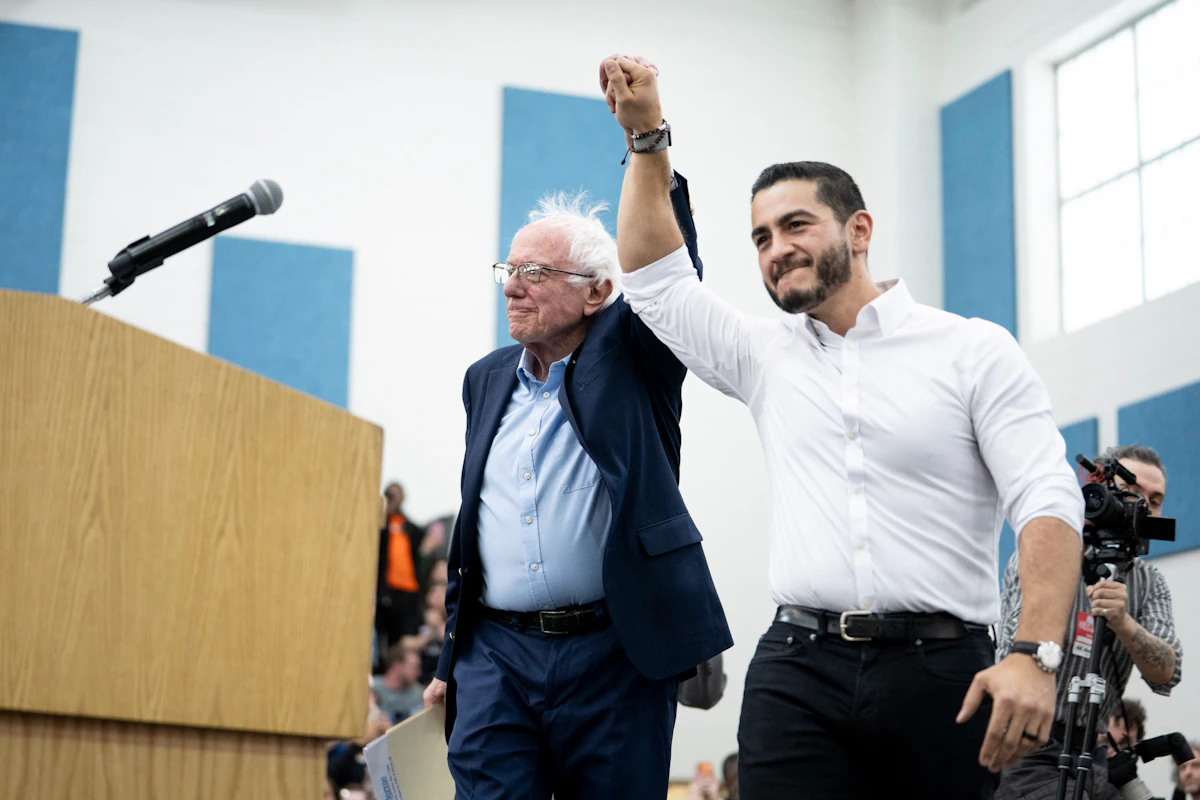
Abdul El-Sayed, a primary candidate for U.S. Senate in Michigan, released an ambitious AI policy platform Monday, joining other progressives like Senator Bernie Sanders in a push for regulation and public ownership. But El-Sayed’s proposal also goes a step further: not just public ownership, but also public governance. Earlier this month, an AI super PAC spent millions to ensure that Alex Bores, the author of a comparatively weak New York state AI accountability law, wouldn’t make it to Congress. El-Sayed’s proposed changes to the AI industry go far further than Bores’s legislation. When asked whether he was worried about industry political action committees targeting his campaign over his new proposals, El-Sayed shrugged it off. “I’m just not afraid of them or AIPAC or any of the others. What’s another hundred-million-dollar super PAC, I guess?”El-Sayed’s policy proposal, which he shared exclusively with The New Republic ahead of its release, has three key components: democratic governance of AI, public ownership of AI companies, and safety requirements. His proposal takes inspiration from Sanders’s American AI Sovereign Wealth Fund bill, proposed earlier this month—and like Sanders’s bill, calls for the creation of a sovereign wealth fund to distribute AI companies’ cash into Americans’ pockets. Sanders envisions establishing that via a one-time 50 percent tax on the country’s biggest AI companies, generating an estimated $7 trillion for social safety net programs, plus a yearly dividend for Americans. El-Sayed proposes using that money to fund education and job training, increase unemployment benefits, and boost small business loans.“I love the senator’s point that we need to own the outcomes of this, in part because it is our data and our knowledge that went into creating it,” El-Sayed said about Bernie’s proposal. They both reason that, since AI has been trained on human writing, research, and collective knowledge, it is a good that belongs to all Americans. “But I think the ownership part needs to go a step further, because we also need some control,” El-Sayed added.To get that control, he proposes democratic governance of AI companies. He proposes that frontier AI labs be chartered as public benefit corporations, legally mandating them to balance public interest with profit margins. Additionally, he suggests that a majority of board seats at these companies should be democratically elected or publicly appointed, rather than selected by shareholders. And, importantly, he calls for major tech companies like Amazon, Microsoft, Google, and Meta to divest from frontier AI companies. El-Sayed also recommends the establishment of a Food and Drug Administration–style agency to evaluate models before they’re deployed, a ban on AI-generated political media, and requiring companies to work with the Centers for Disease Control and Prevention, National Institutes of Health, and Federal Emergency Management Agency to protect against biosecurity breaches.El-Sayed’s breezy response to TNR’s question about possible industry retaliation—“What’s another hundred-million-dollar super PAC, I guess?”—references the unrelated money that the American Israel Public Affairs Committee, or AIPAC, has already spent on the race. Through United Democracy Project PAC, AIPAC has spent over $2 million to support one of El-Sayed’s opponents, Representative Haley Stevens, who is the Democratic establishment’s favored candidate. El-Sayed has repeatedly criticized both the Israeli government and AIPAC’s influence in politics. El-Sayed is also facing State Senator Mallory McMorrow, though polls suggest the race is largely between El-Sayed and Stevens. McMorrow released an AI policy proposal last month that focuses on creating a professional apprenticeship program funded by a token tax, which would charge by the number of tokens used (tokens are the basic units of data that AI models use). Stevens has not released an AI policy plan.Despite a broad consensus among voters that politicians should regulate the AI industry, few bills have actually been passed. Following AI industry super PACs’ massive spending to defeat Alex Bores in retaliation for the RAISE Act, some feared politicians might become even more reluctant to try.El-Sayed is hopeful that American voters are ready to push back against money in politics. “We live in an era right now where people are really smart to the old system of money coming in to buy elections. They see the wool being pulled over their eyes and they don’t like it,” he said.He also doesn’t think politicians have the luxury of time when it comes to regulating AI. “We need to act yesterday,” he said, “and at best, we can act tomorrow.”