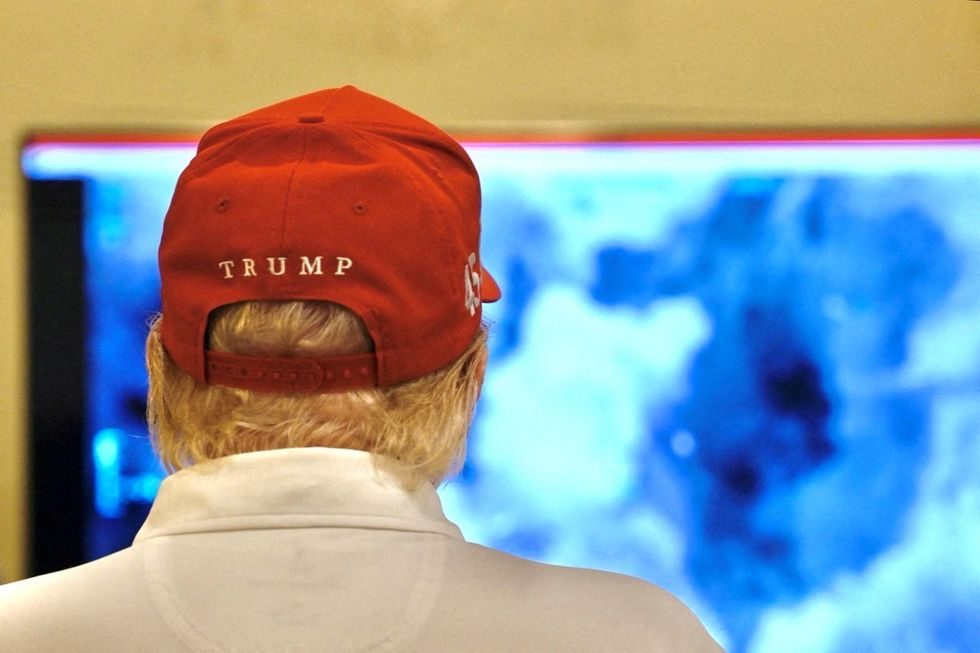
It's not the number of service members who've been killed in the war with Iran. It's not the number of people who have died in ICE custody. It's not the millions of people imperiled by the Trump administration's decision to dismantle USAID.The number terrifying Republicans, according to a new Washington Post report, is the amount of voters worried about the economy. “This is a big chunk,” Nathan Nascimento told the Post. “This is a scary number.”Nascimento, executive director of the conservative super PAC Americans for Prosperity Action, told the Post Sunday that he's disturbed by polling that shows even loyal Republicans and consistent voters are losing enthusiasm for President Donald Trump.About 1 in 5 of those voters in swing states such as Ohio and New Hampshire told the PAC they think they'll either stay home of vote blue in November, the Post reported. There is however enthusiasm on the left, Mitchell Brown, a Republican pollster, told the Post. "Democrats are as enthusiastic about voting as they were at the same time ahead of the 2018 midterm elections, when they swept back into power in the House," Brown said. "But Republicans are far less excited to vote at this point than they were then, posing an issue for the party." In particular, men under 40 represent the greatest risk as they are most likely to have concerns about the economy and prices. "This group proved pivotal to Trump’s 2024 electoral victory," the Post reported, "which included a sweep of some of the same battleground states holding critical elections this year."Natalie Baldassarre, a spokeswoman for the Republican National Committee, denied a dour state of affairs within her party. “Republicans are united, on offense, and armed with our largest war chest in party history because voters are energized and understand what’s at stake in November’s election,” said Baldassarre. As of Sunday, the number of service members who've been killed in the war with Iran is 18. The number of people who have died in ICE custody is 19. The number of people imperiled by the Trump administration's decision to dismantle USAID is 14 million.
U.S. military forces disabled a tanker trying to get through the Strait of Hormuz on July 24, stopping what officials said was a deliberate attempt to run a regional blockade after the crew repeatedly ignored warnings.
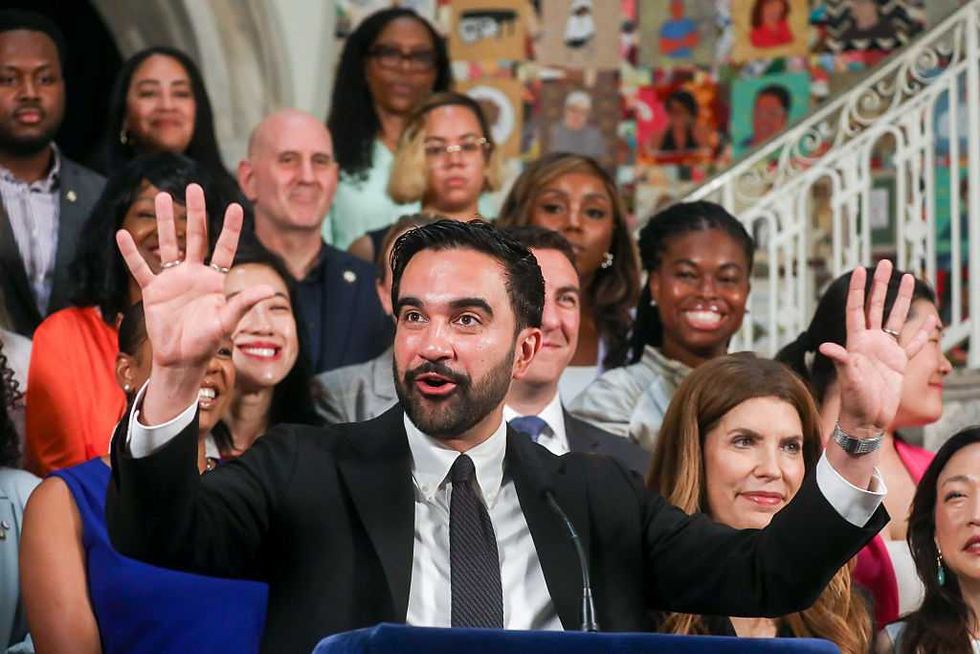
"Have you ever been to the U.S.-Mexico border?” “No.”One word. That may have been the most revealing moment of New York City Democratic Mayor Zohran Mamdani’s recent interview with the New York Times.Sanctuary policies are easy to defend from a podium at New York City Hall. They are much harder to defend before communities that have already paid the price.Mamdani defended his city’s sanctuary policies, which he reinforced after taking office by signing an executive order reaffirming them.The problem is not so much that Mamdani has never visited the border. It is that he seems unwilling to understand why communities that lived through the border crisis reached a very different conclusion.That lesson is visible far beyond the Rio Grande.Consider Goliad County in South Texas. The rural county has about 7,000 residents and sits roughly 160 miles from the U.S.-Mexico border.Testifying before the Senate Judiciary Committee last year, Sheriff Roy Boyd described how the crisis transformed the community he serves.Boyd’s office averaged 77 arrests a year during the five years before 2021. From 2021 through 2024, that average jumped to 413. Deputies discovered 16 cartel stash houses, and pursuits involving suspected human smugglers became routine.Residents began hearing voices and movement on remote properties after dark. Many no longer felt safe alone in their own homes.Those facts expose what Mamdani’s answer overlooks. The border crisis did not remain at the border. Cartel activity and illegal immigration reached inland communities that lacked the personnel and equipment to confront them. Former Border Patrol agent and Texas Public Policy Foundation senior fellow Ammon Blair calls cartels “hybrid threats.”As Blair puts it, “Cartels don’t just smuggle. They destabilize.” Boyd has described them as “contractors and subcontractors” in a network moving migrants and drugs from the border into Texas’ largest cities.That reality changed Texas’ response. In 2021, as illegal crossings surged under President Joe Biden, Goliad became one of the first inland counties to declare a local disaster. Boyd suggested giving local law-enforcement agencies flexible grants for overtime, new officers, patrol vehicles, and other equipment.Those grants became part of Operation Lone Star.According to Texas Republican Gov. Greg Abbott’s office, Operation Lone Star has produced more than 535,700 apprehensions and referrals, 57,400 criminal arrests, and 47,500 felony charges. Texas law enforcement has also intercepted more than 779 million lethal doses of fentanyl.RELATED: The revolution will not be televised — it will be livestreamed in 4K Andrew Lichtenstein/Corbis/Getty ImagesBoyd later launched the Operation Lone Star Task Force, which allows local agencies to share deputies, intelligence, and resources across jurisdictional lines while targeting human smuggling, cartel activity, and organized crime.New York has felt the downstream effects too. Former Mayor Eric Adams warned that the migrant crisis would “destroy New York City.” Mamdani nevertheless continues to defend sanctuary policies that impede cooperation with federal immigration authorities.Goliad’s experience carries a national lesson. Criminal organizations do not recognize state boundaries. The same networks that move people across the border traffic drugs, weapons, and money into communities nationwide. They exploit ports of entry, the northern border, and weaknesses far from either frontier.The farther those networks spread, the more Americans discover that border security is not someone else’s problem.Mamdani may be proud of New York City’s sanctuary stance.His one-word answer showed more than where he has never been. It revealed what he refuses to see.Sanctuary policies are easy to defend from a podium at city hall. They are much harder to defend before communities that have already paid the price.
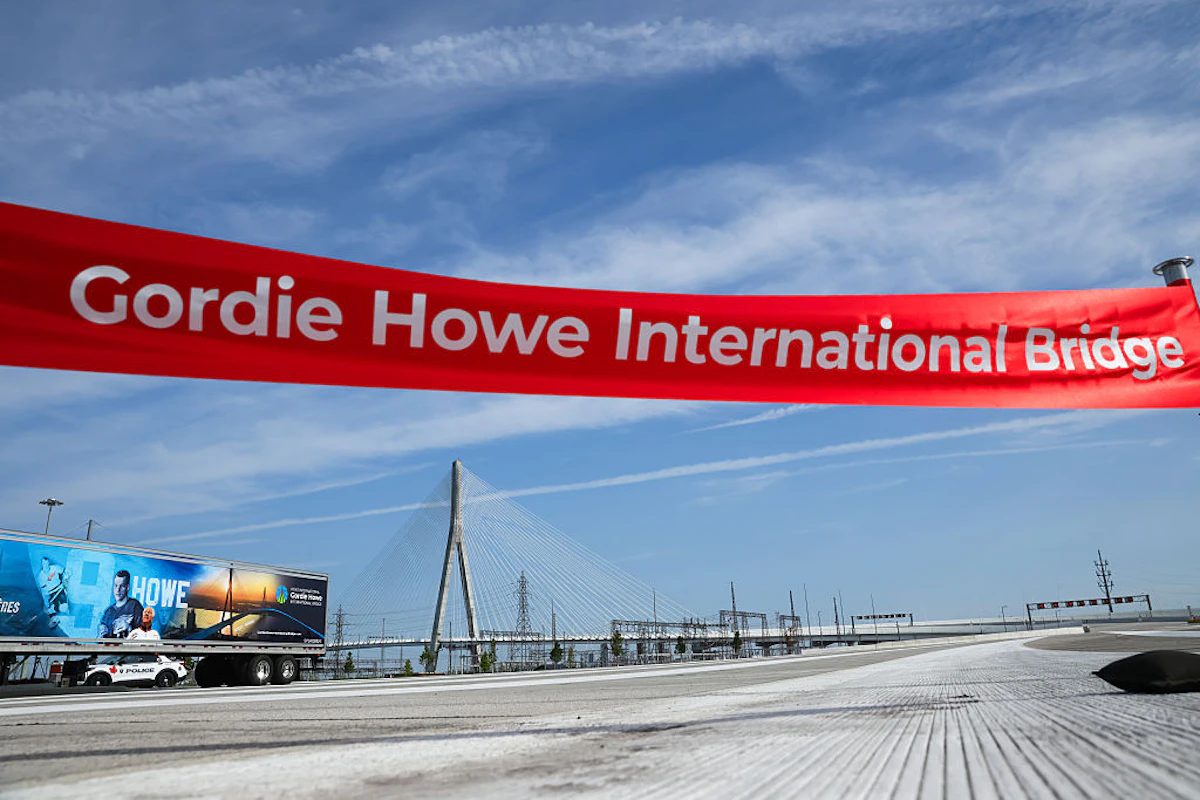
President Donald Trump is suddenly reneging on the terms of the Gordie Howe Bridge project after he claimed Ottawa “disinvited” U.S. officials from the Michigan–Ontario crossing’s grand opening.“Canada disinvited the United States of America to the opening of the Gordie Howe Bridge, which is fine, considering they are paying substantial TARIFFS to the United States, but the original Deal on the Bridge, which was terribly negotiated by a previous Administration, no longer stands,” Trump wrote on Truth Social Friday. “We changed the terms of the Deal so that the United States of America now gets 50 percent of the Profit.”The Gordie Howe Bridge was the creation of a very different period in U.S.-Canadian relations. The international bridge was first proposed in the early 2000s and agreed upon by the two nations in 2012. Under the terms of that agreement, Canada would fully pay for the bridge to get the project moving forward and only share toll revenue once it had recovered its initial costs.At the time, President Barack Obama was revered by America’s northern neighbors, and diplomatic relations between the two countries were good. But Trump has worked hard to undo that long-standing goodwill. Over the last year and a half, the U.S. president has repeatedly attacked Canada, punishing its people with enormous tariffs, baselessly accosting its government, and even threatening to invade its land to make another U.S. state.The latest insult came earlier this week, when Trump announced 50 percent tariffs on a wide range of Canadian products worth $20 billion. Canada rescinded its invitations to U.S. officials for the bridge’s grand opening ceremony shortly thereafter, and moved the ribbon-cutting ceremony from the international border line at the center of the bridge to a nearby inspection plaza.“In light of trade action threatened by the United States earlier this week, it would be inappropriate to proceed with a celebratory event between the two countries,” the office of Canada’s infrastructure minister said, in a statement obtained by The New York Times. “The Gordie Howe International Bridge remains a vital infrastructure project that reflects years of hard work and will be a major economic driver.”Now Trump is threatening the bridge by claiming that the two countries will split the revenue 50-50, which was not what was agreed upon nearly 15 years ago.It’s not the first time that Trump has meddled with the bridge. In February, Trump promised that he would block the grand opening unless Canada “fully compensated” the U.S. “for everything” and give him “at least half” ownership of the bridge.It was not clear, even then, what Canada needed to compensate Washington for. Canada footed the bill for the Gordie Howe International Bridge. The project created new American labor and was constructed with U.S. supplies to boot.Trump’s take was an unexpected backtrack from how he felt about the bridge during his first term: Trump seemed to wholeheartedly support the endeavor in a joint statement issued in 2017 by himself and former Canadian Prime Minister Justin Trudeau, claiming at the time that the bridge would “serve as a vital economic link” between the two countries.
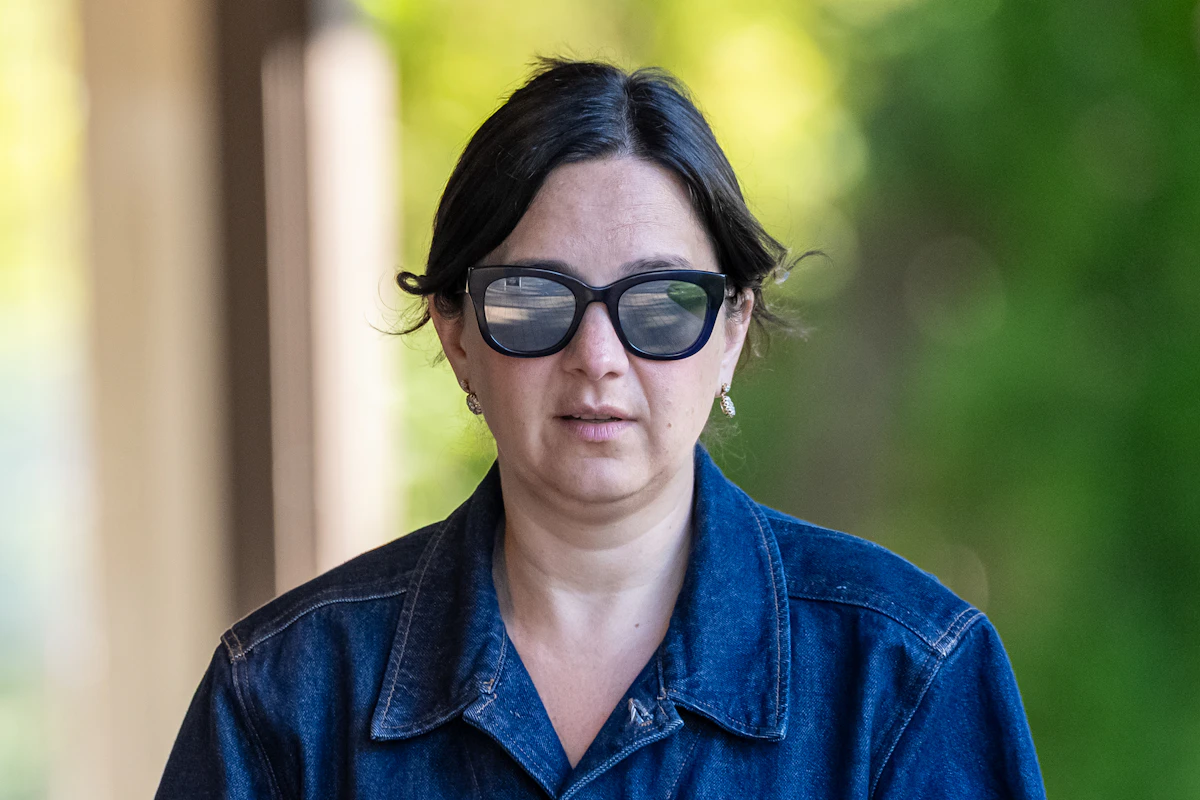
CBS News chief Bari Weiss has been so busy skewing the storied network’s coverage that she’s gotten basic facts wrong—including elementary details about America’s leaders and where they’re from.Fired 60 Minutes correspondent Cecilia Vega spilled the tea at the National Association of Hispanic Journalists Conference in New Orleans Thursday, revealing that she had endured network pressure on a number of issues before she was canned, including one particularly stunning dispute over a story on SNAP benefit cuts in West Virginia.While stopping short of referring to Weiss by name, Vega said her decision to tell the story strictly through the eyes of West Virginians had spurred backlash from CBS’s “new” top brass because she had not interviewed Vice President JD Vance or referred to his decade-old memoir, Hillbilly Elegy.But Vance, as Vega pointed out, is from Ohio. Not West Virginia.Other arguments bubbled up over the network’s new intent to insert political bias into the famed news magazine’s reporting, according to Vega. One such instance involved demands by network executives that she include footage of protesters attacking plainclothes Immigration and Customs Enforcement officers in Minnesota—footage that her team discovered did not exist. She said she was also tasked with inserting a line into one of her scripts that claimed Iran was “totally outgunned” by U.S. and Israeli forces—a detail that she noted was a copy-paste administration talking point.Weiss, the founder of the pro-Israel blog The Free Press and a former New York Times opinion columnist, was tapped to run CBS News late last year, despite the fact that she had never worked in broadcast journalism, lacked traditional reporting experience, and had also never run a major news operation.Weiss’s business decisions atop the news giant have unequivocally and single-handedly divorced CBS News from its decades-long place within America’s prestige news media circuit. What was once crowned the “gold standard” of broadcasting and the home of some of journalism’s most venerable names, such as Walter Cronkite and Edward R. Murrow, has since devolved into a graveyard for journalism ethics. Under Weiss’s stewardship, CBS News has killed critical stories in order to save face for the Trump administration. In December, Weiss pulled the plug on Vega’s 60 Minutes segment investigating the result of Donald Trump’s mass deportation program, focusing on Venezuelan immigrants who were deported to El Salvador’s notoriously brutal CECOT megaprison.The network has also lost a cadre of veteran journalists, ranging from Vega to 60 Minutes executive producer Bill Owens and the program’s de facto face, Scott Pelley.