The Real America
World Cup tourists are discovering the little secret of American abundance. We plan to keep sharing and defending it for a long time to come.

Steven Spielberg’s highly anticipated alien movie “Disclosure Day” hit theaters last Friday. In the weeks leading up to its premiere, a circulating theory — fueled by the government’s ongoing UFO file declassifications — suggested Spielberg collaborated with the government to prepare the public for real alien disclosure.Glenn Beck saw it on opening night, and he says it’s definitely “worth seeing.”But could it actually be predictive programming?On this episode of “The Glenn Beck Program,” Glenn shares his raw thoughts on what “Disclosure Day” really means. Glenn isn’t ready to dismiss the theory that “Disclosure Day” is predictive programming — entertainment designed to plant ideas so that future real-world events feel familiar and less shocking.“The Department of War and the CIA have had an official entertainment liaison office for decades,” he says.“They are brought in to help shape stories, and it's not a shadowy conspiracy ... [Hollywood is] given jets and bases and technical advisers for their movies, and in exchange, they shape the stories for the government, and this is documented policy.”However, there’s another framework worth considering: George Gerbner’s cultivation theory.Gerbner’s theory argues that long-term, heavy exposure to media gradually "cultivates" or shapes people's perceptions of reality, making them believe the world is more like what they see on screen than it actually is.Glenn points out that heavy media consumption is one of the modern era’s defining characteristics, as people are “scrolling and staring and consuming media” essentially “eight hours every day.”“[Gerbner’s] research shows that heavy viewers develop mean world syndrome where everything is a danger. They overestimate the danger, crime, threats. They become more fearful, more dependent, and more open to strong-man measures,” he explains.What if “Disclosure Day” isn’t preparing us for real aliens but rather attempting to scare people into submitting to future government mandates?The most critical question, Glenn insists, is: “Who profits from the fear?”“We've been seeing a steady drum beat of disclosure that is happening. I don't know what's real and what's not,” Glenn confesses.But he does know one thing: “A government who has been denying [aliens] for decades suddenly decides to open the door?”“Why? And who profits from fear?” he asks.To hear more, watch the video above.Want more from Glenn Beck?To enjoy more of Glenn’s masterful storytelling, thought-provoking analysis, and uncanny ability to make sense of the chaos, subscribe to BlazeTV — the largest multi-platform network of voices who love America, defend the Constitution, and live the American dream.
World Cup tourists are discovering the little secret of American abundance. We plan to keep sharing and defending it for a long time to come.
Major League Baseball has issued warnings to four San Francisco Giants pitchers after three players wrote Bible verses on their Pride Night caps.
The signing of the interim peace deal between the US and Iran will take place on Friday near Lucerne in Switzerland, according to the country’s foreign ministry.
A judge dismissed a lawsuit from Elon Musk’s artificial intelligence company xAI accusing a rival of trying to steal trading secrets — three days after Musk became […]
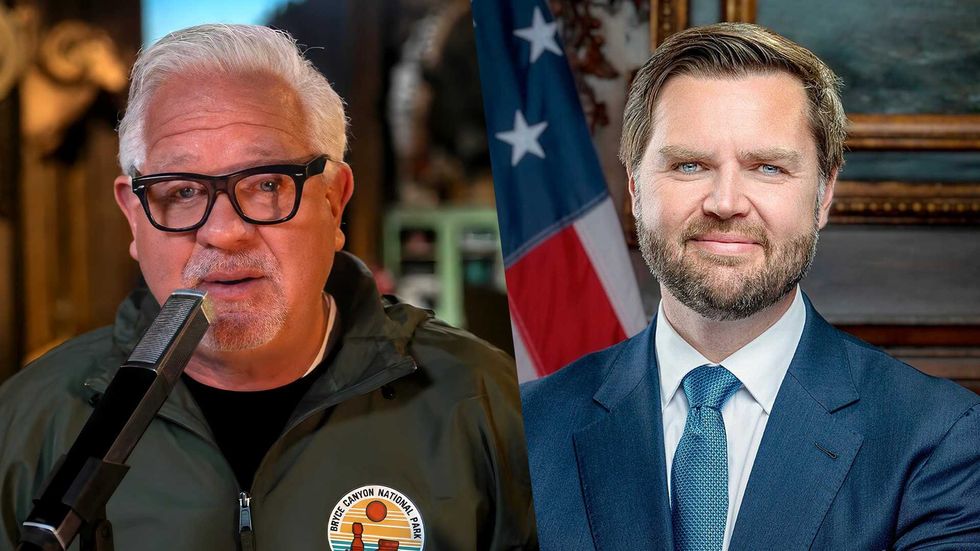
The United States and Iran announced a preliminary framework agreement intended to end the recent war, reopen the Strait of Hormuz, and lift the U.S. blockade of Iranian ports. The agreement reportedly includes a 60-day ceasefire period for negotiations over Iran's nuclear program. A formal signing ceremony is scheduled for June 19 in Geneva, Switzerland.Critics and analysts across the political spectrum, however, have expressed skepticism because many key provisions remain undisclosed. Israeli officials and other observers have raised concerns that unresolved issues — including Iran's regional proxy networks and the specifics of future nuclear restrictions — have been left for later negotiations.To get clarity on these matters, Glenn Beck spoke with none other than Vice President JD Vance. Glenn begins with several frank questions: “How do you negotiate with an apocalyptic, end-times-twelver regime, and what makes you confident that we can, as the president has said on the outset, get no support for proxies, end of the missile program, and no nukes? Do we have those, and how do you lock them in with — to be honest — crazy people that think they’re living in the end times?”“One of the most important lessons that [Trump] has given me in international negotiation or anything is you don’t trust anybody,” says Vance.“I don’t trust the words; I don’t trust the commitments, though they have committed to stop funding terrorism and to stop building or buying a nuclear weapon. Those commitments are there, but I trust people’s actions,” he adds.This philosophy, he claims, underpins the entire peace deal.“The way that we set up that deal, given the president’s directives, is if they perform the things that they say they’re going to perform, then they get a lot of relief, and if they don’t perform any of those things, then they get nothing,” says Vance, claiming that regardless of how Iran reacts, the United States is still in “a great position.”“We got the Strait of Hormuz open; oil is now down below $80 today. We have their military still destroyed, their defense industrial base still destroyed, their nuclear program still destroyed,” he declares.If Iran “[behaves] like a normal country,” the United States will treat it “like a normal country,” he adds, and if it doesn’t, Iran will suffer while the U.S. remains strong.“The United States still has all the cards, and there’s no skin off our back for entering into this negotiation,” says Vance.Glenn reiterates his initial question: “And no support for proxies, end of the missile program, and no nukes for sure?”“Correct, Glenn, and if they don’t do that, they don’t get any of the benefits of the bargain,” Vance confirms.But as a Christian, Glenn can’t help but wonder about the fate of the Iranian people.“It is hard to watch a regime slaughter its own people who are — just to use an American term — ‘yearning to breathe free.’ We hoped that we would be able to have, you know, a free people in Iran by the end of this. It doesn’t look like that is part of the plan at all. Can that be done without ... regime change?” he asks.“We’ve given the Iranian people an opportunity here. [Iran’s] military is substantially weaker. I mean it’s effectively gone. … If the Iranian people want to rise up and make, you know, their own country or make their own political future, then obviously the president of the United States would be happy to deal with whatever new government they produce, but we’re not going to force that on anybody,” Vance explains.“We will empower people on the ground who yearn to breathe free, but we’re not going to force them to ... elect their own government. What we’re going to do is pursue our best interests,” he continues.The U.S., Vance says, entered this war with Iran with clear goals: to prevent Iran from obtaining a nuclear weapon and to allow it a “conventional military” that could not “threaten its allies in the region.”“And that’s what we got,” he states.To hear more, watch the full interview above.Want more from Glenn Beck?To enjoy more of Glenn’s masterful storytelling, thought-provoking analysis, and uncanny ability to make sense of the chaos, subscribe to BlazeTV — the largest multi-platform network of voices who love America, defend the Constitution, and live the American dream.

The European Union approved legislation to enact its trade deal with the United States on Tuesday, more than two weeks before President Donald Trump would have imposed higher tariffs on the 27-nation bloc if the pact hadn’t taken effect. European lawmakers had until July Fourth, the day of America’s 250th birthday, to finalize their side […]
In a global sourcing world centered on far-flung supply chains often built on illegal subsidies and trade practices, customs fraud and duty evasion, and underpriced goods, one key U.S. free trade agreement has remained a linchpin for American textile and apparel manufacturers’ competitiveness and job growth and domestic supply chain stability. The United States-Mexico-Canada Agreement, […]
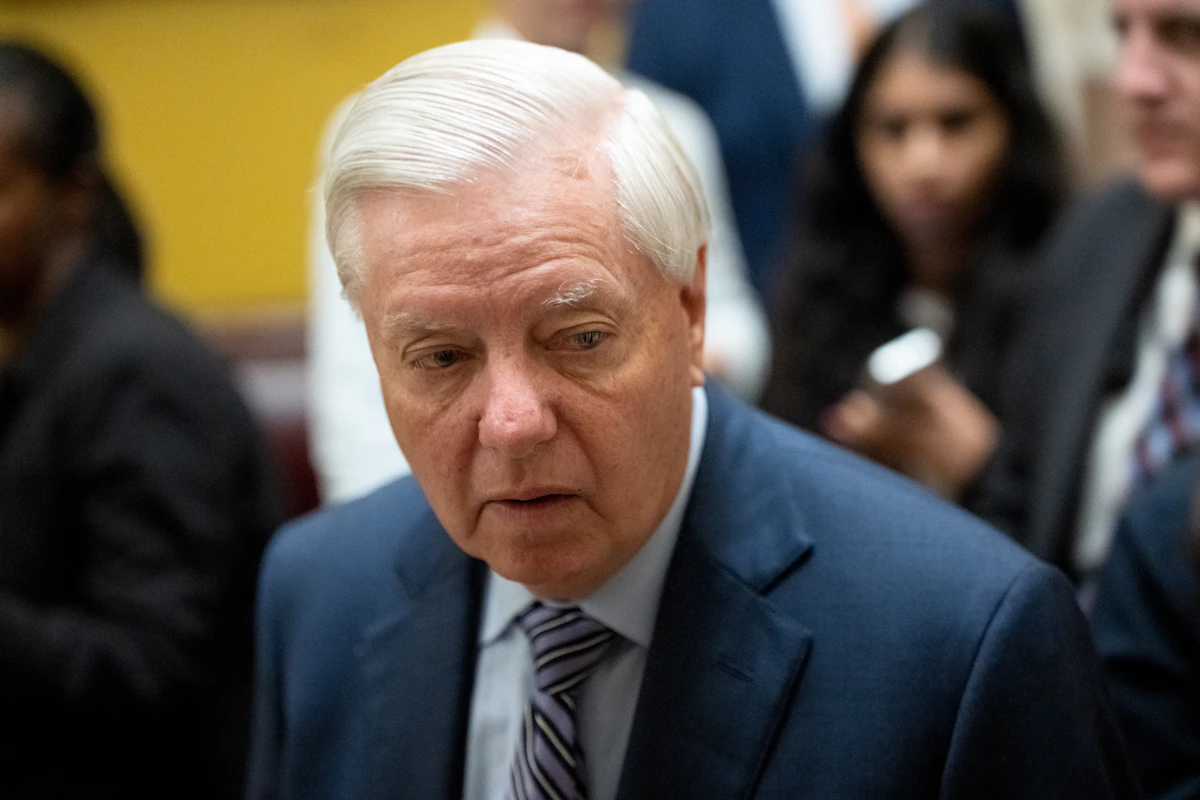
Republican senators are being kept in the dark about the exact terms of Donald Trump’s deal with Iran—and they’re not happy. The Trump administration has yet to release the text of the memorandum of understanding officials signed with Iran, leaving senior GOP members frustrated at everything they don’t know, Politico reported Monday. Senator Lindsey Graham, a defense and Iran hawk, voiced concern about discrepancies between different parties’ descriptions of the deal. “The MOU being described by us sounds really very good; the MOU being described by Iran sounds awful,” he told Politico. The South Carolina Republican fretted that the deal would resemble former President Barack Obama’s Joint Comprehensive Plan of Action, which defense hawks despised.“If they can enrich [uranium] anywhere at all, then it’s the same as JCPOA. If they can’t enrich, then that makes it a good deal,” he continued, and added in a separate conversation that he was “skeptical that Iran will ever go there.” It seems that the similarities between Trump’s deal and the JCPOA are already coming into sharp relief: Defense Secretary Pete Hegseth crumbled on live television when trying to explain the difference. Some Republican senators are wary of the deal, believing they will have to review and vote on it. “If you want a deal to last, it can’t be an executive agreement,” said Oklahoma Senator James Lankford. “We’ve got to have a vote of Congress to be able to solidify [it] long term.”But others suspect that, like the JCPOA, the deal will be a political agreement. “They’ll try to write it around the treaty requirements, so I don’t expect we’ll vote on it,” said Texas Senator John Cornyn.GOP lawmakers aren’t the only ones wary of Trump’s deal with Iran: Even his own Cabinet members seem to hate it. Trump has claimed he will release the text of the deal on Friday, after the formal signing ceremony.