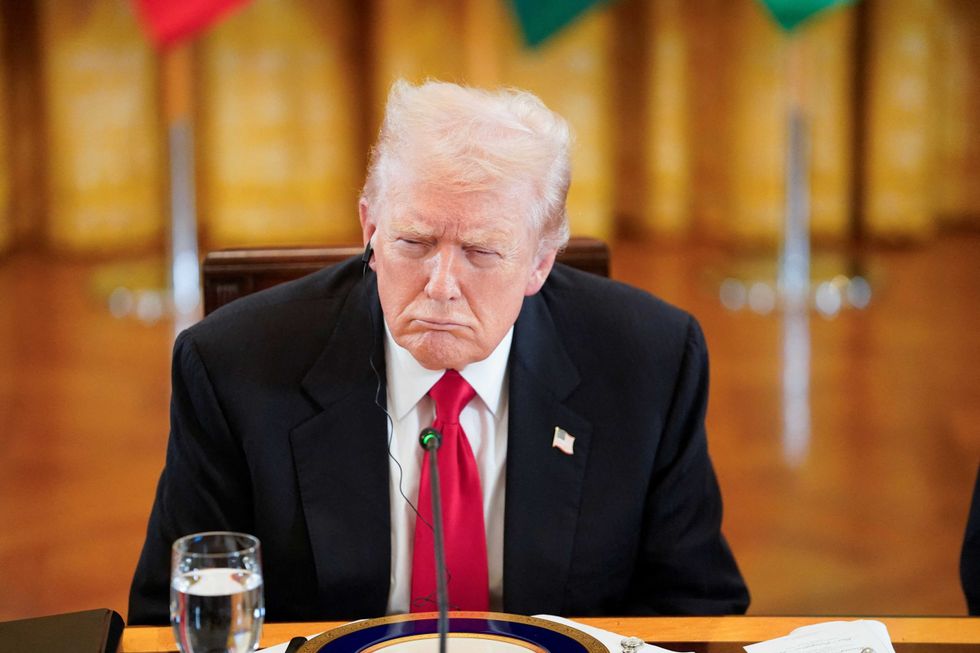
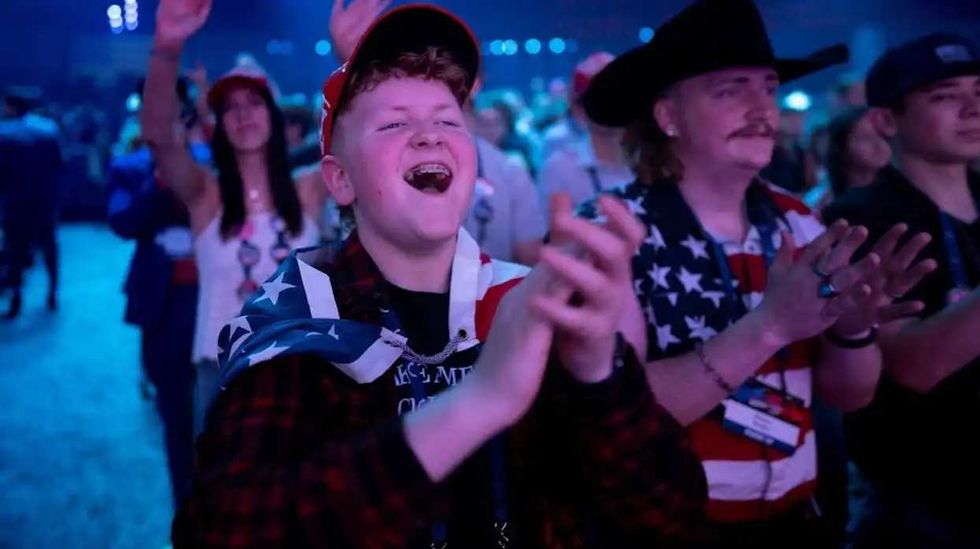
President Donald Trump has struggled to get decent turnout at his celebration of America’s 250th birthday, which has focused on promoting Trump himself rather than American history. Between that and his increasingly desperate efforts to stop Democrats from voting in the upcoming midterm elections, many political experts believe Trump and the Republican Party could be headed toward a political wipeout.According to one of the most respected political analysts in America, Trump could actually help himself politically through the United States’ semiquincentennial — but he is squandering that opportunity.“There was perhaps a world in which President Trump might have used the looming semiquincentennial to bolster his, and his party’s, fortunes for the fall,” wrote Kyle Kondik, the managing editor of the University of Virginia Center for Politics’ nonpartisan polling and elections newsletter Sabato’s Crystal Ball, in an in-depth analysis on Thursday. “Or at least tried to, perhaps by presenting himself as something other than a hard partisan figure.”Kondik contrasted Trump with another Republican politician, President Gerald Ford, who served in office during America’s bicentennial celebration in 1976. Unlike Trump’s polarizing approach, which emphasized promoting himself and bashing Democrats, Ford focused on a nonpartisan approach that was proactively positive about American history and the nation’s future. This was “exemplified by a campaign song, ‘I’m Feeling Good About America.’ (That’s also the name of our Center for Politics documentary about the 1976 campaign, free to watch on YouTube). Ford still lost [to Democratic nominee Jimmy Carter], but it ended up being a very close election,” much closer than experts had predicted during the bicentennial celebrations that summer.“It may be that Republicans find a way to dig out of their current political hole, but a sunny, optimistic president rallying the country over the course of a happy, celebratory summer doesn’t seem to be in the cards,” Kondik explained. “This president cannot even countenance helping his party achieve an easy win, as he has both denigrated and thus far declined to sign a bipartisan housing bill, a matter of national concern in an election whose major theme is ‘affordability.’”He added that “events marking the 250th anniversary of the signing of the Declaration of Independence have turned into yet another partisan event, with the president apparently planning to hold what amounts to a campaign rally on the Fourth itself. The World Cup, hosted partially by the United States, has excited international visitors and provided that rarest of all things on social media: organically heartwarming content. But that’s not really a story that involves the president.”Kondik clarified that, while Trump has not helped himself politically, it does not seem that he has hurt himself either. Yet with an approval rating stubbornly stuck in the 30s, “if Democrats actually win the Senate this year—they’re still underdogs to do so—Trump’s numbers being worse than they were in 2018 [during his last midterm elections] would likely be a big explanation why.”Because polls sample different groups of voters, Kondik predicted that Trump’s numbers may fluctuate a little between now and Election Day, but that the safest bet is that they will remain where they are unless he makes drastic changes in his behavior.“As is often the case with modern presidential approval ratings, expecting little-to-no change is a better bet than expecting big change,” Kondik wrote. “Particularly as the president doesn’t change much himself.”Speaking exclusively to AlterNet about his article, Kondik elaborated on the differences between Ford and Trump in terms of celebrating a big American birthday.“It is to some degree an apples to oranges comparison, because Ford was on the ballot and Trump is not, and the country was also a lot different,” Kondik told AlterNet. “But I do think in the midst of a trying decade, Ford's positive messaging helped cut through the negativity and capitalized on good feelings about the bicentennial. But there were many other reasons Ford came back, including uncertainty about whether Carter was up to the task of being president.”When asked if Trump’s explicitly partisan approach to celebrating America’s 250th birthday will be remembered as a missed political opportunity for him, Kondik said that “if Trump is as weak as he is now or weaker at the time of the election, and Republicans have a poor showing (losing the House and losing the Senate or at least losing one or more races in red states), it'll be easy to point to Trump's standing as a driving force in those results.”He added, “If that does happen, there will have been many missed opportunities for Trump, and perhaps how he handled the Fourth would be one of those (although in all likelihood other things would have been more important, like the decision to attack Iran and the subsequent impact on gas prices...
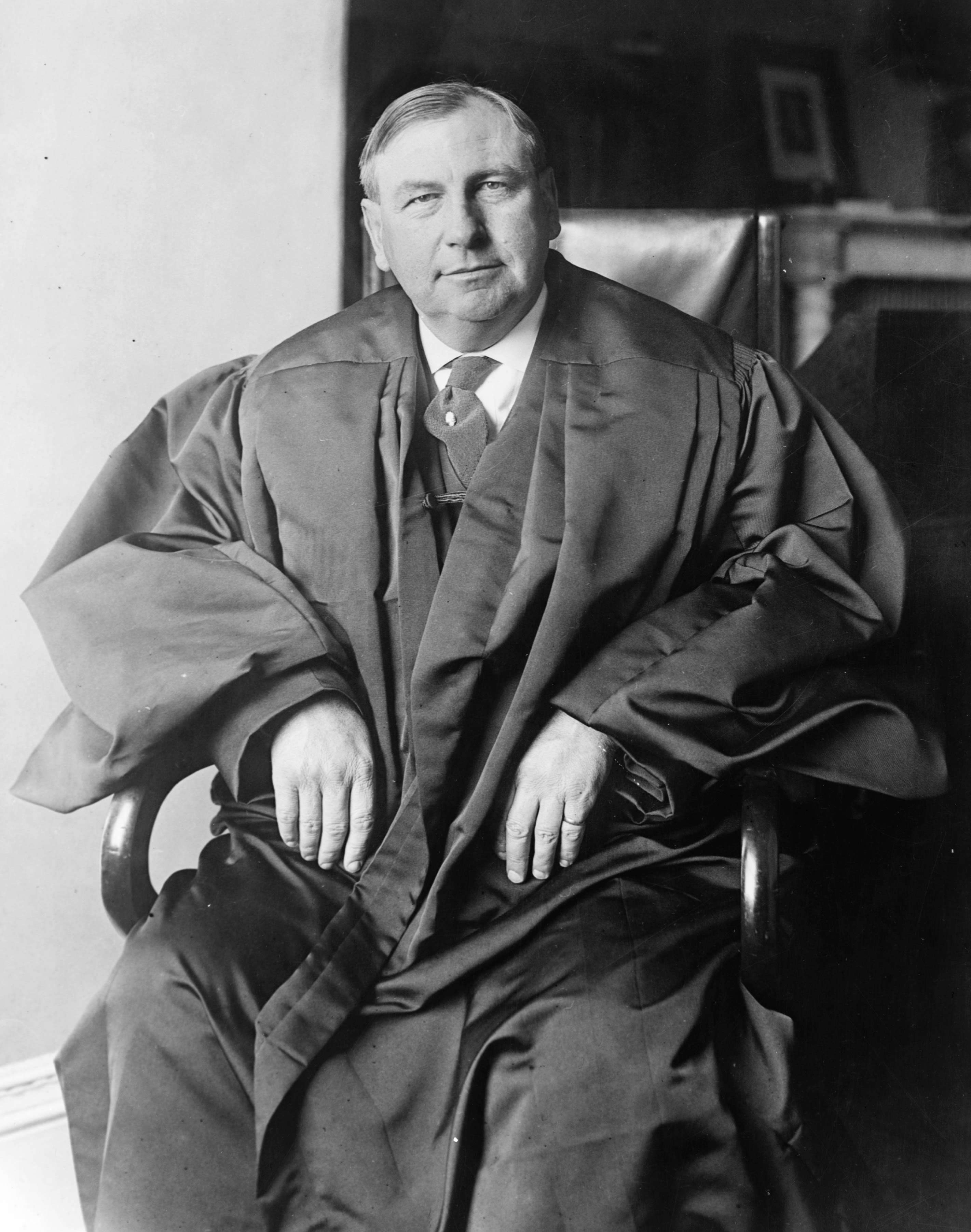
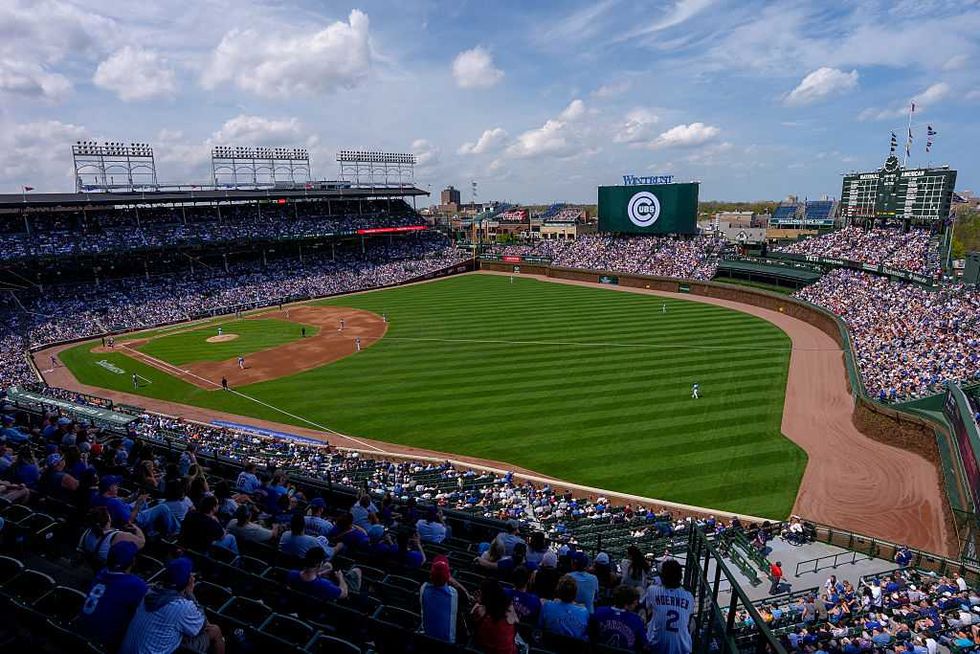
Everyone knows the song.It’s a warm summer night, the top of the seventh inning has just concluded, and the organ begins to ring throughout the stadium. It’s time to whip out the singing voice for one of America’s most iconic tunes — "Take Me Out to the Ball Game." At a time when baseball fandom was overwhelmingly male-dominated, the character of Katie stands out as an unusual creation for the era.Yet few baseball fans, let alone Americans at large, know the true history behind the 118-year-old symbol of our country’s pastime.To get to the beginning, we must travel back to the time of President Theodore Roosevelt. The year is 1908: The Ford Model T makes its debut in the automobile market; New York City drops the very first New Year’s Eve ball in Times Square; and the Grand Canyon is declared a national monument.The story goes that Jack Norworth was riding a New York subway train when he was inspired by a sign he saw that read, “Baseball Today — Polo Grounds.” Norworth quickly developed the lyrics to the song, with Albert Von Tilzer composing the music.The irony? According to reports, neither of these men had ever been to a baseball game. Norworth did not attend a game until 32 years later in 1940.Norworth and his then-wife Nora Bayes would go on to debut the tune during a vaudeville act at the Amphion Theater in Brooklyn. The song was quickly recorded by multiple different groups, with both the Edward Meeker and the Haydn Quartet versions finding mass success. Although only the chorus is sung at baseball games today, the original song contains multiple verses that tell the story of Katie Casey (later changed to Nelly Kelly by Norworth) — a “baseball mad” fanatic who would rather have her boyfriend take her to the ballgame than to the theater. At a time when women did not even have the right to vote, let alone the fact that baseball fandom was overwhelmingly male-dominated, the character of Katie stands out as an unusual creation for the era.The earliest documented instance of "Take Me Out to the Ball Game" being played at a baseball game was during a Los Angeles high school game in 1934. The song made its Major League debut later that year during Game 4 of the 1934 World Series.Stadium bands began regularly performing the tune during games in the mid-20th century. However, the way baseball fans engage with the song today — singing it during the seventh-inning stretch — was popularized by Chicago White Sox announcer Harry Caray in the 1970s. Caray later brought the tradition to the Chicago Cubs when he became their announcer in 1982. In 2001, "Take Me Out to the Ball Game" was ranked #8 on the "Songs of the Century" list, and later in 2010, Edward Meeker's recording was inducted into the Library of Congress' National Recording Registry.So next time you find yourself indulging in America's pastime, remember to buy some "peanuts and Cracker Jack" so that you can "root, root, root for the home team" — but never forget: "For it's one, two, three strikes, you're out, at the old ball game."Like Blaze News? Bypass the censors, sign up for our newsletters, and get stories like this direct to your inbox. Sign up here!
Even as President Donald Trump and his MAGA movement gut civics in public schools by dismantling the Department of Education and pushing pro-MAGA interpretations of history and “God-centered education,” a new study suggests that Generation Z can ill afford this educational erosion, as they are shockingly ignorant of basic facts about American history.“Nearly two-thirds (61 percent) of Americans under 30 are unaware of what America’s 250th is commemorating this year, while just 39 percent know we are celebrating the adoption of the Declaration of Independence,” reported Cato Institute’s Jonah Messinger and Emily Ekins on Thursday. The right-leaning think tank conducted a survey, the Cato Institute Fourth of July Survey, with the help of the polling firm Morning Consult.Messenger and Ekins added that “a majority (52 percent) of Gen Z Americans also don’t know what country from which the American colonies declared their independence, while 48 percent correctly answered that it was Great Britain.”Additionally, “More importantly, two-thirds (67 percent) of Gen Z do not know why the American colonies declared independence from Great Britain, while 33 percent correctly answered that it was to protest high taxes and a lack of representation in government.”There was a bright spot in the numbers, in that 66 percent of Generation Z knew America’s first president was George Washington. That number, however, is 11 points less than the number of Americans overall who know their nation’s first president.“Six in ten Americans (64 percent) under 30 likewise don’t know what the main purpose of the US Constitution is,” Messenger and Ekins wrote. “Instead, 14 percent thought the main purpose of the Constitution was to declare independence from Great Britain (which is what the Declaration of Independence did), 17 percent thought the main purpose was to create a presidency, Congress, and Supreme Court, 8 percent thought it was to list all federal laws, and 4 percent thought it was to create two major political parties. Another 21 percent admitted they didn’t know. Only 36 percent knew that the main purpose of the Constitution is to establish and limit the powers of government.”In a separate Thursday post about the poll, Ekins identified similarly ominous findings about the American public overall.“A new national survey from the Cato Institute, conducted in collaboration with Morning Consult of 2,253 Americans ahead of July 4th and America’s 250th anniversary, finds nearly half (46 percent) of Americans don’t know what America’s 250th anniversary commemorates,” Ekins wrote. “A little more than half (53 percent) correctly answered that it was the adoption of the Declaration of Independence.”The survey discovered that “while most Americans have at least an instinctive sense that the US Constitution protects their rights, a majority (58 percent) don’t actually know how it accomplishes this. Less than half (41 percent) correctly said that the Constitution’s purpose is to establish and limit the powers of government. The remaining said the purpose of the Constitution was to declare independence from Great Britain (17 percent), create the presidency, Congress, and Supreme Court (12 percent), list all federal laws (7 percent), or create two major political parties (4 percent), while 18 percent conceded they don’t know what the purpose of the Constitution is.”The survey also found majorities of Americans support ideas about how to change America’s Constitution that one or the other party staunchly oppose. These include conservative views such as requiring photo ID to vote (66 percent), requiring a balanced budget (69 percent), making English the nation's official language (64 percent), banning flag burning (60 percent) and banning transgender women from women’s sports (59 percent). It also includes liberal views such as guaranteeing health care (73 percent), providing free college (60 percent), limiting money in political campaigns (69 percent), guaranteeing a right to abortion (58 percent), banning hate speech (58 percent) and increasing taxes on the wealthy (58 percent).
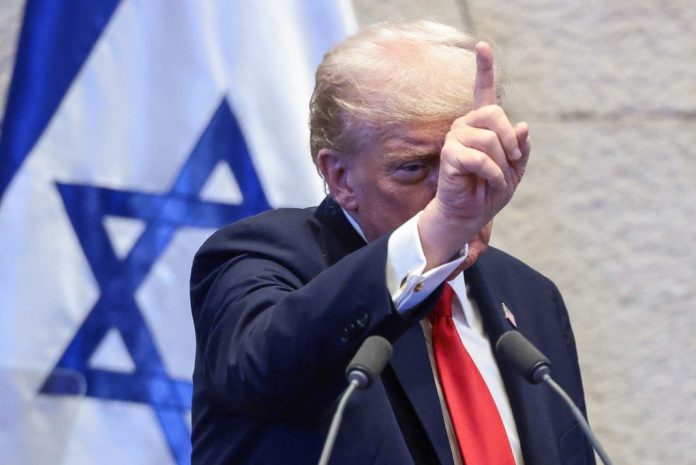
President Donald Trump called himself the “best president in the history of Israel” on Thursday as his relationship with Israeli Prime Minister Benjamin Netanyahu continues to strain amid the unresolved Iran war. During an interview with CNBC host Joe Kernen, Trump boasted that he has been the greatest ally of Israel in its most challenging […]
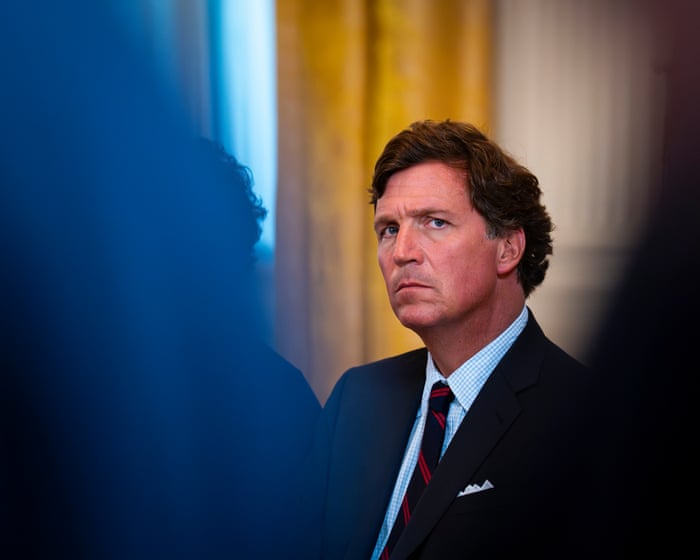
Former Fox News host further said he doesn’t ‘want to be a candidate’ for president and aired frustration with TrumpTucker Carlson, the rightwing broadcaster, wants to help build a new political party in the United States, he said in an interview – though he gave scant detail about the party, and did not indicate whether he was referring to a concrete project or merely musing.In the same interview, Carlson dismissed the idea of running for office as part of that new party. “I don’t want to be a candidate,” he said. Continue reading...
The federal government is proposing to overhaul radiation safety regulations for nuclear power, including by eliminating a long-term principle for nuclear safety. The Nuclear Regulatory Commission (NRC) this week proposed to get rid of the requirement for nuclear plants to ensure that radiation exposure is “as low as is reasonably achievable.” Proponents of the change say just…
The influential conservative commentator’s relationship with the president and the G.O.P. fractured over the war with Iran. Now, he says he is charting a new course.